


A skilled visa nomination is your gateway to working in a country that values your professional expertise. Getting the skilled visa nomination requirements right from the outset is what separates successful applicants from those who face delays or refusals.
At Jameson Law, we have guided hundreds of professionals through this process. This guide outlines the steps, documents, and common pitfalls to ensure your nomination stands the best chance of success.
What a Skilled Visa Nomination Actually Means?
A skilled visa nomination is a formal endorsement from a state, territory, or employer. It confirms that your skills meet a genuine workforce need. Crucially, it is not a visa in itself.
The Department of Home Affairs treats nomination and visa application as separate stages. Confusing the two is a common error.
- Expression of Interest (EOI): You submit this through SkillSelect.
- Nomination: A state (like NSW or Victoria) nominates you based on your EOI.
- Visa Application: Once nominated, you are invited to lodge the visa application.
Note: Lodging an EOI does not grant you a bridging visa. You must maintain a lawful status while waiting.
Understanding Your Nomination Pathway
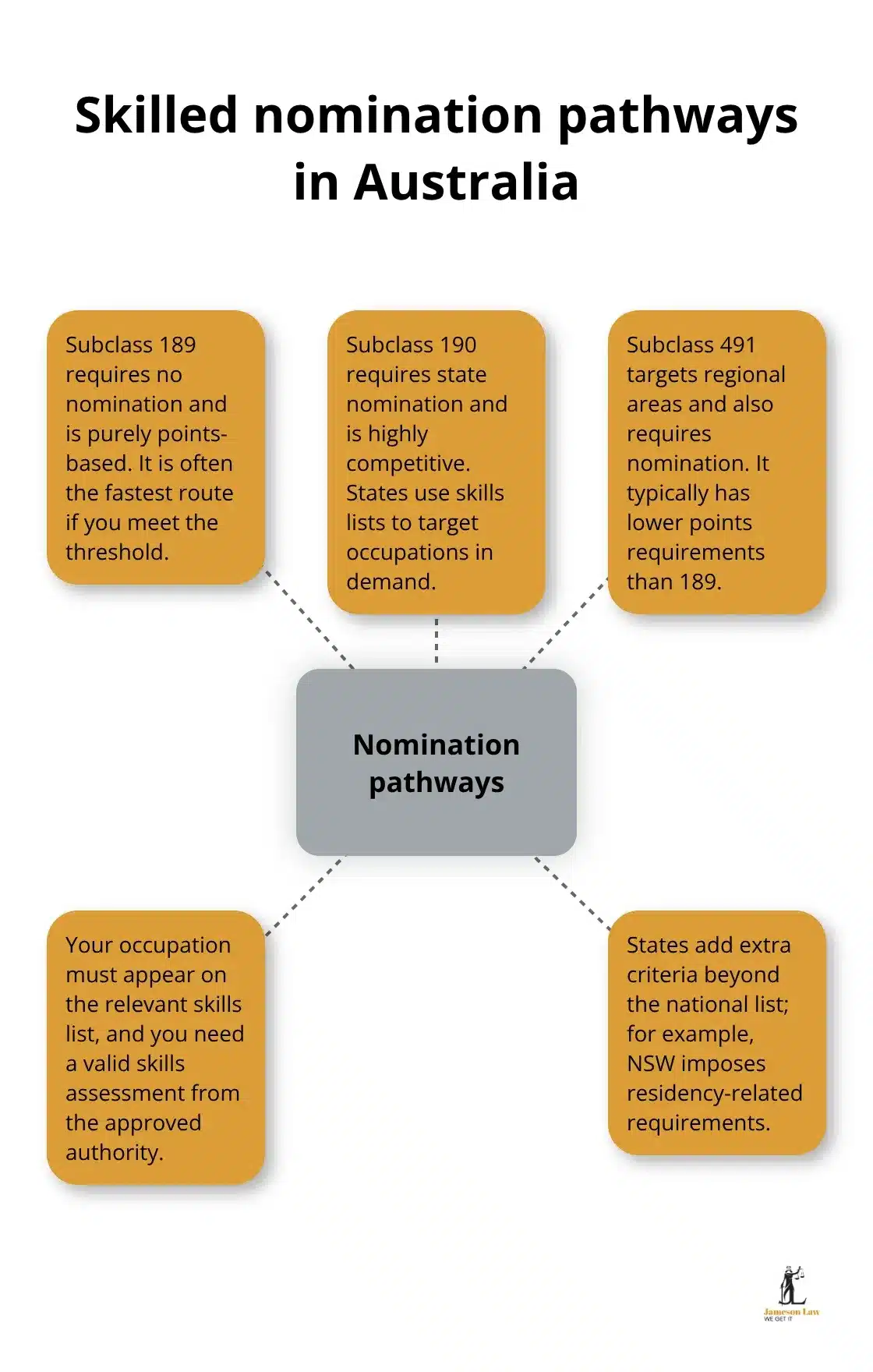
Australia’s skilled migration system has three primary pathways:
- Subclass 189 (Independent): No nomination required. You apply based solely on points. While it seems straightforward, it is highly competitive with irregular rounds.
- Subclass 190 (State-Nominated): Requires state nomination. Each state maintains its own skilled occupation list and may have residency criteria.
- Subclass 491 (Regional): Targets regional areas and offers an additional 15 points. You must live and work in a designated regional area.
Timeline and Critical Deadlines
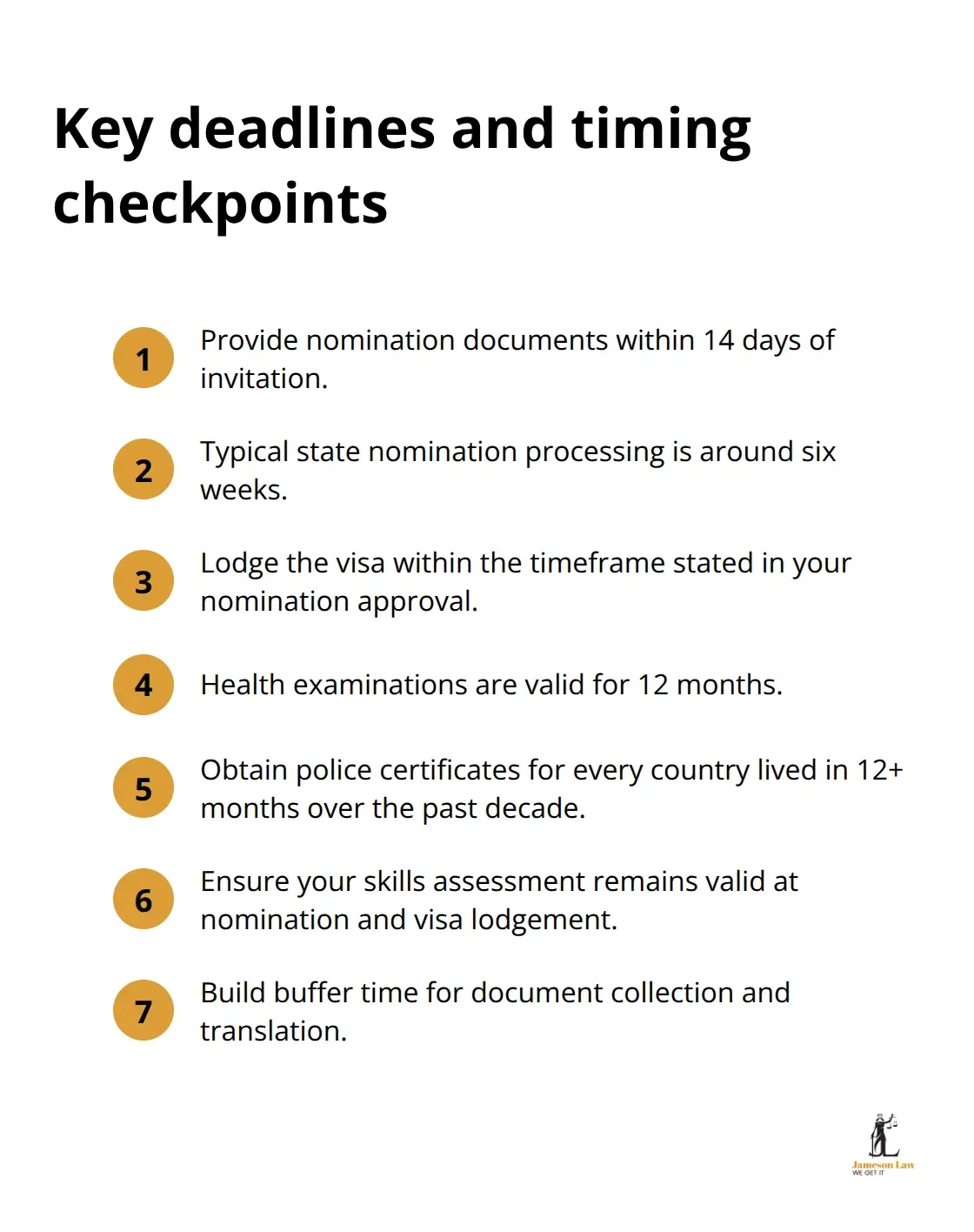
Meeting deadlines is essential. There are two key windows you cannot miss:
- State Nomination Deadline: After receiving a state invitation, you typically have 14 days (varies by state) to submit evidence.
- Visa Application Deadline: Once nominated, Home Affairs issues an invitation. You have exactly 60 days to lodge your visa application, or the invitation expires.
Key Documentation and Evidence Requirements
Skills Assessment
A valid skills assessment is mandatory. It must be valid at the time of invitation. Authorities like VETASSESS or Engineers Australia assess your qualifications.
Police Certificates and Residential History
You must provide police certificates for any country where you resided for 12 months or more (cumulative) in the last 10 years. For Australia, use the AFP National Police Check.
Common Applicant Mistakes
Occupation Mismatch
Ensure your ANZSCO code matches exactly. You cannot use a “General Accountant” assessment for a “Management Accountant” nomination.
Timing Missteps
Health examinations are valid for 12 months. Completing them too early risks expiry before your visa is processed. Gather documents like police checks early, but book health exams only after invitation.
Final Thoughts
Success in skilled visa nominations comes from precision. Treat every deadline as absolute and ensure your occupation aligns with the correct list.
For tailored advice and to ensure compliance with the latest updates, contact Jameson Law. Our experts can guide you through the nomination programs to maximise your success.