PUBLICATION

Conveyancing Searches NSW: What Every Buyer Should Check

"Understand what conveyancing searches NSW reveal about your property before buying and protect yourself from costly surprises."
Conveyancing Searches NSW: What Every Buyer Should Check

Buying property in NSW involves more than just finding the right home and agreeing on a price. Conveyancing searches NSW are your protection against hidden problems that could cost you thousands down the track.

At Jameson Law, we’ve seen buyers skip these searches and face serious regrets. This guide walks you through the essential checks that every NSW buyer should complete before signing on the dotted line.

What a Title Search Actually Reveals

The Foundation of Your Purchase

A title search is your first line of defence against ownership problems. It’s not optional-it’s the foundation of every property transaction in NSW. The NSW Land Registry Services maintains the official electronic record of who owns the land and what legal interests affect it. When you order a title search, you access the registered owner details, lot and plan information, and any easements, restrictions on use, covenants, mortgages, and caveats that could impact your purchase.

Order this search before your contract is prepared, not after. Most buyers wait too long and discover problems at exchange, when it’s far harder to renegotiate or walk away. A title search typically costs between $20 and $100 depending on the service provider-a small price compared to the cost of discovering encumbrances after settlement.

Easements and How They Affect Your Plans

Easements catch buyers off guard more often than any other title issue. An easement grants a third party (usually a utility company or neighbour) the right to access and use part of your land for drainage, access, or services. If an easement runs across your property, it can restrict your renovation plans, prevent you from building a fence in certain areas, or allow others to access parts of your land.

Restrictions on use work similarly; they’re legal conditions that limit how you can develop or use the property now and in the future. Some restrictions prevent you from running a business from home or subdividing the land. These limitations affect not just your immediate plans but also the property’s future resale value.

Mortgages, Covenants, and Caveats

Covenants are historical conditions that may require or prevent specific actions by owners. Mortgages listed on the title show the seller’s lender interest and must be discharged before settlement, which is standard. Caveats on property title are notices claiming an interest in the property and can delay your settlement significantly if not resolved.
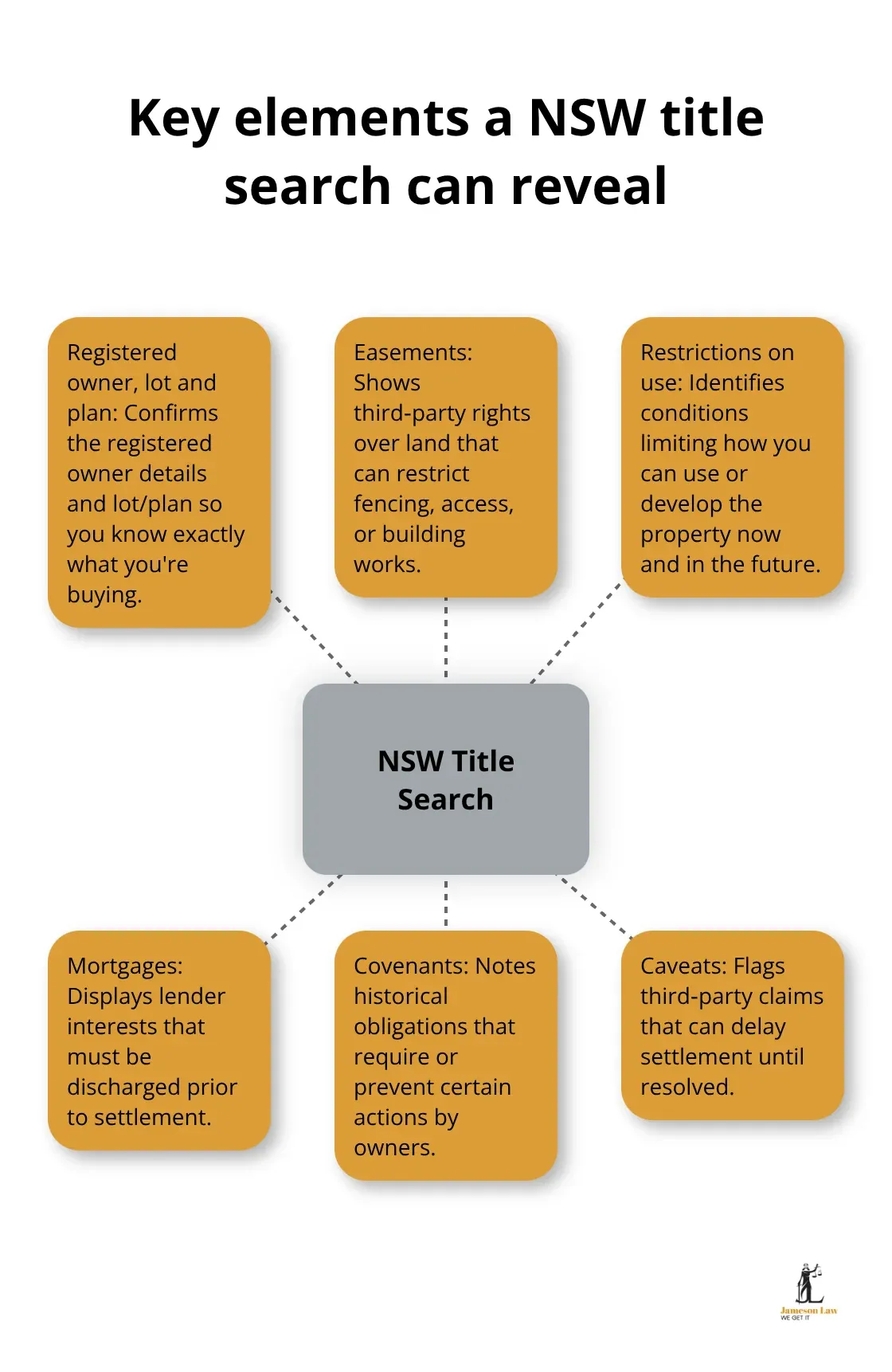
Diagram showing what a NSW title search can reveal: owner details, lot/plan, easements, restrictions, mortgages, covenants, and caveats. - conveyancing searches NSW

The Australian Institute of Conveyancers emphasises that while these issues don’t necessarily block a sale, they require clear understanding and appropriate action. A conveyancer explains the practical impact of each finding and works with you to address them.

Why Professional Review Matters

Ordering a title search online is possible, but interpreting legal terms and notations without expertise often leads to missed red flags. A conveyancer reviews the entire title packet, identifies what affects your plans, and flags anything requiring negotiation or further investigation before you exchange contracts. This professional review protects you from costly surprises and ensures you understand exactly what you’re buying. Once you’ve confirmed the title is clear, your next step involves checking what the local council and environmental authorities have on record about the property.

Local Council and Environmental Searches Reveal Hidden Property Issues

What Council Certificates Tell You

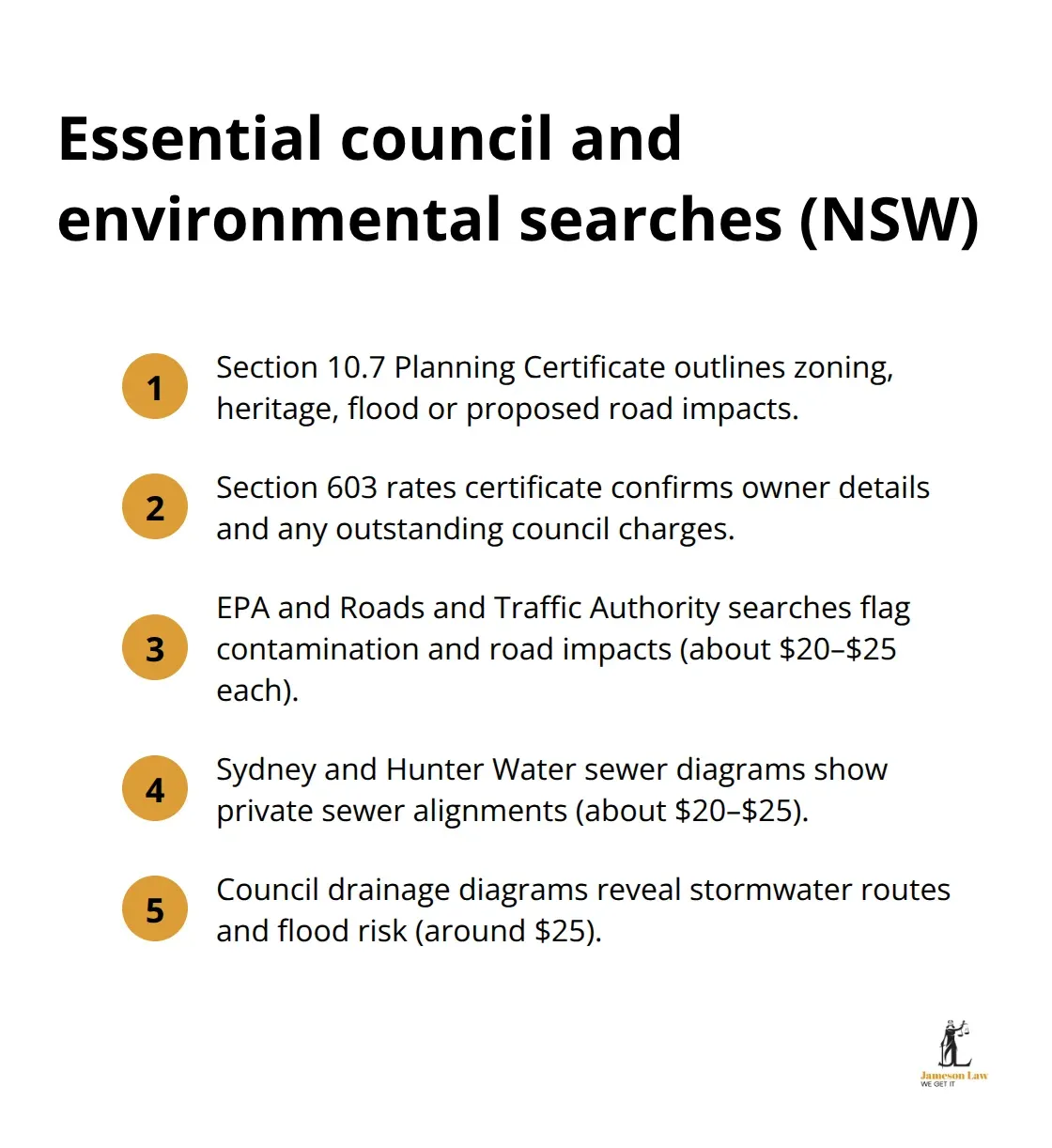
Council searches in NSW uncover what local government knows about your property, and this information often surprises buyers who assumed their title search told them everything. A Section 10.7 Planning Certificate from your local council is now mandatory under the NSW Conveyancing (Sale of Land) Regulation 2022 and must be attached to every contract before exchange. This certificate reveals whether the property is affected by proposed road widening, heritage listings, flood zones, or development applications that could impact your plans or property value. The cost runs roughly $53 to $133 depending on your council, but skipping this step exposes you to rescission rights if the seller fails to attach it at signing.

Compact list of key NSW council and environmental searches and what they reveal. - conveyancing searches NSW

Council rates certificates, formally called Section 603 certificates, show the current owner, property address, and any outstanding rates and charges for the year. These documents help you budget for ongoing holding costs and identify whether the seller owes money to the council that could delay settlement.

Environmental Hazards and Contamination Risks

Environmental searches identify contamination risks, asbestos in older buildings, and flood or bushfire hazard zones that affect insurance premiums and future resale appeal. Flood zone information in particular affects your insurance costs significantly; properties in flood-prone areas often face premium increases or outright refusal from some insurers. Environmental Protection Authority searches and Roads and Traffic Authority checks, costing roughly $20 to $25 each, flag contaminated land registers and road impact assessments that could affect your property’s future use or value.

Water and Drainage Systems

Sydney Water and Hunter Water provide sewerage diagrams showing where private sewer pipes run on your property and how it connects to the wastewater system. These diagrams cost $20 to $25 and reveal whether buildings sit over or adjacent to sewer lines, information critical before any renovation or extension work. A Statement of Available Pressure and Flow from Sydney Water shows current water pressure and flow at hydrants, which matters if you plan internal water service upgrades or have concerns about water supply reliability.

Drainage diagrams and stormwater information from your local council cost around $25 and reveal whether stormwater pipes cross neighbouring properties or whether your land contributes to neighbourhood flooding during heavy rain.

Timing and Professional Review

Request these searches at least three weeks before your expected exchange date, as councils can take weeks to respond and delays here commonly push settlement dates back. Many buyers order these searches but fail to review them carefully, missing red flags buried in technical language. If a Section 10.7 Certificate shows a proposed development application affecting the property, you need to contact the council directly to understand the timeline and impact before exchange.

Outstanding council rates, water charges, or special levies listed on these certificates become your responsibility after settlement if not settled by the vendor beforehand, so confirm with your conveyancer that the seller will clear these before completion. Review all council and environmental documents with your conveyancer before exchange, not after, because rescission rights expire five business days after you sign and missing a single mandatory attachment gives you grounds to withdraw and recover your deposit. Once you’ve confirmed these searches are clear, the final layer of protection involves checking water, drainage, and building compliance records that reveal the property’s physical condition and infrastructure standards.

Infrastructure and Building Compliance Before You Buy

Sewerage Diagrams and Building Restrictions

Sydney Water and Hunter Water sewerage diagrams form the backbone of your pre-purchase infrastructure checks, yet most buyers never examine them carefully until problems emerge after settlement. These diagrams cost $20 to $25 and show exactly where private sewer pipes run across your property, how your land connects to the public wastewater system, and critically, whether any buildings sit over or adjacent to sewer lines. Building over sewer (BOS) or building adjacent to sewer (BAS) creates major complications if you plan renovations, extensions, or any structural work. Sydney Water charges substantial fees for approvals on properties with BOS conditions, and some developments become impossible without expensive rerouting. Request these diagrams at least three weeks before exchange because water authorities can take weeks to respond, and a delayed diagram arriving after you’ve exchanged contracts gives you rescission rights under NSW law.

Stormwater and Water Pressure Systems

Stormwater drainage systems matter equally; council drainage diagrams reveal whether stormwater pipes cross neighbouring properties, whether your land contributes to neighbourhood flooding during heavy rainfall, or whether you’re responsible for maintaining shared drainage infrastructure. These diagrams cost around $25 and prevent you from discovering mid-renovation that your planned extension will block a neighbour’s stormwater line or that your property sits in a natural drainage path.

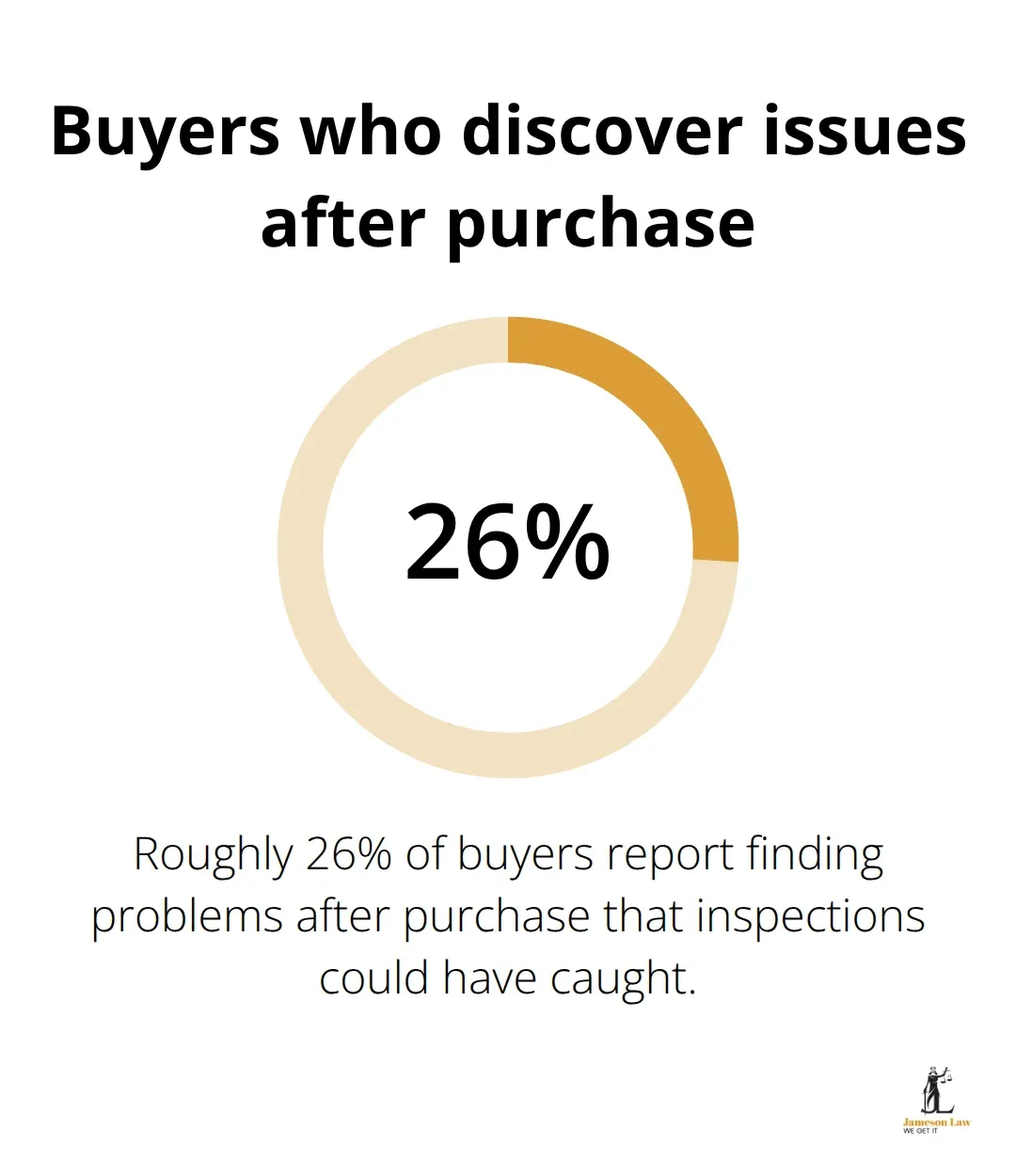
Percentage of buyers who find problems after buying that inspections could have identified.

A Statement of Available Pressure and Flow from Sydney Water shows current water pressure and flow at hydrants on your property-information that matters if you plan internal water service upgrades, have concerns about water supply reliability, or want to verify the system can handle your intended use.

Building Inspections and Defect Detection

Building inspection reports and compliance records separate properties you can safely buy from those requiring expensive remedial work before occupation. While building and pest inspections are optional, roughly 26% of buyers discover problems after purchasing that they would have caught beforehand. A professional building inspection typically costs $400 to $800 and identifies structural defects, asbestos in older properties, roof condition, plumbing integrity, electrical safety issues, and pest infestations that could cost thousands to fix post-settlement. For properties built before 1990, asbestos in insulation, roofing, or pipe wrapping represents a genuine health hazard and remediation cost; identifying it before purchase lets you factor removal costs into your negotiation or walk away entirely.
Strata Reports and Financial Health

Strata properties require additional scrutiny; a strata report costs $300 to $600 and reveals the building’s physical condition, outstanding maintenance backlogs, special levies, litigation history, and insurance coverage. Properties with significant defects flagged in strata reports often face difficulty securing finance, meaning your bank may refuse to lend against a property with unresolved building issues. You must receive at least 30 days notice to pay for standard levies, as well as any special levies. Ask your conveyancer to coordinate these inspections before exchange, not after, so you can renegotiate the purchase price or request vendor contributions to repairs based on actual findings.

Development Applications and Neighbourhood Changes

Development Application reports from council show whether approved or proposed developments nearby will affect your property’s privacy, light access, or noise levels within the next five years, helping you understand whether the neighbourhood environment will change significantly after your purchase.

Final Thoughts

Conveyancing searches NSW protect your investment by uncovering problems before you commit to a purchase. Title searches reveal easements and restrictions that affect your plans, council certificates expose zoning changes and outstanding rates, and water diagrams show infrastructure limitations. Building inspections catch structural defects and asbestos, while strata reports flag special levies or defects that banks refuse to finance. Together, these searches form a complete picture of what you’re actually buying.

Common issues emerge repeatedly throughout NSW property transactions. Easements restrict renovations, outstanding council rates transfer to you after settlement, and sewerage diagrams reveal building-over-sewer conditions that cost thousands to remedy. Strata reports flag structural defects that lenders refuse to finance, while development applications show neighbourhood changes coming within five years. Missing a single mandatory document at exchange gives you rescission rights, but discovering problems after settlement leaves you with repair bills and no recourse.

A conveyancer coordinates all searches, reviews findings in plain English, flags anything requiring negotiation, and ensures every mandatory document attaches before you sign. Contact Jameson Law to discuss your conveyancing needs and protect your purchase from start to finish.

Speak to an Expert Lawyer today

Laywers-Jameson-Law-The-best-law-firm-in-Sydney- Sydney Lawyers - Sydney
BOOK NOW

WE'RE IN IT TO WIN IT

Book your consultation

Book Now
Book Now Mobile 06 02 2025

This form submission is encrypted and secured to ensure your information remains confidential.

What our Clients

Related Publications:

What our clients say

.

Jameson Law - Voted the Best Law firm in Sydney Award

Legal Answers ... In Short

We're here to help

Our mission is to ensure our client matters are resolved successfully every time. Success to us does not simply involve winning, but moreover ensuring we take the most feasible, economic and stress-free path to help our clients achieve their goals. We fight hard for our clients, and always go by the motto: we’re in it to win it.

Jameson Law - Best Law Firm in Sydney

WE'RE IN IT TO WIN IT

Book your consultation

Call us now on (02) 8806 0866 or fill out the form below

Book Now Mobile

This form submission is encrypted and secured to ensure your information remains confidential.

WE'RE IN IT TO WIN IT

Book your consultation

Book Now Mobile 06 02 2025
lock

This form submission is encrypted and secured to ensure your information remains confidential.

Our Sydney Offices

Offices Parramatta and Sydney Jameson Law
Parramatta CBD - Head Office
jameson Law - Blacktown
jameson Law - Liverpool Office
Jameson Law - Bankstown
Court Houses We Frequent Jameson Law

Court Houses We Frequent

Balmain Local Court

Registry: Monday to Friday, 9:00am to 4:30pm

Bankstown Local Court

Court Operating Hours: 9:30am-4:30pm

Blacktown Local Court

Registry Hours: 9:00 – 4:30
Telephone Hours: 8:30 -4:30
Days open: Mon-Fri

Burwood Local Court

Registry Hours: 9:00 – 4:30
Telephone Hours: 8:30 – 4:30
Days open: Mon – Fri

Campbell Local Court

Registry Hours: 9:00 – 4:30
Telephone Hours: 8:30 – 4:30
Days open: Mon – Fri

Central Local Court

Registry Hours: 9:00 – 1:00 and 2:00 – 4:30
Telephone Hours: 8:30 – 4:30

Downing Local Court

Registry Hours: 9:00 – 1:00 and 2:00 – 4:30
Telephone Hours: 8:30 – 4:30

Wollongong Local Court

Registry Hours: 9:00 – 1:00 and 2:00 – 4:30
Telephone Hours: 8:30 – 4:30

Fairfield Local Court

Registry Hours: 9:00 – 1:00 and 2:00 – 4:30
Telephone Hours: 8:30 – 4:30

Hornsby Local Court

Registry Hours: 9:00 – 1:00 and 2:00 – 4:30
Telephone Hours: 8:30 – 4:30

Liverpool Local Court

Registry Hours: 9:00 – 1:00 and 2:00 – 4:30
Telephone Hours: 8:30 – 4:30

Manly Local Court

Registry Hours: 9:00 – 1:00 and 2:00 – 4:30
Telephone Hours: 8:30 – 4:30

Newtown Local Court

Registry Hours: 9:00 – 1:00 and 2:00 – 4:30
Telephone Hours: 8:30 – 4:30

Parramatta Local Court

Registry Hours: 9:00 – 1:00 and 2:00 – 4:30
Telephone Hours: 8:30 – 4:30

Penrith Local Court

Registry Hours: 9:00 – 1:00 and 2:00 – 4:30
Telephone Hours: 8:30 – 4:30

Sutherland Local Court

Registry Hours: 9:00 – 1:00 and 2:00 – 4:30
Telephone Hours: 8:30 – 4:30

Waverley Local Court

Registry Hours: 9:00 – 1:00 and 2:00 – 4:30
Telephone Hours: 8:30 – 4:30

Windsor Local Court

Registry Hours: 9:00 – 1:00 and 2:00 – 4:30
Telephone Hours: 8:30 – 4:30

Wollongong Local Court

Registry Hours: 9:00 – 1:00 and 2:00 – 4:30
Telephone Hours: 8:30 – 4:30

Downing Centre District Court

Registry Hours: 9:00 – 4:30
Telephone Hours: 8:30 – 4:30
Days open: Mon – Fri

Parramatta District Court

Registry Hours: 9:00 – 4:30
Days open: Mon-Fri

Penrith District Court

Registry Hours: 9:00 – 4:30
Days open: Mon-Fri

Campbelltown District Court

Registry Hours: 9:00 – 4:30
Days open: Mon – Fri

Liverpool District Court

Registry Hours: 9:00 – 4:30
Days open: Mon – Fri

Wollongong District Court

Registry Hours: 9:00 – 1:00 and 2:00 – 4:30
Telephone Hours: 8:30 – 4:30

Supreme Court New South Wales

Registry Hours: 9:00 AM – 4:30 PM
Telephone Hours: 8:30 AM – 4:30 PM
Days Open: Monday to Friday

Federal Circuit and Family Court of Australia

Registry Hours: 9:00 AM – 4:30 PM
Telephone Hours: 8:30 AM – 5:00 PM
Days Open: Monday to Friday

Federal Court

Monday to Friday, 8:30 AM – 4:30 PM

High Court

Monday to Friday, 8:30 AM – 5:00 PM

Children’s Court of New South Wales

Registry Hours: 9:00 AM – 4:30 PM
Telephone Hours: 8:30 AM – 4:30 PM
Days Open: Monday to Friday

Coroner’s Court New South Wales

Registry Hours: 9:00 AM – 4:30 PM
Telephone Hours: 8:30 AM – 4:30 PM
Days Open: Monday to Friday

Industrial Relations Commission of New South Wales

Registry Hours: 9:00 AM – 4:30 PM
Telephone Hours: 8:30 AM – 4:30 PM
Days Open: Monday to Friday

Land and Environment Court of New South Wales

Registry Hours: 9:00 AM – 4:30 PM
Telephone Hours: 8:30 AM – 4:30 PM
Days Open: Monday to Friday

WE'RE IN IT TO WIN IT

Book your consultation

Book Now
Book Now Mobile 06 02 2025
lock

This form submission is encrypted and secured to ensure your information remains confidential.