Skilled visa nomination requirements can make or break your application. Whether you’re an employer looking to sponsor talent or an applicant pursuing an opportunity abroad, understanding these requirements is non-negotiable.
At Jameson Law, we’ve guided hundreds of clients through this process. This guide covers everything you need to know to get it right the first time.
What Employers and Applicants Must Demonstrate for Skilled Visa Nomination
Employer Eligibility and Sponsorship Requirements
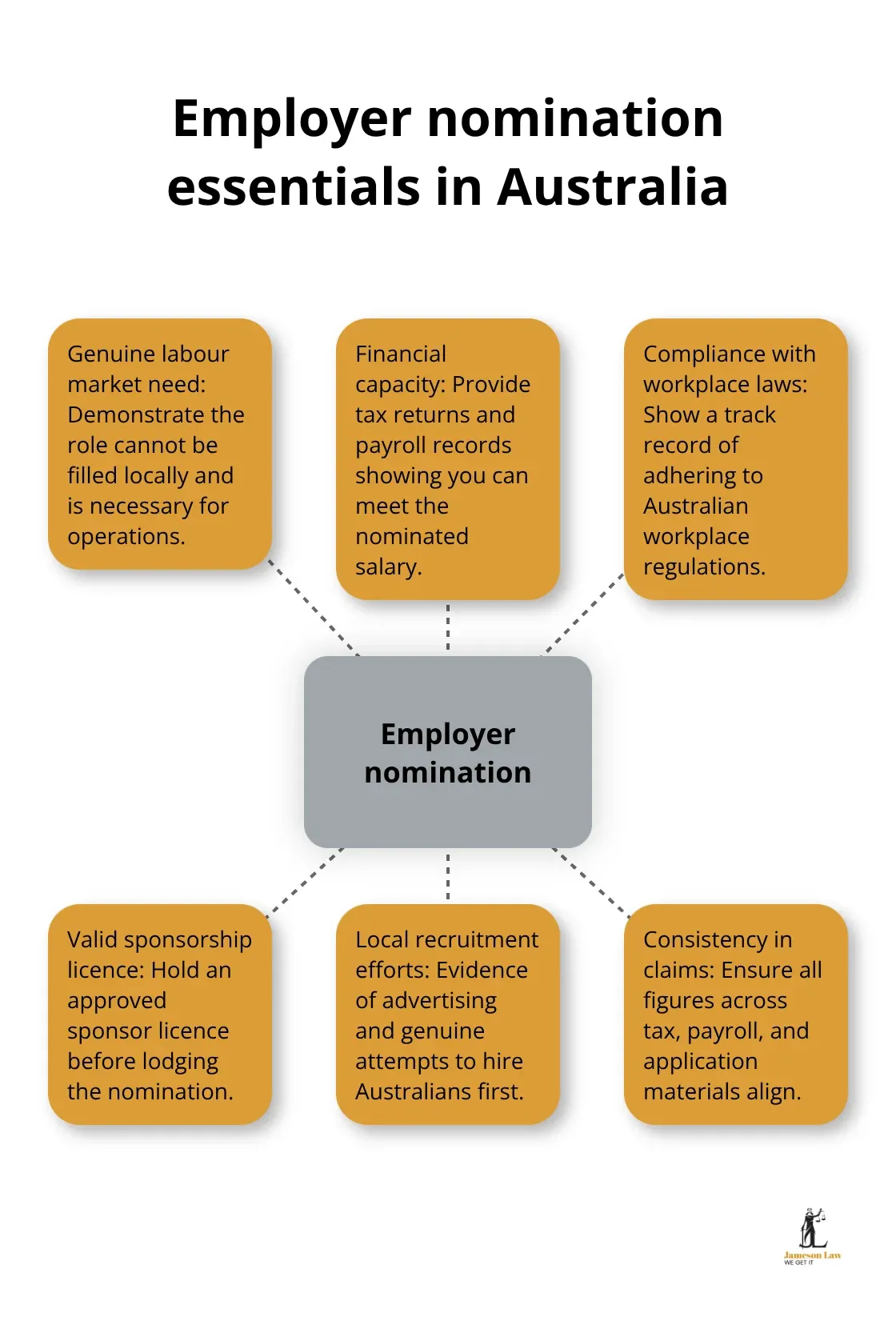
Employers sponsoring skilled workers through Australia’s visa system face strict eligibility rules that extend far beyond simply having an open position. Your business must demonstrate genuine labour market need, financial stability, and a commitment to complying with workplace laws. The Australian Department of Home Affairs requires you to hold a valid sponsorship licence, maintain payroll records that prove you can meet the nominated employee’s salary expectations, and show that you have genuinely tried to recruit locally first.
Many employers underestimate how thoroughly the department scrutinises these points. Your financial documentation must align precisely with your claimed capacity to employ. If your tax returns show lower revenue than your application suggests, your nomination fails. The department’s scrutiny extends to every claim you make about your business’s financial health and hiring capacity.

State Nomination Complexity and Occupation Lists
State nomination adds another layer of complexity to your application strategy. Different states maintain different occupation lists and prioritise different industries based on their economic needs. New South Wales might actively seek healthcare workers while another state focuses on skilled trades. You must check your state’s current occupation list before investing time in an application-this step is non-negotiable.
The skilled occupation list summarises the occupations Australia needs to fill skill shortages. What qualified last month might not qualify this month. Your occupation choice determines your entire pathway forward, so verify current eligibility before you proceed.
Applicant Skills Assessment and Employment Documentation
For applicants, the pathway demands equally rigorous preparation. Your skills assessment must come from the correct assessing authority for your occupation, and the assessment must precisely match your claimed role and experience. Submitting an assessment from the wrong body or one that does not align with your nominated occupation causes immediate rejection.
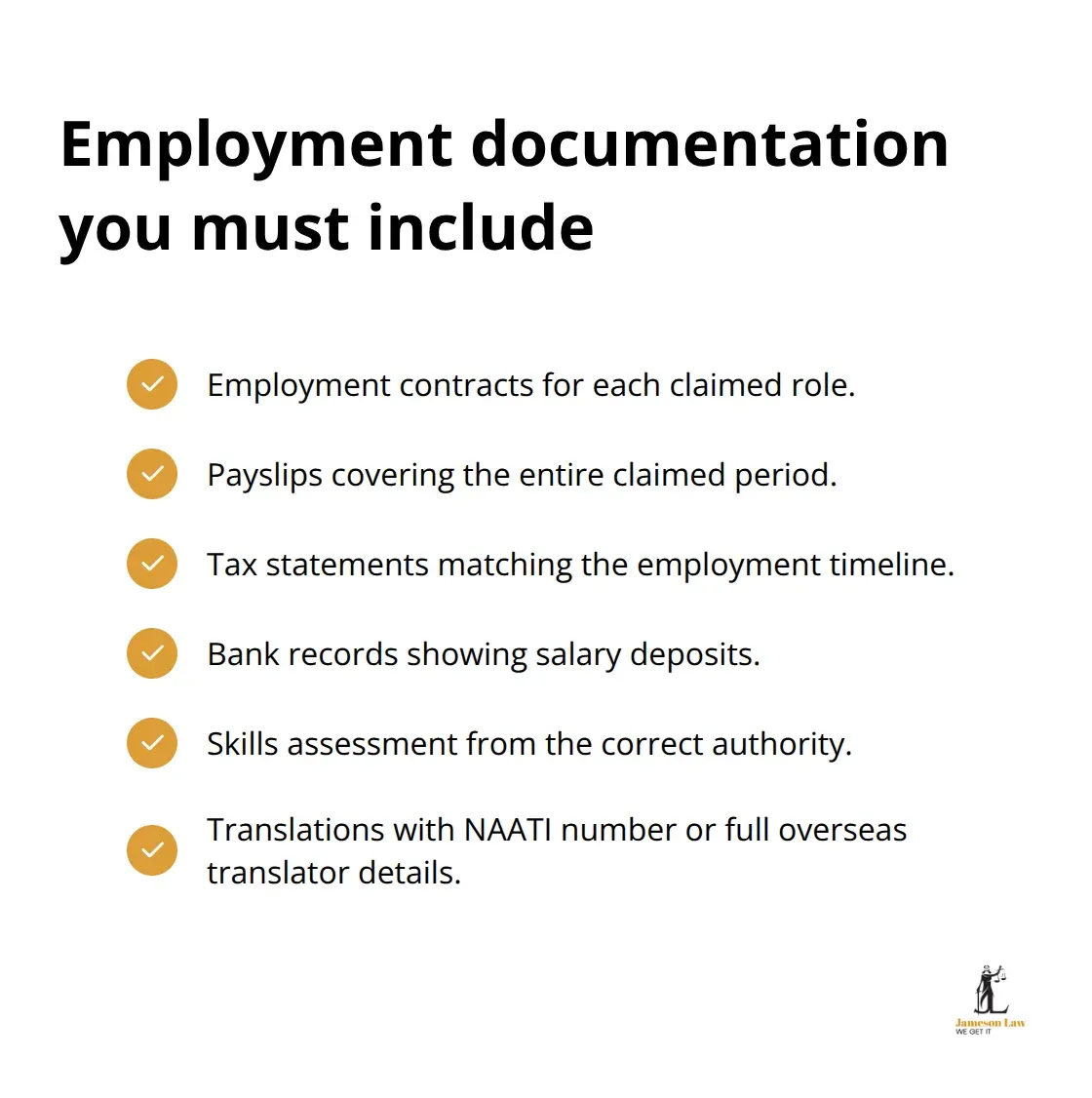
Employment history documentation separates successful applications from failed ones. You need employment contracts, payslips spanning your claimed work period, tax statements, and bank records showing salary deposits. The department wants proof that your actual duties matched the nominated occupation’s requirements.
English Language Proficiency and Supporting Documentation
English language proficiency matters significantly in your overall assessment. Higher scores on tests like IELTS or PTE strengthen your profile and increase your chances of receiving an invitation. Try for a 7.0 or higher across all bands rather than scraping through at 6.0-this substantially improves your competitive position.
Your passport validity, police certificates for every country where you have lived for 12 months in the past decade, and health examination results all form part of the complete picture. Missing any single element delays processing. The department’s data shows that incomplete applications face substantially longer processing times than comprehensive submissions. Translation of non-English documents must include the translator’s NAATI number if done in Australia or full translator details if done overseas (these specifics matter because the department processes thousands of applications and moves quickly through those with no gaps).
Your nomination success depends on how thoroughly you address each requirement before submission. The next section walks through the nomination process step by step, showing you exactly how employers register and how applicants build their documentation packages.
How the Skilled Visa Nomination Works in Practice
Lodging Your Nomination and Obtaining the Transaction Reference Number
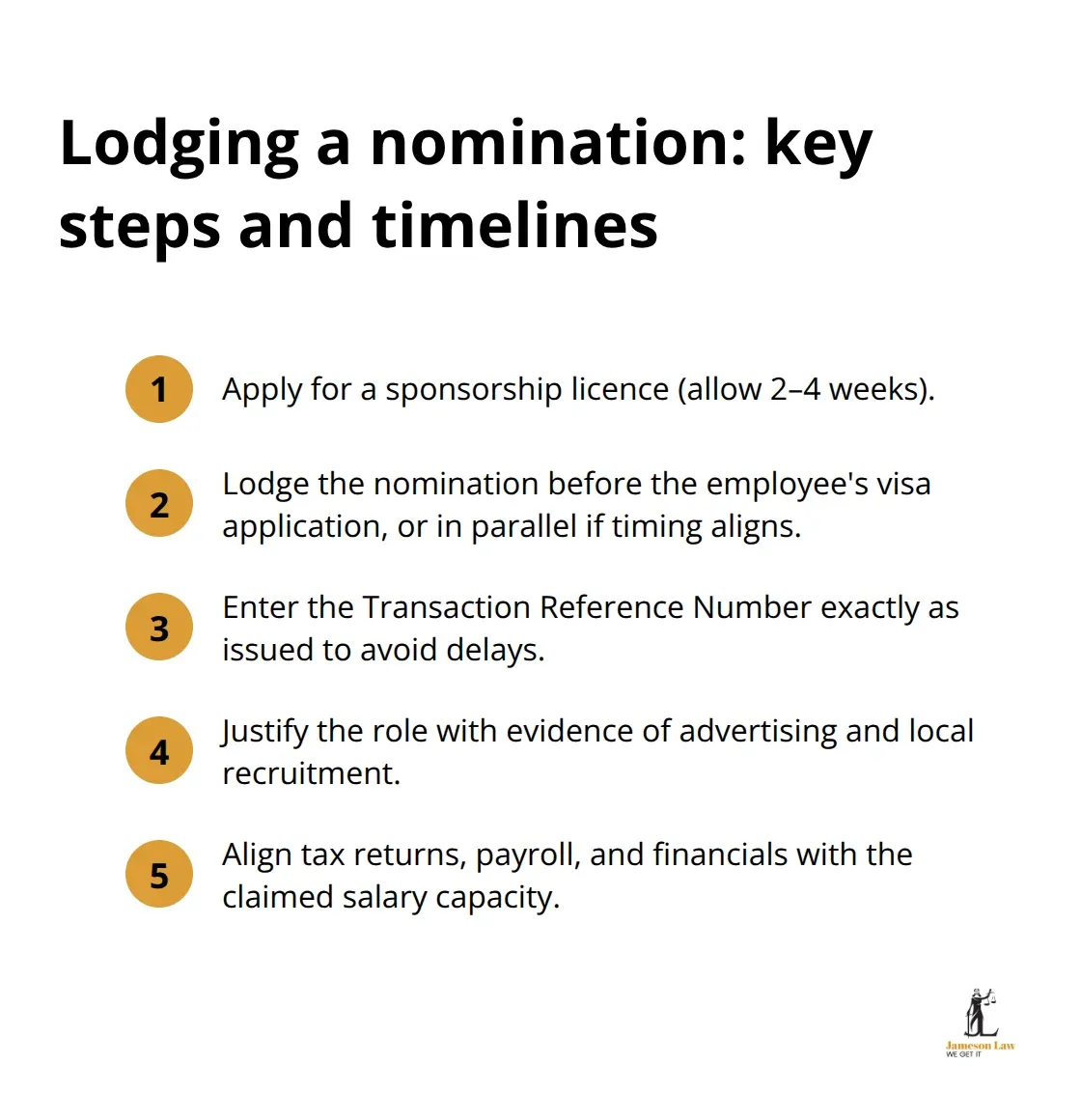
Employers initiate the nomination process by applying for a sponsorship licence through the Australian Department of Home Affairs, a step that takes between 2–4 weeks depending on application completeness. You must lodge your nomination before your employee applies for the visa, though the department can process both simultaneously if timing aligns well. Once approved, the department issues a Transaction Reference Number that your employee must enter exactly as provided into their visa application-transcription errors here cause unnecessary delays.

The nomination itself costs money and requires detailed justification of why you need this specific worker, including evidence that you advertised the position and genuinely attempted to recruit locally first. Your financial records undergo scrutiny to confirm you can actually pay the nominated salary, so align your tax returns, payroll records, and business financials with your sponsorship claims.
Building Your Documentation Package
Documentation forms the backbone of a successful nomination and subsequent visa application. Your employee needs employment history spanning their claimed work experience, supported by contracts, payslips covering the entire period, tax statements, and bank records showing salary deposits-a work reference letter alone will not suffice. Skills assessments from the correct assessing authority must demonstrate their qualifications and experience precisely match the nominated role. Health examinations typically take 1–2 weeks and remain valid for 12 months, so time these strategically. Police certificates for every country where your employee lived for 12 months in the past decade must accompany the application, and all non-English documents require translation with either an Australian NAATI number or full overseas translator details included.
Submitting Complete Applications and Using ImmiAccount
The Australian Department of Home Affairs processes applications faster when documentation is complete and accurate from the start-incomplete applications experience delays of 3–6 months or longer. Your employee should set up an ImmiAccount immediately to track progress, upload documents securely, and update contact details if circumstances change, as the department communicates primarily through this platform. The next section examines the common mistakes that derail applications even when employers and applicants understand the basic requirements.
What Derails Skilled Visa Applications
Incomplete Employment Documentation
Skilled visa applications fail not because applicants lack eligibility, but because they submit incomplete documentation or claim experience they cannot prove. The Australian Department of Home Affairs processes thousands of applications monthly, and incomplete submissions move to the back of the queue. A missing payslip, an employment contract that fails to specify your exact duties, or a skills assessment from the wrong assessing body stops your application immediately. Applicants who invest months preparing their nomination then rush the final documentation stage and lose everything. The department’s processing times stretch from weeks into months when applications lack detail.
Your employment history documentation must cover every position you claim, with contracts and payslips spanning the entire period stated in your skills assessment. If your nomination states you worked as a software developer for five years but your payslips only cover three years, the department rejects the nomination outright. Tax statements and bank records showing salary deposits corroborate your employment claims independently.

A reference letter from your employer carries minimal weight without supporting financial documentation. Many applicants believe a generic reference stating they worked in the role for X years suffices, but the department wants proof embedded in official records.
Skills Assessment and Occupational Alignment
Your skills assessment must align precisely with your nominated occupation and your actual work experience. An assessment from an incorrect assessing authority or one that fails to match your claimed duties creates immediate grounds for refusal. Check which assessing body handles your occupation before you lodge anything, as switching assessors midway through your application wastes months. The correct assessing authority for your occupation determines whether your assessment holds weight with the department.
English Language Proficiency and Test Timing
English language proficiency scores below 7.0 across all bands significantly reduce your competitiveness in the invitation process. Applicants targeting a 6.0 minimum place themselves at a disadvantage when competing against candidates who scored 7.5 or higher on IELTS or PTE. Higher scores strengthen your overall points tally and improve invitation chances substantially. Try to take your English test when you have completed your skills assessment and employment documentation package, so you can lodge everything simultaneously. If you test early in your application journey, you might need to retake the exam if scores expire or if you want to improve your points.
Passport, Police Certificates, and Health Examinations
Your passport validity period cannot expire before your visa grant, and the department requires police certificates for every country where you lived for 12 months in the past decade. Applicants frequently overlook countries they visited briefly or assume short-term stays do not require certificates, then face delays when the department requests missing documentation. Non-English documents must include either an Australian translator’s NAATI number or full overseas translator details, and applicants who provide translations without these identifiers force the department to request resubmissions.
Health examination results remain valid for 12 months, so time your medical appointment strategically to align with your application submission. Rushing through documentation or submitting partial packages costs you months in processing delays that could have been avoided with careful upfront preparation. The department processes applications faster when documentation is complete and accurate from the start-incomplete applications experience delays of three to six months or longer.
Final Thoughts
Skilled visa nomination requirements demand precision from both employers and applicants, and the difference between success and rejection often comes down to documentation completeness and accurate skills assessments. Employers who verify sponsorship eligibility upfront, maintain meticulous financial records, and lodge nominations with thorough supporting evidence move through the process efficiently. Applicants who gather employment documentation before submission, obtain assessments from the correct assessing authority, and achieve higher English language proficiency scores strengthen their competitive position substantially.
The Australian Department of Home Affairs processes applications faster when documentation arrives complete and accurate from the start, while incomplete submissions experience delays stretching months longer than comprehensive packages. If you’re an employer considering sponsorship, verify your licence eligibility and financial capacity now rather than discovering obstacles mid-application. If you’re an applicant, start gathering employment contracts, payslips, and tax statements immediately while arranging your skills assessment and English language test.
We at Jameson Law understand that skilled visa nomination requirements vary by visa subclass, state, and occupation, and our immigration law team has guided hundreds of employers and applicants through this process successfully. We provide tailored strategies that align your circumstances with the most suitable visa pathway and help you avoid the preventable errors that derail applications. Contact Jameson Law today to discuss your skilled visa strategy and move forward with confidence.