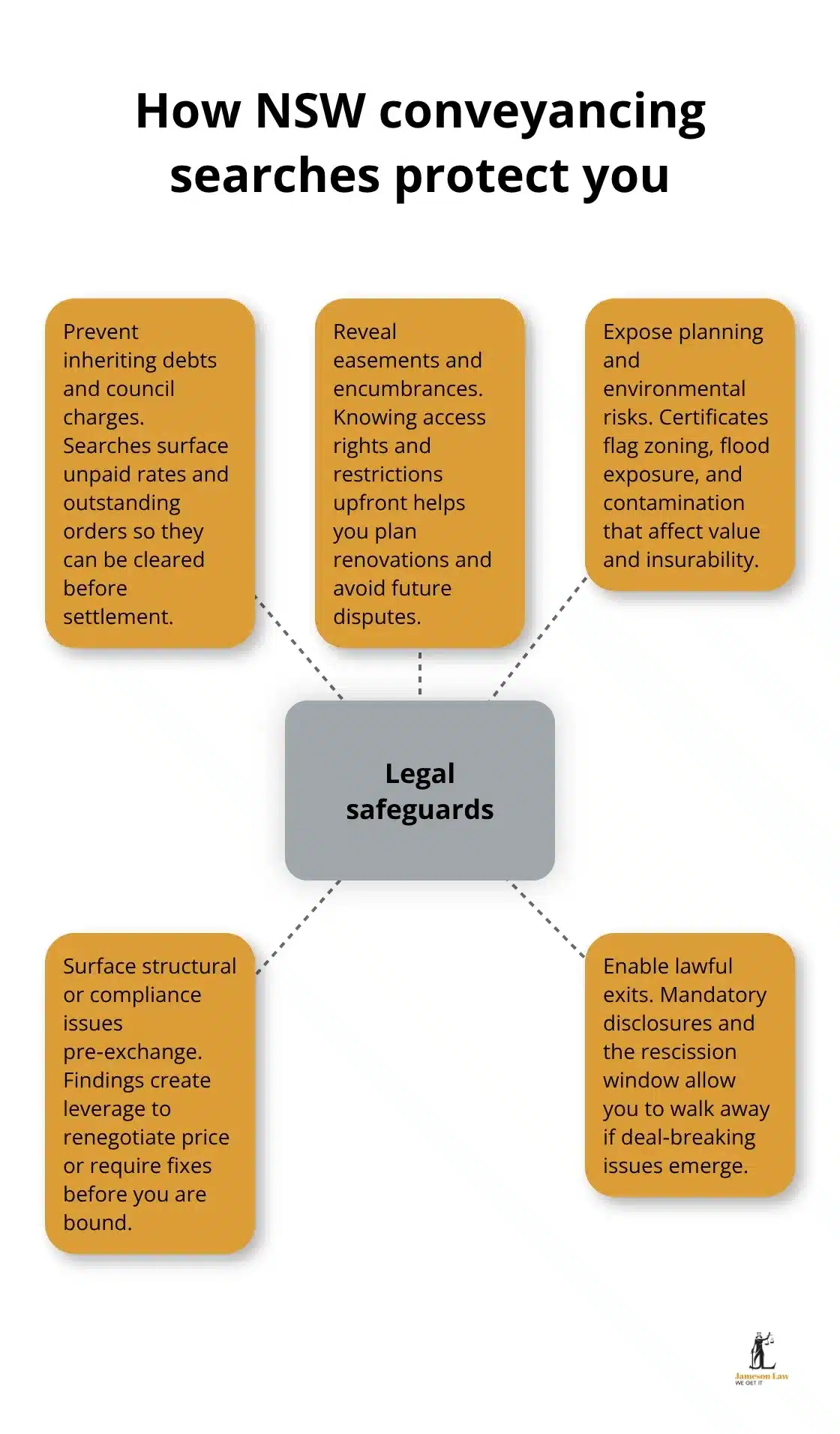
Buying a home in NSW involves more than just viewing properties and making an offer. Conveyancing searches NSW are your first line of defence against inheriting someone else’s problems, from hidden debts to structural issues.
At Jameson Law, we’ve seen countless buyers skip or rush through these searches, only to discover expensive surprises after settlement. The good news is that understanding what to check takes far less time than dealing with the fallout of missing something critical.
What Conveyancing Searches Actually Do
Conveyancing searches uncover what’s really attached to a property before you commit your money. They reveal ownership details, outstanding debts, easements, planning restrictions, environmental hazards, and structural issues that won’t show up during a property inspection. In NSW, these searches are not optional extras-they protect you against inheriting liabilities from the previous owner. The Conveyancing (Sale of Land) Regulation 2022 mandates that certain searches, particularly the Section 10.7 Planning Certificate from your local council, must be attached to the contract before exchange. Without these searches, you’re buying blind. We’ve seen buyers discover after settlement that a property sits in a flood zone, has an unregistered easement allowing neighbours access across their land, or carries outstanding council rates they’re now responsible for. The financial impact ranges from thousands to hundreds of thousands of dollars depending on what emerges too late.

Why NSW Law Makes These Searches Mandatory
NSW law requires conveyancers and solicitors to conduct specific searches before contracts are exchanged. The Section 10.7 Planning Certificate must be provided by the seller and attached to the contract; if it’s missing at exchange, you have 14 days to rescind the contract without penalty. A title search through NSW Land Registry Services costs between $20 and $100 and reveals the registered owner, lot and plan details, easements, covenants, mortgages, and caveats. Section 603 rates certificates from your local council show outstanding rates and charges for the current year. Water and drainage diagrams from Sydney Water or Hunter Water cost around $30 and map private sewer lines-essential before any renovations. For strata properties, the Strata Schemes Management Act 2015 requires buyers to receive at least 14 days’ written notice before paying standard levies, making strata reports (costing $300 to $600) absolutely necessary for understanding your financial obligations. These aren’t bureaucratic hurdles; they’re legal safeguards designed to give you time to walk away or renegotiate if problems emerge. The 14-day rescission window after exchange exists precisely because mandatory searches sometimes reveal deal-breaking issues.
How Searches Protect Your Investment Before It’s Too Late
Building and pest inspections aren’t legally required, but roughly 26% of buyers discover problems after purchase that professional inspections would have caught beforehand. Asbestos in insulation or roofing on properties built before 1990 is a genuine hazard that professional inspections identify. Easements on your title can restrict where you renovate, fence, or extend-discovering this after settlement leaves you with no recourse. Environmental contamination searches flag whether the land was previously used for industrial purposes or other high-risk activities. Outstanding council orders or compliance issues discovered during searches give you leverage to renegotiate the price before exchange; post-settlement, you’re liable. Lenders and mortgage brokers may refuse financing based on strata reports, flood zone designations, or building defects, so addressing these findings before exchange prevents financing collapse.
The Role of Professional Conveyancers in the Search Process
A conveyancer coordinates all searches, interprets the technical language, and flags negotiable issues for you to address with the seller’s conveyancer before you’re legally bound. Starting the search process early-ideally ordering a title search before your contract is prepared-gives you time to uncover red flags and make informed decisions rather than rushing through searches under time pressure. Your conveyancer will order the title search, review the planning certificate, arrange building and pest inspections, and liaise with your lender to confirm they’ll finance the property based on what the searches reveal. This coordinated approach (rather than handling searches yourself) significantly reduces the risk of missing something important. The next section outlines the essential searches every NSW homebuyer should conduct and what each one reveals about your potential property.
Essential Searches Every NSW Homebuyer Should Conduct
Title Search: Your Foundation for Ownership Clarity
A title search through NSW Land Registry Services forms the foundation of your property purchase. It costs between $20 and $100 and reveals the registered owner, lot and plan numbers, easements, restrictions on use, covenants, mortgages, and caveats affecting the land. Easements warrant particular attention because they grant others legal rights to access or use part of your property for utilities, drainage, or other purposes. If an easement exists, you cannot fence across it or build over it without consent, which directly impacts your renovation plans and future resale value. Mortgages on title indicate a lender’s interest and must be discharged before settlement; caveats are notices claiming a legal interest that can delay a sale.
Planning and Council Information: Understanding Zoning and Risk
A Section 10.7 Planning Certificate from your local council costs around $67 for a basic version or $168 for a full certificate and reveals zoning, heritage listings, flood zones, road widening plans, development applications, and contamination risks. This certificate is mandatory under the Conveyancing (Sale of Land) Regulation 2022 and protects you because if it’s missing at exchange, you can rescind within 14 days. Section 603 rates certificates show outstanding council rates and charges for the current year, preventing surprises after settlement. Water and drainage diagrams from Sydney Water or Hunter Water cost approximately $30 and map private sewer lines on your property-essential before any renovations or extensions because private sewers can restrict where you build or upgrade services.
Environmental and Building Assessments: Identifying Hidden Hazards
Environmental contamination searches identify whether the land was previously used for industrial purposes, dry cleaning, service stations, or other high-risk activities that could affect soil quality or pose health risks. Building and pest inspections are optional but reveal structural defects, asbestos in properties built before 1990, roof condition, pest infestations, and building code violations. Approximately 26% of buyers discover problems after purchase that professional inspections would have identified beforehand. For strata properties, a strata report costs $300 to $600 and discloses building condition, maintenance backlogs, special levies, litigation history, and insurance coverage.
Strata Properties: Understanding Your Financial Obligations
Under the Strata Schemes Management Act 2015, you must receive at least 30 days’ written notice before paying standard levies, making this timeline critical when you budget and negotiate. Lenders and mortgage brokers may refuse financing based on strata issues, flood designations, or building defects, so you need to identify these problems before exchange to prevent financing collapse. The costs of these searches add up quickly, but skipping them leads to far greater expense. Order your title search early, before your contract is prepared, so you and your conveyancer have time to interpret findings and renegotiate terms with the seller’s conveyancer if necessary. Once you understand what each search reveals, the next step involves recognising the common issues that emerge during this process and how they affect your purchase decision.
Common Issues Discovered During Conveyancing Searches
Outstanding Rates and Council Orders
Outstanding council rates and orders transfer directly to you at settlement, making them far more common than most buyers realise. Section 603 rates certificates from your local council reveal whether the seller owes money for rates, water charges, or other council services for the current financial year. If the seller has not paid, you become liable after settlement, which means you fund their debt. Council orders differ but carry equal seriousness-these formal notices require the owner to fix structural defects, remove unauthorised additions, or comply with building codes. A property with an active council order signals that structural or compliance work needs completion, and lenders often refuse to finance properties with unresolved orders. Your conveyancer obtains the rates certificate early and confirms with the seller’s conveyancer that all outstanding amounts will be cleared from the sale proceeds before settlement. If orders exist, your conveyancer negotiates a price reduction or requires the seller to obtain a compliance certificate proving the work is finished before you exchange contracts. Waiting until settlement to discover these issues leaves you with no leverage and full financial responsibility.
Easements and Covenants on Title
Easements and covenants on title frequently catch buyers off guard because they restrict how you use your land. An easement grants someone else the legal right to cross, access, or use part of your property-common examples include drainage easements allowing councils to maintain pipes beneath your land, or utility easements for electricity, water, or telecommunications. If an easement exists across your backyard, you cannot build a fence, shed, or extension across that easement without consent from the beneficiary (which is rarely given). Covenants are conditions historically attached to the land that restrict use-a covenant might prohibit commercial activity, limit the type of dwelling you can build, or require you to maintain a property to certain standards. These restrictions bind future owners indefinitely.
Environmental Hazards and Flood Risk
Environmental hazards and flood risk emerge from Section 10.7 Planning Certificates and environmental searches, and they directly impact property value and insurability. A property in a designated flood zone faces higher insurance premiums, potential difficulty obtaining a mortgage, and reduced resale appeal. Environmental contamination from historical industrial use can render soil unsuitable for vegetable gardens or childcare facilities and may require expensive remediation. These findings appear in planning certificates and environmental reports, which your conveyancer reviews before you exchange contracts.
Structural Defects and Building Code Violations
Structural defects and building code violations uncovered during building inspections reveal costly problems-asbestos in insulation, roof deterioration, foundation movement, or unpermitted renovations without proper approvals. Approximately 26% of buyers discover significant problems after purchase that inspections would have caught beforehand. Order all searches before exchanging contracts, review findings with your conveyancer, and use any issues to renegotiate price or require remediation before you are legally bound.
Final Thoughts
Conveyancing searches NSW protect your investment by surfacing problems before you commit your money. The title search, planning certificate, rates certificate, water diagrams, and building inspection form a complete picture of what you’re buying and what liabilities come with it. Without these searches, you risk inheriting outstanding debts, discovering easements that restrict your renovation plans, or learning too late that the property sits in a flood zone or carries unresolved council orders.
Starting the search process early gives you and your conveyancer time to interpret findings, negotiate with the seller’s conveyancer, and make informed decisions rather than rushing under time pressure. Approximately 26% of buyers discover significant problems after purchase that professional inspections would have caught beforehand, making the upfront cost of searches far cheaper than post-settlement repairs or disputes. Lenders and mortgage brokers may refuse financing based on strata issues, flood designations, or building defects, so identifying these problems before exchange prevents financing collapse and wasted time.
We at Jameson Law recommend engaging a qualified conveyancer to coordinate all searches, interpret technical language, and flag negotiable issues before you’re legally bound. Your conveyancer orders the title search, reviews the planning certificate, arranges building and pest inspections, and liaises with your lender to confirm they’ll finance the property based on what emerges. Contact Jameson Law to discuss your needs and safeguard your property purchase from start to settlement.