Buying property in Australia involves more than just signing paperwork. Property settlement conveyancing is a complex legal process where mistakes can cost you thousands of dollars.
At Jameson Law, we have seen firsthand how proper guidance makes the difference between a smooth transaction and a costly nightmare. This guide walks you through what you need to know to protect your interests through to settlement day.
What Conveyancing Actually Means for Your Property Purchase
Conveyancing transfers property ownership from seller to buyer through a strictly regulated legal process in Australia. This process involves property searches, contract review, title verification, and settlement coordination.
The settlement period typically runs 4 to 6 weeks, though you can negotiate this timeframe with the seller depending on your circumstances. According to industry data, the most common settlement duration nationwide is two months, with New South Wales buyers predominantly adhering to the standard 42-day (six-week) period.
Your conveyancer acts as your legal shield, protecting you from title defects, financial traps, and contractual errors that could derail your purchase or cost you thousands after settlement.
The Settlement Timeline and What Happens
Settlement day marks when the legal transfer actually occurs. Your conveyancer prepares essential documents including the Transfer of Land, stamp duty calculations, and mortgage discharge authorities if refinancing.
The settlement statement shows all adjustments—council rates, water, body corporate levies—apportioned between buyer and seller based on who owned the property during each period. If the seller prepaid the full year’s rates, you reimburse them for your portion from settlement onward.
The Final Inspection Before Settlement
A final property inspection should occur the day before or the morning of settlement to confirm the property’s condition matches the contract and that essential systems work. You should check that all agreed inclusions remain in the property and that no damage has occurred since contracts were exchanged. Taking time for this inspection prevents disputes and gives you grounds to delay settlement if significant issues emerge.
What Can Go Wrong in Property Settlement
Title Defects That Stop Settlement in Its Tracks
Property settlement involves multiple moving parts, and when one fails, the entire transaction stalls. Title defects rank among the most serious problems that emerge during conveyancing.
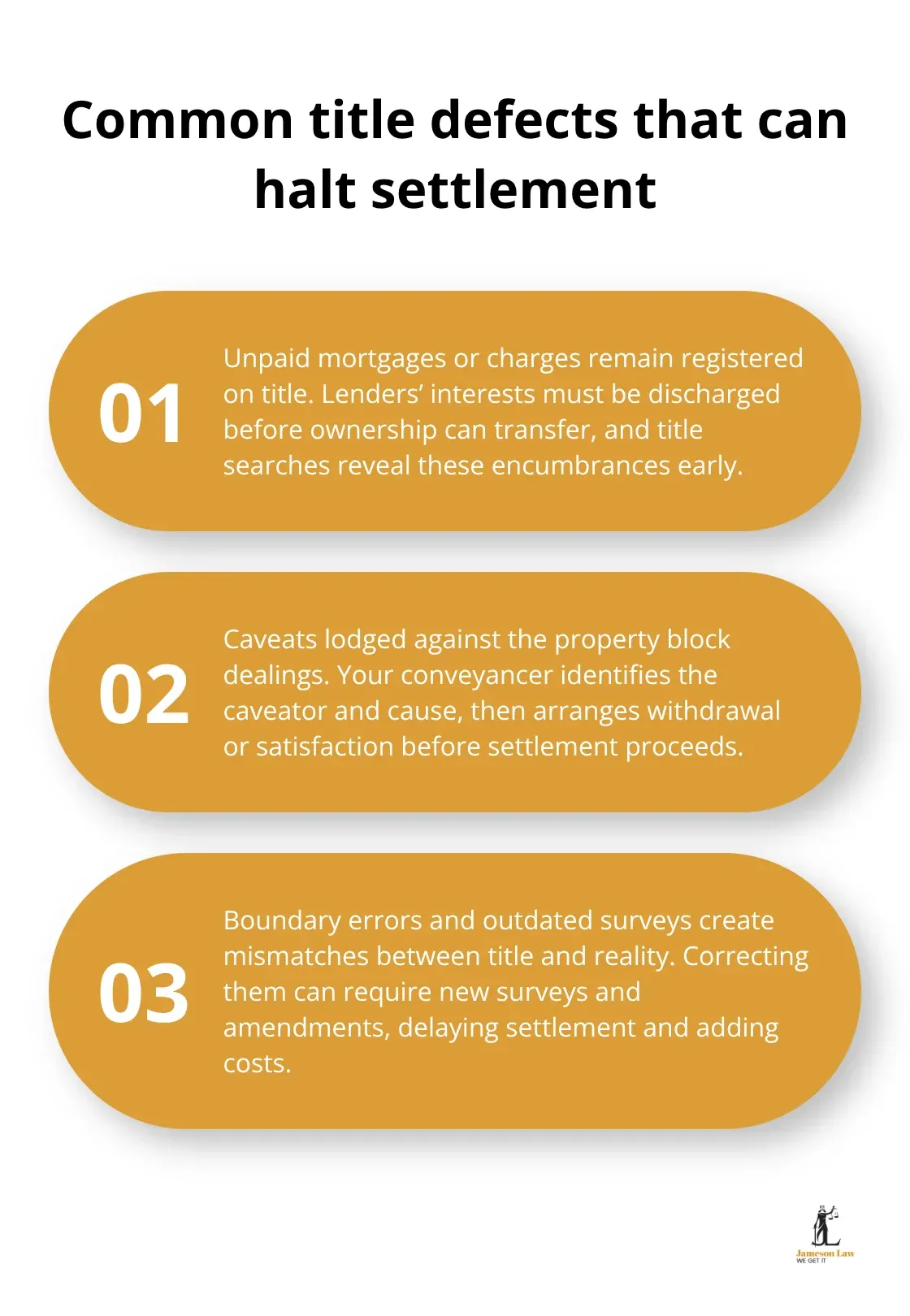
A defect occurs when the seller lacks clear ownership to transfer to you—this might involve unpaid mortgages, caveats lodged against the property, or incorrect boundary descriptions on the Certificate of Title.
Property searches conducted by your conveyancer uncover these issues before settlement, not after you have taken possession. If a search reveals a caveat, your conveyancer must determine who lodged it and work to have it removed before settlement proceeds.
Financial Pitfalls That Catch Buyers Off Guard
Financial pitfalls often stem from buyers who fail to understand their obligations before signing contracts. Stamp duty (transfer duty) calculations vary significantly by state and property value. Your conveyancer must calculate this accurately because underestimating creates a critical shortfall at settlement.
Contract conditions matter equally. Some contracts include special conditions requiring pest inspections or finance approval within 14 days. If you fail to meet these deadlines, the seller can legally withdraw and keep your deposit.
Delays That Cost Both Parties Money
Delays happen most often because buyers haven’t arranged their finance properly or the discharging banks fail to communicate effectively. Settlement delays trigger holding costs for both parties; if you are renting while waiting to settle, each extra week costs money, and the buyer may also be hit with penalty interest.
How Your Conveyancer Protects Your Interests
Property Searches That Reveal Hidden Problems
The moment you instruct a conveyancer, they conduct property searches that uncover liabilities associated with the property. These searches uncover problems before you are legally committed. Your conveyancer then reviews the contract line by line, identifying special conditions that might trap you—such as finance clauses that give you inadequate time to arrange a loan.
Managing the Documentation Trail via PEXA
In 2026, almost all NSW property settlements are conducted digitally. Once the contract is agreed, your conveyancer manages the documentation trail electronically via PEXA (Property Exchange Australia).
They coordinate with the seller’s legal representative to obtain discharge documents for existing mortgages and verify that boundary descriptions match reality. On settlement day, PEXA securely handles the electronic exchange of funds and instantly lodges the Transfer of Land with the title office, confirming you as the registered owner within minutes.
Final Thoughts
Property settlement conveyancing requires extreme attention to detail and proactive communication at every stage. Your conveyancer identifies risks early, protects you from title defects and financial pitfalls, and coordinates with the banks and the vendor’s legal team via PEXA to keep settlement moving forward on schedule.
At Jameson Law, we understand the complexity of property settlement conveyancing and the real consequences when things go wrong. Our conveyancing team has the experience to spot problems before they derail your purchase and the expertise to navigate the documentation that protects you.
If you are buying or selling property in New South Wales, contact Jameson Law to discuss your conveyancing needs and move toward settlement day with absolute confidence.