De facto relationships carry the same legal weight as marriage in Australia, yet many people don’t understand their rights when separation occurs. Property disputes, child support disagreements, and financial settlements can become complicated fast without proper guidance.
A de facto separation lawyer helps you navigate these complexities. At Jameson Law, we’ve guided countless clients through de facto separations with practical solutions tailored to their unique circumstances.
What De Facto Status Actually Means?
Legal Recognition Under Australian Law
Under Australian law, a de facto relationship exists when two people live together on a genuine domestic basis without being married. Your rights to property, maintenance, and child support receive equal protection under the Family Law Act 1975.
The Federal Circuit and Family Court treats de facto separations identically to divorces when determining financial and parenting orders. Proving the relationship was “genuine and domestic” is key.
How Courts Assess De Facto Status
Courts examine whether you shared a sexual relationship, financial interdependence, and a commitment to a shared life. Registration under state law (e.g., the NSW Relationships Register) can strengthen your claim and may bypass the requirement to prove a 2-year duration.
Key Differences from Marriage
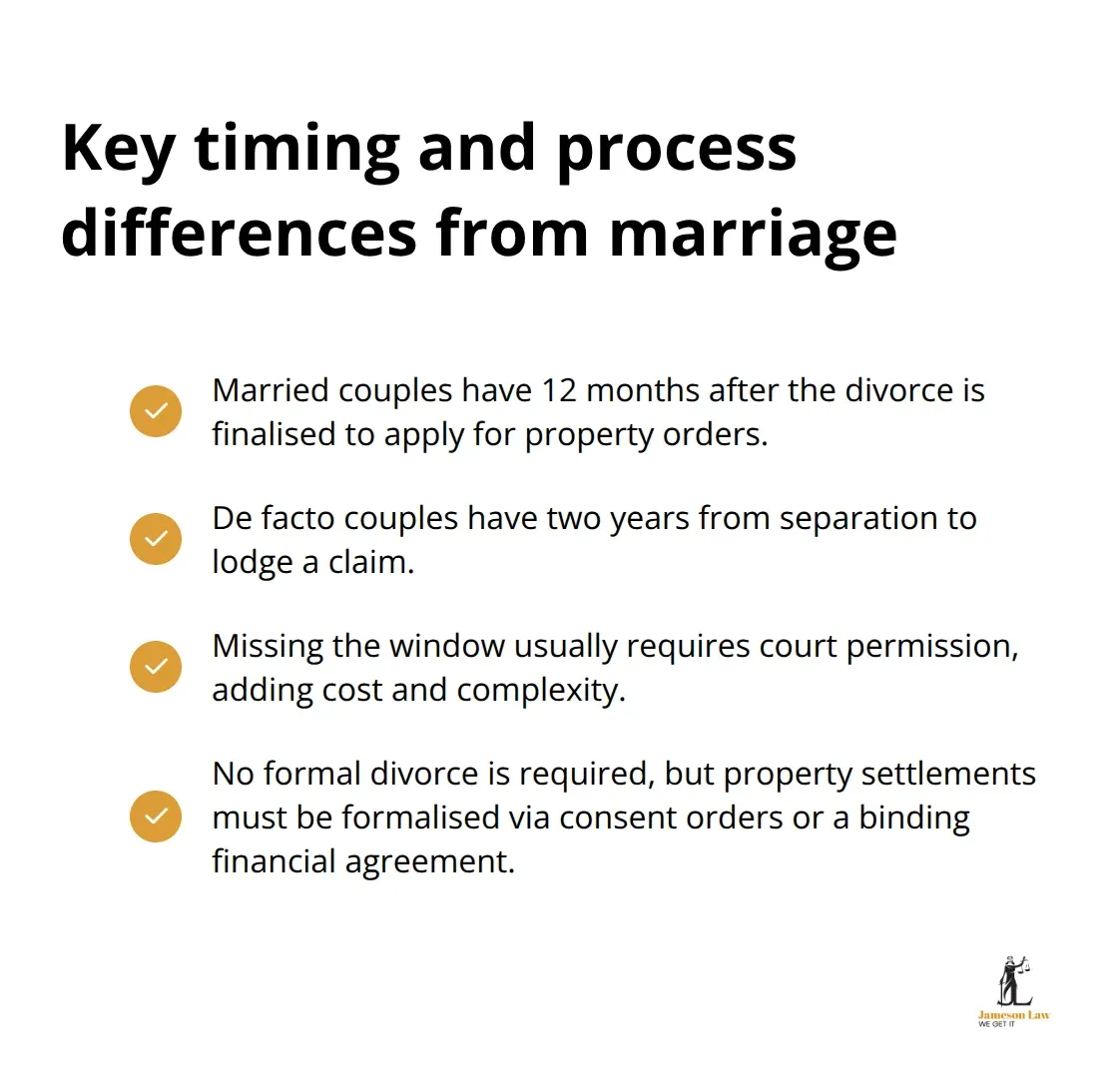
The critical difference is timing. Married couples have 12 months from divorce to apply for property orders. De facto couples have two years from separation. This window is absolute. Missing it means requesting the Court’s permission, which is difficult and costly.
How Property and Money Get Divided After De Facto Separation?
The Four-Step Framework Courts Use
When a de facto relationship ends, the property settlement process follows a four-step framework:
- Identify Assets & Liabilities: Including the family home, superannuation, and debts.
- Assess Contributions: Financial (wages) and non-financial (homemaking/parenting).
- Evaluate Future Needs: Factors like age, health, and care of children.
- Just and Equitable: Ensuring the final split is fair.

Why Full Disclosure Protects Your Interests
The process hinges on full financial disclosure. If either party hides assets, the settlement becomes vulnerable to challenge. Documenting assets brought into the relationship helps distinguish initial contributions.
Meeting the Two-Year Deadline
You must lodge a claim within two years of separation. The separation date carries significant weight as it determines which assets fall within the pool. If you agree on division, formalise it through Consent Orders or a Binding Financial Agreement to protect yourself legally.
Resolving Disputes Without Court
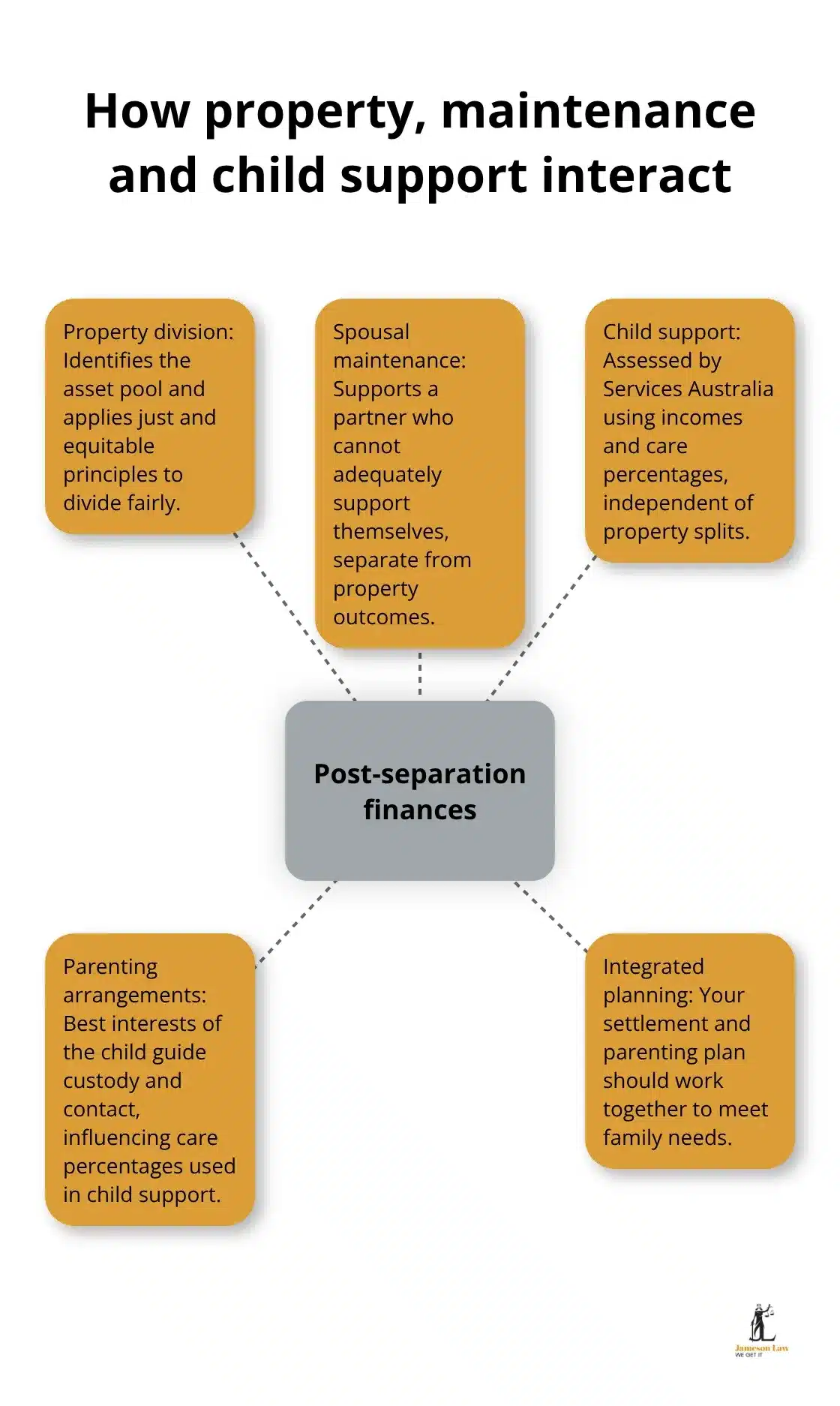
Spousal maintenance applies if one partner cannot support themselves. Child support is assessed separately through Services Australia. Understanding how these elements interact positions you to negotiate a comprehensive settlement.
What Derails De Facto Separations?
Asset Disputes and Hidden Property
Asset disputes dominate because ownership boundaries are often unclear. Superannuation splitting is a common area of confusion. Hidden assets, like crypto or undisclosed accounts, can derail negotiations.
Custody Disagreements and Parenting Leverage
Using property disputes as leverage in parenting negotiations backfires. Courts assess these matters separately based on the best interests of the child. Attempting to trade parenting time for financial advantage damages your credibility.
Final Thoughts
De facto separations demand specialist legal guidance. The stakes are high, involving interconnected decisions about property, maintenance, and children. A de facto separation lawyer brings clarity to situations that feel overwhelming.
Fair outcomes happen when you have someone in your corner who understands both the law and practical realities. Contact Jameson Law to discuss your situation and ensure your rights are protected.