Sponsoring someone to work or live in Australia involves strict requirements that many people get wrong. At Jameson Law, we’ve seen countless applications delayed because sponsors didn’t understand the rules from the start.
This guide breaks down Australia sponsor visa requirements in plain language, covering what you need to know before you apply for an employer-sponsored visa.
How Sponsor Visas Work in Australia?
A sponsor visa is an employer-backed pathway for skilled workers. The sponsor (your employer) nominates you for a role, and the Department of Home Affairs assesses both the sponsor’s credentials and your suitability. This isn’t a visa you can obtain independently.
Permanent and Temporary Pathways
Australia offers three primary employer-sponsored work visa pathways:
- Employer Nomination Scheme (Subclass 186): Provides permanent residency if an approved employer nominates you.
- Temporary Skill Shortage visa (Subclass 482): Addresses labour shortages and allows up to four years of work.
- Skilled Employer Sponsored Regional (Provisional) visa (Subclass 494): A regional option that replaced the older 187 scheme.
Sponsor Obligations and Common Failures
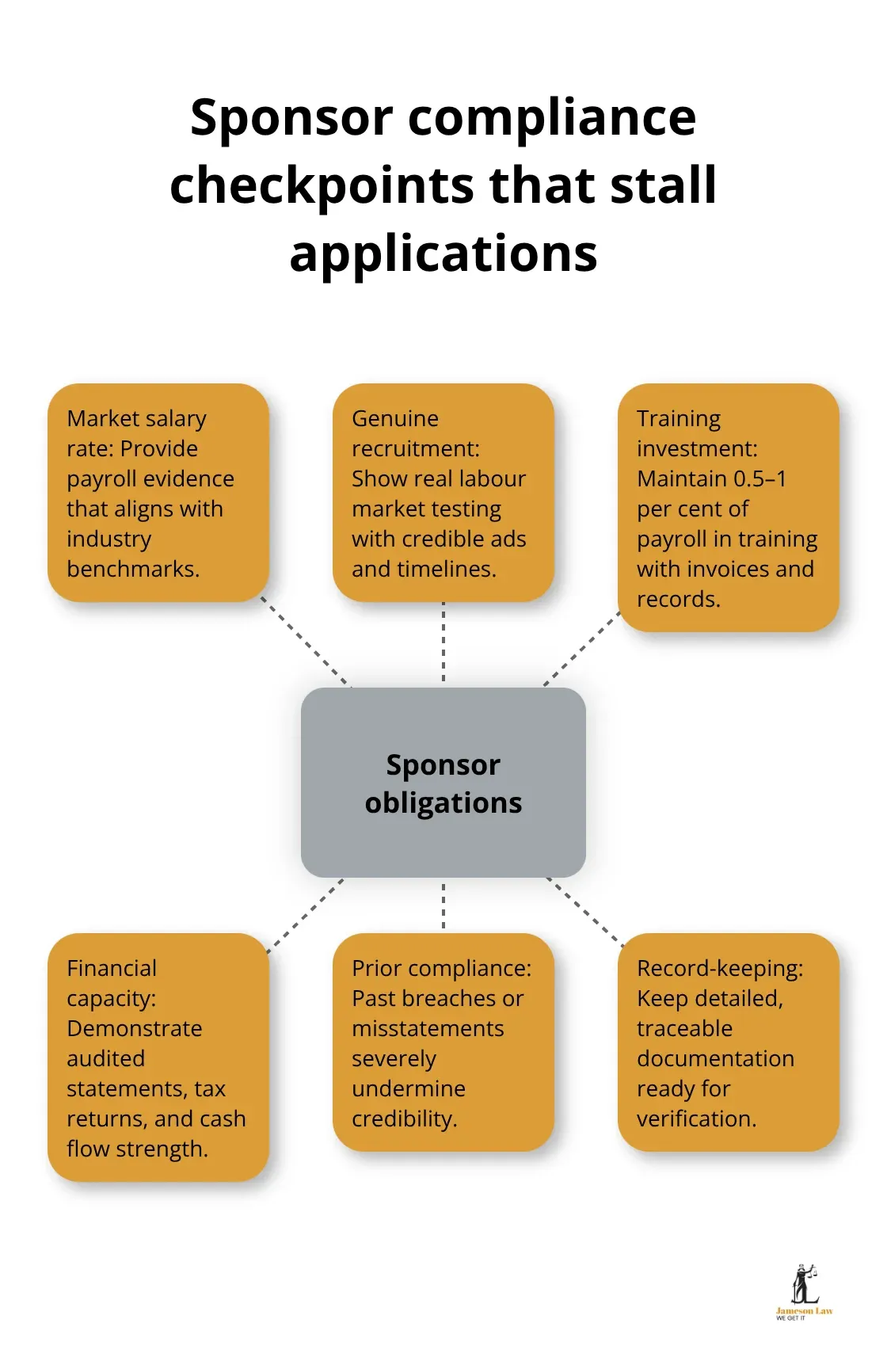
Sponsors face genuine scrutiny. They must demonstrate financial capacity and pay the Skilling Australians Fund (SAF) levy. This levy replaced the old training benchmark (1% of payroll). It is a specific fee based on business turnover and visa duration.
How to Move Through Sponsorship Step by Step?
Sponsorship approval demands precision. Applications stall when sponsors skip steps or submit incomplete documentation.
Identify Your Visa Subclass First
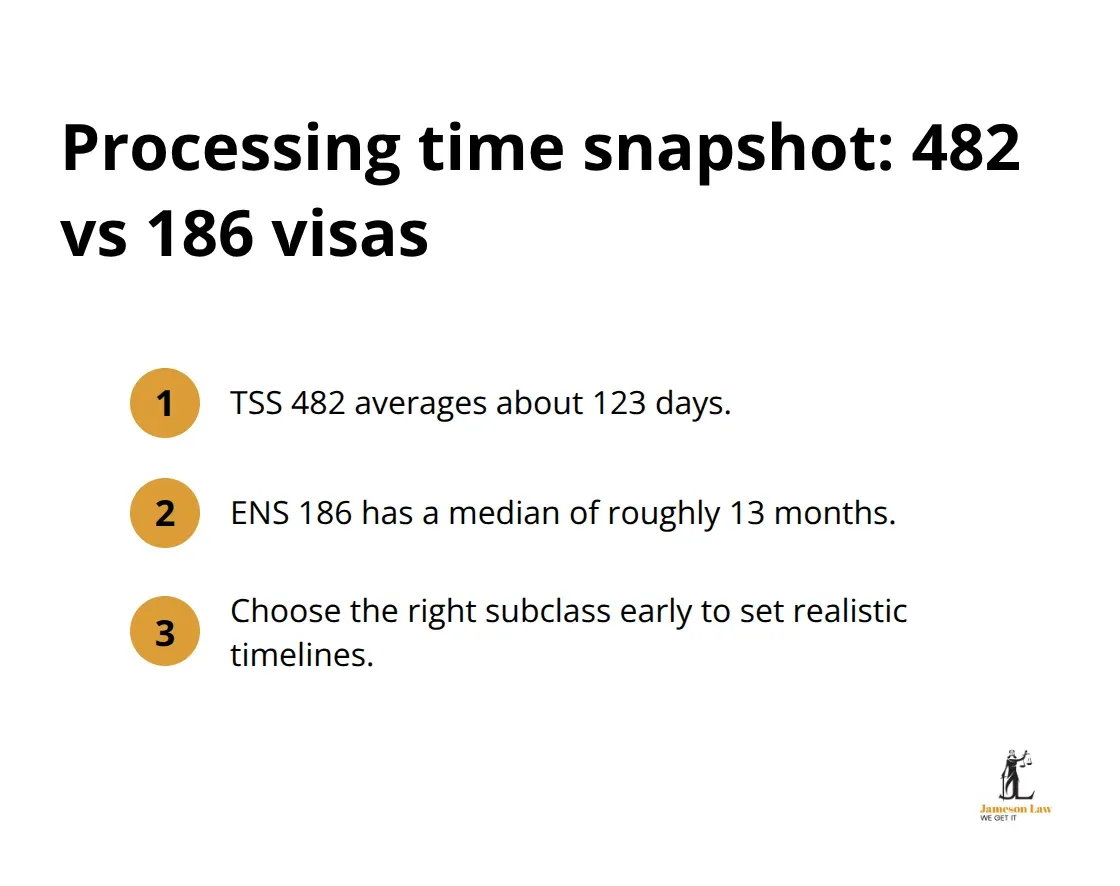
Start by identifying your visa subclass. The Subclass 482 visa typically processes in 3–6 months, while the permanent 186 visa often takes 12–18 months. Knowing this helps you plan realistic timelines.
Prove Your Sponsor Meets Financial and Labour Market Tests
Your sponsor must meet financial capacity requirements. They must also prove they advertised the role to Australian citizens first via Labour Market Testing (LMT). The Department scrutinises job ads and salary offers to ensure they meet market rates.
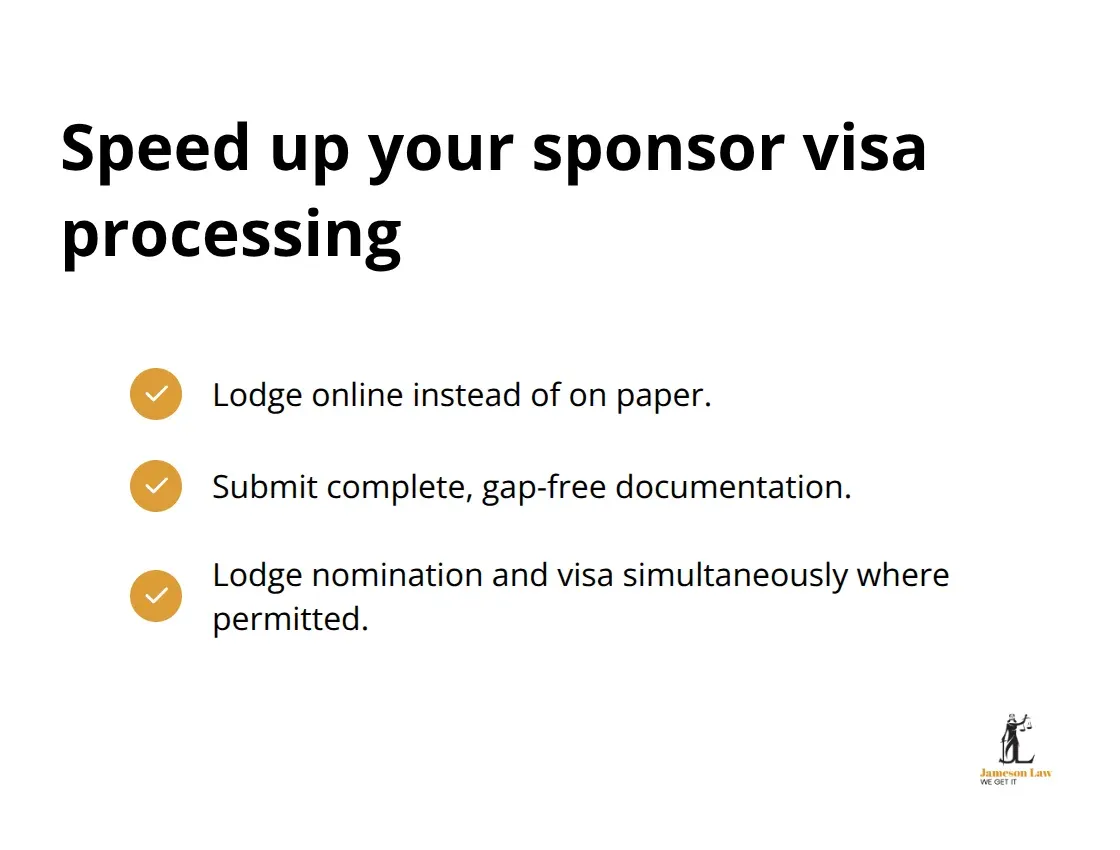
Submit Complete Documentation Online
Lodging online via ImmiAccount streamlines processing. The Department advises simultaneous lodgement of nomination and visa applications where possible.
What Actually Derails Sponsor Visa Applications?
The most damaging mistakes fall into three categories: missing information, underestimating financial obligations, and misunderstanding visa conditions.
Documentation Completeness Determines Application Progress
The Department will not progress your application until every required document is present. Sponsors frequently fail to provide complete financial records or omit SAF levy payments.
Financial Capacity Tests Determine Sponsorship Viability
Sponsors must prove they can genuinely afford to employ you. This means providing tax returns and payroll records. The Department examines profit margins to ensure the business is viable.
Visa Conditions Create Legal Obligations
The Subclass 482 visa restricts you to working for your nominated employer. Changing employers without Department approval constitutes a breach. If you breach conditions, your visa can be cancelled under Section 116 of the Migration Act.
Final Thoughts
Australia sponsor visa requirements demand precision. The pathway hinges on understanding your visa subclass, gathering complete documentation, and ensuring your sponsor meets every obligation, including the SAF levy.
Incomplete applications and financial capacity failures derail viable cases. We at Jameson Law specialise in immigration law and can guide you through this complex process. Contact Jameson Law to discuss your sponsor visa application today.