Australia visa processing times vary dramatically depending on your visa category and application quality. At Jameson Law, we’ve helped hundreds of applicants navigate these timelines and understand what actually affects how long they’ll wait.
The difference between a fast approval and a delayed one often comes down to preparation and knowing the system. This guide breaks down realistic 2026 timeframes and shows you how to avoid common delays.
What Are the Real Processing Times for Each Visa Type?
Skilled Migration Visas Move at Different Speeds
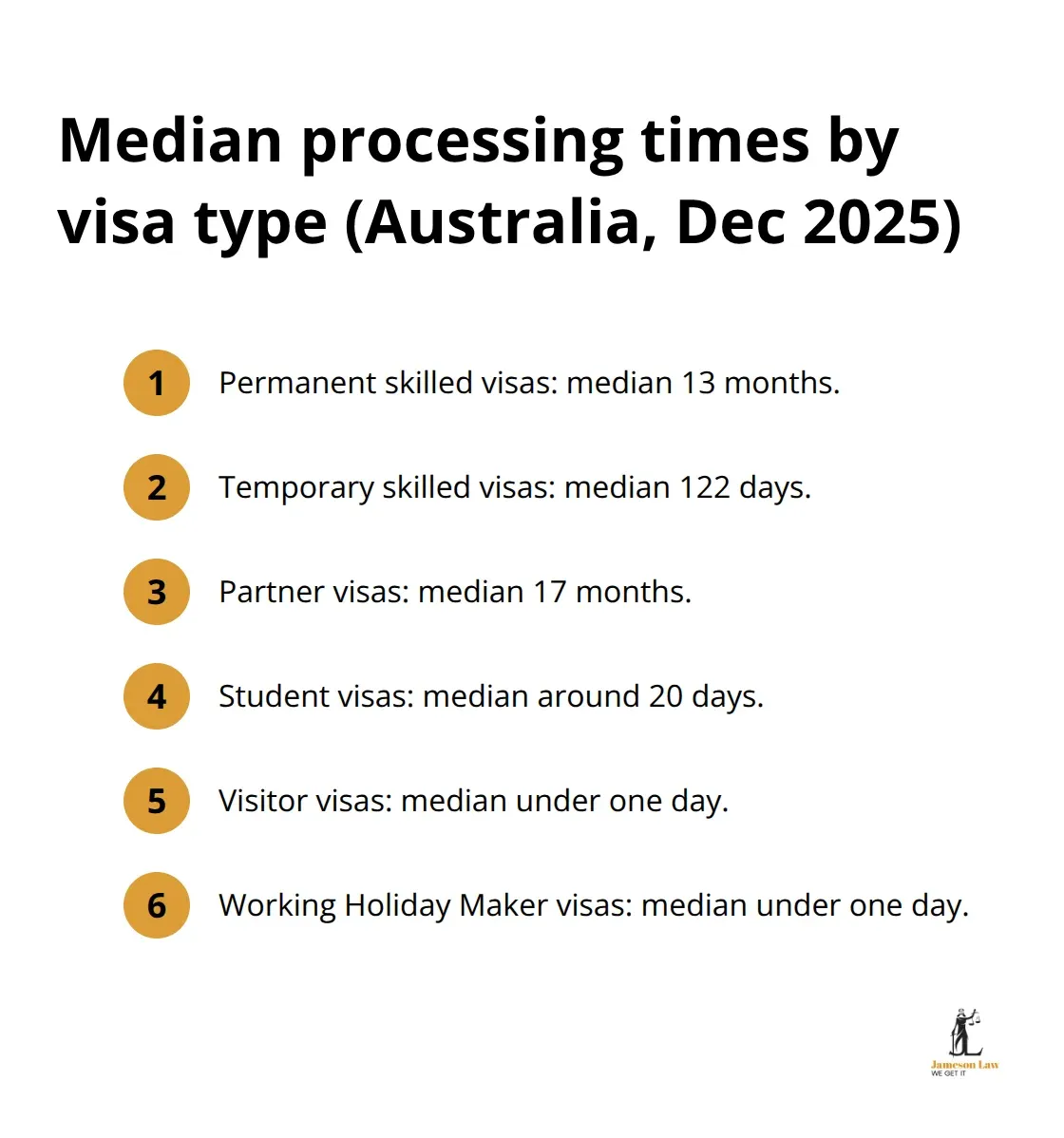
Skilled migration visas take between 6 and 13 months to process, depending on occupation demand and application completeness. The Department of Home Affairs reports a median processing time of 13 months for permanent skilled visas, though this varies significantly based on current Ministerial Directions which prioritise employer-sponsored visas for regional Australia and occupations in healthcare and teaching.
Temporary skilled visas (like the Subclass 482) move faster at a median of 123 days, and recent “Skills in Demand” updates offer fast-track processing for specialist streams in as little as 7 to 21 business days. However, incomplete applications destroy this advantage—submitting all required documents upfront matters more than most applicants realise.
Family and Student Visas Operate on Completely Different Timelines
Partner visas currently sit at a median of 16 to 24 months, with complexity and relationship verification driving extended waits for both onshore (820/801) and offshore (309/100) pathways. Student visas process much faster (around 20 to 35 days median), but under the new Ministerial Direction 115 introduced for 2026, processing is now determined by a “traffic-light” priority system based on your education provider’s capacity. If your university is in the “Red Zone,” you will face slower processing.
Visitor visas represent the exception to processing delays, with median times under one day for subclasses 600, 601, and 651. The gap between visitor visas and skilled or family visas reveals how assessment intensity directly impacts your timeline.
What Actually Slows Down Your Application?
Health checks via approved panel physicians, character assessments, and security verifications add weeks or months depending on whether external agencies respond quickly. Application volume during peak periods compounds delays; early 2026 saw backlogs across student, skilled, and partner categories due to surges in lodgements targeting February–March intakes.
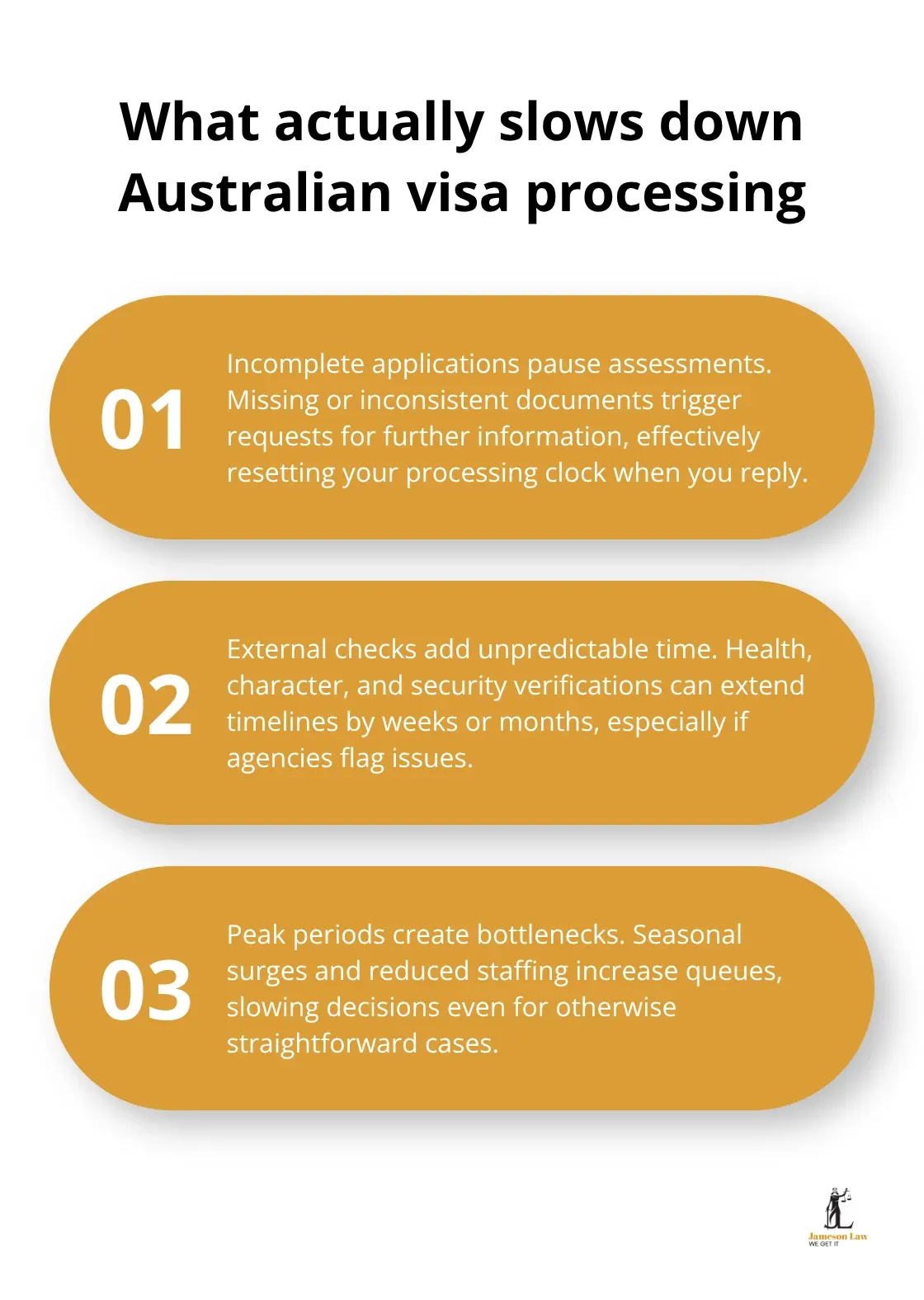
What Really Delays Your Visa Application?
Incomplete Applications Destroy Your Timeline
Incomplete applications represent the single biggest cause of delays across every visa category. When you submit missing documents, the department pauses your assessment, sends you a request, and your processing clock effectively resets. A document submitted on day one versus day 90 means a 90-day delay you created yourself.
External Checks Add Unpredictable Delays
International police clearance certificates and external security assessments can stretch timelines dramatically. Someone with a straightforward employment history moves through these checks in weeks, while someone with multiple countries of residence can wait months.
Peak Periods Create Genuine Bottlenecks
Application volume during peak periods creates genuine delays. The department faces seasonal peaks in July and August for student visas, and November through February for skilled migration. Lodging your application outside peak periods genuinely improves your timeline if you have flexibility.
How to Actually Speed Up Your Visa Application?
Submit Complete Applications on Day One
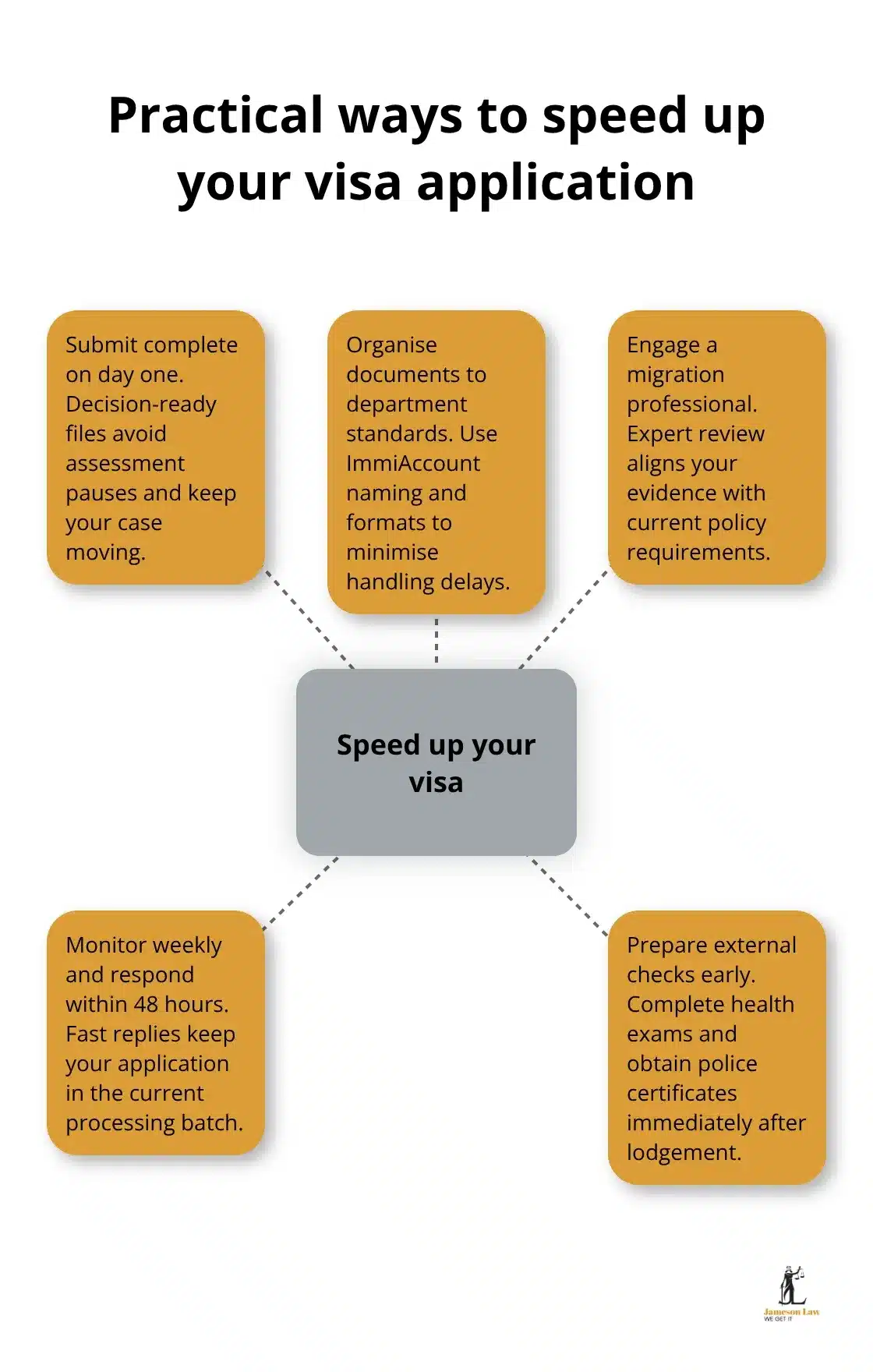
Submit your complete application on day one, not day 60. Organise every document before lodgement: employment letters, qualification certificates, financial records, health assessments, and relationship evidence. Cross-reference each document against the department’s checklist.
Organise Documents in the Format the Department Requires
Use ImmiAccount to upload documents in the exact format and naming structure the department specifies. Poor document organisation forces departmental staff to spend additional time locating information.
Engage Professional Migration Guidance
Professional immigration lawyers understand departmental assessment priorities and documentation standards that most applicants miss entirely. A professional reviews your application before lodgement, identifies gaps, and ensures your documents align with current 2026 policy requirements.
Monitor Your Application Weekly and Respond Promptly
Monitor your ImmiAccount status weekly. The department sends requests for additional information through this portal. The moment you see a request, respond within 48 hours with organised, clearly labelled documents.
Final Thoughts
Australia visa processing times range from under one day for visitor visas to 24 months for partner visas, but application quality determines your actual timeline far more than these median figures suggest. Incomplete documentation and slow responses add months to your wait.
Professional migration guidance identifies gaps before lodgement and positions your application ahead of policy changes that catch most applicants off guard. We at Jameson Law anticipate these changes to protect your timeline. Contact Jameson Law to review your visa strategy and build a realistic timeline for your relocation to Australia.