Sponsoring skilled workers through an employer sponsorship visa NSW is a strategic move for businesses facing talent shortages. The pathway offers clear benefits, but navigating the requirements demands precision from both employers and applicants.
At Jameson Law, we’ve guided countless organisations through this process. This guide breaks down what you need to know to succeed with visas like the TSS Subclass 482 and ENS Subclass 186.
What Businesses Must Establish Before Sponsoring Workers?
Registering as an Approved Sponsor
The Department of Home Affairs requires your organisation to register as a Standard Business Sponsor (SBS). This registration forms the foundation of your sponsorship pathway.
You must demonstrate financial stability and a lawful track record. The Department assesses your ABN registration and tax compliance history with the ATO.
Meeting Financial and Salary Requirements
You must prove the capacity to pay the worker at least the Temporary Skilled Migration Income Threshold (TSMIT), which is currently AUD 73,150 (plus superannuation). This ensures the salary meets Australian market rates.
Demonstrating Labour Market Testing (LMT)
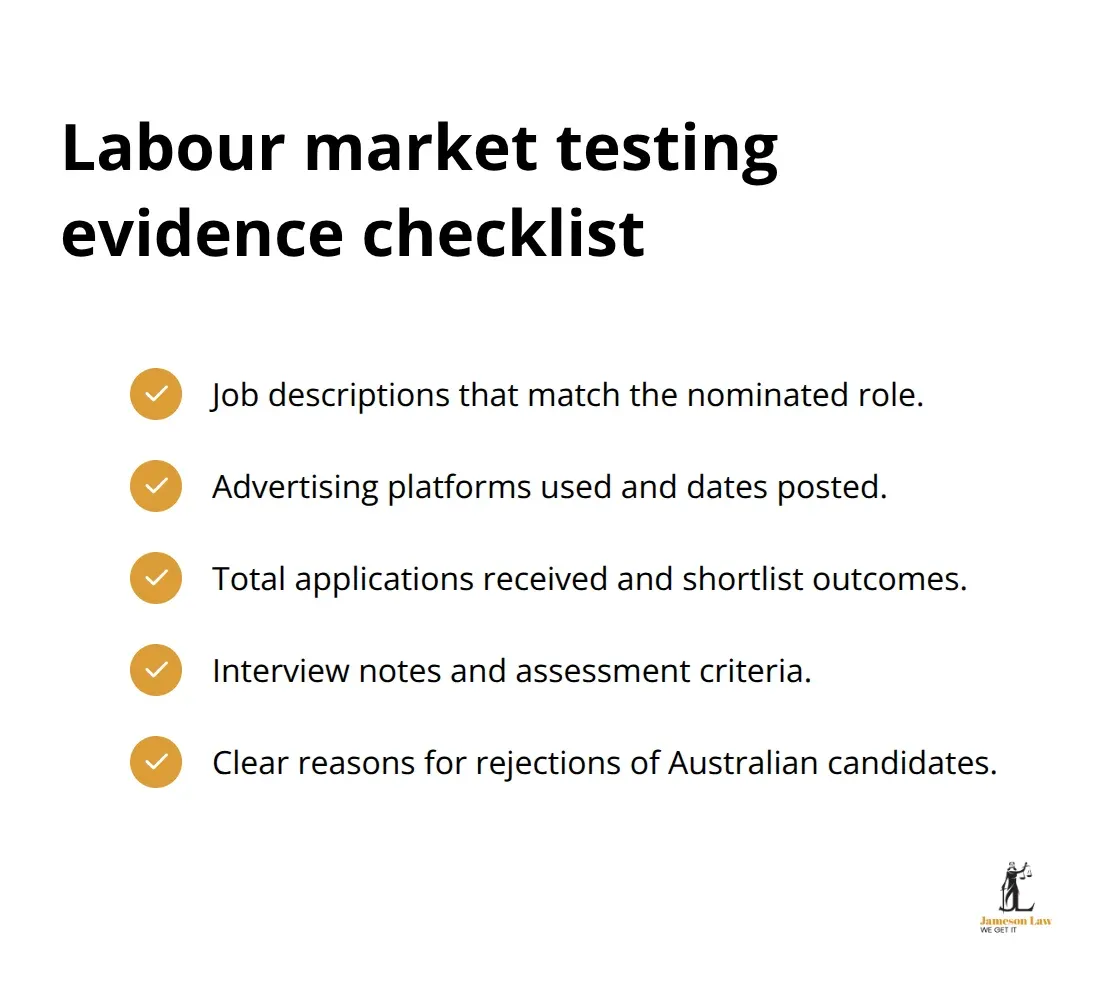
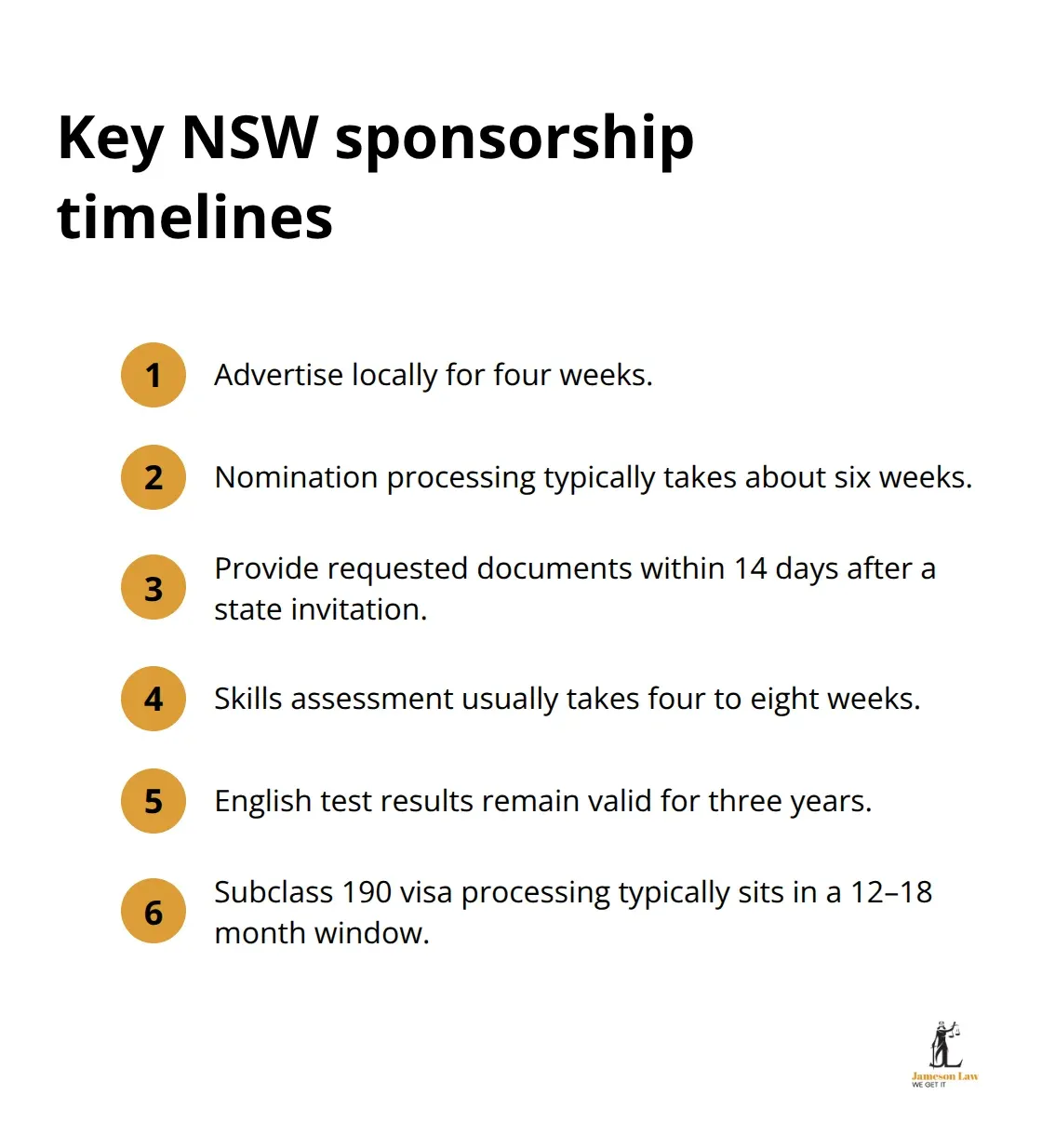
You must demonstrate that no suitably qualified Australian worker is available. This involves advertising the role for at least 4 weeks on platforms like Workforce Australia.
What Applicants Must Prove to Qualify?
Skills Assessment and Qualification Verification
A valid skills assessment from an approved authority (like VETASSESS or ACS) is often mandatory. This verifies that your qualifications match the nominated occupation.
Health Examination and Character Requirements
You must undergo health clearance through an approved panel physician. Additionally, you must provide police checks from every country where you have lived for 12 months or more.
English Language Proficiency
Applicants must provide valid English test results from providers like IELTS or PTE Academic. For the Subclass 482 visa, the score requirement depends on your occupation list (Short-term or Medium-term).
The Nomination and Visa Application Process
How the Nomination Stage Works
The employer submits a nomination to the Department, including the job description and evidence of the Skilling Australians Fund (SAF) levy payment.
Submitting Your Visa Application
Once the nomination is approved (or lodged concurrently), you submit your visa application via ImmiAccount. Discrepancies between your nomination and visa application can lead to refusal.
Final Thoughts
Employer sponsorship visa NSW pathways demand rigorous compliance. For businesses, the foundation rests on approved sponsorship and honest labour market testing.
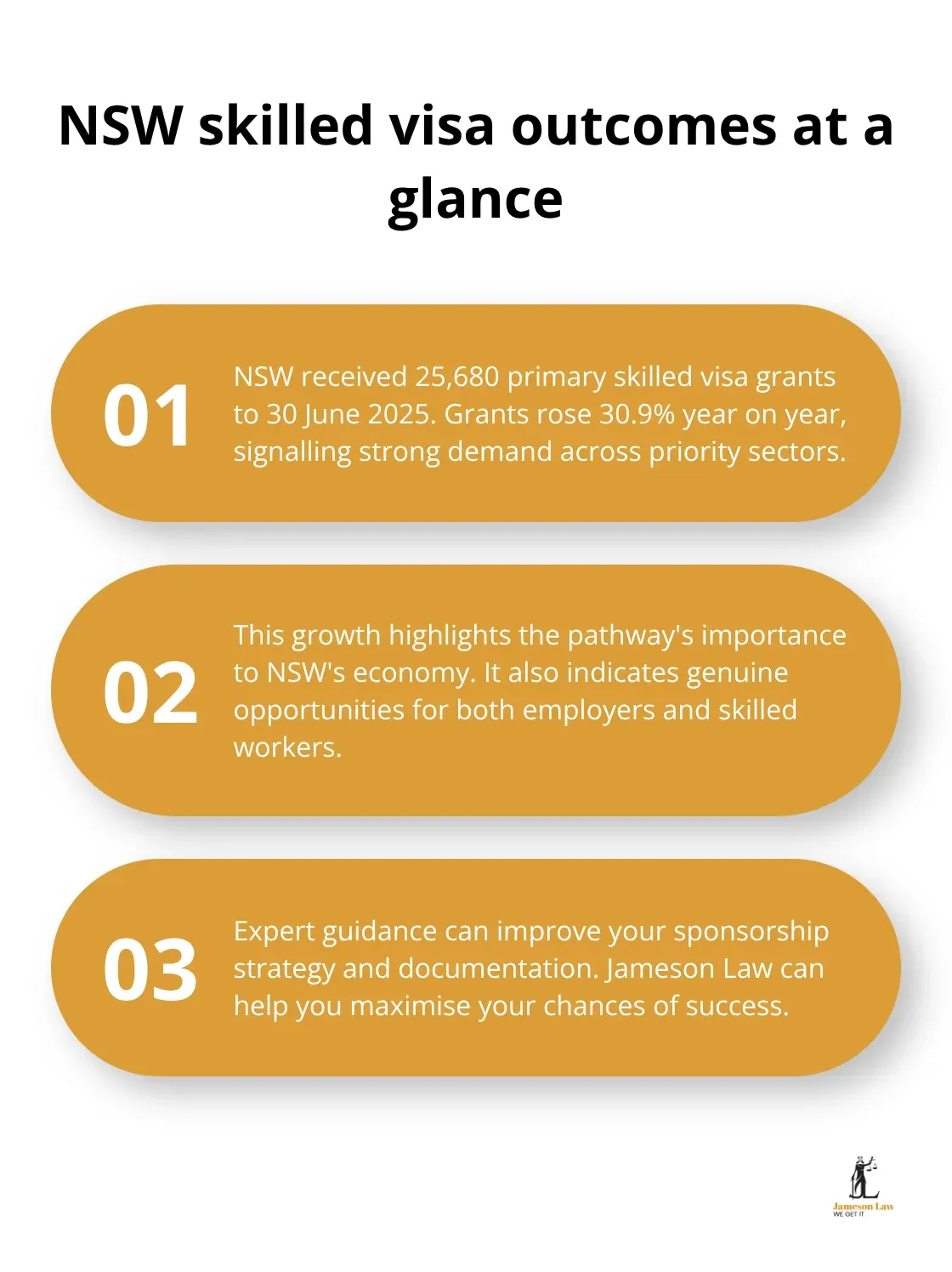
If you are navigating this process, professional guidance makes a difference. Contact Jameson Law to discuss your sponsorship strategy and maximise your chances of success.