Australia’s skilled worker shortage has created significant opportunities for international professionals seeking employment Down Under. Understanding Australia work permit visa requirements can make the difference between a successful application and costly delays in your migration journey.
We at Jameson Law have guided hundreds of skilled workers through this complex process. The right visa pathway depends on your qualifications, work experience, and whether you have employer sponsorship.
Which Australian Work Visa Suits Your Situation?
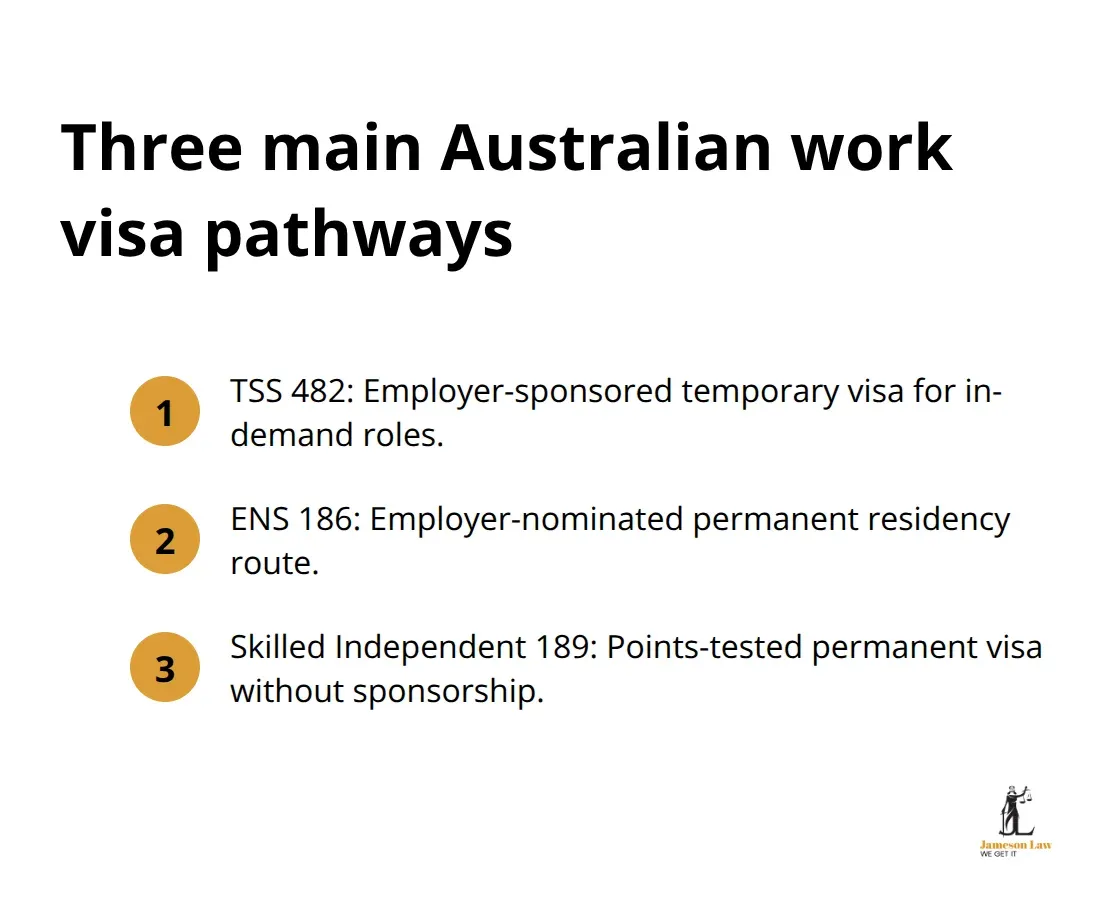
Three primary visa pathways dominate Australia’s skilled migration landscape. The Temporary Skill Shortage visa subclass 482 serves as the most accessible entry point. It requires employer sponsorship and offers up to four years of work authorisation. This visa addresses Australia’s immediate labour shortages, with processing times averaging 2-4 months. Employers must complete Labour Market Testing to demonstrate genuine recruitment efforts.
Direct Permanent Residency Through Employer Nomination
The Employer Nomination Scheme visa subclass 186 provides immediate permanent residency for skilled workers with established employer relationships. This pathway suits professionals with three years of relevant experience. Current processing times range from 8-18 months but offer immediate settlement rights, a key advantage when considering Australia work permit visa requirements for skilled migration.
Independent Migration Without Sponsorship
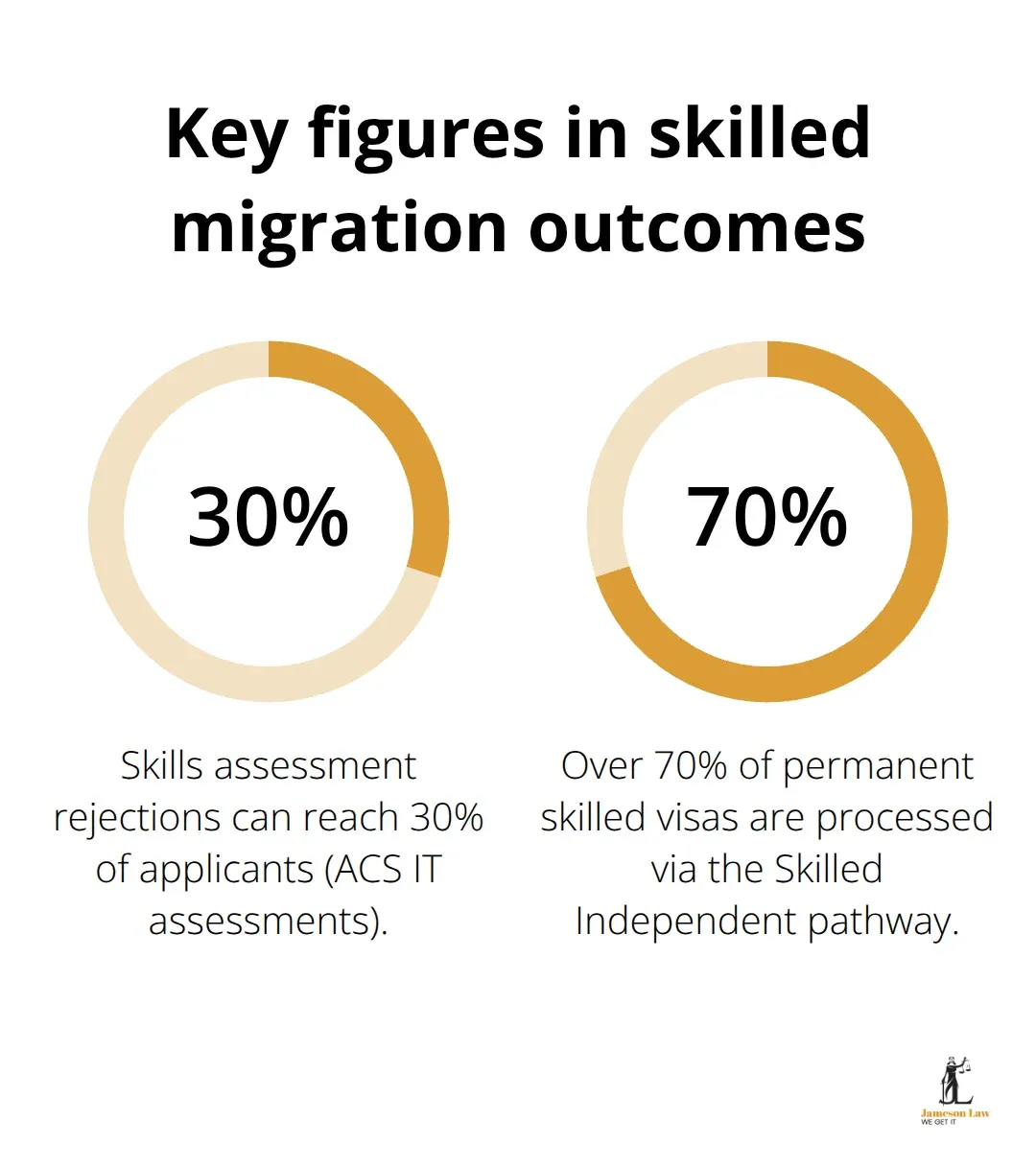
The Skilled Independent visa subclass 189 operates through Australia’s points-based system and requires a minimum of 65 points. This pathway processes over 70% of permanent skilled visas annually. Applicants under 32 years with superior English skills and relevant Australian qualifications score highest in this competitive system.
Skills Assessment Bodies and Professional Requirements
The Australian Computer Society (ACS) handles IT professional assessments, while Engineers Australia manages engineering occupations. Healthcare professionals face unique assessment timelines with the Australian Health Practitioner Regulation Agency (AHPRA). These bodies determine whether your qualifications meet Australian standards, a critical step in meeting Australia work permit visa requirements.
What Documents and Tests Do You Need?
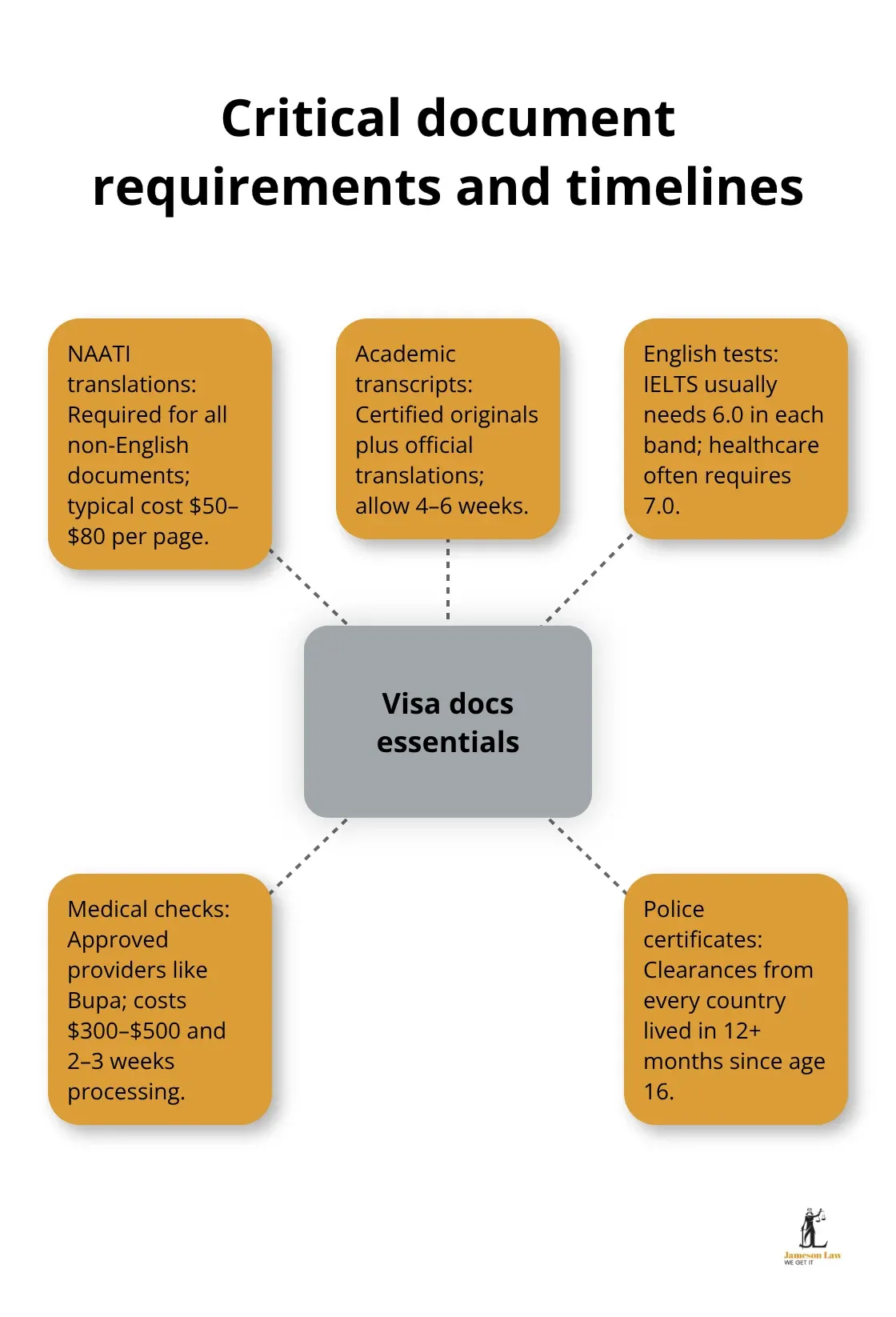
Skills assessments form the foundation of every Australian work visa application. IELTS remains the gold standard for English proficiency tests, with most work visas requiring a minimum 6.0 in each band. Healthcare professionals often need 7.0 across all components. You may also use PTE Academic for faster results.
Medical Examinations Through Approved Providers
Health checks must be completed through approved providers like Bupa Medical Visa Services. These assessments include chest X-rays and blood tests. Police certificates present the biggest documentation challenge, requiring clearances from every country where you lived for 12 months or more since age 16, as mandated by the Department of Home Affairs character requirements.
Document Certification and Translation Requirements
NAATI-certified translators must handle all non-English documents. Academic transcripts require both original certification and official translations. Character references need statutory declaration format with specific wording requirements that vary between visa subclasses.
Common Documentation Failures
Incomplete documentation causes application failures. Some countries take 8-12 weeks to issue police clearances, making early application essential. Expired English test results and incomplete skills assessments represent the leading causes of application rejections for work visas in Australia.
What Derails Most Work Visa Applications?
Skills Assessment Rejections Hit 30% of Applicants
Skills assessment failures destroy more Australian work visa dreams than any other factor. The ACS rejects approximately 25-30% of IT applications due to insufficient evidence. Engineers Australia demands detailed project reports demonstrating specific competencies.
Employer Sponsorship Collapses From Labour Market Testing
Labour Market Testing failures kill employer sponsorship applications when companies cannot demonstrate genuine recruitment efforts. Job advertisements must run for at least four weeks with specific salary ranges. Smart employers engage immigration specialists to structure compliant recruitment campaigns.
Processing Delays Extend Beyond Published Timeframes
Official processing times rarely reflect reality for complex applications. Subclass 186 applications can take 12-24 months. Document verification requests add further delays. The most effective strategy involves submitting applications with comprehensive documentation that anticipates verification requests.
Final Thoughts
Australia work permit visa requirements demand strategic preparation and precise execution. The Temporary Skill Shortage visa delivers faster results, while the Employer Nomination Scheme grants permanent residency. Skills assessments and comprehensive documentation determine success.
Professional legal guidance transforms these complex requirements into manageable steps. We at Jameson Law help skilled workers navigate assessment bodies and employer sponsorship requirements. Contact our immigration team today to develop a strategy that maximises your Australian work visa success.