Postgraduate visa requirements can feel overwhelming, but they’re manageable when you know what to expect. At Jameson Law, we’ve helped countless graduates navigate this process successfully.
This guide breaks down everything you need to know about the Temporary Graduate Visa (Subclass 485), from eligibility criteria to work experience requirements. You’ll find practical steps to strengthen your application and avoid costly mistakes.
What Qualifies You for a Postgraduate Visa?
The Department of Home Affairs sets clear eligibility thresholds. You must be 35 years old or under when you apply (unless a Masters by Research/PhD graduate). You must hold a Student visa within the last six months and have completed a CRICOS-registered qualification.
Your qualification must align with the Skilled Occupation List depending on your stream. The Department updated eligibility rules on 14 December 2024, so verify current requirements.
Understanding the Three Visa Streams
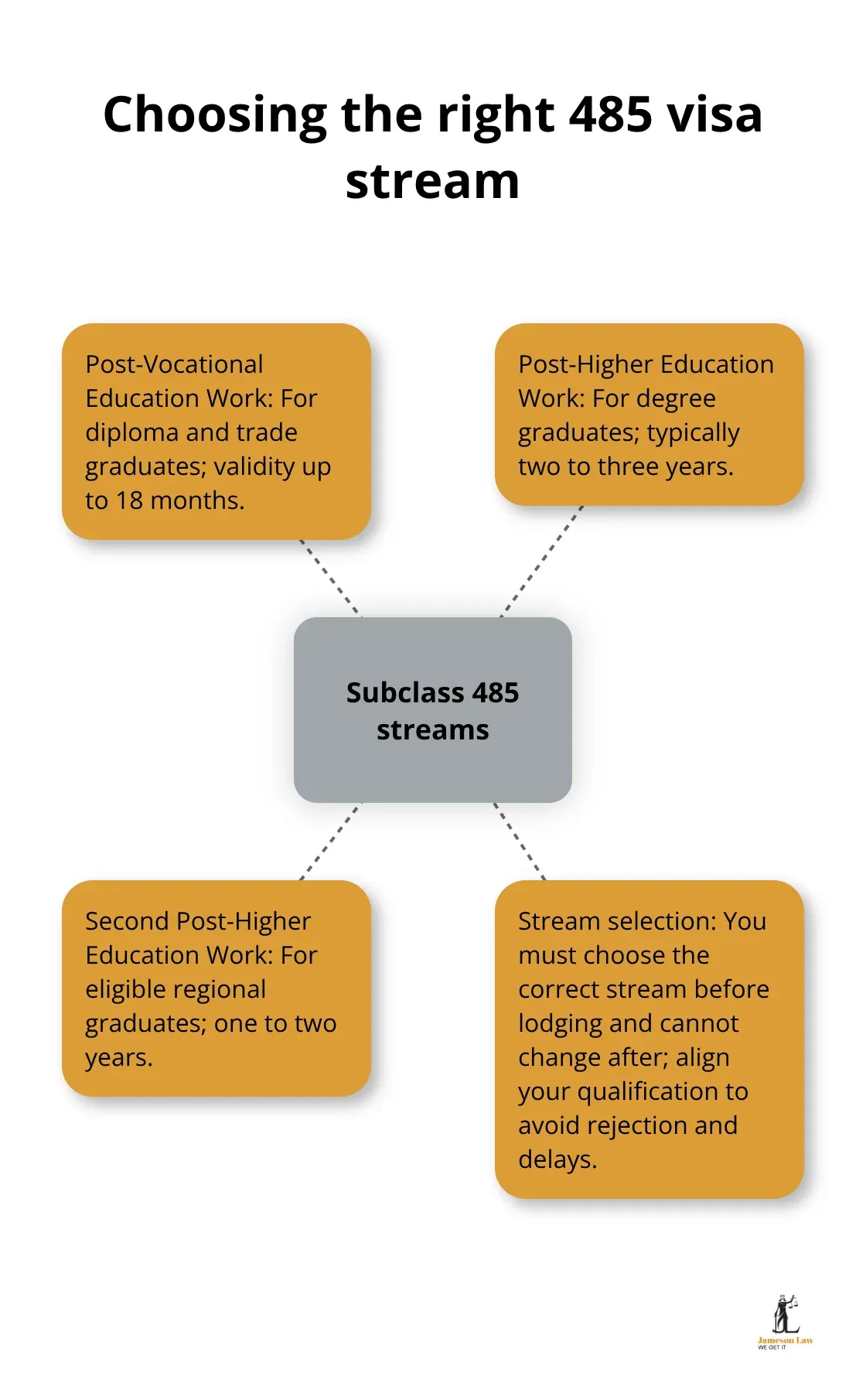
Three streams exist under Subclass 485. You must select the correct one before lodging:
- Post-Vocational Education Work: For diploma and trade qualification holders (up to 18 months).
- Post-Higher Education Work: For Bachelor, Masters, or PhD holders (2–3 years).
- Second Post-Higher Education Work: For regional graduates (1–2 extra years).
Gathering the Right Documentation
You must provide official transcripts confirming you completed your CRICOS course. Proof of English proficiency (IELTS, PTE) and valid Overseas Student Health Cover (OSHC) are mandatory. Upload clear scans to reduce requests for information.
Submitting Your Application Online
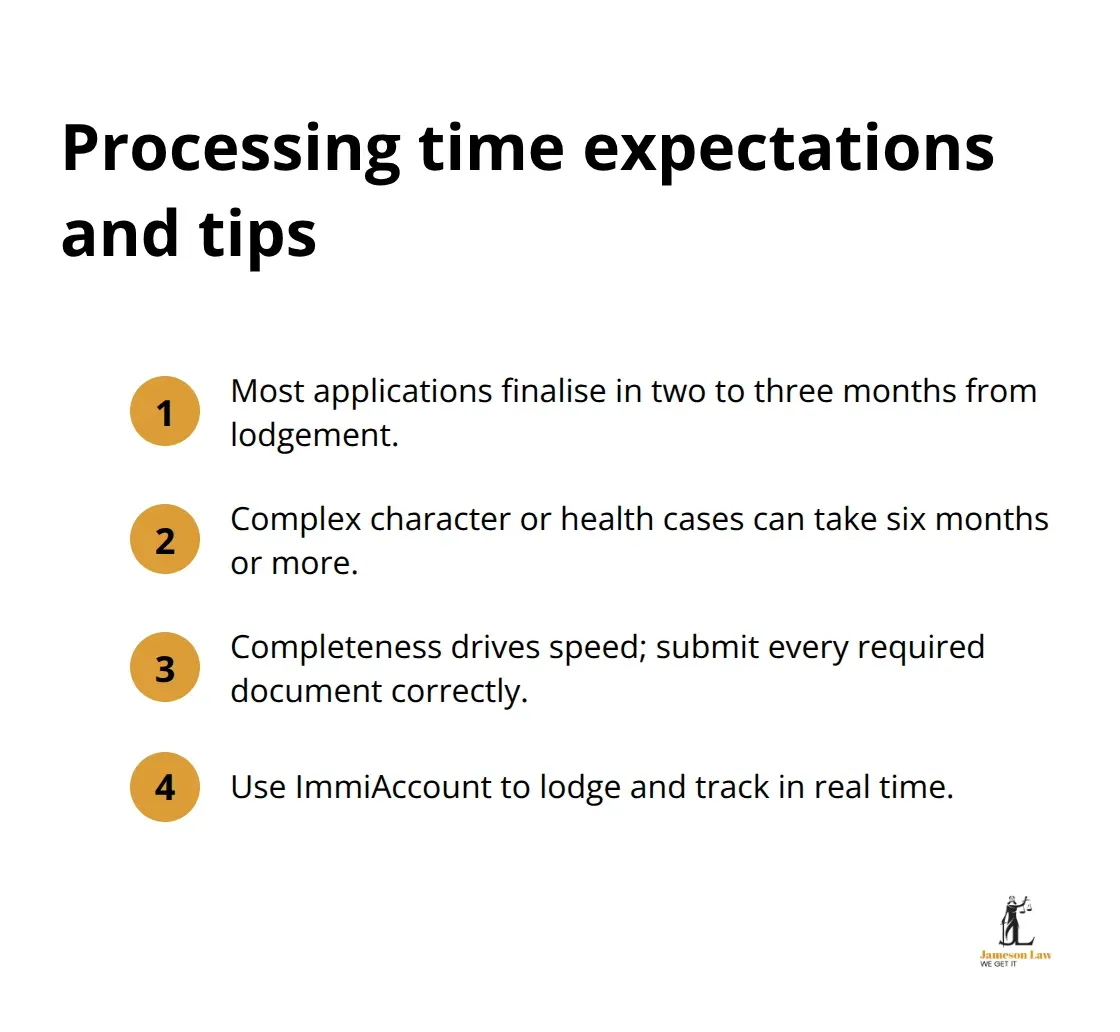
The ImmiAccount system allows you to lodge online. Most applications process within 2–3 months. Complex cases involving character concerns can extend to 6 months.
Building Your Work Experience Case
How the Department Evaluates Your Employment History
For the Post-Vocational stream, a provisional skills assessment is required, which often demands 360 hours of vocational placement or work. For the Post-Higher Education stream, work experience is not a visa criteria but helps with future skilled migration.
What Types of Work Experience Count?
Internships and part-time roles count if they relate to your field. Overseas work experience counts if it relates to your nominated occupation. For self-employment, provide invoices and contracts.
Documentation Standards That Pass Department Scrutiny
Employment records must demonstrate genuine work. The Department cross-references claims with ATO tax records. Inconsistencies can trigger refusal. Maintain detailed records from day one.
Assembling Your Application Without Delays
Preparing a postgraduate visa application demands precision. Create a master checklist before gathering documents. Most applicants waste weeks hunting for missing items.
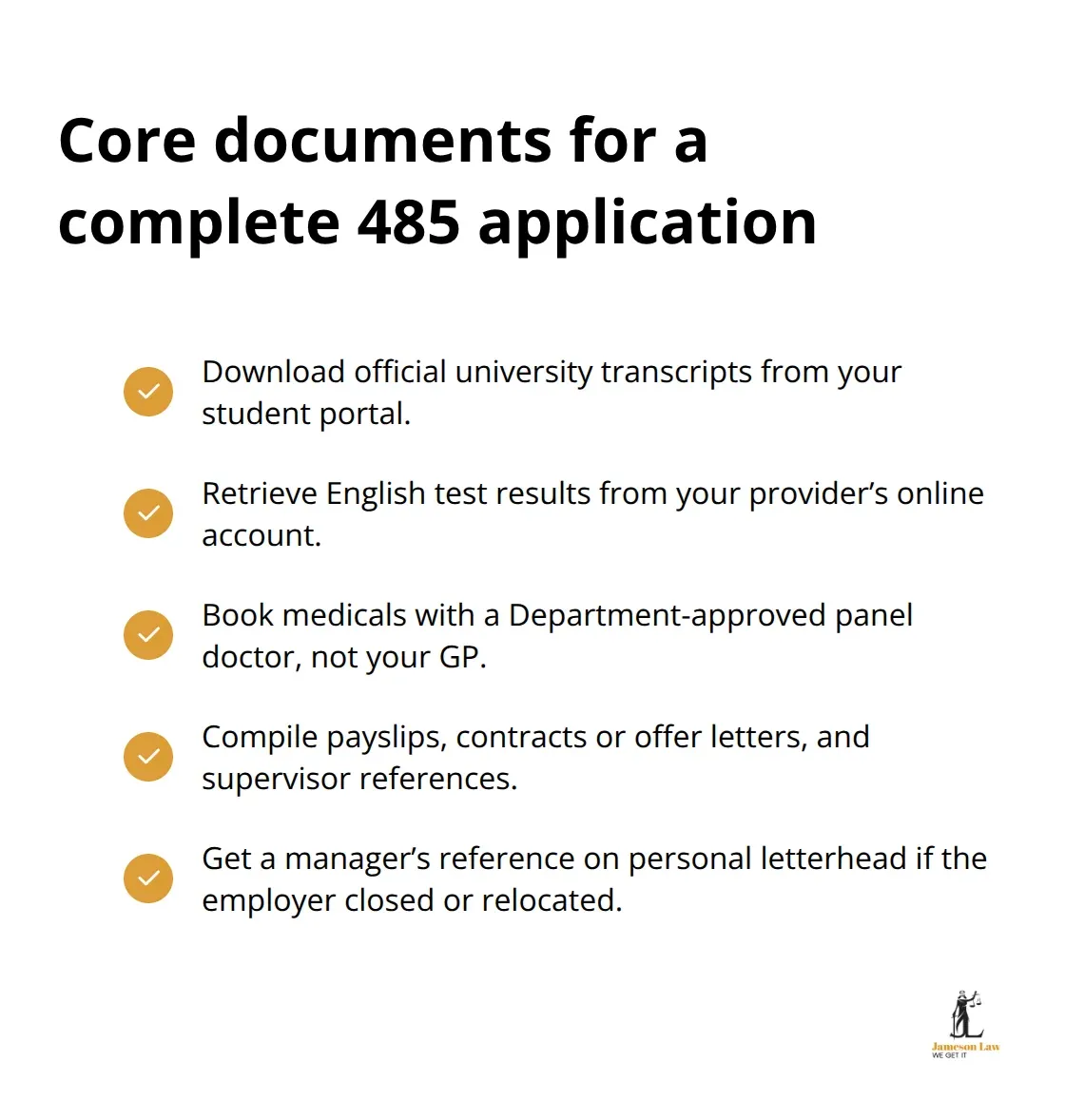
Collecting Your Core Documents
Start by downloading official university transcripts. Obtain your National Police Check early (it takes weeks). Book your medical examination with Bupa Medical Visa Services.
Avoiding Critical Mistakes
Do not lodge without verifying that your qualification meets the updated eligibility rules effective from 14 December 2024. Some Graduate Certificates no longer qualify. Verify this with a registered migration agent.
Final Thoughts
Meeting postgraduate visa requirements demands strategic planning. You now know that eligibility hinges on your age (under 35), study status, and selecting the correct stream.
If you face uncertainty or have character concerns, consult a professional. At Jameson Law, we offer expert immigration services to help you navigate these requirements. Contact us today to secure your future in Australia.