Australia’s sponsorship visa programs offer pathways for skilled workers to build careers abroad, but navigating sponsorship visa Australia requirements demands precision and planning. The three main visa categories—Temporary Skill Shortage, Employer Nomination Scheme, and Skilled Independent Regional—each have distinct rules.
At Jameson Law, we’ve guided hundreds of applicants through these processes. This guide walks you through every step so you can submit a strong application for an employer-sponsored visa.
Which Sponsorship Visa Fits Your Situation?
Understanding the Three Main Visa Categories
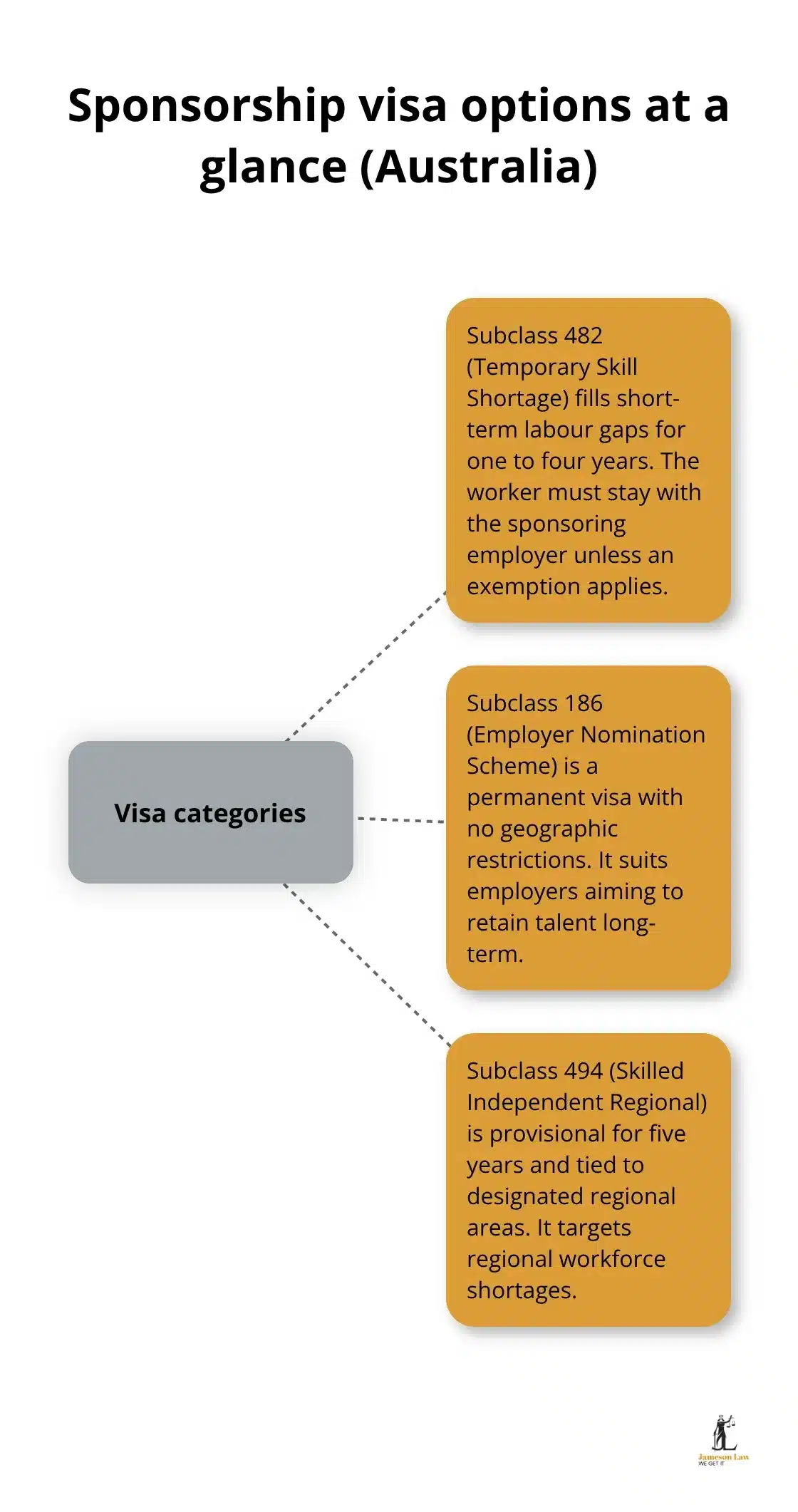
As of mid-2025, employers sponsor workers across three distinct categories. The Temporary Skill Shortage visa (Subclass 482)—now evolving into the Skills in Demand visa—operates as a temporary pathway. The Employer Nomination Scheme (Subclass 186) is a permanent visa with no geographic restrictions.
Subclass 482: Temporary Skill Shortage Visa
The 482 visa suits short-term labour gaps. It comes in multiple streams, including Short-term and Medium-term. A specific provision for Hong Kong passport holders extends the stay up to five years. Worker mobility remains restricted to the sponsoring employer unless an exemption applies.
Subclass 186: Employer Nomination Scheme Visa
This visa includes a Temporary Residence Transition (TRT) stream for workers who have been with their sponsor for at least two years. It also offers a Direct Entry stream that requires a formal skills assessment. Subclass 186 is the choice for retaining talent permanently.
Subclass 494: Skilled Independent Regional Visa
The Skilled Employer Sponsored Regional (Subclass 494) visa requires the job to be in a designated regional area. It is provisional for five years and offers a pathway to the Permanent Residence (Skilled Regional) visa (Subclass 191).
Health, Character and Security Checks
Medical Examination Requirements
Health requirements form the first major hurdle. You must undergo a medical examination by an approved panel doctor (Bupa Medical Visa Services). The examination covers chest X-rays and blood tests. Processing typically takes two to four weeks.

Character Assessment and Police Certificates
Character assessment scrutinises your criminal history. You must provide police certificates from every country where you have lived for 12 months or more in the past 10 years. Dishonesty here can lead to visa refusal or cancellation.
Compiling Your Evidence and Submitting Your Application
Gathering Documentation for Your Visa Category
Documentation makes or breaks your application. For Subclass 482, you need proof of two years’ work experience (or less under new Skills in Demand rules). For Subclass 186, you need a positive skills assessment. Start collecting these immediately as assessments can take 8–12 weeks.
Lodging Your Application Through ImmiAccount
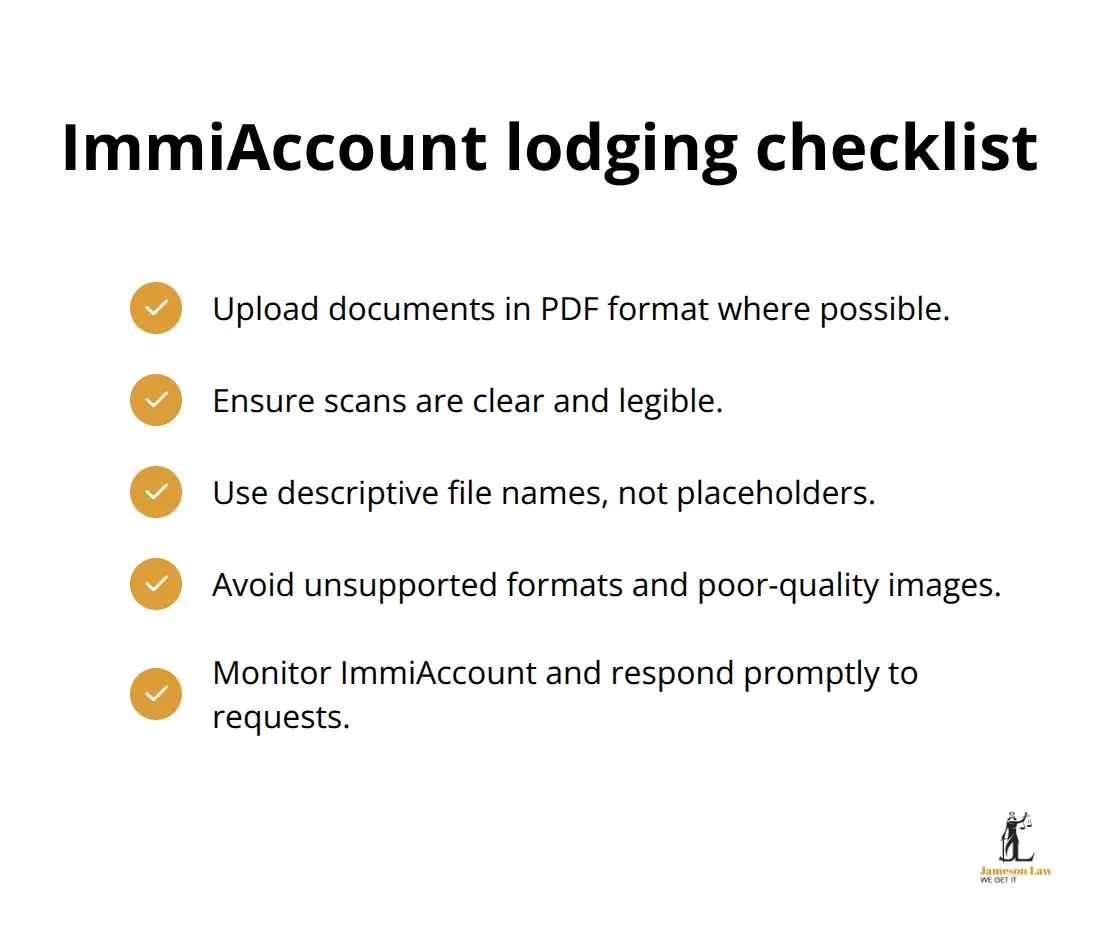
Lodging through ImmiAccount is straightforward but requires care. Upload documents in PDF format and ensure scans are clear. Inconsistencies between your form and documents trigger clarification requests that extend processing.
Final Thoughts
Sponsorship visa Australia requirements demand attention to detail. The pathway you choose determines everything that follows. Verify your category against the Department of Home Affairs resources before committing.
If your application faces complications, contact Jameson Law. Our team understands the complexities of sponsorship visa applications and can help you navigate every requirement.