Australia’s visa system is complex, with dozens of pathways designed for different circumstances. Getting it wrong can cost you months of delays or result in an outright rejection.
At Jameson Law, we have helped hundreds of applicants navigate these requirements successfully. This guide walks you through the core visa types, common pitfalls to avoid, and how a dedicated immigration lawyer Australia (or Registered Migration Agent) can significantly strengthen your application.
Visa Pathways That Match Your Situation
Australia’s visa system splits into four main categories. Understanding which pathway applies to you is the first step toward a successful application.
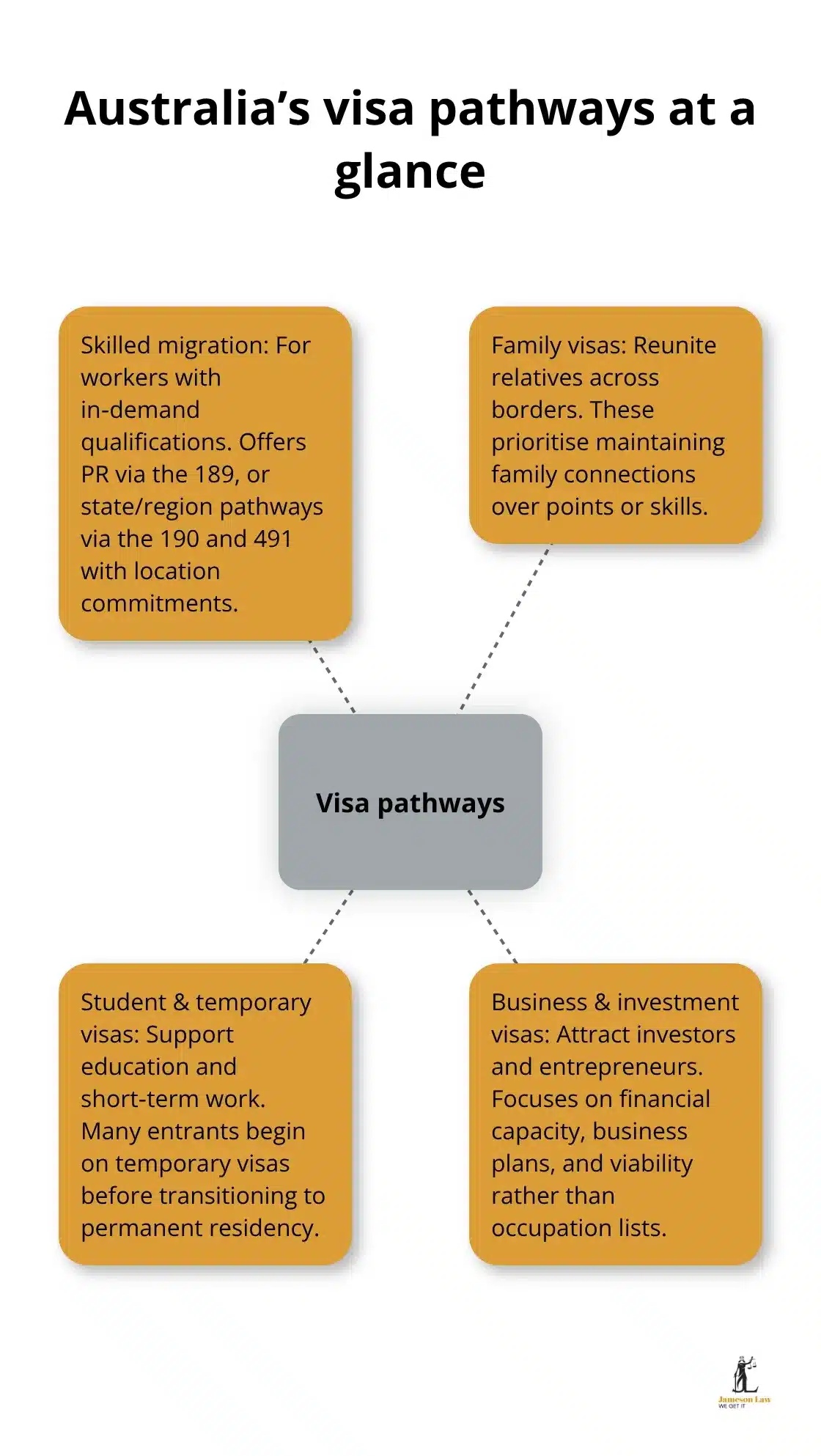
According to the Australian Bureau of Statistics (ABS), net overseas migration remains heavily weighted toward temporary visa arrivals compared to permanent ones. This means most people entering Australia start on temporary pathways before transitioning to permanent residency, making it critical to map out your long-term migration strategy early.
Skilled Migration for Workers in Demand
Skilled migration visas reward applicants with qualifications that Australia desperately needs. Options include:
- Subclass 189: Offers permanent residency without state sponsorship if your occupation appears on the relevant skilled list.
- Subclasses 190 and 491: Require state or regional sponsorship and carry strict work location commitments.
- Employer-Sponsored (Subclasses 186, 482): Bypass the points test entirely, moving you directly toward residency once an employer nominates you.
Your occupation, English language ability, and work experience all factor into the points test. Most applications fail not because applicants lack skills, but because they submit incomplete evidence of their work history or fail to meet the required English thresholds.
Family Reunion and Student Pathways
Family visas—spanning partner visas (309/100 and 820/801), child visas, parent visas, remaining relative visas, and carer visas—prioritize maintaining family connections.
Student visas remain Australia’s largest temporary visa category. To secure a student visa, you need a valid Confirmation of Enrolment, proof of sufficient funds, and evidence of genuine student intent. The Department of Home Affairs requires clear evidence that you intend to study, not simply reside in Australia. Your application must connect your study goals directly to your career aspirations.
Business and Investment Opportunities
Important Note: It is crucial to be aware that the traditional Business Innovation and Investment Program (BIIP) visas are currently closed to new applications.
To replace these pathways and continue attracting top-tier global talent, the Australian Government has introduced the National Innovation Visa (often referred to as the Global Innovation Visa). This modernized pathway focuses heavily on exceptional individuals, innovative entrepreneurs, and major investors who can drive national economic growth, rather than relying on standard occupation lists. Like all visas, strict health and character checks apply regardless of your financial strength.
Common Visa Application Mistakes to Avoid
The Department of Home Affairs expects precision. While they do not automatically reject every imperfect application, poor documentation creates severe roadblocks.
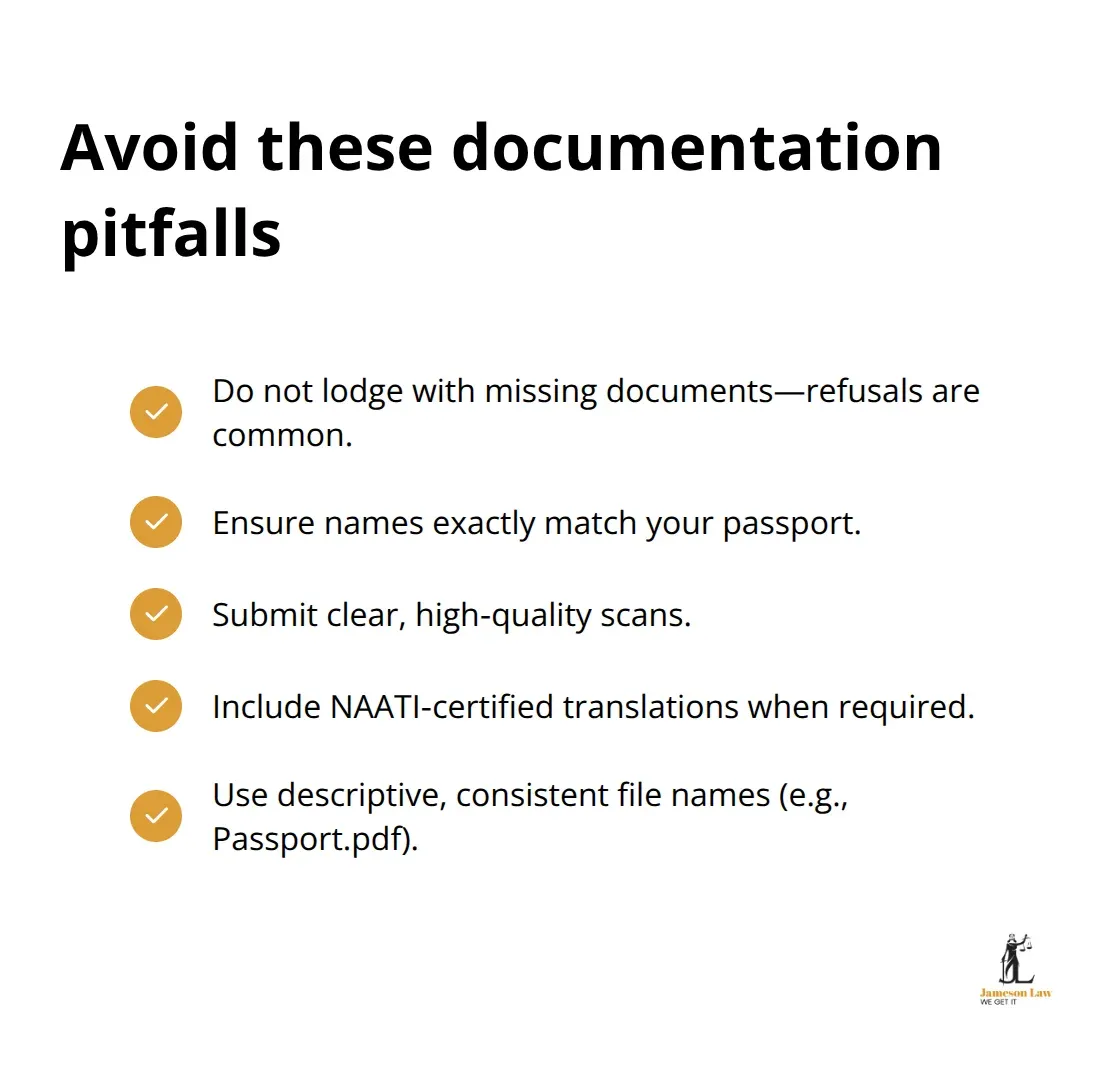
- Incomplete Documentation: A name mismatch between your passport and application or a missing NAATI-certified translation can lead to serious complications. While the Department will often send a ‘Natural Justice’ letter or a Request for Further Information (s56) giving you a chance to address these errors, relying on this delays your application for months and adds unnecessary stress.
- Missing Deadlines: When the Department requests further information (typically within 28 days), failing to respond in time can cause a direct refusal. However, if you are struggling to obtain complex documents (like overseas police clearances), you can formally request an extension—provided you do so before the original deadline expires.
- Failing Health & Character Requirements: Attempting to hide a criminal history or a health condition will almost certainly result in refusal under Public Interest Criterion (PIC) 4020, which penalizes false or misleading information severely.
- Overlooking Visa Conditions: Misunderstanding work hour limits or failing to maintain proper health insurance creates grounds for visa cancellation.
How Migration Experts Strengthen Your Visa Application
The difference between a successful visa journey and a failed one often comes down to how thoroughly you prepare your application. An expert immigration lawyer or Registered Migration Agent (RMA) does more than fill out forms; they strategically manage your case.
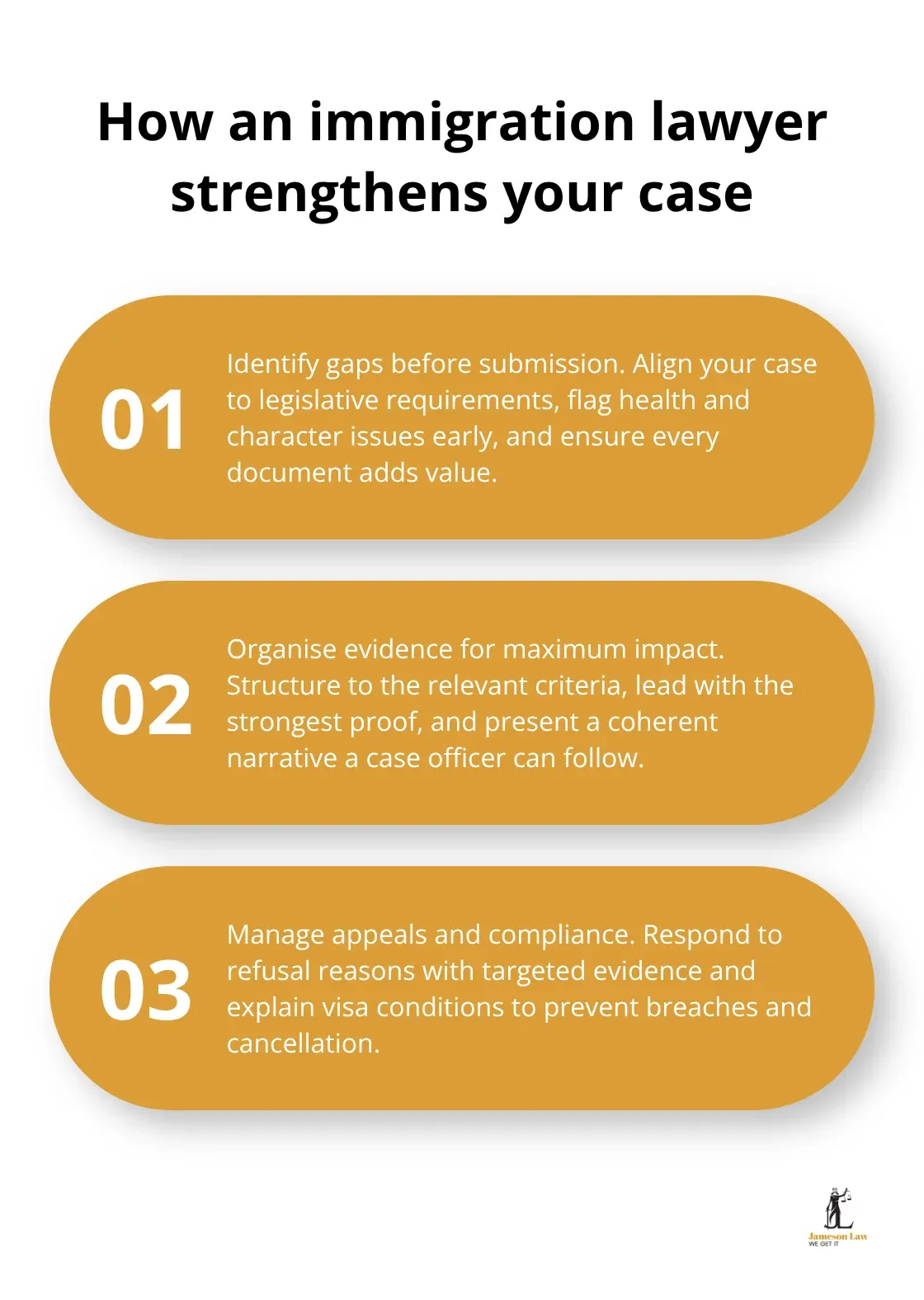
Identifying Gaps Before Submission
A migration professional reviews your circumstances against actual legislative requirements rather than internet rumors. We flag health or character issues that need addressing before lodgement and ensure every document strengthens your case rather than creating confusion.
Organising Documents for Maximum Impact
The Department of Home Affairs won’t accept password-protected files or blurry scans. A migration expert prepares your application as a coherent narrative, structuring each section to address specific legislative criteria and placing the strongest evidence first to guide the case officer to a swift approval.
Handling Appeals and Refusals (ART)
If your application faces refusal, an immigration lawyer handles the appeal process through the Administrative Review Tribunal (ART)—the newly established body that replaced the former AAT. Appeals demand precision and strategic thinking. By providing targeted evidence that directly corrects the Department’s initial concerns, your lawyer fights for a positive outcome. The ART has the power to make several decisions: they can affirm the Department’s original refusal, vary the decision, set aside the refusal and substitute a new decision, or remit the matter back to the Department with specific directions to approve the visa.
Guiding Compliance and Protecting Your Status
We guide you on visa condition compliance before you even arrive in Australia. Understanding your obligations regarding study loads, work hours, and reporting from the start keeps you on solid ground throughout your stay and protects your long-term residency goals.
Final Thoughts
Your visa application succeeds or fails based on preparation, accuracy, and understanding what the Department of Home Affairs actually requires. Incomplete documentation triggers frustrating delays, missed deadlines put your status at risk, and overlooking visa conditions leads to cancellation.
An expert immigration lawyer Australia or a Registered Migration Agent can identify these issues before you submit, organise your documents for maximum impact, and handle complex ART appeals if an initial assessment goes wrong. The stakes are simply too high for guesswork.
The difference between a successful outcome and a rejection often comes down to expert guidance. Contact Jameson Law to review your circumstances, clarify your eligibility, and develop an immigration strategy tailored to your exact situation.