Australian immigration visa processing 2026 is shifting in ways that directly affect your application timeline and success rate. The Department of Home Affairs has introduced new procedures and eligibility criteria that can either speed up your case or create unexpected delays.
We at Jameson Law have reviewed these changes in detail. We’re breaking down what they mean for your specific visa category and how to position your application for the fastest possible outcome.
How Long Does Your Visa Actually Take in 2026?
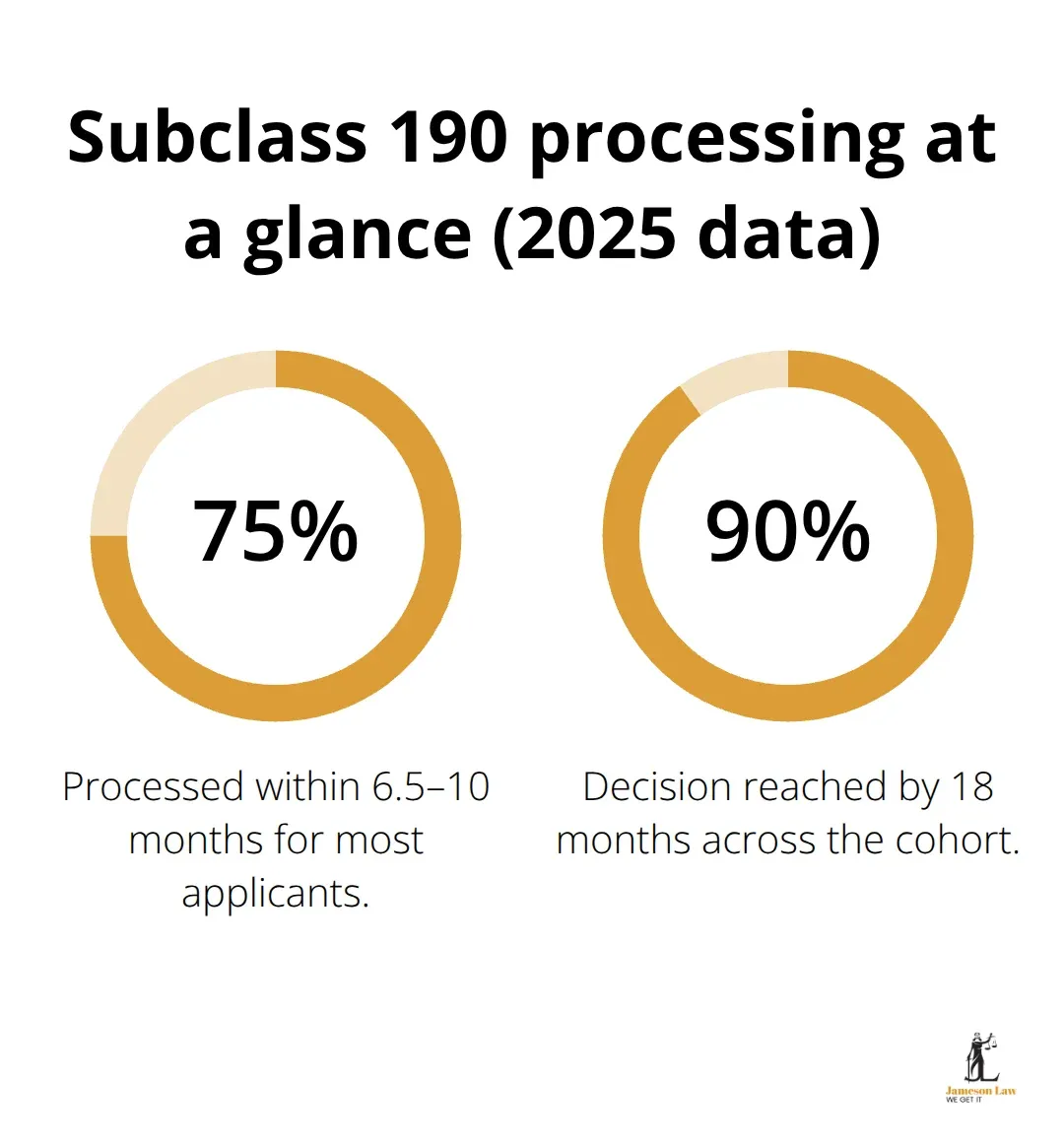
Processing times vary dramatically. Skilled migration visas like Subclass 190 sit in a 12–18 month window for most applicants. However, applicants in priority sectors like healthcare and teaching can see approvals in under 6 months.
Student visas (Subclass 500) experienced slowdowns due to stricter Genuine Student checks. Partner visas remain the slowest category, often exceeding 18 months due to relationship verification.
Incomplete Documentation Creates the “Pause Effect”
Incomplete documentation is the primary culprit for delays. When the Department requests information, your file leaves the active queue. This “pause effect” extends your timeline regardless of how quickly you respond. External checks by agencies like the AFP for character clearance can also restart your timeline.
Priority Sectors Move Faster
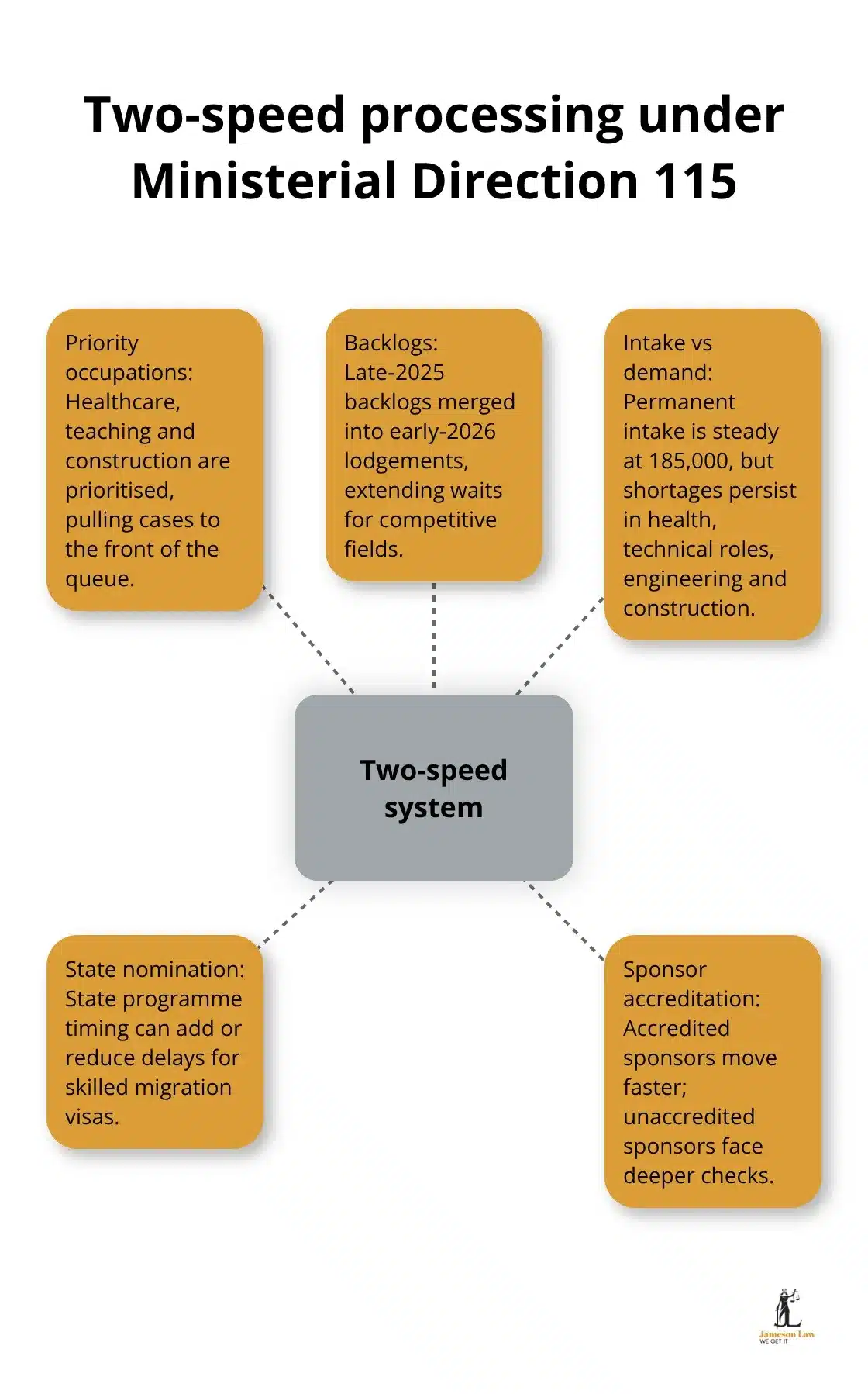
Under new directives, occupations in healthcare and teaching are pulled forward. Competitive occupations outside these sectors face inherited queues. Temporary Work visas (Subclass 482) average around 123 days for decision-ready applications.
What Actually Changed in Australian Immigration for 2026?
Ministerial Direction 115: A Two-Speed System
Ministerial Direction 115 reshaped priorities. The Department now prioritises healthcare, teaching, and construction. This creates a two-speed system: priority sectors move fast, while others face backlogs. Jobs and Skills Australia data confirms ongoing shortages in these key areas.
Financial and Employment Verification Intensified
The Department now contacts banks and employers directly. For skilled migration, they verify work experience claims with tax authorities. For students, financial capacity is cross-checked with banks. Your documentation must withstand this direct scrutiny.
Preparing Your Application to Withstand Scrutiny
Audit Your Financial Records
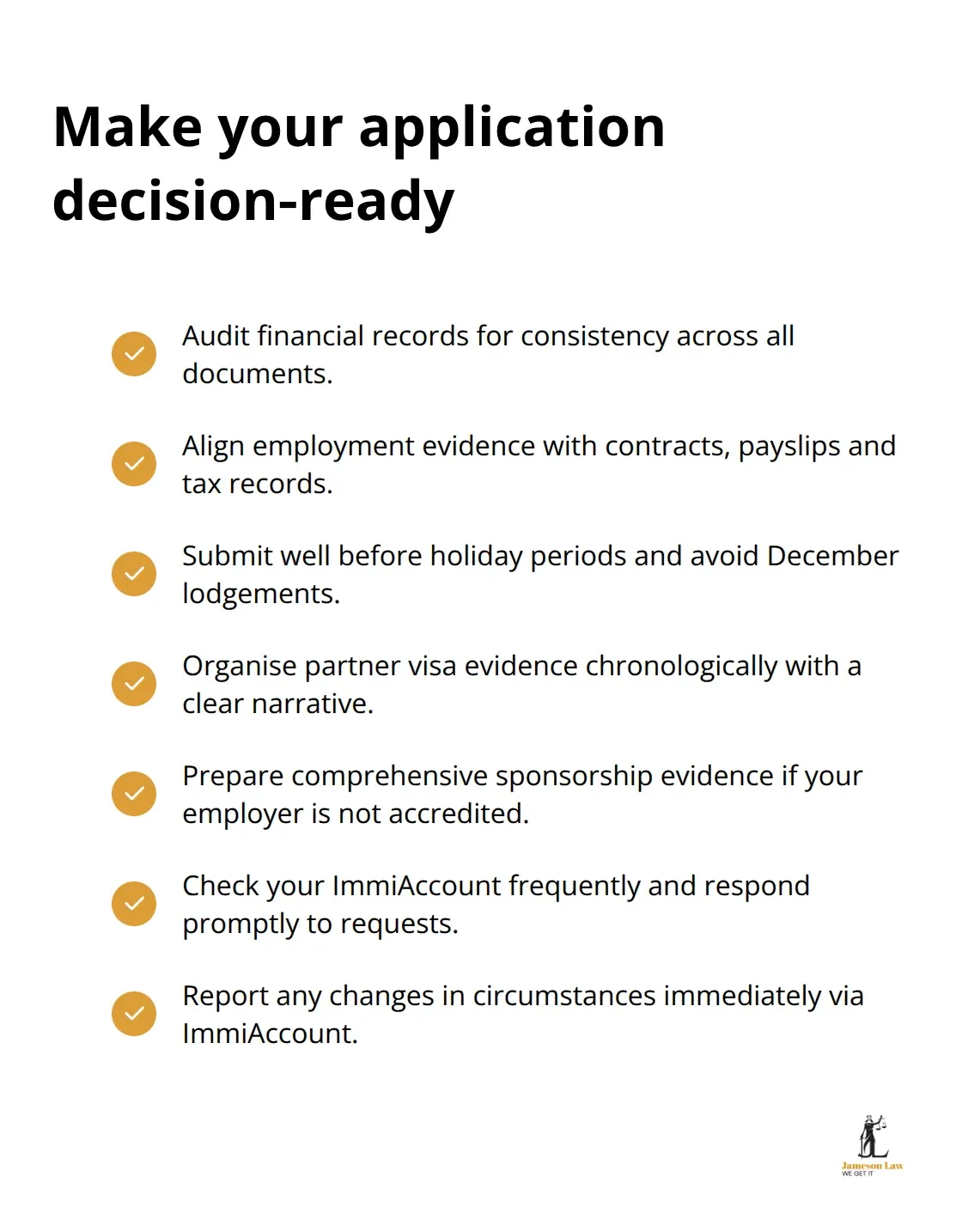
Ensure your bank statements match your claims exactly. Any discrepancy between your declared funds and official records will trigger a request for information, pausing your file. This is critical for permanent residency pathways.
Gather Verifiable Employment Evidence
Collect payslips, tax returns, and contracts that match your skills assessment. If you worked as a contractor, obtain statutory declarations that include contact details for verification.
Monitor ImmiAccount
Check your ImmiAccount regularly. Missing a request deadline can lead to refusal. If your circumstances change, update the Department immediately to avoid character check delays.
Final Thoughts
Immigration visa processing 2026 operates on strict verification rules. Submitting a decision-ready application eliminates the “pause effect” and positions you for the fastest outcome.
If your application involves complex elements, professional guidance is essential. Contact Jameson Law to discuss your visa strategy and how we can support your journey.