Australia’s migration numbers to Australia reached record highs in recent years, with net overseas migration hitting significant levels according to the Australian Bureau of Statistics (ABS).
We at Jameson Law see firsthand how these dramatic shifts affect visa applications and settlement processes. The data reveals significant changes in source countries, visa pathways, and regional distribution patterns that impact both migrants and Australian communities.
What Are Australia’s Latest Migration Numbers?
Net overseas migration to Australia reached 446,000 people in the 2023-24 financial year. This figure represents a decrease from the previous year’s peak. The drop reflects tighter government controls on temporary visa pathways, particularly affecting international student numbers. Migrant departures simultaneously increased, creating a more balanced flow.
Temporary Visa Categories Drive Migration Patterns
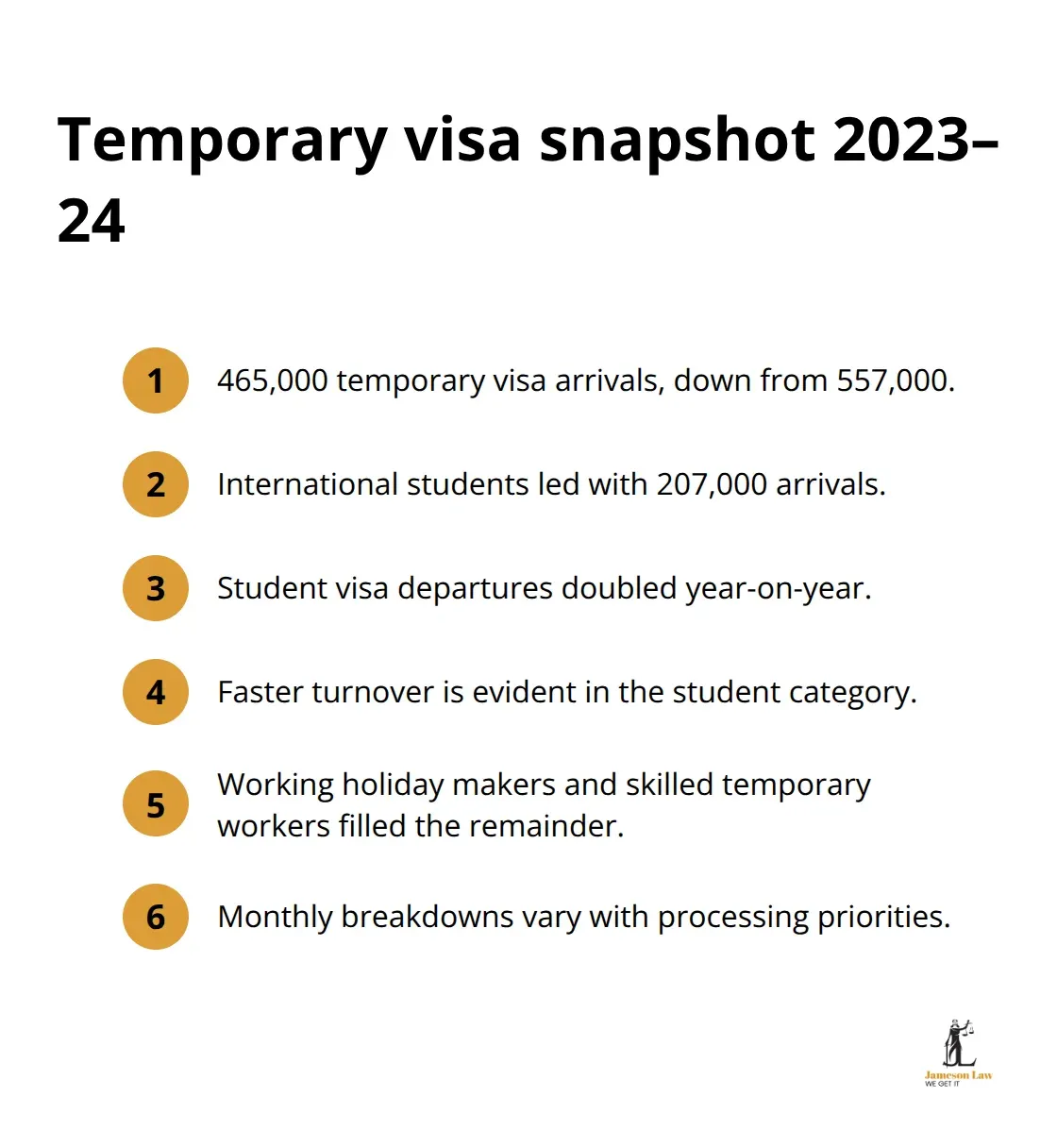
Temporary visa holders comprised the majority of total arrivals. International students represented the largest single category, though numbers are stabilising. Working holiday makers and skilled temporary workers filled the remainder of temporary visa allocations.
Permanent Visa Recovery Shows Promise
Permanent visa arrivals increased to 91,000, showing recovery in skilled and family reunion pathways. The skilled migration stream continues to dominate permanent allocations. Processing times now average 10 months for skilled permanent visas, impacting migration planning for thousands of applicants.
Age Demographics Reveal Migration Motivations
The demographics indicate younger people choose Australia for education and early career opportunities. Current migration numbers to Australia remain higher than pre-2020 levels, but composition has shifted dramatically toward temporary pathways, attracting young professionals who later transition to permanent residence.
Which Countries Lead Australian Migration?
India dominates Australia’s migration landscape, supplying the largest number of permanent migrants across all visa categories. China ranks second, followed by the Philippines, Nepal, and the United Kingdom. This pattern reflects Australia’s strategic focus on skilled migration from Asia-Pacific regions where English proficiency aligns with labour market demands.
Skilled Migration Exceeds Family Reunion Numbers
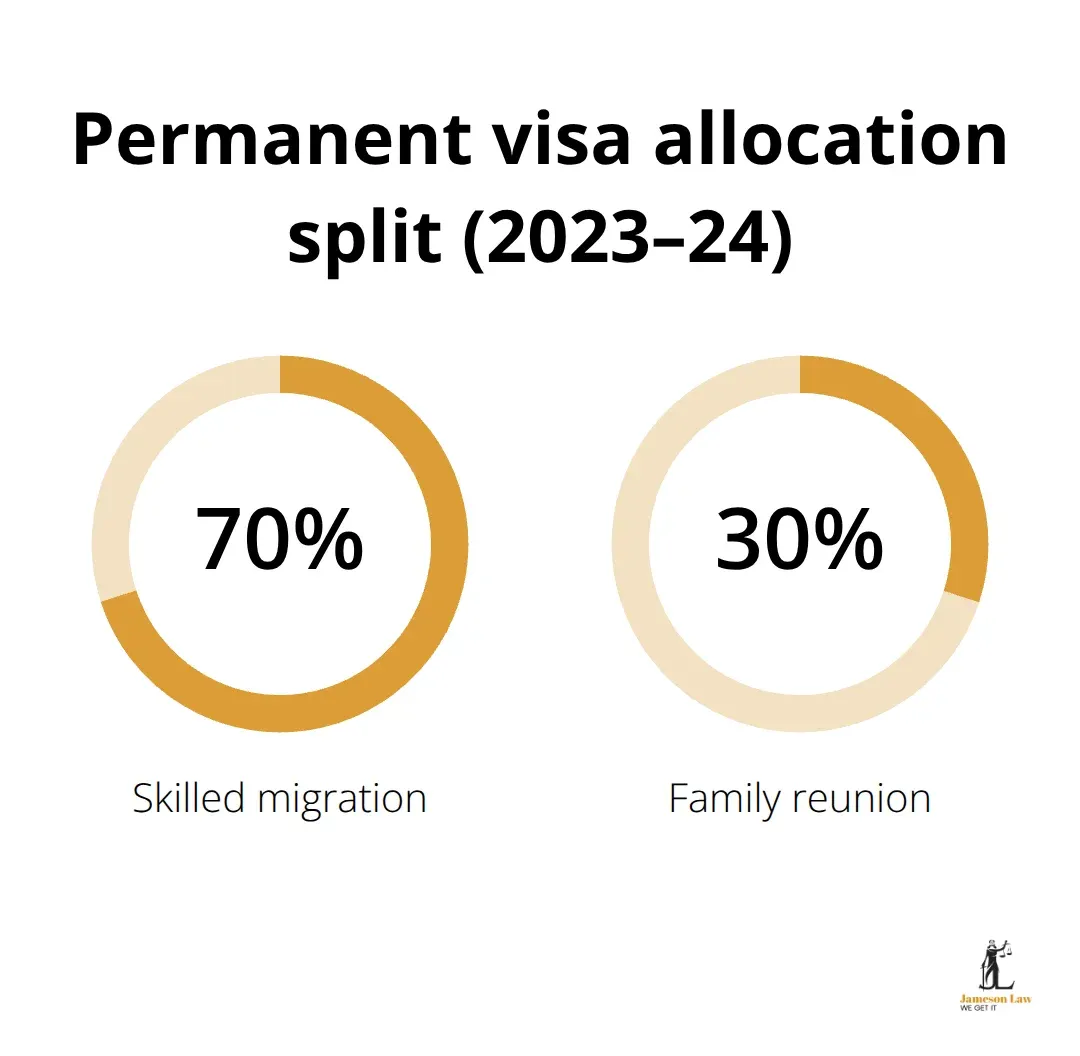
Skilled migration pathways account for approximately 70% of permanent visa allocations. Indian nationals secure the highest number of skilled worker visas, particularly in technology and healthcare sectors. Chinese migrants follow closely, with strong representation in business and investment categories.
States Target Specific Migration Demographics
New South Wales captured the largest net migration gain, followed by Victoria. These states attract skilled migrants through job opportunities in Sydney and Melbourne. Western Australia and Queensland target specific skill sets like mining. South Australia and Tasmania offer state nomination programs that fast-track permanent residency.
How Does Migration Impact Australia’s Economy?
Migration numbers to Australia directly reshape the economic landscape. The net migration figure fills critical skills gaps in healthcare, technology, and construction. Indian and Chinese migrants dominate skilled visa categories precisely because they possess qualifications in these high-demand fields.
Skills Gaps Drive Strategic Migration Targets
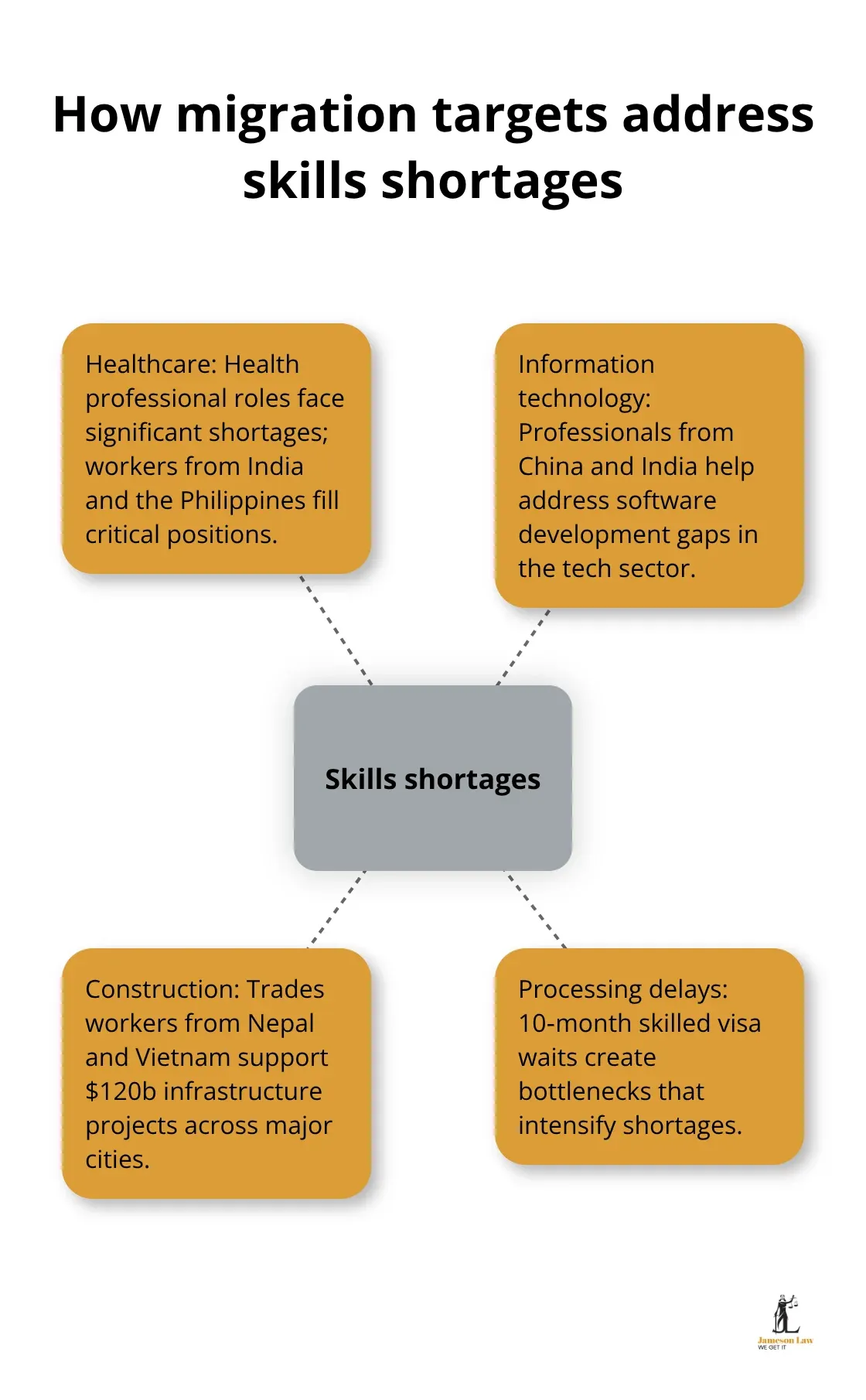
Australia’s migration composition targets specific occupational fields. Healthcare workers from the Philippines and IT professionals from India address critical shortages. Construction trades workers support infrastructure projects across major cities. Processing delays for skilled visas create bottlenecks that force employers to compete for talent.
Population Growth Strains Urban Infrastructure
Net migration to NSW and Victoria creates infrastructure demands. Sydney’s public transport and Melbourne’s road network experience significant pressure. Housing construction lags behind population growth, pushing prices up in migration hotspots. Regional areas benefit from skilled migration through resource sectors.
Final Thoughts
Migration numbers to Australia show a strategic shift toward skilled pathways. The government manages infrastructure pressures while balancing economic needs. India’s dominance as a source country reflects the focus on attracting skilled workers for critical sectors.
Processing delays create planning challenges for migrants and employers. Future policy changes will likely emphasise regional settlement incentives. We at Jameson Law help clients navigate these complex skilled migration pathways that support economic growth.