

The migration to Australia process involves identifying the correct visa pathway, gathering robust evidence, and lodging a compliant application through the Department of Home Affairs. Because migration laws are strictly enforced, understanding the statutory requirements for your specific visa subclass is essential to avoid refusals and lost application fees.
At Jameson Law, we assist individuals and families in navigating the complexities of Australian immigration. This guide outlines the core visa pathways, essential documentation, and what to expect during application processing.
Migration to Australia Process: Visa Pathways
Australia’s migration program is broadly divided into skilled, family, and student streams. Identifying the most appropriate route depends entirely on your qualifications, relationships, and long-term goals.
| Visa Pathway | Primary Intent | Key Requirements |
|---|---|---|
| General Skilled Migration | To fill economic and labour shortages using a points-based system. | Positive skills assessment, minimum 65 points, and an invitation via SkillSelect. |
| Family & Partner Visas | To reunite genuine partners, children, or parents with Australian residents. | Proof of genuine relationship and an eligible sponsor. Specific financial requirements vary by subclass. |
| Student Visas | To undertake full-time education at an accredited Australian institution. | Confirmation of Enrolment (CoE), Genuine Student criteria, and financial capacity evidence. |
Skilled Migration and Points Testing
The skilled migration route is highly competitive. Visas such as the Subclass 189, 190, and 491 operate on a points-tested basis. While 65 points is the minimum statutory threshold to lodge an Expression of Interest (EOI) via SkillSelect, reaching 65 points does not guarantee an invitation. States like New South Wales actively invite candidates for subclass 190 and 491 visas based on targeted occupational lists, demanding high points scores and often specific local employment history.
Family Visas and Financial Sponsorship
Family reunion visas depend heavily on the genuineness of the relationship. While there is no single, universal financial threshold that applies to all family sponsors, certain subclasses (like parent visas) may require an Assurance of Support (AoS), which mandates strict income and bond requirements. The Department rigorously vets the relationship and the sponsor’s eligibility before a grant is issued.
Student Visas
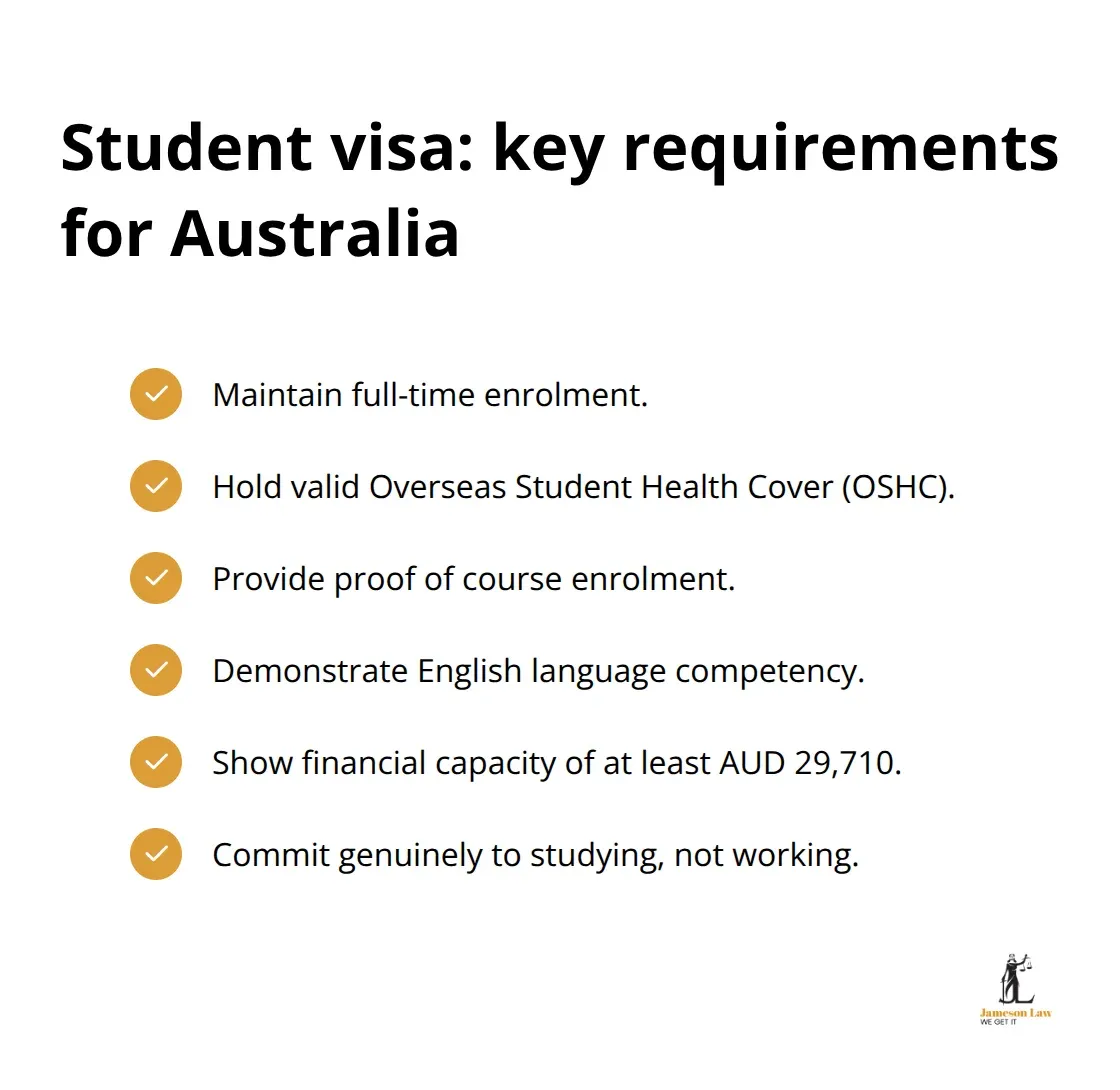
Student visas require a Confirmation of Enrolment and evidence of Overseas Student Health Cover (OSHC). Depending on your risk assessment level and the documentation checklist, you may also be required to provide robust evidence of financial capacity to cover travel, tuition, and living expenses.
Crucial Evidentiary Requirements
Providing valid, current, and verifiable documentation is the cornerstone of the migration to Australia process. Submitting an application missing critical documents can lead directly to a refusal.
Health and Character Clearances
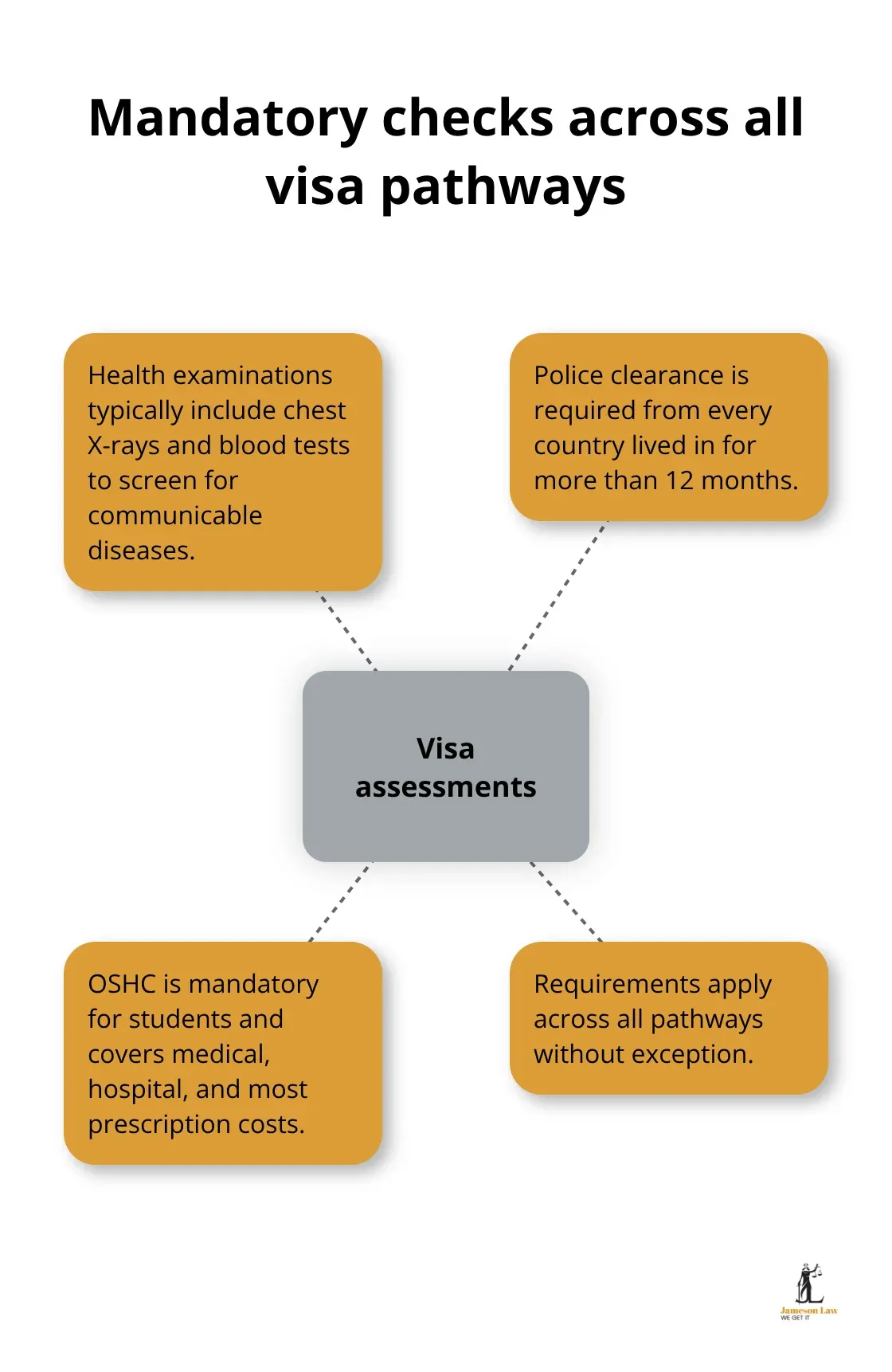
The Department of Home Affairs strictly enforces Public Interest Criteria. You generally must provide police clearance certificates for every country where you have lived for 12 months or more over the past 10 years (since turning 16). Additionally, health examinations by approved panel physicians are required for most permanent and many temporary visas. These examinations cannot be substituted by your own GP or private health insurance records.
Currency of Documentation
Ensure your documents are current at the time of lodgement. Evidence must be up-to-date; English language test results (such as IELTS or PTE) generally expire after three years, and skills assessments hold specific validity periods dictated by the assessing authority.
ImmiAccount Lodgement and Application Processing
Submitting Through ImmiAccount
Almost all Australian visa applications are lodged electronically via ImmiAccount. Once lodged and the application fee is paid, you will receive a Transaction Reference Number (TRN). Case officer allocation times vary significantly based on departmental priorities, visa queues, and the specific subclass.
Processing Times Are Guidelines, Not Guarantees
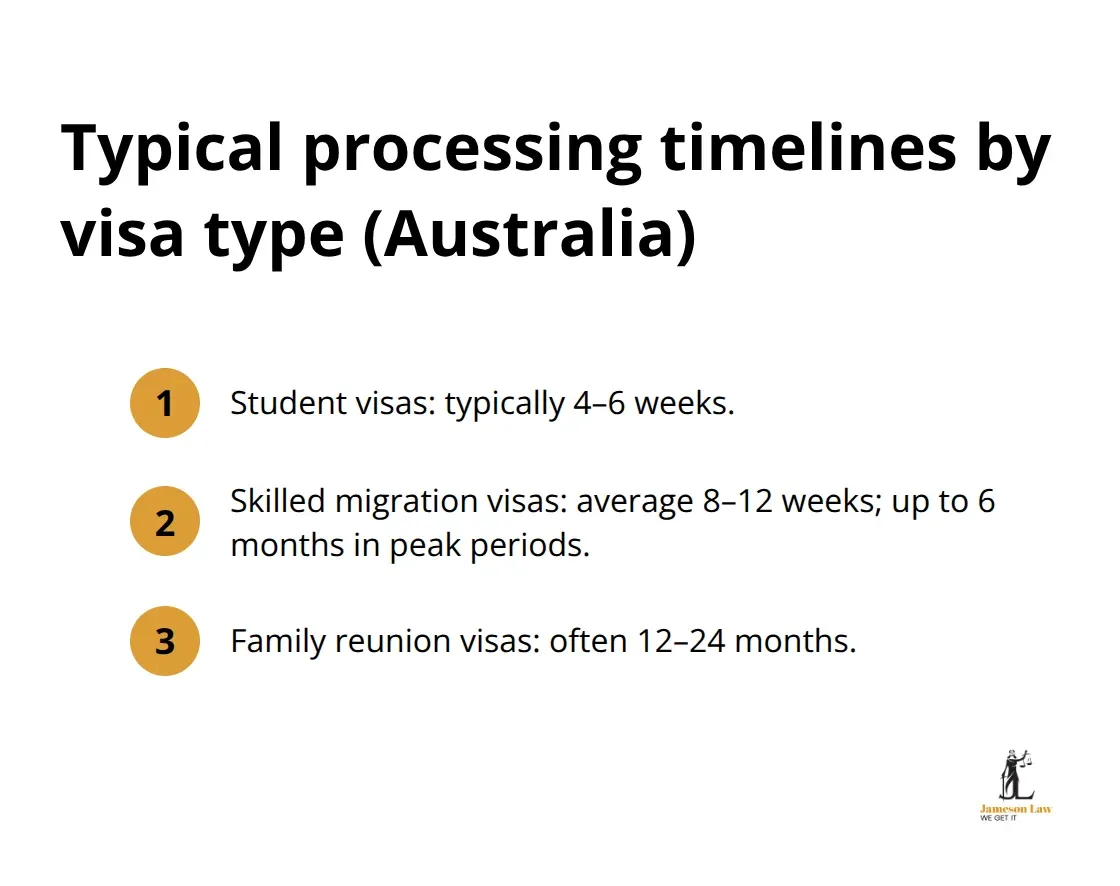
Do not rely on fixed processing estimates, as volumes fluctuate. As a general guide, median processing times published by the Department in May 2026 were approximately 9 months for skilled permanent visas, 20 months for partner provisional/temporary visas, and 19 days for student visas. These median figures change monthly. You should consistently refer to the Department’s official global visa processing times guide for current data.
Requests for More Information
If the Department needs clarification or further evidence, it may ask you to provide information by a stated deadline. Respond completely and on time through ImmiAccount. If required material is not provided, the Department may decide the application on the information already available, which can result in refusal.
Frequently Asked Questions
Does 65 points guarantee a skilled migration invitation in Australia?
No. While 65 points is the minimum statutory threshold required to submit an Expression of Interest (EOI) for skilled visas like the Subclass 189, 190, or 491, it does not guarantee an invitation. Invitations are competitive and based on economic demand, occupational ceilings, and state or territory priorities.
How long does the migration to Australia process take?
Processing times vary widely by visa subclass and individual circumstances. For instance, published median processing times in May 2026 were approximately 9 months for skilled permanent visas, 20 months for partner provisional/temporary visas, and 19 days for student visas. You should always check the Department of Home Affairs’ official processing times guide for current estimates.
Will an incomplete visa application stall indefinitely?
No. If your application is incomplete, the Department of Home Affairs may issue a Request for Further Information (RFI) with a strict deadline, or they may simply refuse the application based on the evidence provided at lodgement.
Final Thoughts
The migration to Australia process demands meticulous preparation and a thorough understanding of the legislative requirements governing your chosen visa subclass. Approaching the application as a strict legal exercise—ensuring valid skills assessments, verifiable financial capacity, and compliant health and character checks—is essential for success.
Because the Department evaluates applications against stringent criteria, missing a deadline or supplying inaccurate information can have severe consequences for your migration goals. Always verify the conditions attached to your visa once granted via the Visa Entitlement Verification Online (VEVO) system.
If you require strategic advice on visa eligibility or assistance with a complex application, contact the immigration team at Jameson Law for expert representation.