

![Partner Visa Timeline [Guide]](https://jamesonlaw.com.au/wp-content/uploads/emplibot/Partner-Visa-Timeline-_Guide__1786943453.jpeg.avif)
Understanding your partner visa timeline Australia is one of the most critical aspects of planning your future together. A spouse or de facto visa application involves a highly structured multi-stage process, and delays can mean prolonged uncertainty or time apart from your partner.
At Jameson Law, we guide couples through the complexities of the Australian migration system. This guide breaks down the onshore and offshore pathways, the factors that dictate processing speeds in 2026, and how to structure a decision-ready application.
Choosing Your Partner Visa Timeline Australia Pathway
Onshore (Subclass 820/801) vs Offshore (Subclass 309/100)
Australia recognises two primary partner visa pathways for married and de facto couples, and your choice dictates your processing timeline and immediate rights.
- Onshore (Subclass 820/801): You must be in Australia when you apply and when the temporary 820 visa is granted. This pathway is beneficial for couples already in Australia, as it generally provides a Bridging Visa with work rights and Medicare access while awaiting the outcome.
- Offshore (Subclass 309/100): You must be outside Australia when you apply. This pathway suits couples currently living overseas who are planning to relocate to Australia once the temporary 309 visa is granted.
The Subclass 300 Prospective Marriage Visa
The Subclass 300 Prospective Marriage visa is an offshore visa designed for couples who intend to travel to Australia to marry. It grants a temporary stay (typically between 9 and 15 months), during which you must marry your sponsor and subsequently apply for the onshore 820/801 visa. Due to the extra application stage, this pathway is often slower and more costly than lodging a direct partner visa if you are already married or meet de facto requirements.
De Facto Relationship Recognition
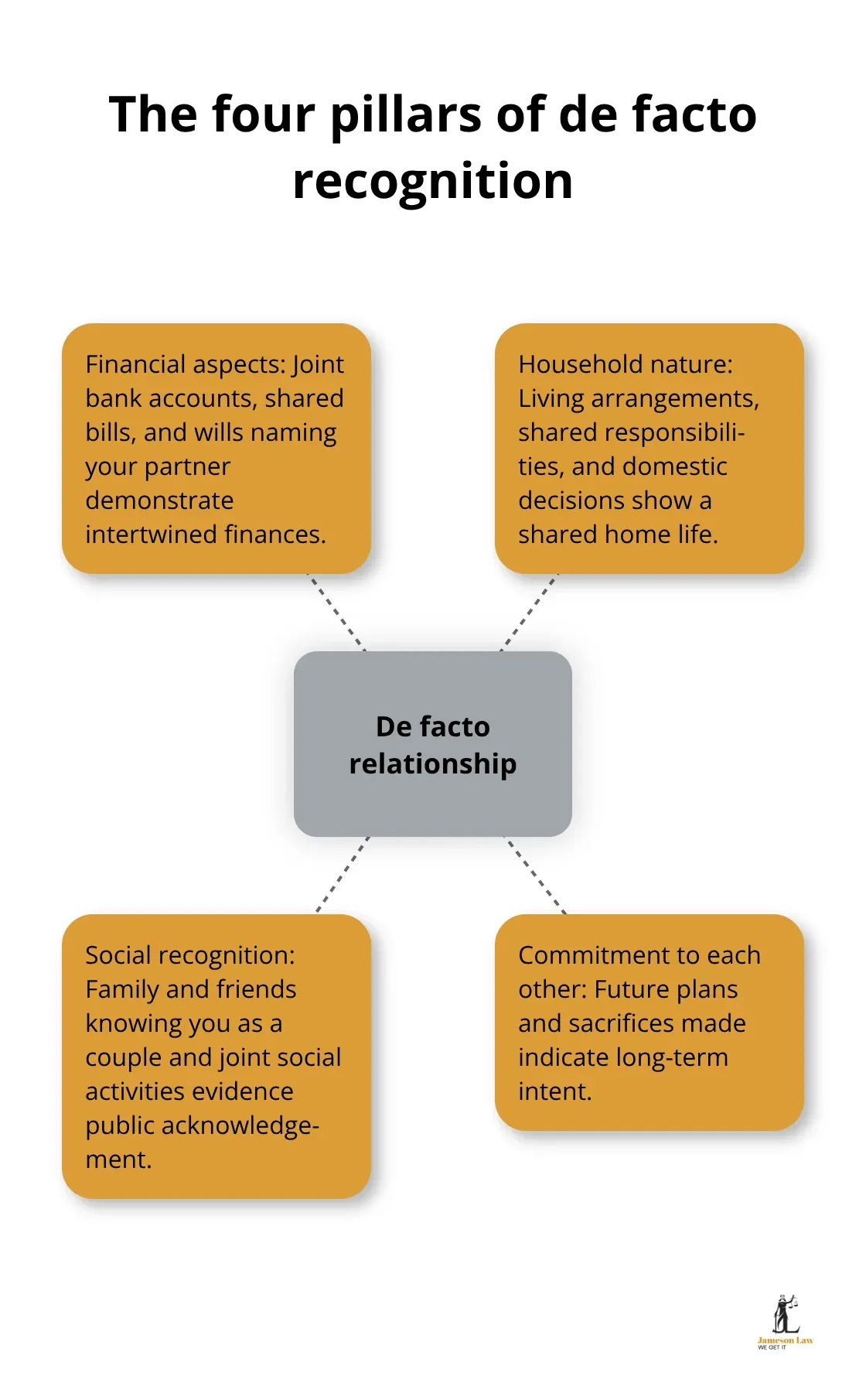
For de facto couples, the Department of Home Affairs generally requires demonstration of a genuine relationship of at least 12 months prior to lodgement. However, this period can sometimes be waived if you have registered your relationship with a relevant Australian state or territory authority, or if compelling and compassionate circumstances exist. The Department assesses relationships across four pillars: financial aspects, nature of the household, social recognition, and mutual commitment.
Key Stages in the Visa Processing Journey
Understanding Processing Times
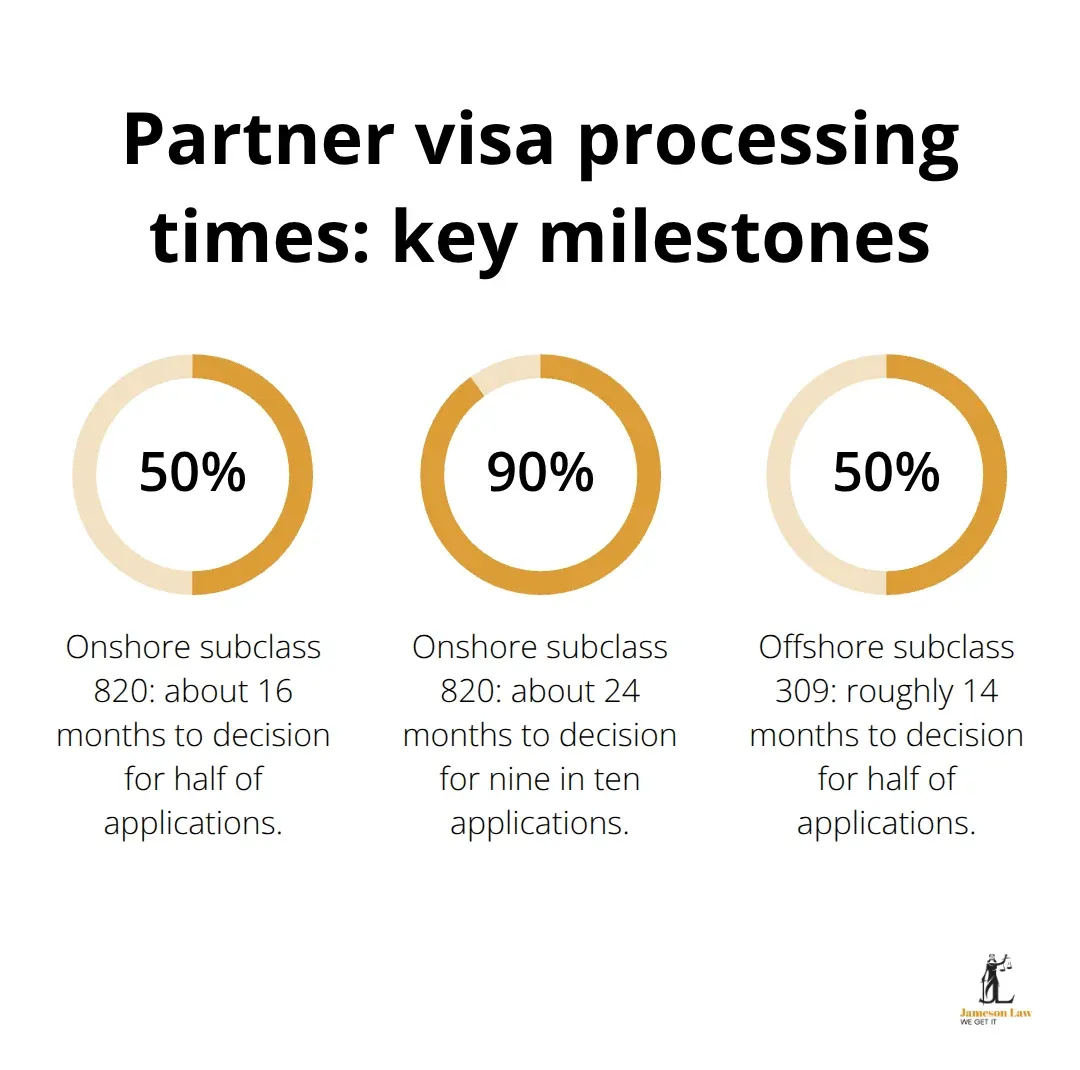
Processing times for Australian partner visas are highly volatile. They fluctuate based on departmental resourcing, ministerial directions, application volume, and the complexity of individual cases. Rather than relying on fixed historical timelines, applicants should always consult the official Global Visa Processing Times guide published monthly by the Department of Home Affairs. Currently, the Department processes these applications in two distinct stages.
Application Lodgement and Information Requests
Submitting your partner visa application through ImmiAccount is the first step. The Department will assign a case officer to assess your identity, relationship evidence, and the eligibility of your Australian sponsor.
If your application lacks necessary evidence—such as updated police clearances, health examinations, or sufficient relationship proof—the Department will issue a Section 56 Request for More Information (s56). You are typically given a strict 28-day deadline to respond. Failing to front-load your application with the required documents is the most common reason for processing delays.
The Two-Year Permanent Residency Assessment
The partner visa is generally a two-stage process. A temporary Subclass 820 or 309 grant does not make the applicant a permanent resident. Two years after the combined Partner visa application was lodged, a temporary visa holder is generally eligible to provide updated documents through ImmiAccount and be assessed for Subclass 801 or 100. Eligibility for assessment is not a guarantee of grant: Home Affairs must still be satisfied that every applicable criterion is met.
Exceptions: Long-Term Relationships and Family Violence
Australian migration law provides vital exceptions to the standard two-year waiting period:
- Long-term relationships: Home Affairs may grant the permanent visa in less than two years if the relationship met the legal definition of a long-term partner relationship when the combined application was made—generally at least three years, or two years where there is a dependent child of both partners.
- Family violence provisions: some Partner visa applicants may remain eligible after a relationship ends because of family violence by the former sponsor. Coverage and evidence rules depend on the applicant’s subclass and circumstances; for example, a Subclass 309 applicant must generally have entered Australia since applying. See the Home Affairs family violence provisions.
Factors That Delay Partner Visa Processing
Incomplete Documentation
Applications that are not “decision-ready” at lodgement sit in queues while case officers wait for basic documents. To mitigate this, ensure your relationship statements are detailed and consistent, and that all identity documents are certified or uploaded in high-resolution colour.
Health and Character Clearances
Police checks from certain jurisdictions can take months to secure. Furthermore, medical assessments must be conducted by approved panel physicians. While front-loading these checks speeds up initial processing, keep in mind that police and health clearances are generally only valid for 12 months. If processing stretches beyond a year, you may be required to undertake them again.
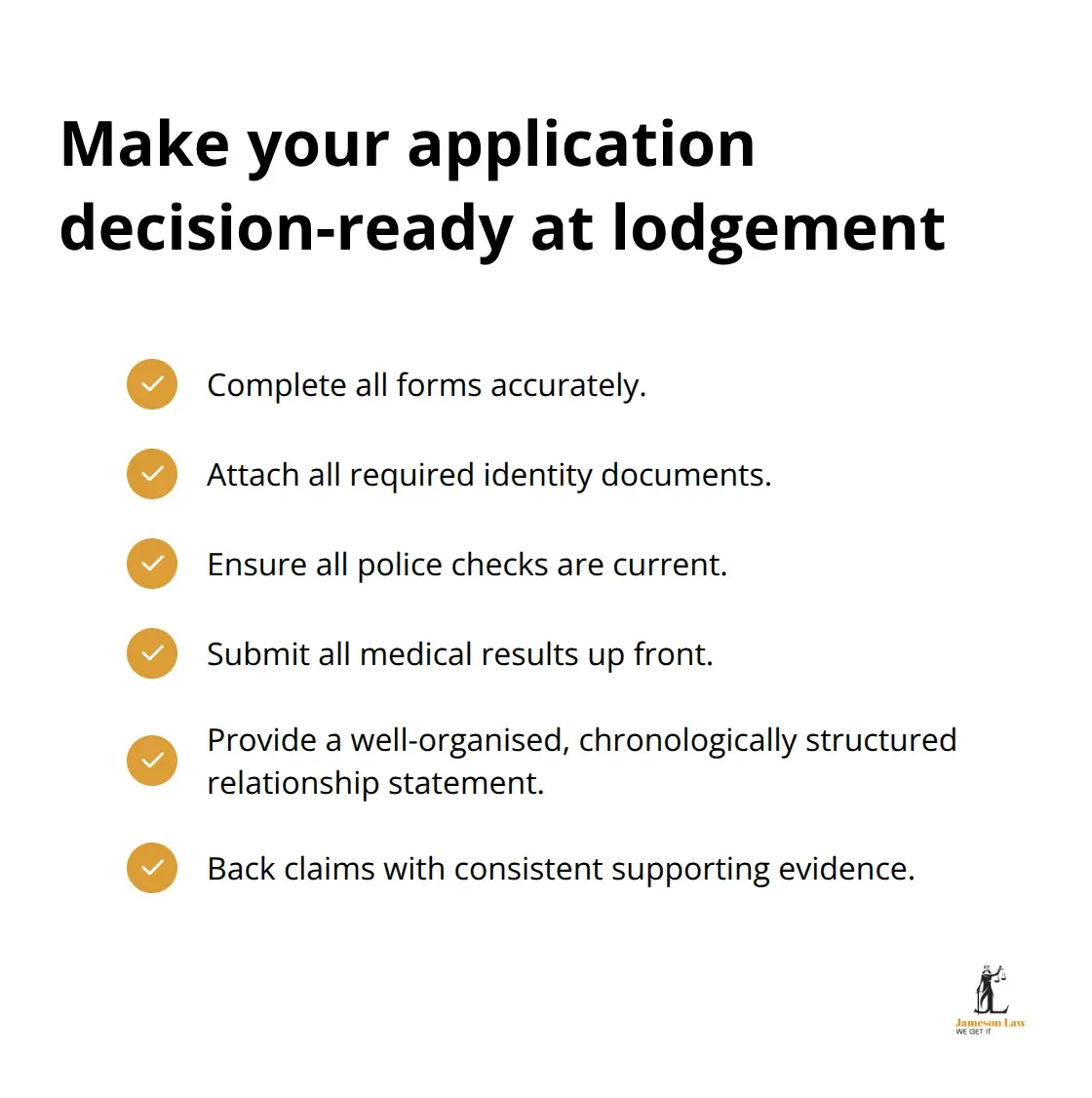
Inconsistencies in Evidence
The Department scrutinises relationship timelines aggressively. Minor discrepancies between your relationship statement, your sponsor’s statement, and third-party statutory declarations (Form 888) can trigger fraud concerns under Public Interest Criterion (PIC) 4020, leading to severe delays or refusal. Consistency is paramount.
Frequently Asked Questions
How long does a partner visa take to process in Australia?
Processing times are highly volatile and depend on the visa subclass (onshore 820 vs offshore 309), application quality, and departmental queues. The Department of Home Affairs publishes monthly global processing times that you should consult for the most current estimates.
Can I get my permanent partner visa without waiting two years?
Home Affairs may grant the permanent visa in less than two years if the relationship met the legal definition of a long-term partner relationship when the combined application was made—generally at least three years, or two years where there is a dependent child of both partners.
What happens to my partner visa if we separate due to family violence?
Some Partner visa applicants may remain eligible after a relationship ends because of family violence by the former sponsor. Eligibility and evidence requirements depend on the visa subclass and circumstances, so applicants should use the current Home Affairs family violence guidance.
Final Thoughts
Managing an Australian partner visa application requires meticulous preparation, chronological consistency, and a clear understanding of departmental procedures. By submitting a complete, decision-ready application that clearly addresses the four pillars of a genuine relationship, you give your file the best possible chance of moving smoothly through the processing queues.
If you are applying with complex circumstances—such as prior visa refusals, periods of separation, or reliance on statutory exceptions—obtaining professional legal guidance is highly recommended. To ensure your application meets the strict requirements of Australian migration law, contact Jameson Law for an assessment of your pathway.