

Applying for an Australian partner visa is a comprehensive legal process requiring detailed documentation. Assessing your partner visa eligibility Australia status before lodging an application ensures you understand the legislative criteria, evidentiary thresholds, and sponsorship obligations set out under the Migration Act 1958 and the Migration Regulations 1994.
At Jameson Law, our immigration lawyers guide couples through the eligibility requirements enforced by the Department of Home Affairs. This guide outlines the available visa pathways, the core elements of a genuine relationship, and key sponsorship restrictions.
Core Partner Visa Eligibility Australia Criteria
To qualify for a partner visa, both the applicant and the sponsor must satisfy specific statutory criteria at the time of application and decision:
- Eligible Sponsor: The sponsor must be an Australian citizen, an Australian permanent resident, or an eligible New Zealand citizen, aged 18 years or older.
- Applicant Age: The visa applicant must be at least 18 years of age when the application is lodged.
- Genuine and Continuing Relationship: The couple must be legally married or in a recognised de facto relationship, with a mutual commitment to a shared life to the exclusion of all others.
- Health and Character: The applicant (and any migrating or non-migrating dependents) must satisfy mandatory public interest criteria relating to health examinations and police clearances.
The Three Main Partner Visa Pathways
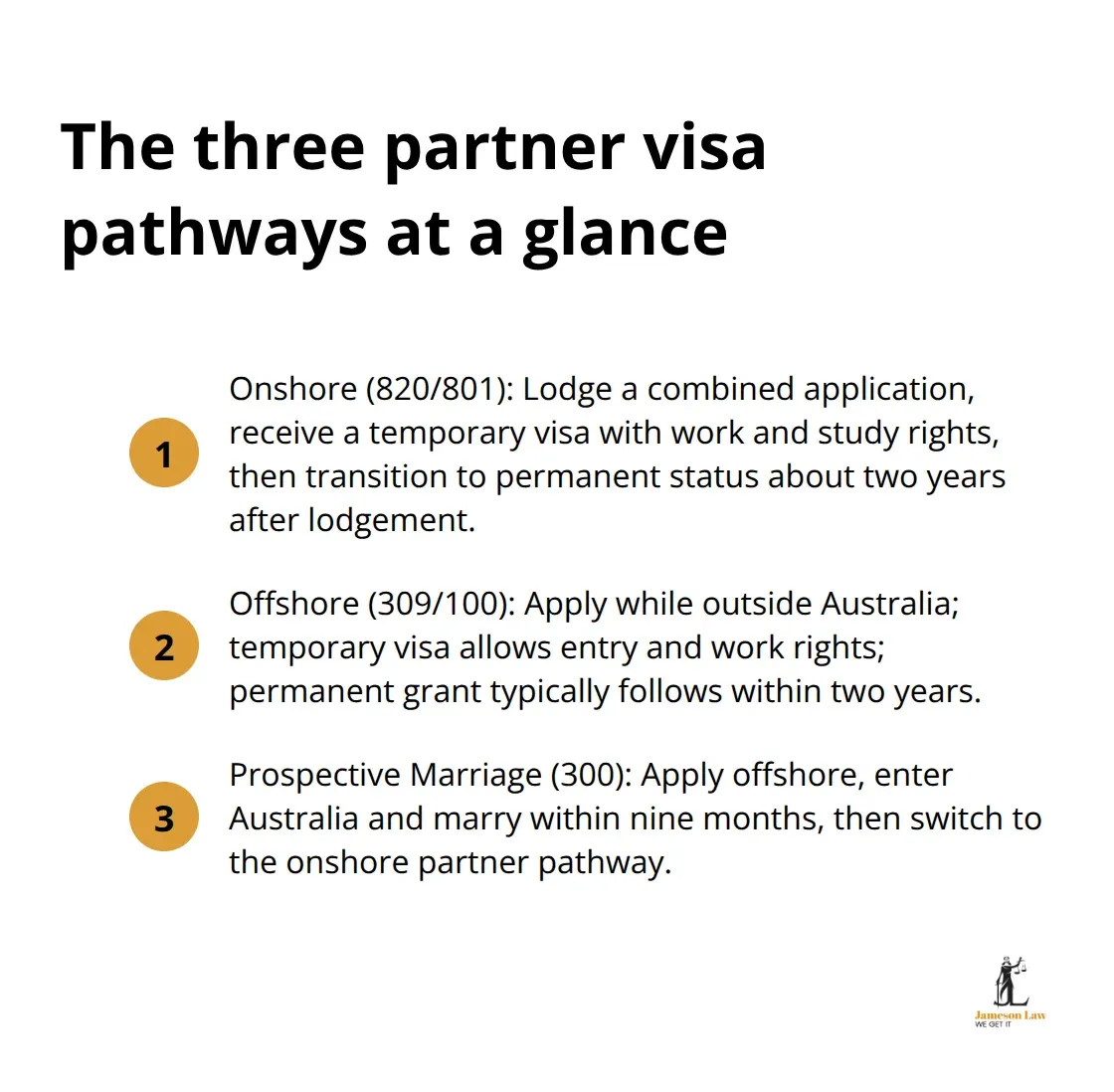
Australia provides three primary partner visa pathways depending on where the applicant is located and whether the couple is married, de facto, or planning to marry:
| Pathway | Visa Subclasses | Key Location & Status Requirements |
|---|---|---|
| Onshore Partner Visa | Subclass 820 (Temporary) / Subclass 801 (Permanent) | Applicant must be in Australia when lodging. Combined two-stage application for married or de facto partners. |
| Offshore Partner Visa | Subclass 309 (Provisional) / Subclass 100 (Migrant) | Applicant must be outside Australia when lodging. Combined two-stage application for married or de facto partners. |
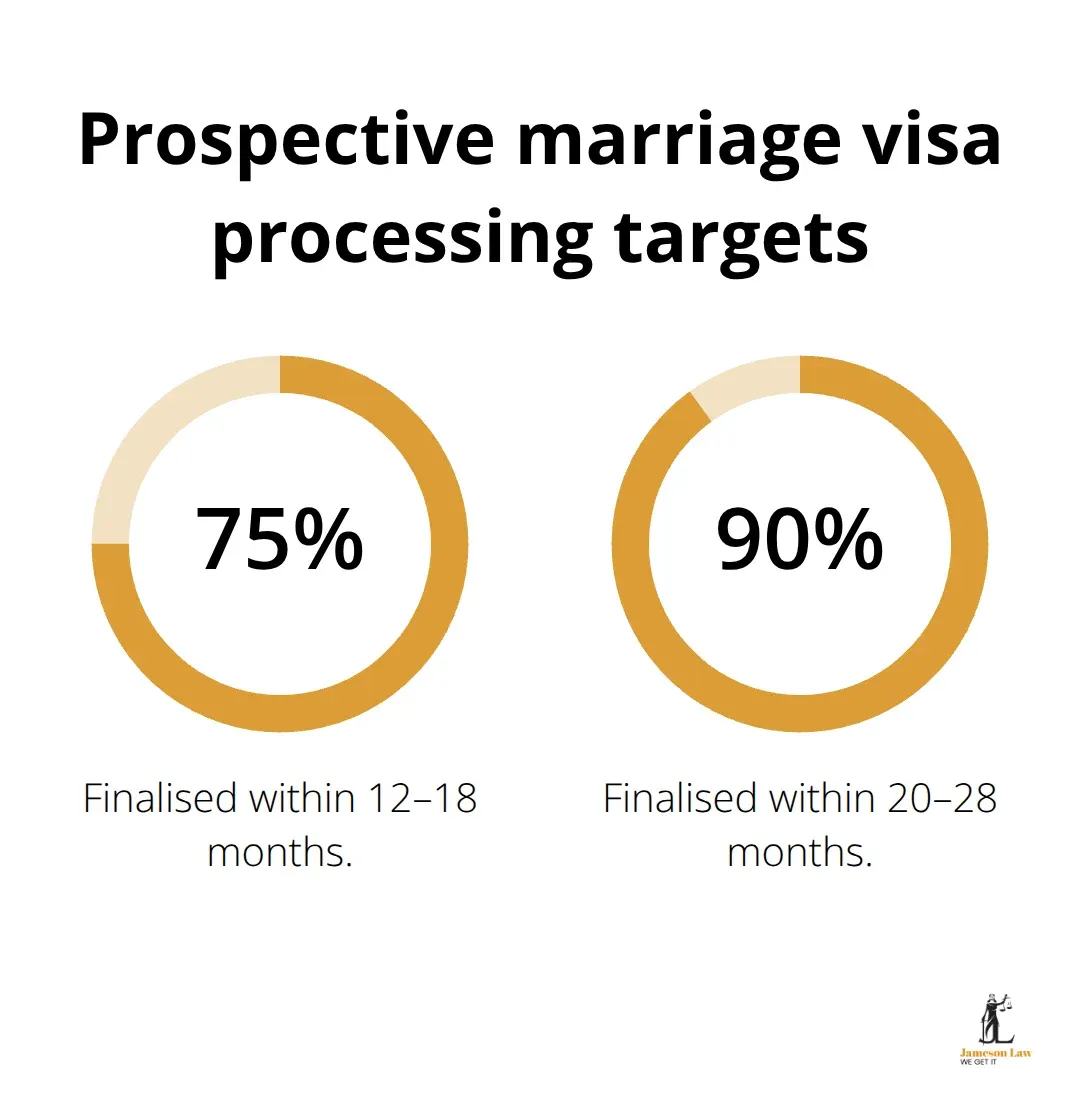
| Prospective Marriage Visa | Subclass 300 (Temporary) | Applicant must be outside Australia when lodging. Intended for engaged couples who plan to marry in Australia within the visa validity period. |
Evidentiary Requirements: The Four Relationship Aspects
Under Regulation 1.09A and Regulation 2.03A of the Migration Regulations 1994, the Department assesses relationship genuineness across four distinct evidentiary pillars:
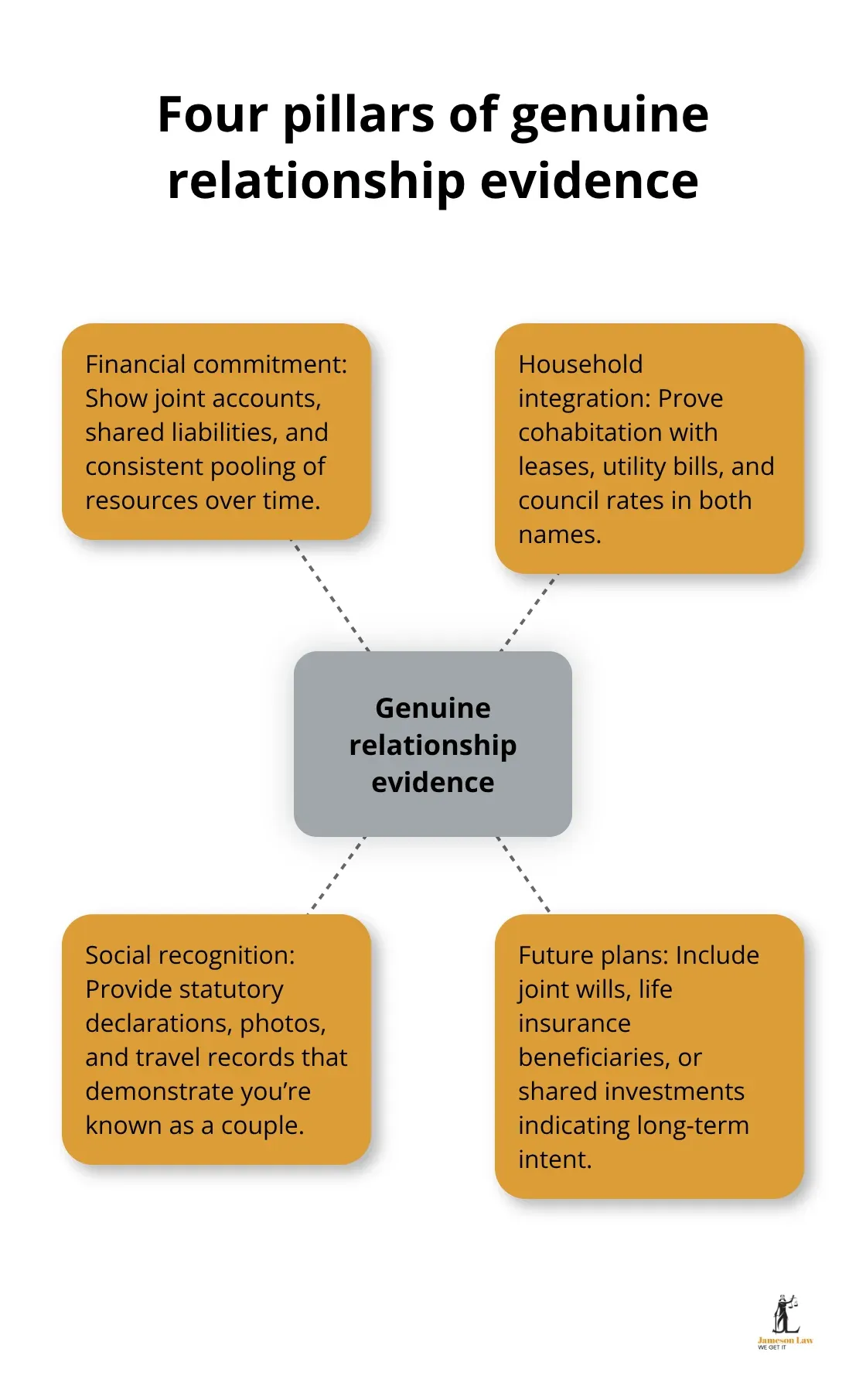
- Financial Aspects: Evidence of joint financial commitments, such as shared bank accounts actively used for household expenses, joint asset ownership, joint liabilities (e.g., leases or loans), and pooled financial resources.
- Nature of the Household: Living arrangements, division of domestic duties, joint residential leases, shared utility bills, and care arrangements for children where applicable.
- Social Aspects: How the relationship is perceived by third parties, supported by statutory declarations from family and friends (e.g., Form 888), joint travel records, shared social memberships, and photographic evidence spanning the relationship timeline.
- Nature of Commitment: The mutual intention for a shared future, knowledge of each other’s personal backgrounds, terms of wills naming each other as beneficiaries, and communication logs during any temporary periods of physical separation.
De Facto Relationships and the 12-Month Requirement
Under Section 5CB of the Migration Act 1958 and Regulation 2.03A, couples applying on a de facto basis are generally required to show they have been in a de facto relationship for at least the 12 months immediately preceding the application date.
Statutory Exceptions to the 12-Month Rule
The 12-month de facto relationship duration requirement does not apply if:
- Registered relationship: the relationship is registered with an Australian state or territory authority recognised for migration purposes. Registration removes the 12-month duration requirement but does not remove the need to prove a genuine de facto relationship.
- Compelling and Compassionate Circumstances: The applicant demonstrates compelling and compassionate circumstances to justify the grant of the visa (for instance, where the couple shares a dependent child).
Sponsorship Limitations and Statutory Protections
Sponsor Limitations (Regulation 1.20J)
Regulation 1.20J can prevent sponsorship approval where the sponsor has already sponsored or nominated two partners, where less than five years has passed since an earlier partner sponsorship, or where the sponsor was themselves granted a partner or prospective marriage visa within the relevant five-year period. The precise five-year starting point depends on which limitation applies.
Compelling circumstances affecting the sponsor can permit approval despite some limitations, but this is discretionary and evidence-specific.
Sponsor Character and Financial Obligations
Sponsors must provide Australian and relevant overseas police checks. A relevant offence and significant criminal record can affect sponsorship approval, but the result depends on the statutory test, disclosure requirements and circumstances—not every conviction automatically disqualifies a sponsor.
There is no universal minimum income threshold for an ordinary partner visa sponsor. The sponsor must nevertheless accept the sponsorship undertakings and provide the information and evidence Home Affairs requests.
Family Violence Provisions
Some applicants may remain eligible for a permanent Partner visa after the relationship ends because of family violence by the former sponsor. Coverage depends on the subclass and circumstances: it includes certain Subclass 820 applicants or holders, Subclass 309 applicants or holders who entered Australia after applying, and some current or former Subclass 300 holders in Australia.
Home Affairs first assesses whether the relationship was genuine before it ended, then assesses whether qualifying family violence occurred. Use the current Home Affairs family violence guidance for notification and evidence steps.
Frequently Asked Questions
What are the core eligibility requirements for an Australian partner visa?
For subclasses 820/801 or 309/100, the applicant must generally be the spouse or de facto partner of an eligible Australian citizen, permanent resident or eligible New Zealand citizen, with a genuine and continuing relationship. Subclass 300 instead requires the prospective-marriage criteria. Age, sponsorship approval, health and character requirements also apply.
Is there a minimum income requirement for a partner visa sponsor in Australia?
No. There is no universal mandatory minimum income threshold for a sponsor under standard partner visa regulations. However, the sponsor must undertake sponsorship obligations to provide accommodation and financial support to the applicant for their initial years in Australia if necessary.
What are the exceptions to the 12-month de facto relationship requirement?
Under Regulation 2.03A of the Migration Regulations 1994, the 12-month de facto cohabitation requirement does not apply if the relationship is registered under an Australian state or territory relationship register, or if compelling and compassionate circumstances exist at the time of application.
Final Thoughts
Establishing partner visa eligibility Australia requires presenting a comprehensive, well-structured evidence portfolio across all four statutory relationship aspects. Whether applying under married or de facto grounds, ensuring compliance with sponsorship limits, health and character checks, and relationship duration rules is essential to avoiding unnecessary delays or refusals.
Because every couple’s circumstances are unique—especially where past visas, complex cohabitation timelines, or sponsorship limitations apply—obtaining professional legal advice provides clarity and ensures your application meets the Department’s standards.
To assess your partner visa eligibility and discuss your migration pathway with our team, contact Jameson Law.