


Australia’s General Skilled Migration (GSM) program provides pathways to residency for professionals whose skills are in high demand. If you are seeking a skilled visa nomination NSW, it is crucial to understand that the process is highly competitive, strictly governed by state economic priorities, and subject to frequently changing quotas.
At Jameson Law, we assist skilled professionals in navigating the complexities of the Department of Home Affairs framework and the NSW Government’s nomination criteria. This guide outlines the mechanics of the Subclass 190 and Subclass 491 visas, evidentiary requirements, and the reality of the invitation process.
Important Update: Current Status of NSW Nominations
Status Alert (August 2026): The NSW Government has officially advised that applications for the Skilled Nominated visa (Subclass 190) are currently closed. Nomination places for the current program year have been fully allocated. Updated settings and quotas for the next program year are still under review.
Applicants must check the official NSW Government Visas and Migration website before incurring costs specifically for this pathway. Subclass 491 pathways have separate criteria and availability; check the current NSW Government page before relying on any pathway.
How NSW Skilled Visa Nomination Works
State nomination operates in tandem with the federal points-tested migration system. By securing a nomination from NSW, you receive additional points toward your federal Expression of Interest (EOI) score, which can be critical in meeting the required thresholds.
| Visa Subclass | Residency Type | Nomination Points Provided |
|---|---|---|
| Subclass 190 (Skilled Nominated) | Permanent Residency. Requires a commitment to live/work in NSW for at least 2 years. | Adds 5 points to your federal EOI score. |
| Subclass 491 (Skilled Work Regional) | 5-year Provisional Residency. Must live, work, and study in a designated regional area. | Adds 15 points to your federal EOI score. |
The Selection Process is Discretionary and Competitive
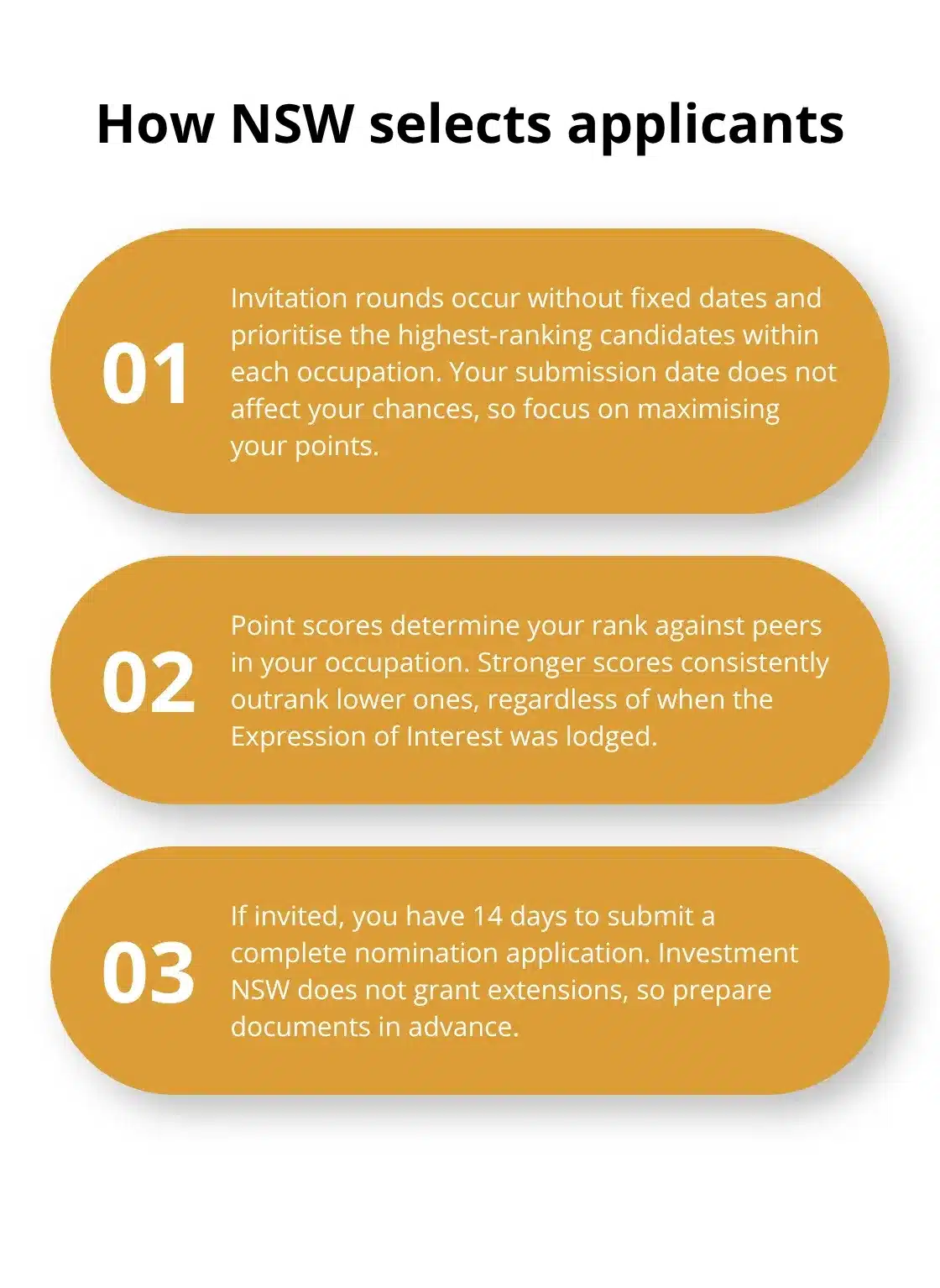
You cannot apply directly to NSW for a Subclass 190 nomination. Instead, NSW utilizes a selection-based invitation process. You must submit an Expression of Interest (EOI) via the federal SkillSelect system, indicating NSW as your preferred state.
NSW periodically reviews the SkillSelect pool and issues invitations based on state economic needs, focusing on high-priority sectors such as health, infrastructure, and information technology. The process is intensely competitive; achieving the minimum federal 65-point threshold does not guarantee an invitation. NSW ranks EOIs within relevant ANZSCO unit groups using its published selection settings. Those settings can change, so check the current NSW page rather than relying on historical invitation patterns.
Crucial Application Requirements and Documentation
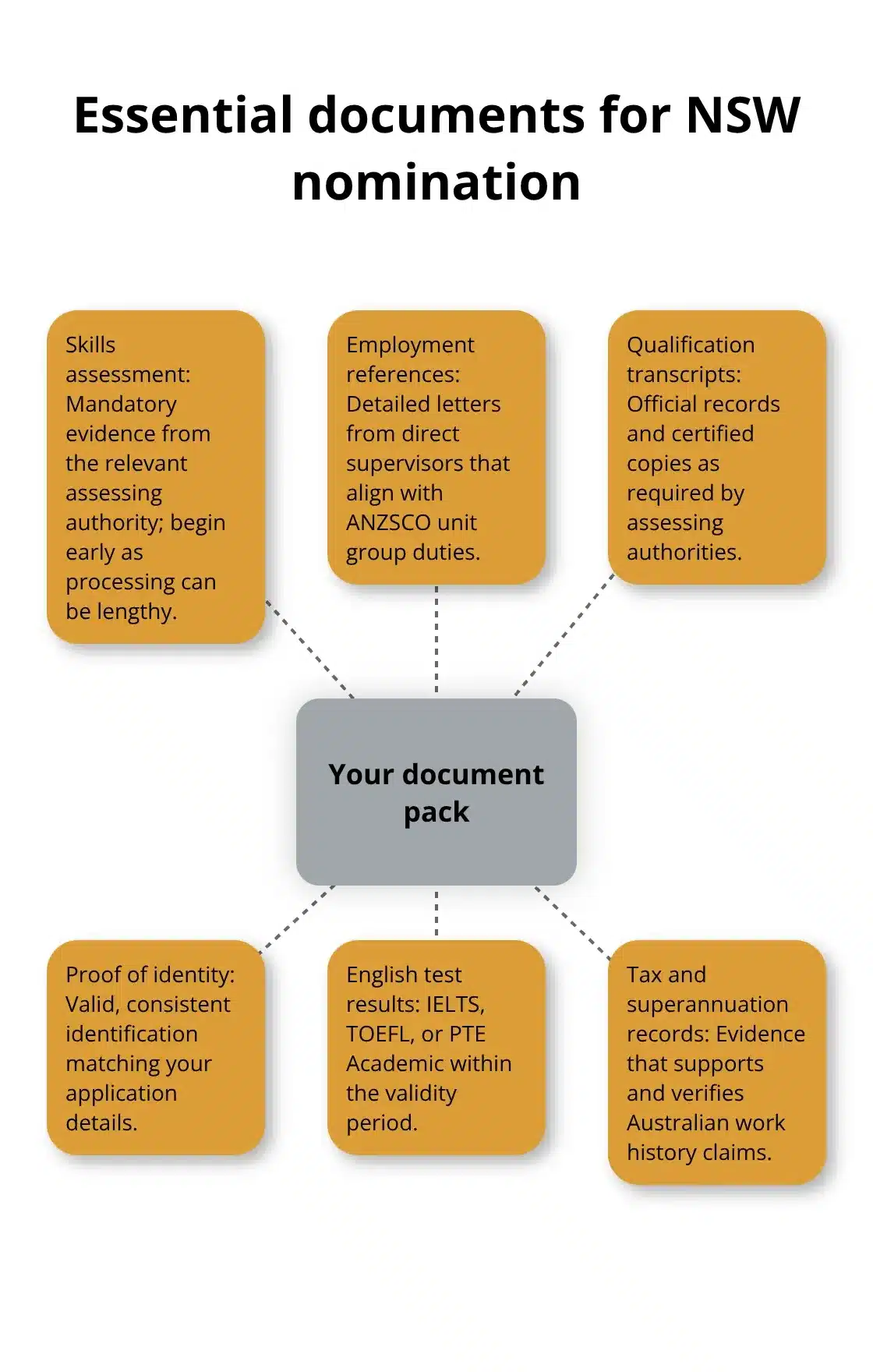
If NSW invites you to apply for nomination, the invitation will state the application deadline and document requirements. Follow the current invitation instructions and prepare evidence in advance because an expired invitation may not be extended.
1. Valid Skills Assessment
You must hold a valid, positive skills assessment for your nominated occupation from the relevant Australian assessing authority (e.g., Engineers Australia, ANMAC, ACS). This assessment must be completed before you submit your EOI.
2. English Language Proficiency
All applicants must demonstrate at least Competent English, though higher levels (Proficient or Superior) award crucial additional points. Test results (such as IELTS or PTE Academic) must be valid at the time of invitation.
3. Employment and Residency Evidence
If you are claiming points for skilled employment, you must provide verifiable documentation. This includes formal reference letters on company letterhead, employment contracts, payslips, and tax records (such as ATO Notices of Assessment). If applying via an onshore pathway, you must prove you meet the state’s specific residency requirements using utility bills, lease agreements, and bank statements.
State Nomination vs. Federal Visa Grant
It is vital to distinguish between state nomination and the actual visa grant. If NSW approves your nomination, this simply triggers SkillSelect to issue you an invitation to lodge your visa application with the Department of Home Affairs. The Department will then independently assess your application against all legislative criteria, including applicable health and character requirements. Nomination by NSW does not guarantee that the Department will grant your visa.
Frequently Asked Questions
Is the NSW Subclass 190 visa nomination currently open?
Currently, NSW advises that Subclass 190 applications are closed because nomination places for the current program year are fully allocated. Updated settings for the next program year are under review. Always check the official NSW Government Visas and Migration page for the latest status.
How do I apply for a skilled visa nomination in NSW?
You cannot apply directly to the NSW Government for a Subclass 190 nomination. You must first submit an Expression of Interest (EOI) through the federal SkillSelect system and select NSW as your preferred state. NSW then runs competitive selection rounds and invites the highest-ranking candidates to apply for nomination.
Does receiving a NSW nomination guarantee my visa will be granted?
No. State nomination is an endorsement that allows you to apply for the visa. Once nominated, you must submit a formal visa application to the Department of Home Affairs, which independently assesses whether you meet all legislative criteria, including health and character requirements.
Final Thoughts
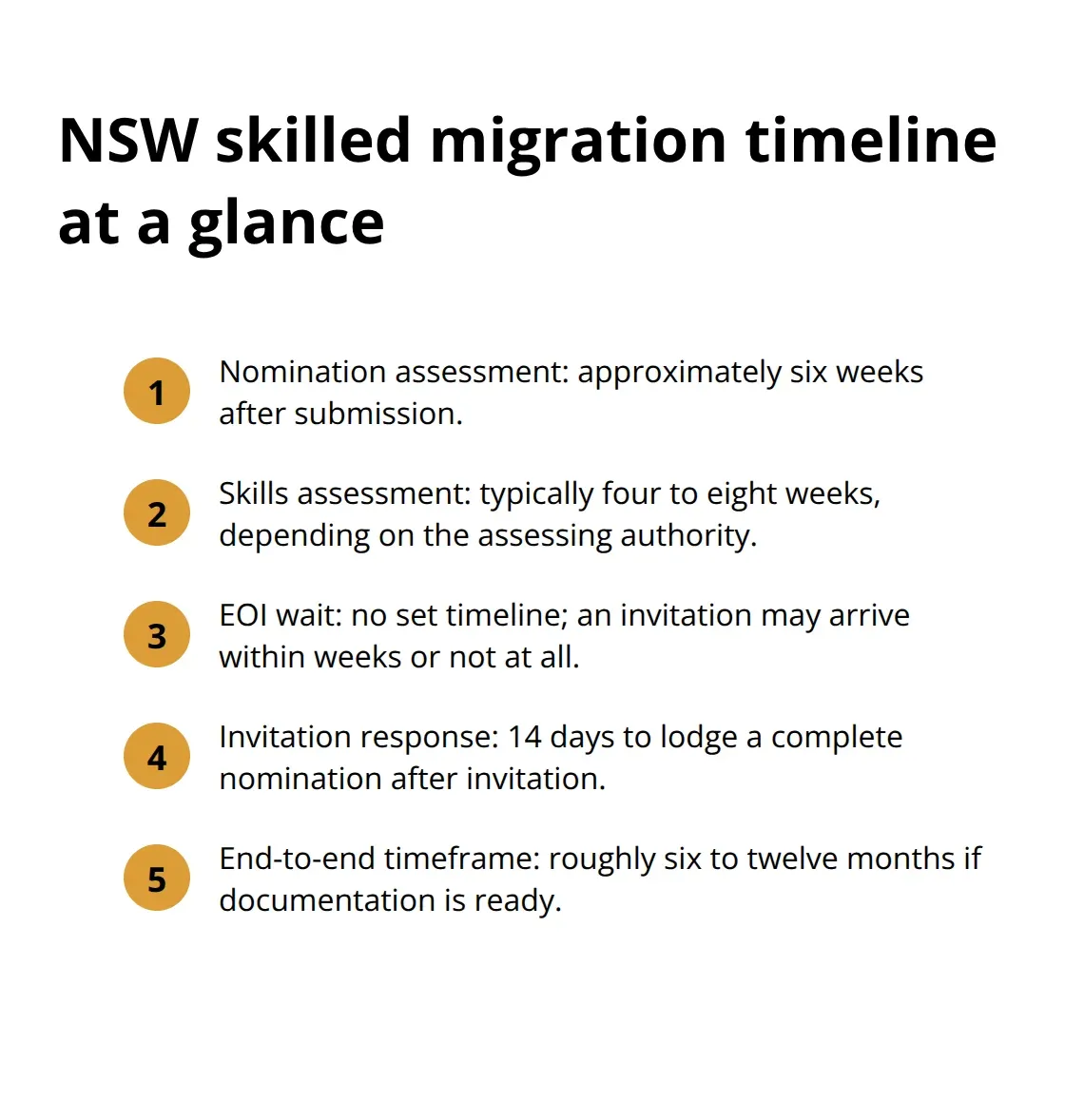
Pursuing a skilled visa nomination NSW requires strategic foresight and meticulous preparation. Because the system is driven by quotas and specific economic needs, applicants cannot rely on simply meeting minimum thresholds. A highly competitive points score, a meticulously prepared EOI, and readiness to act within the 14-day invitation window are critical components of a successful strategy.
Given the suspension of the 190 program pending the new allocation year, prospective applicants should focus their efforts on securing skills assessments, maximizing English scores, and ensuring all employment evidence is robust and verifiable.
For tailored guidance on mapping your skilled migration pathway and ensuring compliance with federal and state criteria, contact the immigration team at Jameson Law.