Skilled visa nomination requirements can make or break your application. Whether you are an employer looking to sponsor global talent or an applicant pursuing a career opportunity in Australia, understanding the 2026 legislative landscape is absolutely non-negotiable.
At Jameson Law, we have guided hundreds of businesses and professionals through this rigorous process. With the recent overhaul of Australia’s immigration system, this guide covers everything you need to know to get it right the first time.
What Employers and Applicants Must Demonstrate for Skilled Visa Nomination
Employer Eligibility and the New Skills in Demand Visa
Employers sponsoring skilled workers through Australia’s visa system face strict eligibility rules. The landscape changed significantly when the new Skills in Demand (SID) Visa officially replaced the former Temporary Skill Shortage (TSS) Subclass 482 visa as the primary employer-sponsored pathway.
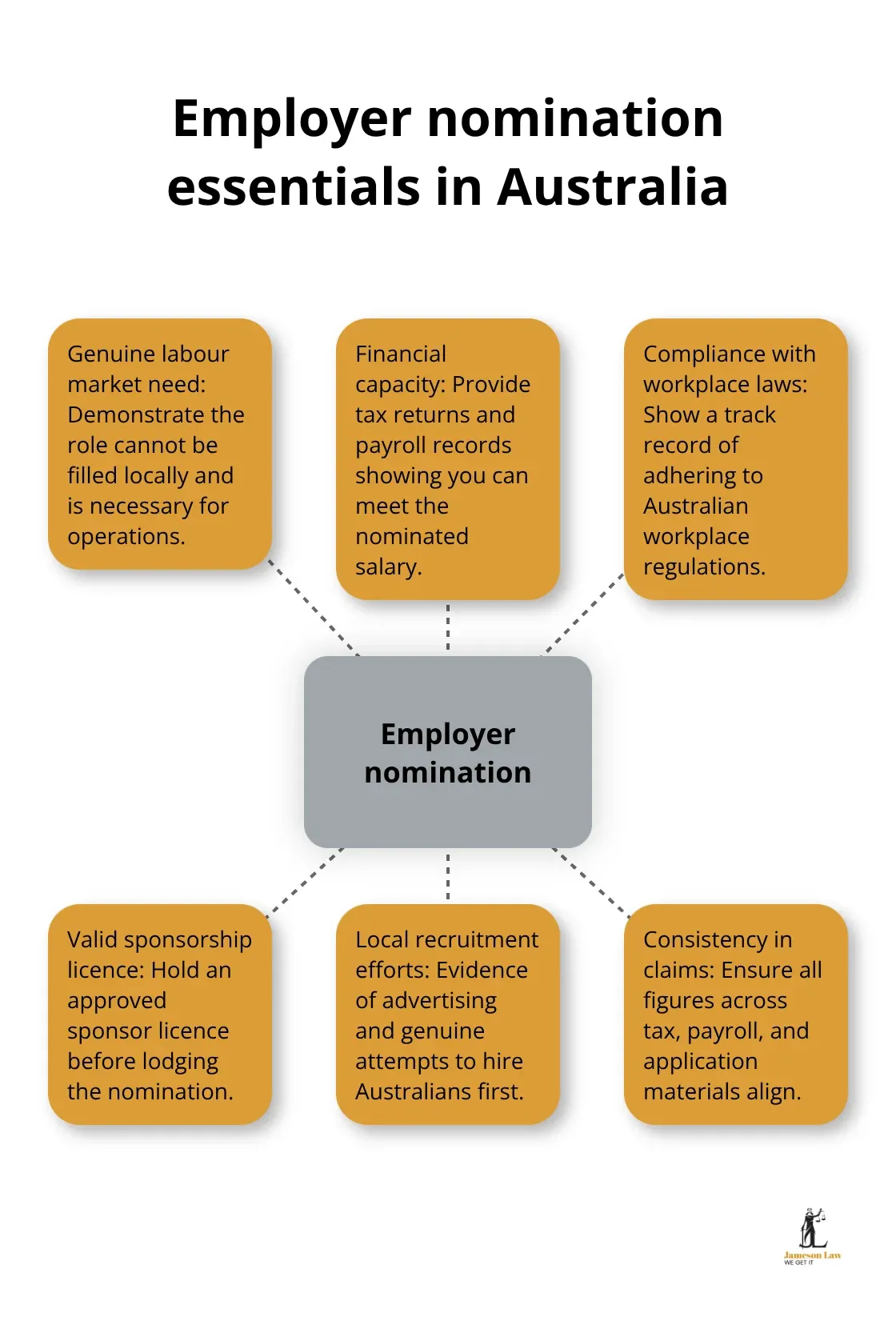
Your business must demonstrate a genuine labour market need and financial stability. Crucially, employers must meet the updated annual minimum salary thresholds for nominations lodged on or after 1 July 2026:
- Core Skills Stream: Requires a minimum salary of AUD 79,499.
- Specialist Skills Stream: Requires a minimum salary of AUD 146,717.
Many employers underestimate how thoroughly the Australian Department of Home Affairs scrutinises these financial points. If your tax returns and payroll records do not align perfectly with your claimed capacity to pay these new thresholds, your nomination will fail.
State Nomination Complexity and Occupation Lists
For those pursuing independent or state-sponsored pathways, such as the Subclass 190 (Skilled Nominated) or Subclass 491 (Skilled Work Regional) visas, state nomination adds another layer of complexity. Different states maintain different occupation lists and prioritise industries based on current economic demands.
While the Department of Home Affairs sets 65 points as the minimum threshold for an Expression of Interest (EOI), relying solely on the minimum rarely guarantees an invitation. Most successful applicants in 2026 need highly competitive scores (often 85 to 95+ points) depending on their profession. Furthermore, for employer-sponsored roles under the new Core Skills stream, your occupation must specifically appear on the consolidated Core Skills Occupation List (CSOL).
Applicant Skills Assessment and Employment Documentation
For applicants, the pathway demands rigorous preparation. A formal skills assessment from the correct assessing authority is mandatory and must precisely match your claimed role.
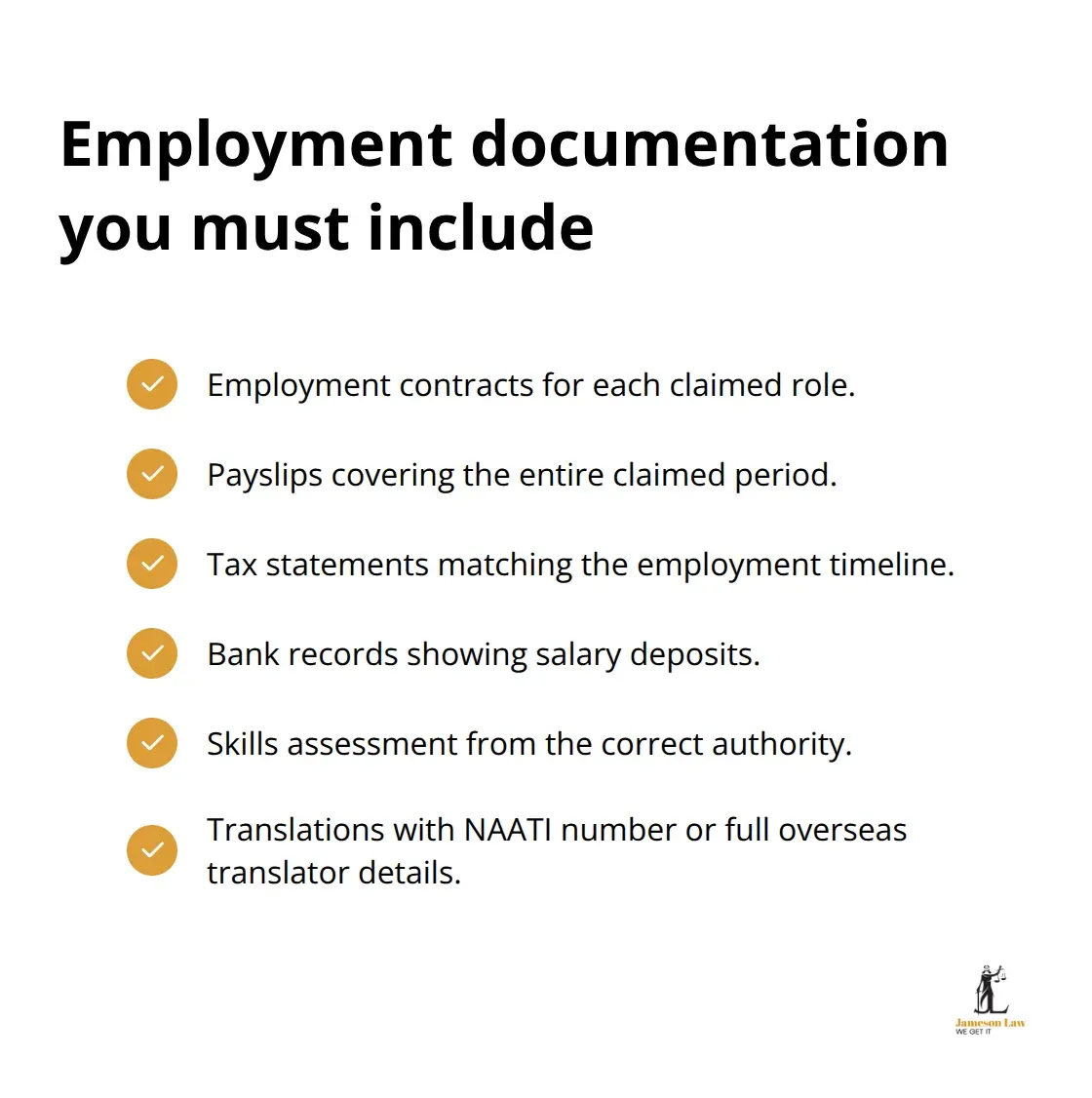
In a major shift benefiting applicants, the minimum work experience requirement for the Skills in Demand visa has been reduced. Applicants now only need one year of full-time work experience (or part-time equivalent) in their chosen field within the last 5 years, down from the previous two-year requirement. You must substantiate this with employment contracts, payslips spanning the claimed period, tax statements, and bank records.
English Language Proficiency and Supporting Documentation
English language proficiency is vital. For the Skills in Demand visa, an IELTS score of 5.0 overall (or equivalent) is generally required. However, for state-nominated points-tested visas, while “Competent English” (e.g., IELTS 6.0) meets the baseline, achieving “Proficient” (7.0) adds 10 points, and “Superior” (8.0) adds 20 points—often the deciding factor for receiving an invitation.
Your passport validity, police certificates from every country lived in for 12 months over the past decade, and health examinations form part of the complete package.
How the Skilled Visa Nomination Works in Practice
The 2026 Visa Processing Overhaul
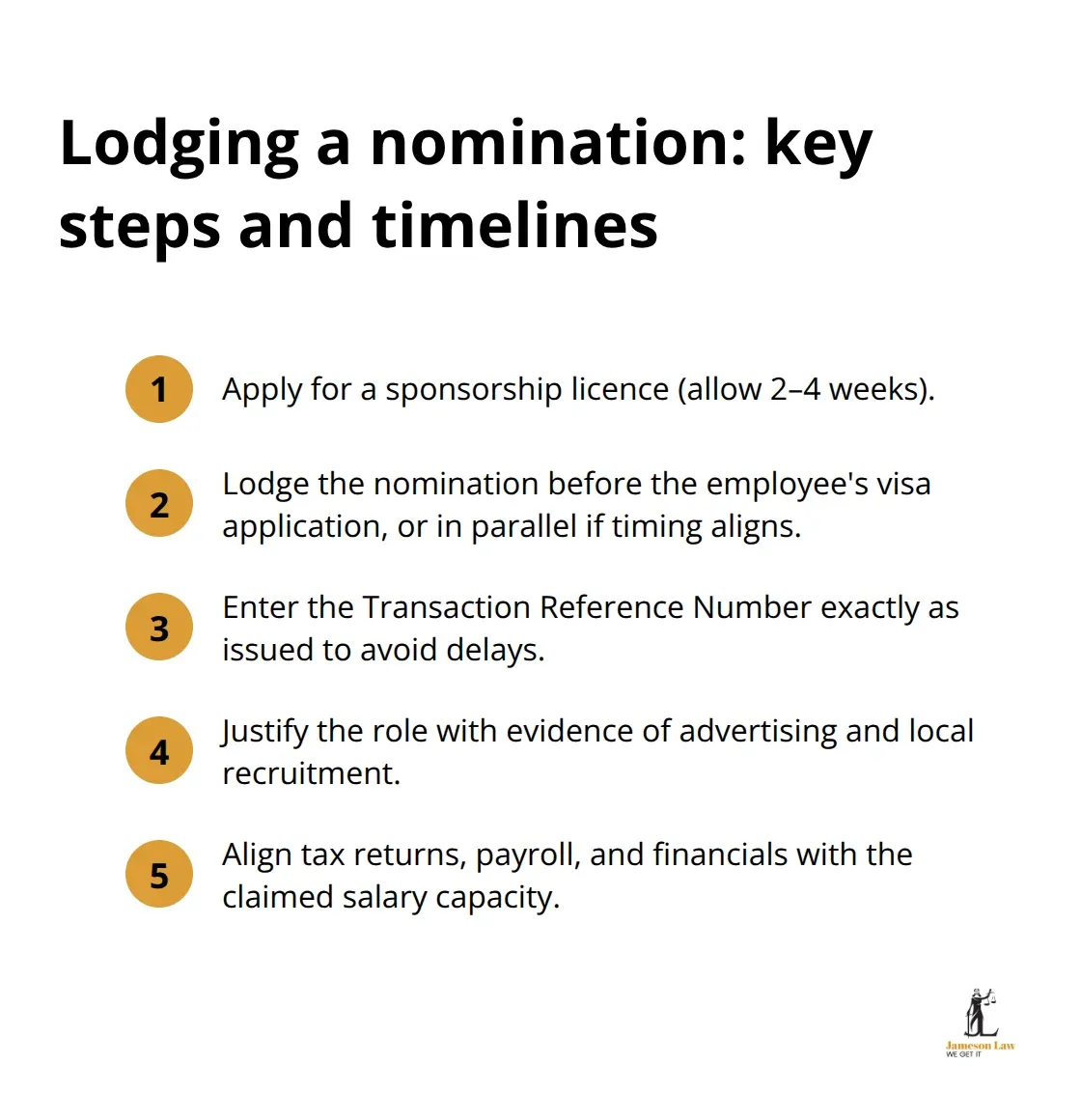
Employers initiate the nomination process by applying for a sponsorship licence. Thanks to the Australian Government’s sweeping visa processing overhaul launched on 6 March 2026, the system now features standardized processing targets and a centralized digital tracking platform.
[Image of the Australian visa processing timeline and document verification flow]
If your application is “decision-ready”, the new processing targets are incredibly fast: just 7 business days for the Specialist Skills stream and 21 business days for the Core Skills stream. Once approved, the department issues a Transaction Reference Number that your employee must enter exactly into their visa application.
Building Your Documentation Package
Documentation forms the backbone of a successful nomination. The new automated document verification system relies on clearly formatted, certified documents. A work reference letter alone will not suffice; the department wants proof embedded in official records, including tax statements and bank deposits. All non-English documents require translation with either an Australian NAATI number or full overseas translator details included.
What Derails Skilled Visa Applications
Incomplete Employment Documentation
Skilled visa applications usually fail because applicants submit incomplete documentation. Under the new March 2026 rules, poor quality scans or missing translations will cause your application to bypass the fast-track automated system and fall into the manual review queue, causing significant processing delays.
Recent Legislative Trap: Training Visa (Subclass 407)
If you are navigating other temporary pathways, be aware of recent integrity shake-ups. For example, from 11 March 2026, a new rule dictates that for the Training Visa (Subclass 407), the employer’s Temporary Activities Sponsorship and the Training Nomination must both be approved before the visa application can even be lodged. Attempting to lodge concurrently as in previous years will result in a refusal.
Final Thoughts
Skilled visa nomination requirements demand extreme precision from both employers and applicants. Employers who proactively plan for the July 2026 salary indexation and maintain meticulous financial records will move through the system efficiently. Applicants who provide “decision-ready” documentation upfront can now benefit from processing times as fast as 7 to 21 days