

Meeting temporary visa Australia requirements requires understanding that there is no single, universal checklist for entering or remaining in the country. Whether the purpose is tourism, study, skilled employment or cultural exchange, the criteria and evidence depend on the visa subclass, stream and applicant circumstances.
At Jameson Law, our immigration lawyers help individuals and sponsoring businesses prepare decision-ready applications under the regulatory framework administered by the Department of Home Affairs. This guide outlines the key temporary visa categories, core document requirements, and essential compliance rules.
Understanding Common Temporary Visa Categories
Before assembling your documents, you must identify the visa subclass that matches your genuine purpose of stay. Australian migration law strictly separates visa pathways based on activity and sponsorship status.
| Visa Subclass | Primary Purpose | Key Evidentiary Focus |
|---|---|---|
| Visitor Visa (Subclass 600) | Tourism, visiting family/friends, or short business visitor activities. | Genuine temporary stay intention, home-country ties, and adequate self-support funds. |
| Student Visa (Subclass 500) | Full-time study at a registered Australian educational institution. | Confirmation of Enrolment (CoE), Genuine Student assessment, financial capacity, English scores, and OSHC. |
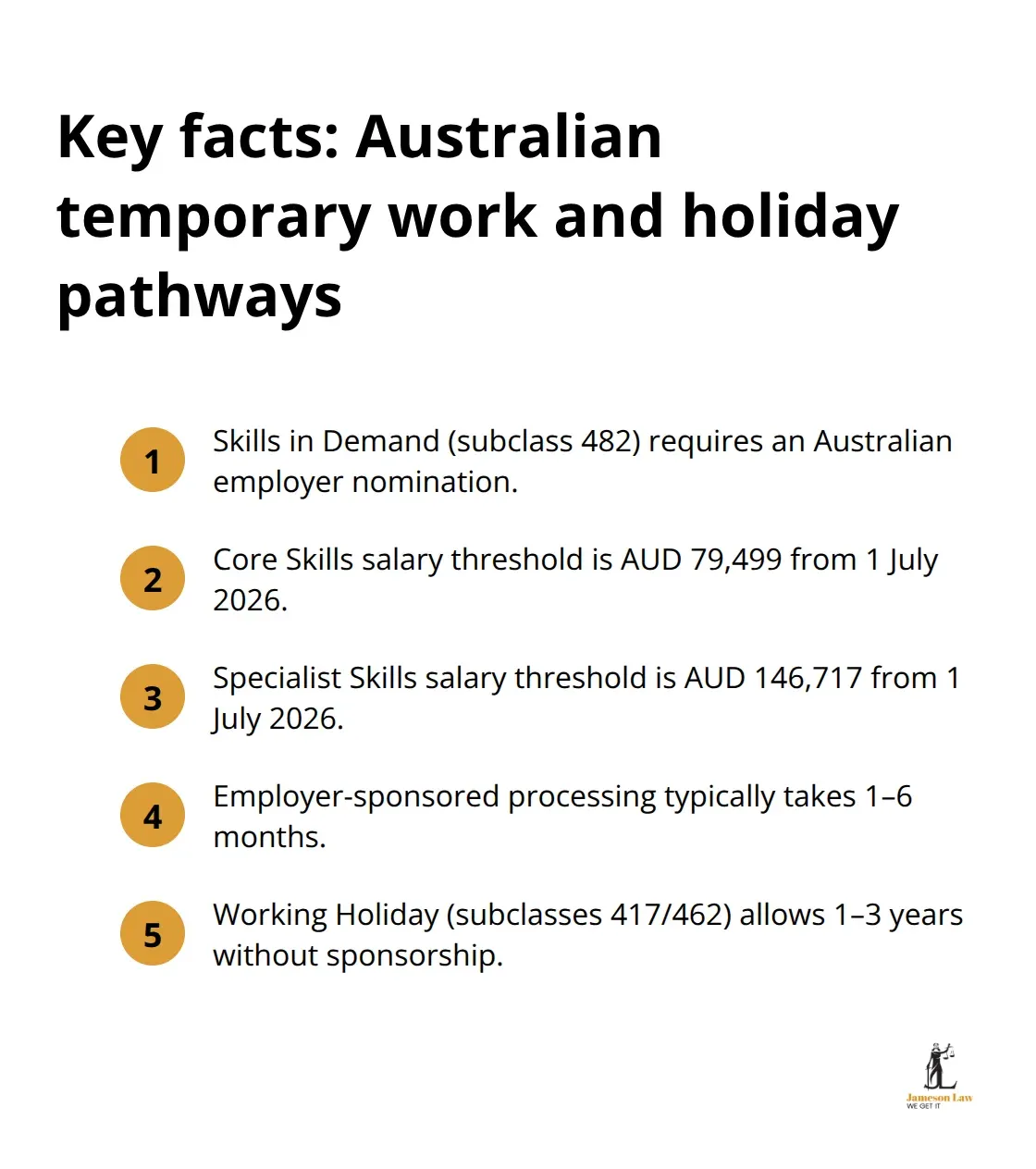
| Skills in Demand visa (Subclass 482) | Employer-sponsored skilled employment in an approved occupation. | Approved standard business sponsor, approved nomination, relevant skilled experience, and salary threshold compliance. |
| Working Holiday visa (Subclass 417) / Work and Holiday visa (Subclass 462) | Extended holiday with incidental work rights for eligible young adults. | Subclass-specific nationality, age and financial criteria; specified work requirements apply only to certain subsequent visa applications. |
| Temporary Graduate (Subclass 485) | Post-study work and stay for international graduates of Australian institutions. | Australian Study Requirement completion, English proficiency, and applicable qualification streams. |
For complete subclass criteria, always refer directly to the Department of Home Affairs visa listing.
Core Evidence Categories for Temporary Visa Applications
While requirements differ by stream, the Department of Home Affairs evaluates temporary visa applications across several fundamental evidence categories.
1. Identity and Civil Status
Every applicant must provide a clear, full-colour copy of their current passport bio-page. Depending on the subclass and whether family members are included, civil status documents such as birth certificates, marriage certificates, or national identity cards must also be attached.
2. Genuine Purpose and Temporary Stay Criteria
Visitor and some other temporary visa streams assess the purpose and circumstances of the proposed stay under their own criteria. Student visa applicants must address the current Genuine Student requirement. Evidence should respond to the official questions and subclass checklist rather than a generic promise to leave.
3. Financial Capacity and Sponsorship
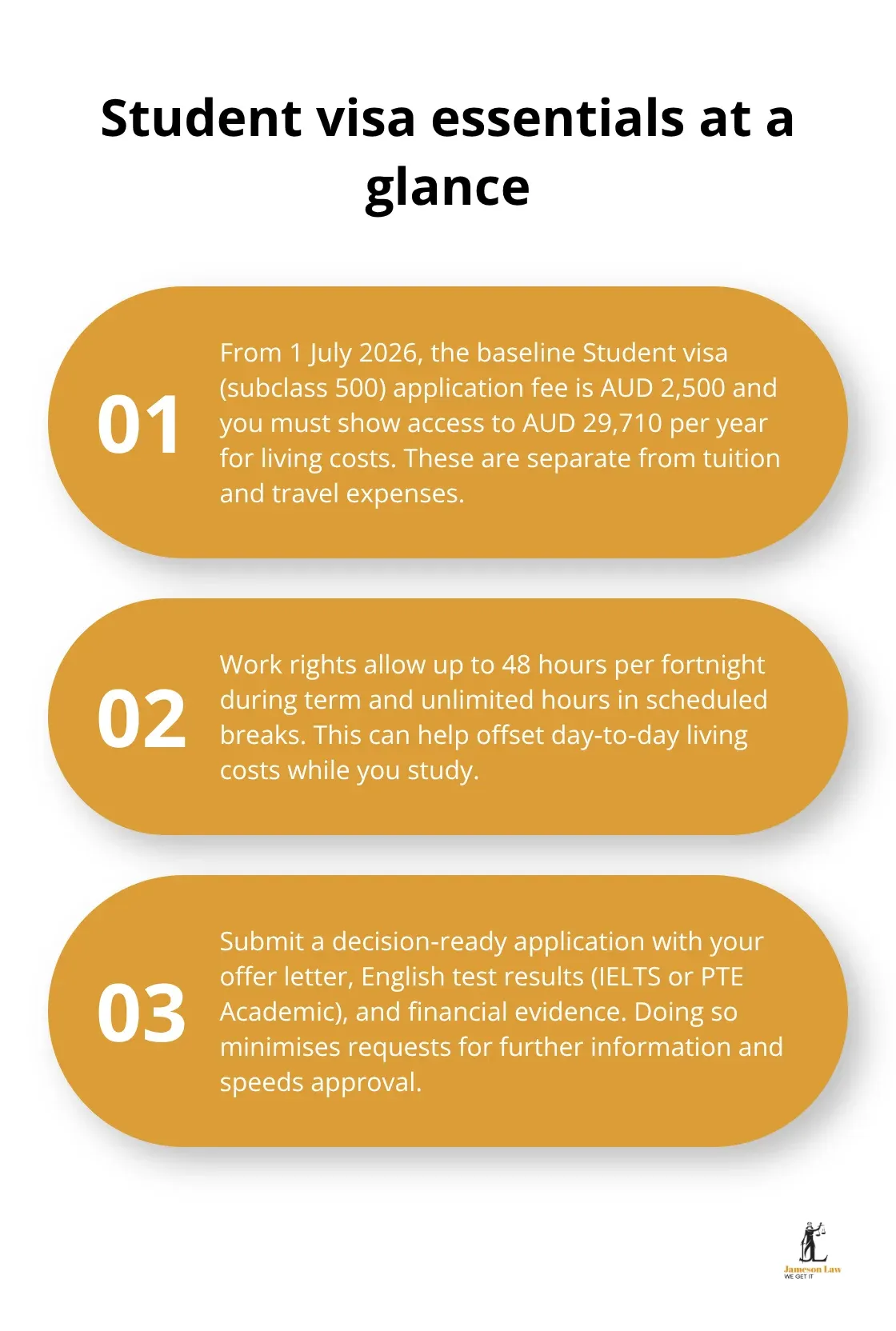
Applicants must demonstrate genuine access to sufficient funds to cover travel, living, and study or accommodation costs. Depending on the subclass, evidence may include recent personal bank statements, official financial declarations, or formal employer sponsorship and nomination approvals.
4. Health and Character Clearances
All applicants must satisfy statutory public interest criteria. Health examinations are required only when triggered by your country of passport, length of stay, or intended activities (e.g., healthcare or childcare environments). When required, you must book with an approved panel physician using your ImmiAccount HAP ID. Police clearance certificates may be requested from countries where you have lived for 12 months or more over the past 10 years.
5. English Language and Qualifications
Where mandated by your specific subclass (such as Student, Graduate, or Skilled Work streams), you must submit valid test results from an approved provider (e.g., IELTS or PTE Academic) and verified copies of your academic degrees or skills assessments.
6. Accredited Translations
All non-English documents must be accompanied by an official translation. Within Australia, translations must be performed by a translator accredited by the National Accreditation Authority for Translators and Interpreters (NAATI). Translations completed overseas must be prepared by a recognized, accredited professional translator.
Online Lodgement, ImmiAccount, and Visa Conditions
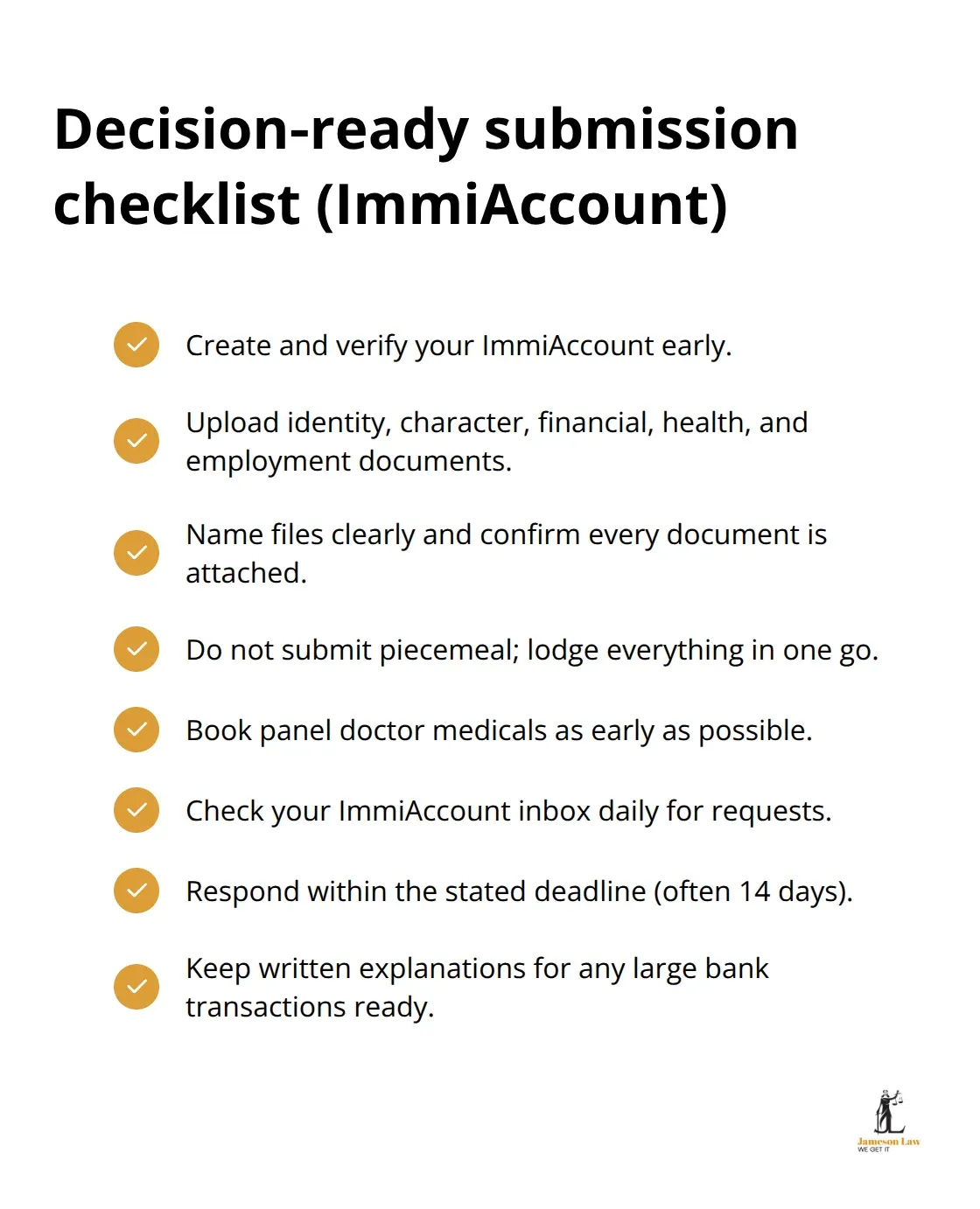
Most Australian temporary visa applications are lodged electronically via ImmiAccount. Submitting a “decision-ready” application—where all supporting evidence is attached at the time of lodgement—minimizes delays caused by formal Requests for Further Information (RFIs).
Adhering to Your Visa Grant Conditions
Once a visa is granted, your legal obligations are defined by the specific condition codes printed on your Visa Grant Notice. Common conditions include:
- Condition 8101 (No Work): You must not engage in work in Australia.
- Condition 8201 (Max 3 Months Study): You must not study or train for more than 3 months.
- Condition 8501 (Maintain Health Insurance): You must maintain adequate health cover (such as OVHC or OSHC) for the duration of your stay.
- Condition 8547 (6-Month Work Limitation): You must not work for more than 6 months with any single employer without prior departmental permission.
You should always verify your active visa conditions and validity dates using the Department’s Visa Entitlement Verification Online (VEVO) system.
Frequently Asked Questions
Is there a single document checklist for all temporary visas in Australia?
No. There is no single universal checklist. Requirements, eligibility criteria, and required documentation vary significantly depending on the specific visa subclass, stream, and your individual circumstances. You should always consult the official Department of Home Affairs subclass page and your tailored ImmiAccount checklist.
Can I work on an Australian temporary visa?
Work rights depend entirely on the visa subclass and the specific conditions attached to your visa grant. Some temporary visas permit full or limited work rights, while others (such as standard tourist streams) strictly prohibit work. You must check your visa grant notice or verify your conditions via VEVO.
Do I need to complete a health examination for a temporary visa?
Not all applicants require a health examination. Whether you need an examination depends on your country of citizenship, time spent in specific regions, intended length of stay, and planned activities in Australia. If required, the Department of Home Affairs will issue instructions and a HAP ID through ImmiAccount.
Final Thoughts
Successfully navigating temporary visa Australia requirements depends on selecting the appropriate subclass and ensuring every statutory requirement is supported by clear, verified evidence. Relying on generic checklists or assumptions regarding work or stay rights can result in visa refusals or unintended breaches of visa conditions.
Because migration policies and subclass regulations are subject to ongoing updates, applicants should regularly verify requirements on the official Department of Home Affairs website or consult their tailored ImmiAccount application portal.
If you require strategic advice on visa pathways, employer nomination compliance, or complex eligibility criteria, contact the immigration team at Jameson Law for professional guidance.