Sponsoring someone to work or live in Australia involves strict requirements that many people get wrong. At Jameson Law, we’ve seen countless applications delayed or rejected because sponsors didn’t understand the rules from the start.
This guide breaks down Australia sponsor visa requirements in plain language, covering what you need to know before you apply.
How Sponsor Visas Work in Australia
A sponsor visa is fundamentally an employer-backed pathway for skilled workers to live and work in Australia. The sponsor (your employer) nominates you for a specific role, and the Department of Home Affairs assesses both the sponsor’s credentials and your suitability. This isn’t a visa you can obtain independently-it requires an approved employer to vouch for you and commit to strict obligations throughout your employment. The sponsor must prove they attempted to fill the role with Australian citizens first, meet training benchmarks, and pay you at least the market salary rate for the position.
Processing Times and Application Strategy
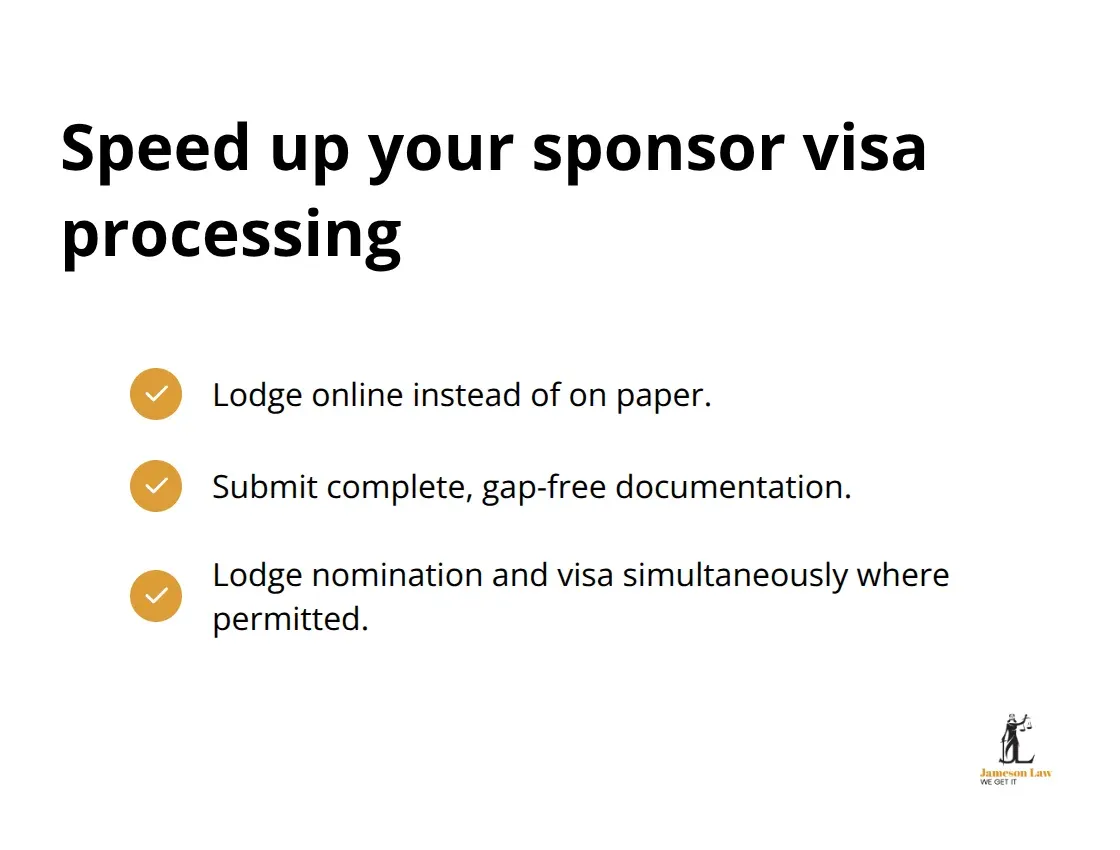
The Department of Home Affairs reports processing times for skilled visas. Speed matters because delays cost money, and incomplete applications are the primary culprit. The Department explicitly states that lodging your application online rather than on paper streamlines processing. Simultaneous lodgement of nomination and visa applications (where possible) also accelerates outcomes.

Permanent and Temporary Pathways
Australia offers three primary employer-sponsored work visa pathways. The Employer Nomination Scheme 186 provides permanent residency if an approved employer nominates you and typically requires you to be under 45 years old at application. The Regional Sponsored Migration Scheme 187 also grants permanence but restricts you to regional areas, excluding major metros like Sydney, Melbourne, and Brisbane. For temporary work, the Temporary Skill Shortage visa 482 addresses labour shortages and allows up to four years of work for your nominated role. The Skilled Employer Sponsored visa 494 is a newer regional provisional option that replaced the older 457 subclass, which closed entirely.
Occupations and Language Requirements
Each pathway has different processing times, eligibility criteria, and financial thresholds, so identifying the correct visa early determines what documents you’ll need and how long approval takes. English language requirements apply to most visas-you’ll typically need IELTS or PTE results, though some occupations have exemptions listed on the Consolidated Sponsored Occupation List. Health and character checks are mandatory for you and any family members accompanying you, usually requiring medical examinations.
Sponsor Obligations and Common Failures
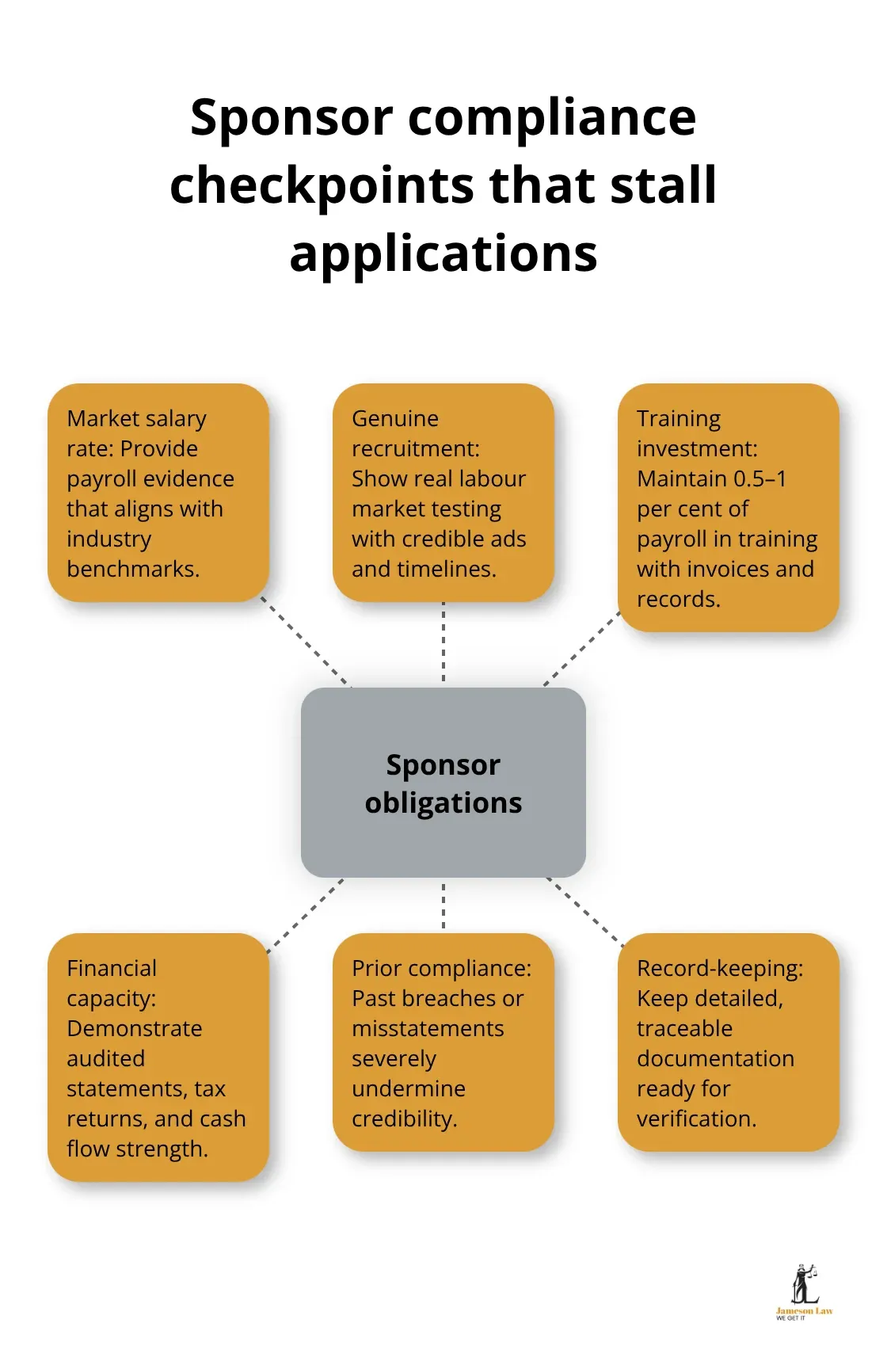
Sponsors face genuine scrutiny from the Department of Home Affairs. They must demonstrate financial capacity to employ you, maintain training obligations (typically investing 0.5% to 1% of payroll in training Australian workers), and show they genuinely tested the local labour market. The sponsor’s track record matters significantly; if they breached visa conditions previously, approval becomes difficult. Many applications fail because sponsors underestimate these obligations or haven’t genuinely attempted to hire locally first. The Department updates rules regularly as Australia’s business needs evolve, and staying current requires active monitoring rather than assumptions. Understanding what your sponsor must prove separates successful applications from those that stall in the assessment phase.
How to Move Through Sponsorship Step by Step
Sponsorship approval demands precision at every stage. Applications stall or fail when sponsors skip steps or submit incomplete documentation. The Department of Home Affairs will not progress your application until they have everything, and vague submissions trigger information requests that add months to your timeline.
Identify Your Visa Subclass First
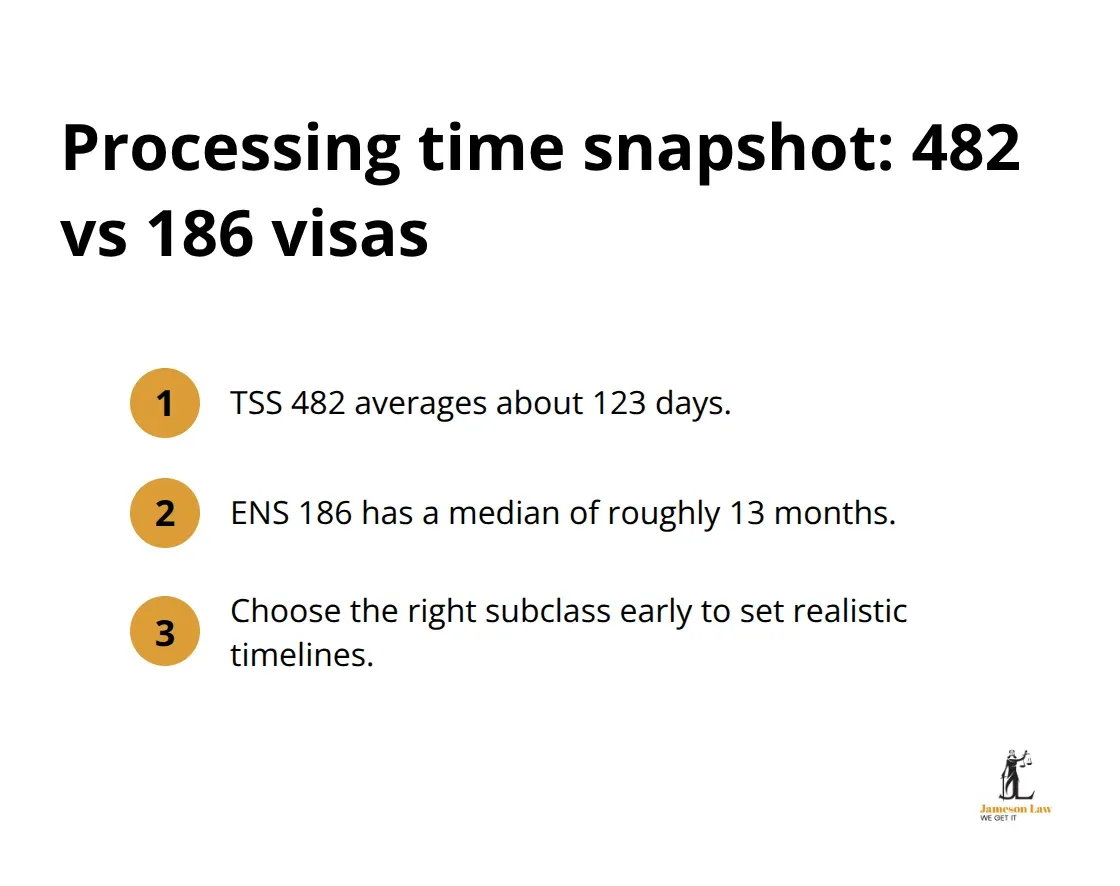
Start by identifying your visa subclass because each pathway demands different documents and has vastly different processing windows. The Temporary Skill Shortage visa 482 processes in 123 days on average according to October 2025 data from the Department of Home Affairs, while the Employer Nomination Scheme 186 takes a median of 13 months. That tenfold difference hinges on knowing which visa suits your situation before you lodge anything. Once you know your pathway, you can gather the correct evidence and prepare realistic timelines.

Prove Your Sponsor Meets Financial and Labour Market Tests
Your sponsor must meet the financial capacity requirements and demonstrate they have genuinely tested the local labour market. The Department requires sponsors to prove they advertised the role to Australian citizens first and that no suitable locals applied. This is not a tick-box exercise; the Department scrutinises job advertisements, recruitment timelines, and salary offers. Sponsors who list unrealistic qualifications or offer below-market rates trigger rejections. Your sponsor must also show training investment records, typically 0.5 to 1 per cent of payroll directed toward Australian worker development. Collect payroll records, training invoices, and any evidence of prior compliance with visa conditions.
Submit Complete Documentation Online
Documentation completeness determines speed more than anything else. Lodging online rather than on paper streamlines processing significantly, and the Department explicitly advises simultaneous lodgement of nomination and visa applications where your visa subclass permits it. This parallel approach accelerates outcomes substantially. Expect the Department to request further information if your submission has gaps; delays while awaiting your response extend timelines by weeks or months. Health and character checks also introduce unpredictability because external agencies conduct these assessments independently. If the Department needs clarification from a health provider or security agency, you wait for their response, not just Department processing. This is why submitting comprehensive medical examinations upfront and ensuring character references are detailed and traceable matters.
Plan for Variable Processing Timelines
Check the Department’s processing times guide regularly because timelines shift as application volumes change. A visa subclass taking 123 days one quarter might take longer the next if applications surge. Do not assume your processing will match the median; plan for the upper range. Verification approval happens in stages, not all at once. The Department approves the sponsorship nomination first, then assesses your visa application separately. These run in parallel but do not conclude simultaneously, so you might receive sponsorship approval weeks before your visa decision arrives. Understanding this staged approach prevents frustration when your nomination clears but your visa assessment continues.
Prepare for Information Requests and External Checks
The Department will contact you if they identify gaps or need clarification on any aspect of your application. External agencies handling health and character assessments operate on their own timelines, and delays from these sources fall outside the Department’s control. Submitting thorough documentation upfront-including detailed character references and comprehensive medical reports-reduces the likelihood of information requests. When the Department does request further information, respond promptly because delays in your replies directly extend your overall processing time. This staged verification process means your application moves through multiple checkpoints, each with its own assessment criteria and potential for additional scrutiny.
What Actually Derails Sponsor Visa Applications
The Department of Home Affairs receives thousands of sponsor visa applications annually, and the rejection rate remains stubbornly high because applicants and sponsors repeat the same preventable errors. Applications fail not because the applicant lacks skills or the sponsor lacks capacity, but because critical documentation gaps or misunderstood obligations torpedo otherwise viable cases. The most damaging mistakes fall into three categories: submitting applications with missing or contradictory information, sponsors underestimating their financial obligations, and applicants accepting roles without fully grasping the visa conditions that will govern their employment and residency. These errors are not minor inconveniences; they cost money through application fees, delay career progression by months or years, and sometimes result in permanent visa refusals that bar future applications for extended periods.
Documentation Completeness Determines Application Progress
The Department will not progress your application until every required document is present. Sponsors frequently submit incomplete financial records, provide vague job advertisements that fail to demonstrate genuine recruitment efforts, or omit training investment records entirely. Information requests triggered by missing documents extend timelines by weeks or months as you gather evidence and resubmit.
Your sponsor must provide payroll records showing they pay the market salary rate for the role, not merely the minimum. The Department cross-references salary claims against industry benchmarks, and if your sponsor’s offer falls below comparable positions, the application stalls. Similarly, sponsors must document training obligations totalling 0.5 to 1 per cent of payroll invested in Australian worker development. If your sponsor cannot produce invoices, training schedules, or attendance records demonstrating this commitment, the Department questions their compliance and delays approval.

Health and character checks also demand thorough preparation. Submit comprehensive medical examinations upfront rather than waiting for the Department to request them; delays from external medical providers or security agencies fall outside the Department’s control and directly extend your timeline. Many applicants submit bare-minimum character references that provide no traceable detail about the referee, forcing the Department to request additional information.
Financial Capacity Tests Determine Sponsorship Viability
Sponsors frequently underestimate the financial scrutiny they face. The Department requires proof that your sponsor can genuinely afford to employ you at the nominated salary without breaching other financial obligations or creating artificial roles. This means providing audited financial statements, tax returns, payroll records, and evidence of prior compliance with visa sponsorship conditions if they have previously sponsored workers.
Small businesses sometimes assume their turnover alone proves financial capacity, but the Department examines profit margins, debt levels, and cash flow to determine actual employment capacity. A sponsor with high revenue but minimal profit cannot credibly commit to paying market salaries long-term. If your sponsor has previously breached visa conditions, failed to pay workers correctly, or misrepresented information to the Department, approval becomes extremely difficult or impossible. The Department maintains records of sponsor compliance, and a single prior violation significantly reduces your chances of success. Your sponsor’s track record is your problem because the Department assesses the sponsor’s credibility as part of your application.
Visa Conditions Create Legal Obligations You Must Honour
Many applicants accept sponsor visa offers without fully understanding the conditions attached to their visa subclass. The Temporary Skill Shortage visa 482 restricts you to working for your nominated employer in your nominated role; changing employers or roles without Department approval constitutes a visa breach. If you breach visa conditions, the Department can cancel your visa, and a cancellation record affects your ability to obtain future Australian visas.
Family members accompanying you on your visa share your visa conditions and restrictions. Sponsors also face obligations that affect you directly: if your sponsor breaches their sponsorship obligations, the Department may cancel your visa regardless of whether you personally breached any condition. This means you depend entirely on your sponsor’s compliance. Before accepting a sponsorship offer, confirm that your sponsor understands their training obligations, salary commitments, and record-keeping requirements. If your sponsor cannot articulate these obligations clearly, that signals danger.
The Department publishes sponsorship obligation details on its website and in legislative instruments, but many sponsors rely on incomplete advice or outdated information. Misunderstanding visa conditions costs applicants their right to work in Australia and creates cascading consequences for future visa applications.
Final Thoughts
Australia sponsor visa requirements demand precision, planning, and professional guidance. The pathway from application to approval hinges on understanding your visa subclass, gathering complete documentation, and ensuring your sponsor meets every financial and labour market obligation. Processing times vary dramatically-from 123 days for temporary visas to 13 months for permanent schemes-so identifying your correct visa early determines your realistic timeline and what evidence you must collect.
Incomplete applications, financial capacity failures, and misunderstood visa conditions derail otherwise viable cases repeatedly. These are not technical oversights; they cost application fees, delay your career progression by months, and sometimes create permanent visa refusals that affect future applications. Immigration law changes regularly, and the Department of Home Affairs applies rules with strict consistency, so professional legal guidance identifies gaps in your application before you lodge it and ensures your sponsor understands their obligations.
Your next step is confirming your visa subclass with professional advice, then gathering documentation systematically rather than rushing to lodge incomplete applications. Contact Jameson Law for a consultation on your specific circumstances-we can review your sponsor’s capacity, identify documentation gaps, and outline realistic timelines before you commit time and money to the application process.