Australia attracts over 600,000 international students annually, making it the third most popular study destination globally. Understanding Australian student visa requirements can mean the difference between acceptance and rejection.
We at Jameson Law have guided thousands of students through this complex process. This comprehensive guide breaks down everything you need to know about securing your student visa for Australia with the help of our expert immigration team.
Which Student Visa Category Fits Your Study Plans?
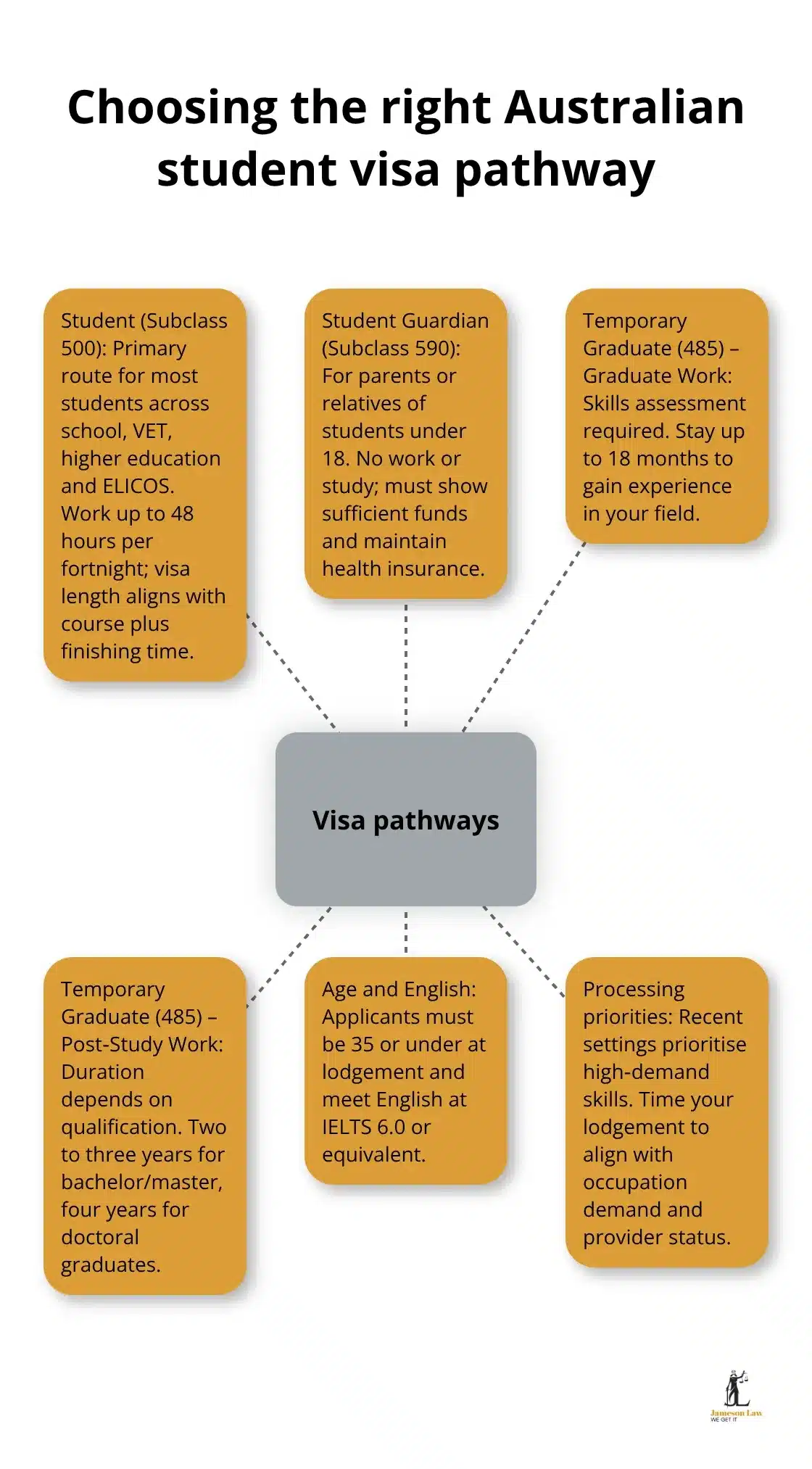
Australia offers three main visa categories for international students, each designed for specific circumstances and study goals. The Subclass 500 Student Visa serves as the primary pathway for most international students who pursue education in Australia.
Subclass 500 Student Visa Overview
This visa covers students who enrol in primary school, secondary school, VET courses, higher education programs, and ELICOS. Students can typically work up to 48 hours per fortnight while they study. The Department of Home Affairs processes these applications based on course type and education provider status.
Student Guardian Visa Requirements
The Subclass 590 Student Guardian Visa allows parents or relatives to accompany students under 18 years old. Guardians must be over 21 years old and demonstrate sufficient financial capacity. This visa prohibits work and study activities, as it focuses solely on guardianship responsibilities.
Post-Study Work Opportunities
The Temporary Graduate Visa (Subclass 485) provides pathways for international students to gain work experience after they complete their Australian qualifications. Recent changes prioritise applications from graduates with skills in high-demand sectors. Our skilled visa lawyers can assist with transitioning from study to work.
What Evidence Must You Provide for Your Student Visa?
Genuine Student Requirements
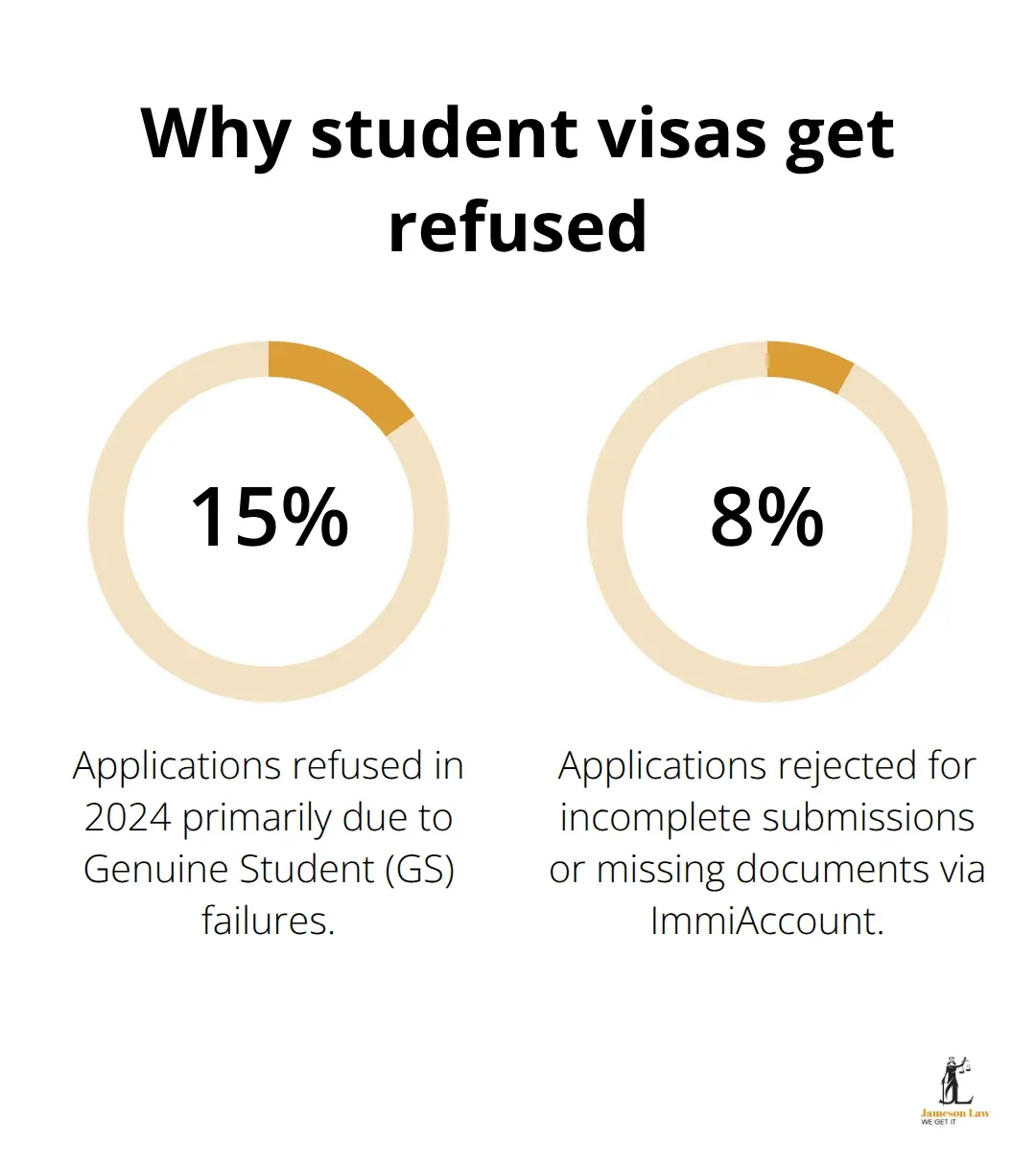
The Genuine Student (GS) requirement presents the most challenging obstacle. Immigration officers assess your personal circumstances, financial situation, and study plans to determine whether you truly intend to return home. The Department rejected 15% of student visa applications in 2024 primarily due to GS failures.
Your statement must demonstrate clear ties to your home country. Detailed documentation of family ties, employment history, and property ownership is essential. Consult with our student visa specialists to prepare a robust GS statement.
English Language Proficiency Standards
English proficiency requirements vary by course level. Vocational courses typically require IELTS 5.5 overall. The Department also accepts TOEFL iBT, PTE Academic, and Cambridge English tests. Test scores must generally be less than two years old at the time of application.
Financial Capacity Documentation
You must demonstrate access to sufficient funds. As of late 2024, this includes living costs of approximately AUD 29,710 per year, plus full tuition fees and travel costs. Acceptable evidence includes bank statements held for at least three months, government loans, or scholarship letters. See the official document checklist for details.
Health Insurance Requirements
Overseas Student Health Cover (OSHC) remains mandatory for your entire visa duration. Providers like Medibank and Bupa offer policies starting from AUD 600 annually. You cannot enter Australia without valid OSHC.
How Do You Submit Your Student Visa Application?
ImmiAccount Application Platform
The Department of Home Affairs processes all student visa applications through ImmiAccount. This digital pathway is your only option. Applications submitted outside ImmiAccount face automatic rejection. The platform charges a non-refundable fee (approx. AUD 1,600+ depending on surcharges).
Document Standards and Certification
Your supporting documents must meet strict formatting requirements. All non-English documents need NAATI-certified translations. The Department accepts only high-quality scans. Documents older than 12 months may require updated versions.
Processing Priorities Under New Directions
The Department introduced Ministerial Direction 107 (and subsequent updates), creating a priority processing system. Applications from school students and postgraduate research candidates often process faster. Your education provider’s risk rating determines your application priority.

Final Thoughts
Australian student visa requirements demand meticulous preparation. The Genuine Student requirement, financial capacity thresholds, and mandatory health insurance create multiple hurdles. The Department scrutinises every detail, from bank statement authenticity to study intentions.
We at Jameson Law help students avoid common pitfalls that lead to rejection. Start your application process early and gather all required documentation. Your Australian education awaits, but you need strategic planning and expert guidance from experienced immigration lawyers to secure your visa.