Building disputes in NSW can escalate quickly, turning what starts as a disagreement into costly litigation. Whether you’re dealing with defective work, payment disputes, or contract breaches, knowing when to hire a building dispute lawyer NSW can save you thousands of dollars and months of stress.
At Jameson Law, we’ve helped countless property owners and builders navigate these complex situations. The right legal guidance at the right time makes all the difference.
When to Hire a Building Dispute Lawyer
Building disputes in NSW don’t announce themselves politely. A defective wall appears, a payment goes missing, or a contractor vanishes mid-project. Most property owners wait too long before hiring legal help, hoping the problem resolves itself. It rarely does. The Home Building Act 1989 sets strict timelines for claims-six years for major defects and two years for minor defects-but waiting costs you money and leverage. Defective work, payment conflicts, contract breaches, unfinished projects, and faulty materials are the main reasons disputes land in NCAT or court. The reality is simple: hiring a lawyer early gives you control over the narrative and your options. Late intervention means playing catch-up on documentation, evidence, and strategy.
Recognise the Warning Signs
You should hire a lawyer the moment a builder ignores a defect report in writing, breaches a contract term, refuses payment, sends a formal notice, or communications break down. These are not hypothetical triggers-they are the exact points where disputes tip from recoverable to costly. A construction-law specialist with NCAT experience improves outcomes significantly compared with generalists. The moment you face one of these situations, a free initial consultation costs nothing and gives you a written cost disclosure before you commit to anything.
Understand the Real Cost of Professional Representation
Most property owners assume a lawyer’s involvement immediately means expensive litigation. That’s wrong. Many disputes resolve through negotiation or mediation long before NCAT or court. For a typical $30,000 defects claim, professional representation typically secures around $22,000 in recovery, while DIY attempts average about $14,000-an $8,000 advantage that far exceeds legal fees.
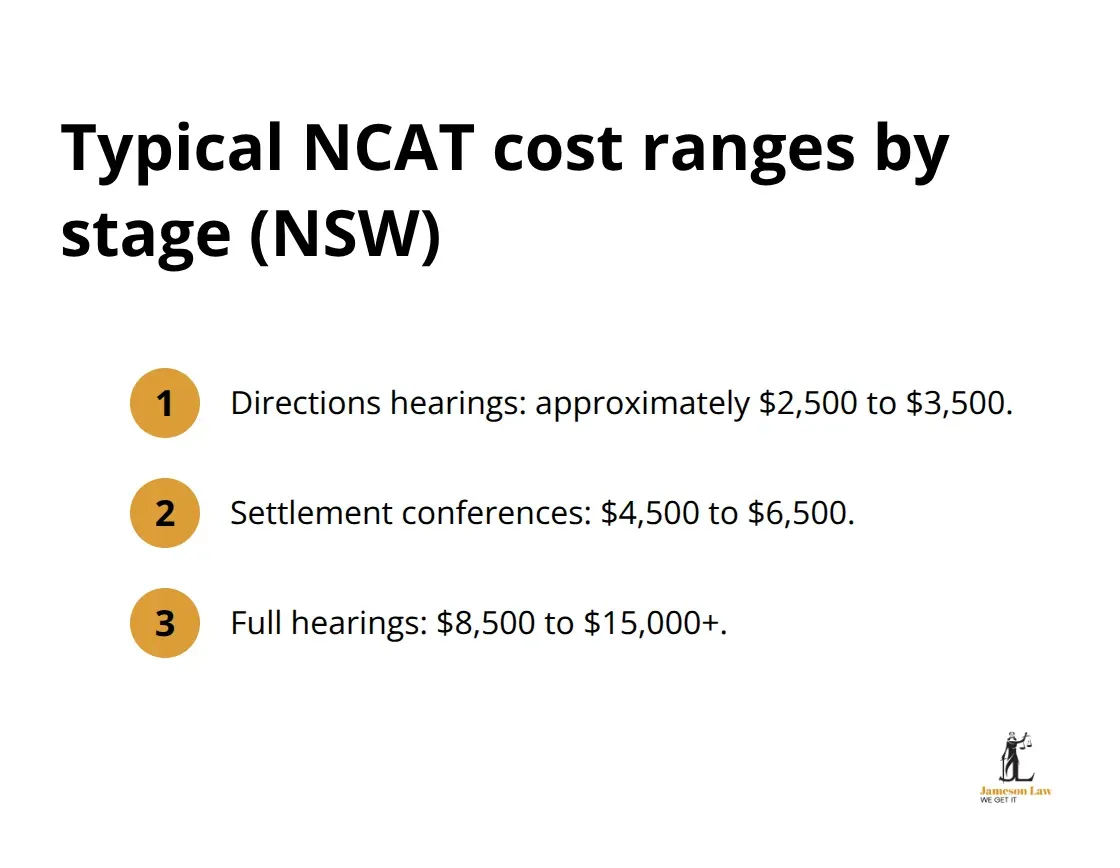
NCAT representation costs vary by stage: directions hearings run approximately $2,500 to $3,500, settlement conferences $4,500 to $6,500, and full hearings $8,500 to $15,000 or more. Fixed-fee quotes are common and remove billing uncertainty.
Calculate Whether Legal Help Pays for Itself
The financial logic is stark: if your dispute is worth $30,000 and legal costs stay under 10% of that value with a realistic chance of improving your outcome by 40% or more, professional representation pays for itself. Early engagement also prevents scope creep and unnecessary court escalation. A construction-law specialist with NCAT experience improves outcomes significantly compared with generalists. The cost-benefit calculation favours hiring help now, not later.
Now that you understand when you might need a lawyer and what it costs, the next step is knowing what to look for in the right legal professional for your situation.
What to Look For in a Building Dispute Lawyer
Choosing the right building dispute lawyer matters more than you think. A construction law specialist with direct NCAT experience will secure better outcomes than a general practitioner who handles building disputes occasionally. When you evaluate any lawyer, ask what percentage of their practice focuses on building disputes, how many NCAT cases they have handled, and what their settlement versus hearing ratio looks like. A lawyer who settles 60-70% of cases before hearing often proves more valuable than one who takes everything to tribunal, because you avoid the cost and delay of a full hearing. Professional representation improves outcomes by roughly 40-50% compared with self-representation, turning a typical $14,000 DIY settlement into around $22,000 with legal help on a $30,000 claim.
Experience and Track Record in NSW Building Law
Construction law specialists understand the specific evidence NCAT expects, how to structure claims, and when settlement makes financial sense. Ask prospective lawyers for examples of similar disputes they have resolved and what the outcomes were. Find out how they would handle your specific type of dispute-defective work claims differ from payment disputes, which differ from contract breaches, and a lawyer with deep experience in your category will navigate it faster. A lawyer who settles most cases before hearing demonstrates practical negotiation skills and realistic case assessment. Request information about their NCAT hearing experience and how they prepare clients for tribunal proceedings. The difference between a generalist and a construction law specialist often shows up in the quality of evidence they present and how they anticipate NCAT’s concerns.
Understanding How Legal Fees Work
Fixed-fee representation is standard in NSW building disputes and removes the uncertainty of hourly billing. A lawyer should provide a written cost disclosure before you engage, detailing exactly what is included at each stage: directions hearings typically cost $2,500 to $3,500, settlement conferences $4,500 to $6,500, and full hearings $8,500 to $15,000 or more. Ask whether expert witness costs, NCAT filing fees, and document preparation are included or charged separately as disbursements. Some firms offer free initial consultations where they review your documents, assess your claim’s strength, and provide a fixed-fee quote before you commit. This costs you nothing and lets you compare offers from multiple lawyers. The NSW Law Society requires written cost agreements for matters over $750, so any reputable lawyer will provide this upfront. Avoid hourly billing for building disputes because it creates perverse incentives to drag matters out, and it makes budgeting impossible. Cost recovery is possible if you win at NCAT: the tribunal may order the losing party to pay your legal costs depending on complexity, though this is never guaranteed.
Key Questions to Ask Prospective Lawyers
Ask your prospective lawyer how they would approach your specific dispute and what their recommended pathway is-whether negotiation, mediation, or NCAT. Ask what weaknesses they see in your claim and what risks you face, because a lawyer who gives you honest bad news is more trustworthy than one who promises the world. Inquire about their preferred communication style and how often you will hear updates (some firms send weekly summaries, others monthly). Ask whether they handle document preparation themselves or outsource it, and whether they will coordinate with your expert witness or expect you to manage that relationship. Find out how they would handle a settlement offer: would they advise you to accept or push for more, and what is their reasoning? A good lawyer explains the trade-offs between accepting a lower settlement now versus the cost and delay of continued proceedings. Finally, ask about their experience with the specific type of dispute you have, because a lawyer with deep experience in your category will navigate it faster and more cost-effectively.
Once you understand what to look for in a lawyer and how fees work, you need to know what dispute resolution options actually exist. Not every building dispute ends up in court, and understanding your pathways-from negotiation through to NCAT-helps you make informed decisions with your legal adviser.
Your Dispute Resolution Pathways in NSW
Most building disputes in NSW follow a predictable sequence. Understanding each pathway helps you make decisions with your lawyer about where to invest time and money. Negotiation is your fastest and cheapest option when both parties still communicate. A written demand letter from your lawyer signals seriousness without formal tribunal involvement and often prompts settlement within weeks.
Negotiation and Settlement Discussions
Direct negotiation works best early, before positions harden and costs mount. Your lawyer drafts a professional demand letter that outlines your claim, references the contract terms you rely on, and sets a reasonable timeframe for response. This letter creates a paper trail and often prompts the other party to take the dispute seriously. Many builders respond to a formal demand by offering settlement rather than facing tribunal proceedings. The advantage is speed: settlement can occur within weeks, avoiding months of tribunal delays and legal costs. Your lawyer assesses any settlement offer against your claim’s strength and advises whether to accept or counter-offer. A lawyer who explains the trade-offs between accepting a lower settlement now versus the cost and delay of continued proceedings demonstrates sound judgment.
Mediation and Alternative Dispute Resolution
If direct negotiation stalls, mediation through NSW Fair Trading is mandatory for most residential building disputes under $30,000 before you can lodge a NCAT application. Fair Trading mediation remains free and typically concludes within four to eight weeks. The mediator does not decide who is right or wrong; instead, they help both sides find common ground. Your lawyer prepares you for mediation by identifying settlement ranges and coaching you on communication strategy. Many disputes settle at mediation when both parties see the strength of evidence presented and understand the costs of tribunal proceedings.
NCAT Applications and Tribunal Hearings
If mediation fails, you move to NCAT, the NSW Civil and Administrative Tribunal, which handles residential building claims under $30,000. NCAT is faster and cheaper than court, with most disputes resolving in 5 to 8 months. At your first NCAT hearing, the tribunal encourages conciliation, and many claims settle here when both parties see the strength of evidence presented. If conciliation fails, the matter proceeds to a formal hearing where NCAT issues a binding decision. At NCAT, the tribunal appoints an independent expert building inspector or quantity surveyor to assess defects and prepare a report, and costs are typically shared equally between parties, adding $4,000 to $8,000 to your budget depending on the work’s complexity. You generally cannot call your own expert unless the tribunal grants permission, so the independent expert’s report becomes critical evidence. Prepare thoroughly for any NCAT hearing by bringing three copies of all documents: the building contract, correspondence, quotes, expert reports, photos, and any NSW Fair Trading rectification orders. NCAT can issue work orders requiring the builder to fix defects by a deadline, money orders reimbursing your rectification costs, or contract termination orders if the relationship is beyond repair.
Court Proceedings as a Last Resort
Court is genuinely a last resort and should only be considered when your claim exceeds NCAT’s jurisdiction or involves complex legal questions that NCAT cannot address. Court litigation in NSW District Court or Supreme Court stretches 18 months or longer and costs $20,000 to $50,000 or more in legal fees alone, making it viable only for high-value disputes where the financial stakes justify the expense and delay. If the builder refuses to comply with a NCAT order, enforcement through NSW Local Court or Supreme Court is possible but adds further cost and delay.
The Strategic Approach to Resolution
Your lawyer should guide you toward early settlement whenever possible because the cost and time of proceeding to NCAT hearing or court rarely justifies the incremental gain in recovery. A lawyer who settles 60-70% of cases before hearing demonstrates sound judgment and realistic case assessment. The critical insight is straightforward: engage your lawyer early, pursue settlement through negotiation and mediation first, and only escalate to NCAT or court when settlement fails and the financial stakes justify proceeding.
Final Thoughts
Professional representation secures roughly 40-50% better outcomes than handling disputes alone, turning a typical $14,000 DIY settlement into around $22,000 with legal guidance on a $30,000 claim. That financial advantage far outweighs the cost of hiring a building dispute lawyer NSW early. When you evaluate prospective lawyers, focus on their NCAT experience, settlement track record, and willingness to provide a written cost disclosure before engagement. A lawyer who settles 60-70% of cases before hearing demonstrates realistic case assessment and practical negotiation skills.
The pathway from dispute to resolution typically moves through negotiation, then mediation under NSW Fair Trading, then NCAT if settlement fails. Most disputes resolve within 5 to 8 months when handled professionally, avoiding the 18-month court timeline and associated costs. Understanding this sequence helps you budget time and money realistically and positions you to make informed decisions with your legal adviser.
Contact Jameson Law to book a free initial consultation. We review your documents, assess your claim’s strength, and provide a fixed-fee cost disclosure before you commit to anything. This costs nothing and gives you the clarity you need to move forward with confidence.