Your immigration status in NSW determines what you can and cannot do in Australia. It affects your work rights, access to services, and your pathway forward.
At Jameson Law, we help people understand their obligations and options. Whether you’re on a temporary visa, pursuing permanent residency, or considering citizenship, knowing the rules matters.
What Your Immigration Status Actually Means in NSW
Your immigration status determines everything from your ability to work and study, to accessing Medicare and government services. NSW hosts visa holders across multiple categories, each with distinct entitlements and restrictions. The Australian Government Department of Home Affairs publishes data on temporary skilled migrants, showing that thousands of visa holders actively work across NSW in occupations ranging from healthcare to construction. Understanding which visa category you hold directly affects your legal standing and practical options in Australia.
Temporary Visas Versus Permanent Residency
Temporary visas grant you the right to remain in Australia for a fixed period, typically between one and five years. Skilled Work Regional visas (subclass 491) allow you to live and work in designated regional NSW areas for five years. Permanent residency offers indefinite residence along with full access to rights like healthcare and eligibility for citizenship. The key difference is that temporary visa holders must comply with strict conditions or face cancellation, whereas permanent residents have greater security.
Your Work Rights and Restrictions
If you hold a temporary skilled visa, you can work in your nominated occupation or a closely related role, but you cannot work outside those boundaries without approval. Permanent residents can work in any occupation without restriction. All workers in NSW—whether on temporary visas, permanent residents, or Australian citizens—receive protection under work health and safety laws according to SafeWork NSW. You have the right to receive instruction on how to work safely, access appropriate safety equipment, speak up about unsafe conditions, and refuse unsafe work.
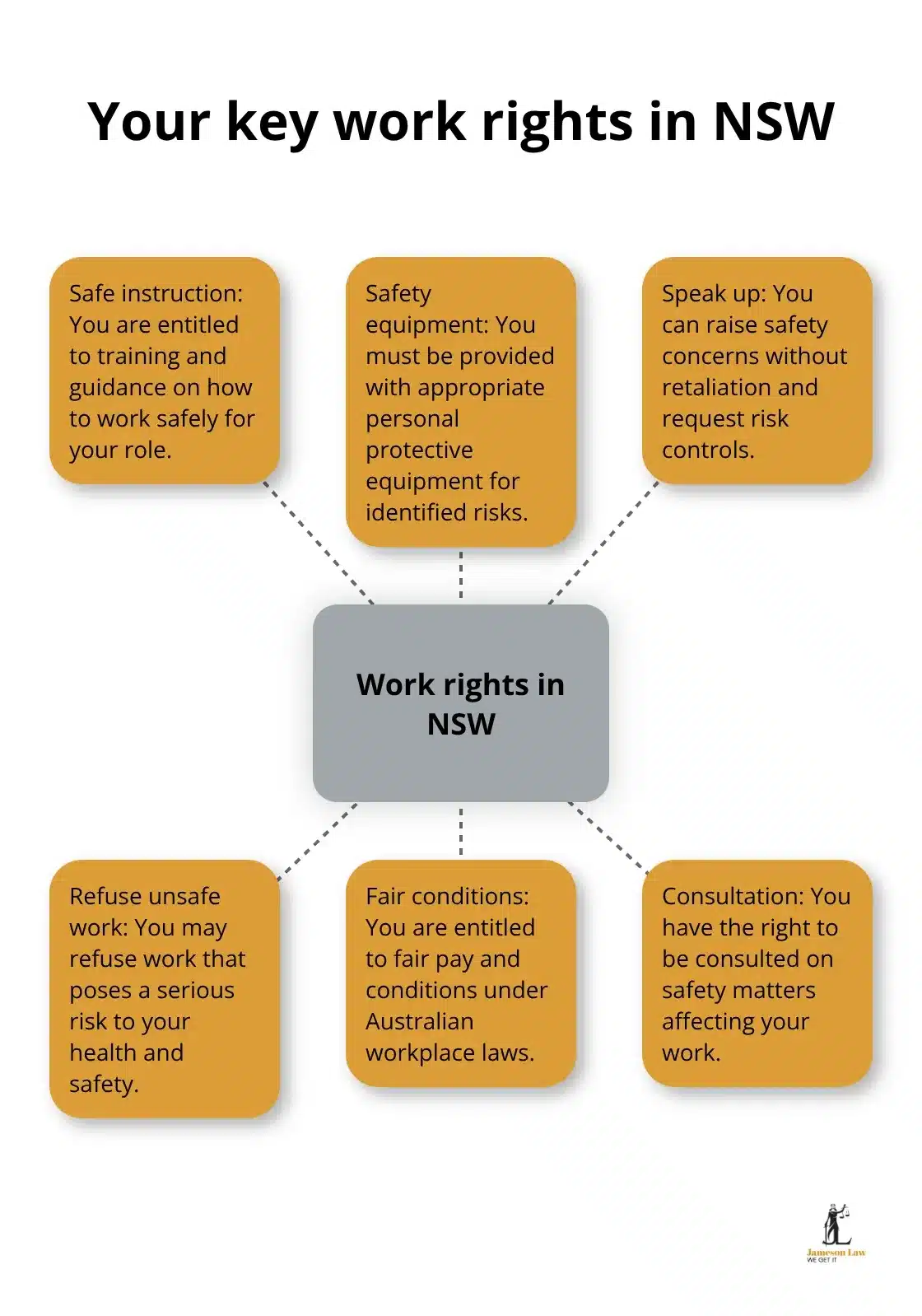
You also have rights to workers’ compensation if injured, fair pay and conditions under the Fair Work Act, and consultation on safety matters.
What You Must Do to Keep Your Visa Valid
Holding a visa comes with non-negotiable obligations. Breach them and you risk cancellation, deportation, and permanent damage to your migration prospects. The Department of Home Affairs takes compliance seriously, and visa conditions are legally binding. We at Jameson Law see too many visa holders make preventable mistakes because they did not understand their specific obligations.
Work Restrictions and Employment Obligations
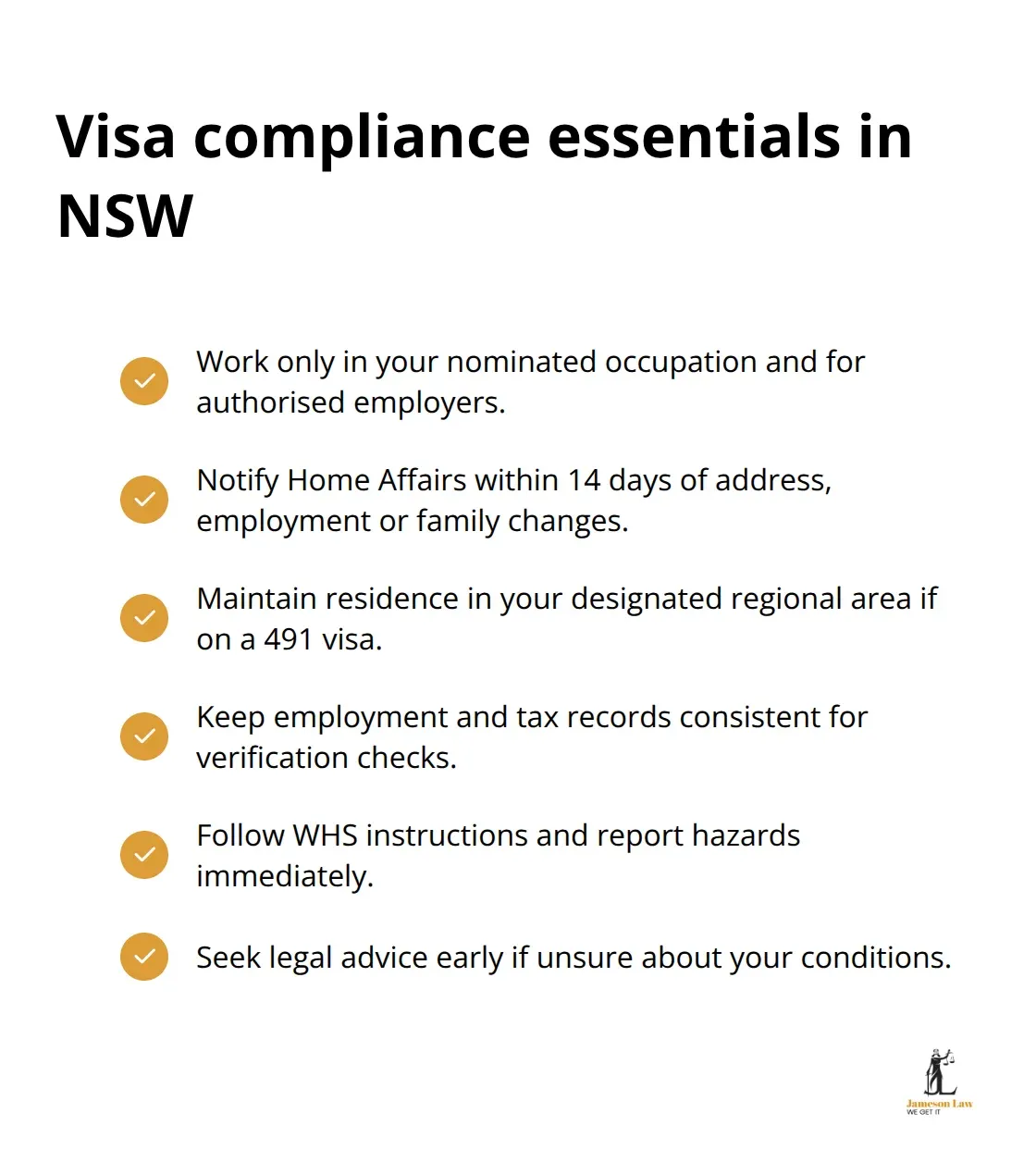
The most common breach involves working outside your nominated occupation or for an unauthorised employer. If your skilled visa restricts you to healthcare roles, you cannot work in hospitality or construction without prior approval from Home Affairs. If you change jobs, your new employer must be willing to sponsor you under the same visa conditions. Home Affairs conducts employer verification checks and can detect unreported employment through tax records and payroll audits.
Reporting Changes in Your Circumstances
You must notify Home Affairs within 14 days if you change your address, employment, marital status, or have children. Failing to do so can result in visa cancellation and a three-year ban on applying for most visas. Reporting changes promptly protects you far more than staying silent.
Seeking Legal Advice on Compliance
If you are facing visa compliance issues or uncertainty about your obligations, seeking legal advice early prevents costly mistakes. Understanding exactly what your visa permits and what it prohibits determines whether you maintain your status or face cancellation.
Moving From Temporary Visas to Permanent Residency
Temporary visas are designed to be temporary. If you want to build a life in Australia long-term, you need a clear strategy to transition toward permanent residency. The path depends entirely on your circumstances, skills, and financial capacity.
Skilled Migration and Points-Based System
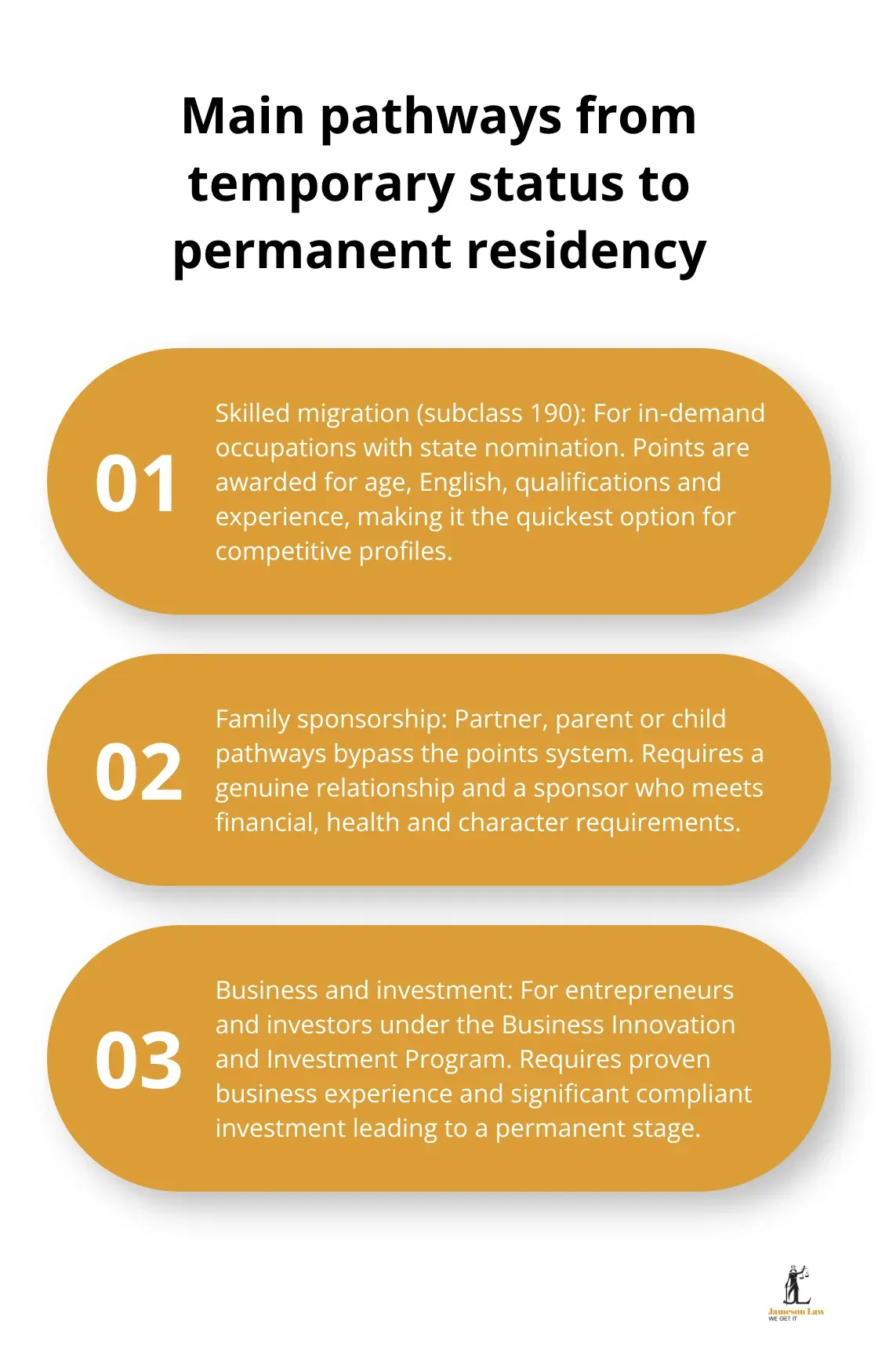
Skilled migration remains the fastest route for workers in high-demand occupations. NSW uses its own Regional Skills List to identify in-demand occupations, and the Skilled Nominated visa subclass 190 offers permanent residency directly if you meet the points threshold. To qualify, you typically need a valid skills assessment, sufficient points for age and English language ability, and an occupation matching NSW priorities.
Family Sponsorship and Citizenship
Family sponsorship offers an alternative if you have Australian citizen or permanent resident relatives. Finally, citizenship is the ultimate step after four years of residency, involving a test on Australian values, history, and government.
Final Thoughts
Your immigration status in NSW determines your legal standing and practical options. Temporary visas grant you the right to remain and work for a fixed period under specific conditions, while permanent residency offers indefinite residence and the pathway to citizenship. Understanding these distinctions protects you from costly mistakes that can result in cancellation and deportation.
The obligations attached to your visa are not suggestions. If you are unsure about your obligations, contact Jameson Law. Our highly experienced immigration team provides practical advice to help you navigate your status, assess your pathway options, and maintain compliance with confidence.