

Moving to Australia requires understanding your options. Whether you’re skilled, sponsored by family, or planning to invest, different pathways suit different circumstances.
At Jameson Law, we help people navigate these routes with clarity. This guide breaks down visa types, 2026 processing times, and how to choose what works for you.
Your Visa Options
Skilled Migration Pathways
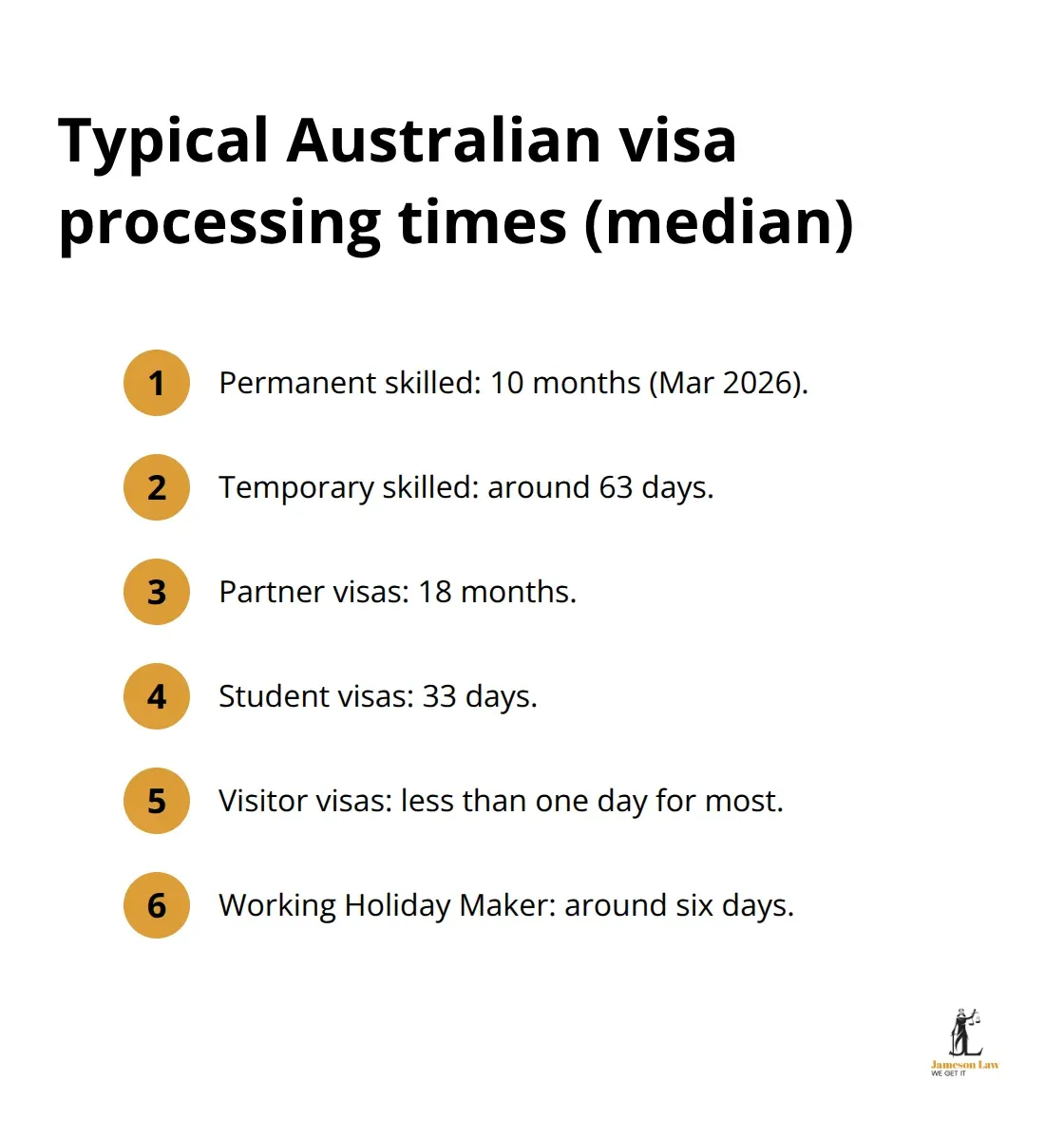
Australia’s skilled migration programme targets workers who address labour shortages and contribute economically. According to the Department of Home Affairs, permanent skilled visas have a median processing time of 10 months as of April 2026. Temporary skilled visas move faster, but this depends heavily on application completeness.
The Skilled Occupation List determines whether your role qualifies. Verify your occupation sits within eligible ANZSCO unit groups before investing time in an application.
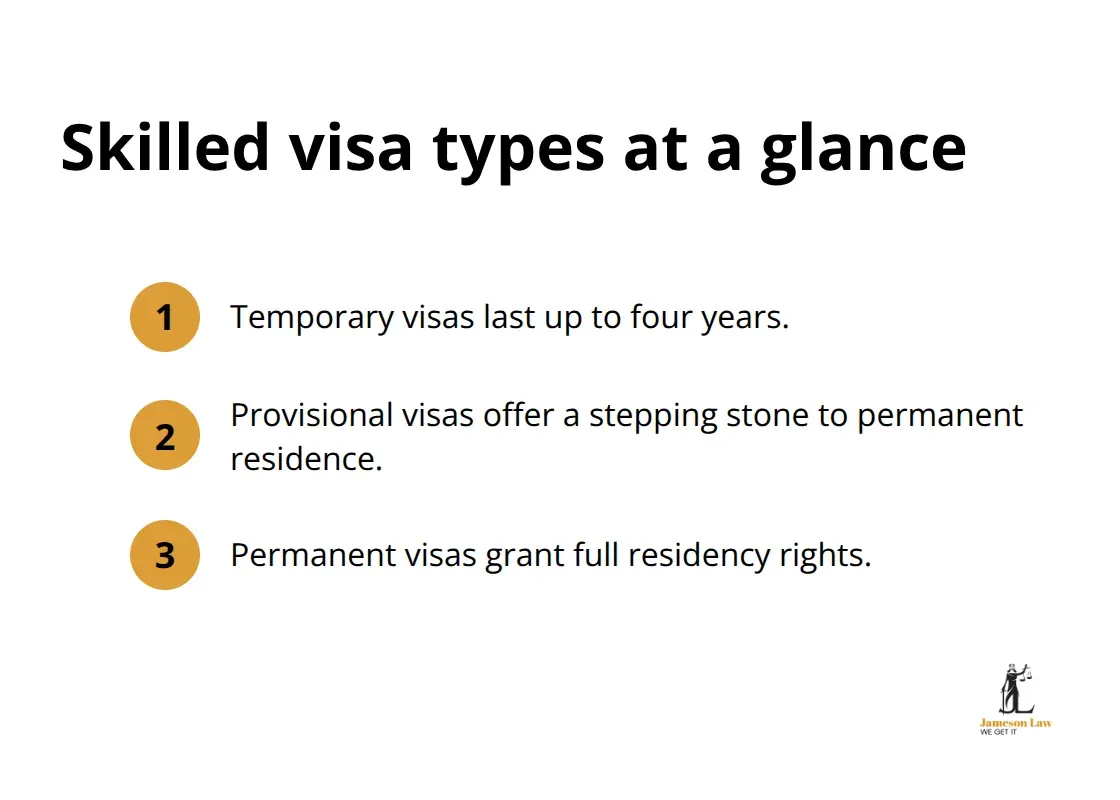
Ministerial Direction No. 105 prioritises employer-sponsored visas in regional areas, healthcare, and teaching. If you hold a job offer, employer sponsorship often provides the most direct pathway.
Regional and Designated Area Options
Regional visas present a strong option if you work outside Sydney or Melbourne. Designated Area Migration Agreements (DAMA) expand occupation access in specific regions, sometimes offering faster settlement opportunities for skilled professionals.
Family Sponsorship Visas
Family reunion visas operate on different criteria. Partner visas have a median processing time of 18 months, reflecting the rigorous relationship evidence required by the Department. You must demonstrate a genuine, ongoing partnership.
How Long Will Your Visa Application Take
Processing times vary dramatically. While skilled visas take about 10 months, partner visa timelines remain lengthy due to the complexity of relationship assessments.
Application Completeness and Queue Position
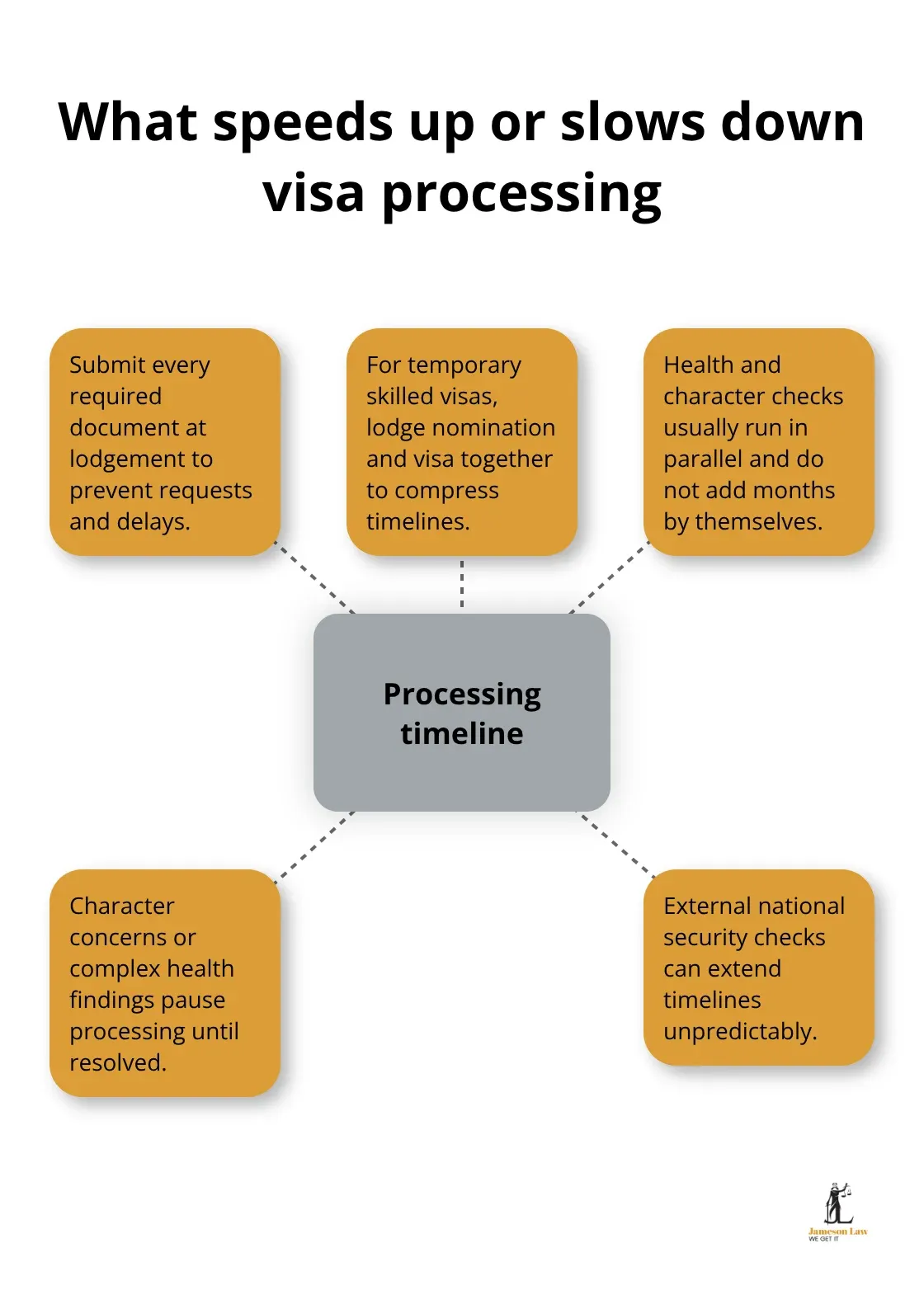
Application completeness determines whether you hit these median timelines. The Department of Home Affairs emphasises that incomplete applications cause the most common delays. Furthermore, because applications sit in a priority queue rather than first-come-first-served, your occupation and visa category significantly influence your wait time.
Which Visa Pathway Suits Your Situation
Your choice depends on your occupational credentials, family connections, and financial capacity. For Skilled Migration, you must obtain a skills assessment from an assessing authority—a process taking 4–8 weeks. If pursuing Business and Investment Visas, you must demonstrate substantial capital, often requiring at least AUD 2.5 million in eligible investments.
Final Thoughts
Australia offers multiple pathways, but honesty about your circumstances is your greatest asset. Skilled migration works if you meet points thresholds; family sponsorship applies if you have established ties; and business visas open doors if you have the capital and a viable commercial plan.
At Jameson Law, our expert team helps you identify which pathway genuinely suits your situation. Contact us today to discuss your goals and avoid the costly errors associated with choosing the wrong visa subclass.