

ASIO has the power to cancel your visa, and it can happen with minimal warning. If you’re on a visa in Australia, understanding this risk is essential to protecting your status.
At Jameson Law, we’ve helped many visa holders navigate ASIO cancellations and their consequences. This guide walks you through your rights, what happens when ASIO acts, and how to respond effectively.
How ASIO Gets the Power to Cancel Your Visa
Legal Authority Under the Migration Act
ASIO’s authority to cancel visas comes directly from the Migration Act 1958 (Cth). Section 501 of the Act allows the Minister for Home Affairs to cancel a visa if they’re satisfied that the holder poses a risk to national security, or if ASIO has advised that the person is a security concern. ASIO doesn’t need to prove anything in court first. ASIO can simply assess you as a security risk, advise the Minister, and your visa can be cancelled based on that assessment alone.
This happens without the usual procedural protections you’d expect in other legal decisions. The Minister can act on ASIO’s advice within weeks, sometimes with only days of notice to you. The speed of this process creates one of the biggest challenges visa holders face, because the decision may already be made before you realise what’s happening.
What Triggers ASIO’s Attention
ASIO assesses visa holders against a broad national security definition that includes terrorism, espionage, foreign interference, and serious criminal activity. The legislation doesn’t require ASIO to find evidence of a specific crime or threat. Instead, ASIO can act on suspicion, intelligence, associations, or information from overseas agencies.
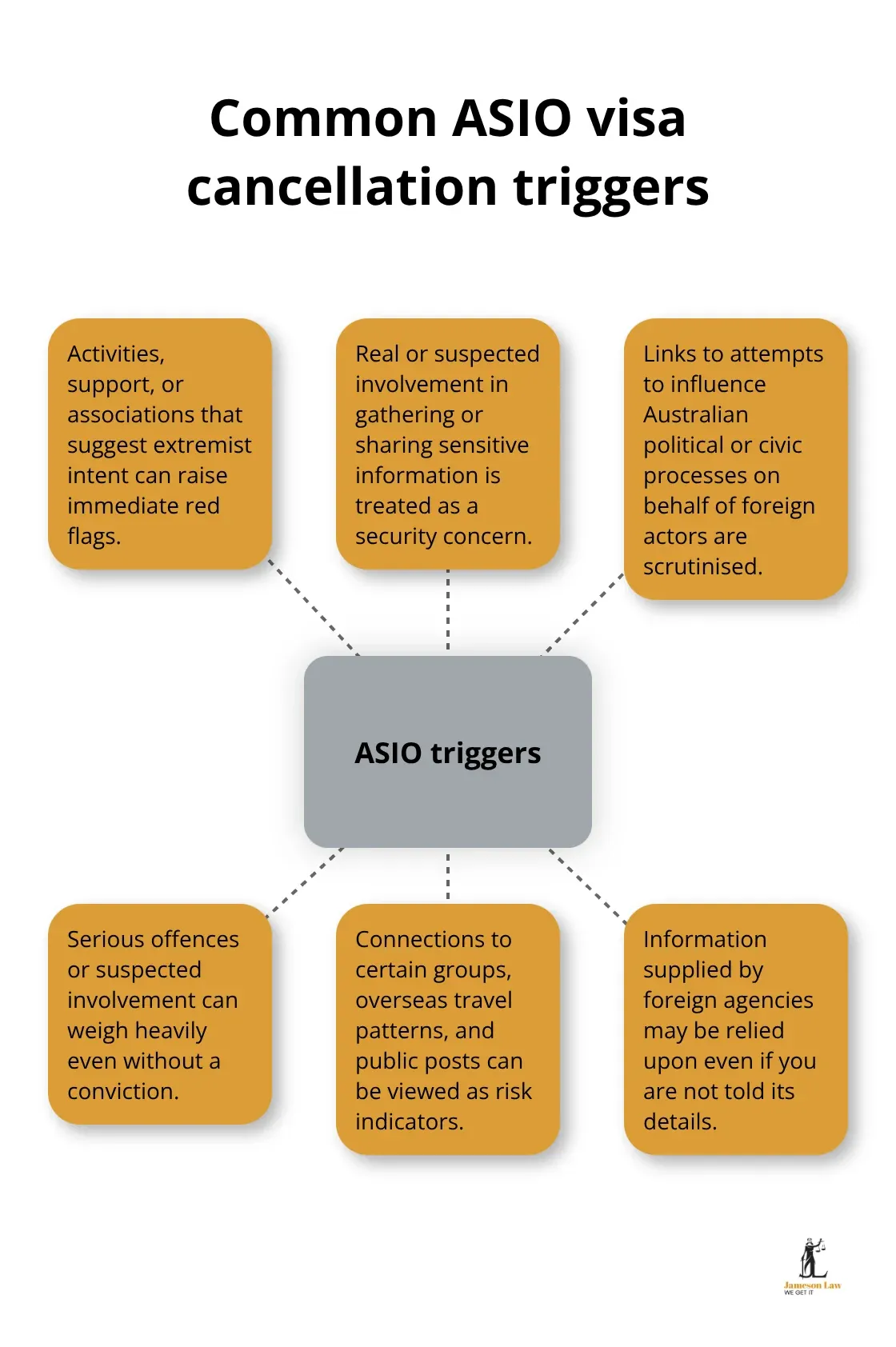
You could be flagged for visa cancellation based on activities that aren’t illegal in Australia, your associations with certain groups, your travel history, or statements you’ve made online. Visa cancellations have occurred following ASIO assessments related to alleged connections to extremist organisations, involvement in foreign conflicts, or suspected espionage activity. The Home Affairs department publishes annual reports showing visa cancellations, though specific details about individual cases remain confidential. ASIO’s threshold for concern is low, and the assessment process happens entirely behind closed doors without your input.
How the Assessment Process Works Against You
When ASIO conducts a national security assessment, you have no right to know what information they’re reviewing, who’s providing it, or what specific concerns they have. ASIO can rely on classified intelligence, overseas agency reports, and informant information that you’ll never see.
The assessment isn’t tested against your version of events because you’re not told it’s happening until after ASIO has already formed its view. Home Affairs then uses this one-sided assessment to decide whether to cancel your visa. If you receive notice, it typically comes as a formal cancellation decision rather than a warning that assessment is underway.
This process fundamentally disadvantages visa holders. You can’t correct misinformation, challenge false allegations, or provide context about your circumstances before the decision is made. ASIO has already concluded you’re a security concern, and the burden then shifts to you to prove otherwise. Understanding what happens next-and what rights you actually have-becomes critical to protecting your status.
What Rights Do You Actually Have
Notification and the Timing Problem
ASIO’s national security power creates a fundamental imbalance. You receive a cancellation decision, not a warning. The Migration Act 1958 (Cth) gives you the right to notification of the cancellation, but notification arrives after ASIO completes its assessment and the Minister makes the decision. This means you defend yourself against conclusions already reached behind closed doors.
The timing works against you from the moment you open the cancellation letter. You have 9 days from receiving notice to request administrative review through the Administrative Appeals Tribunal. This deadline is extremely tight. Many visa holders miss it simply because they’re in shock or don’t understand the process.
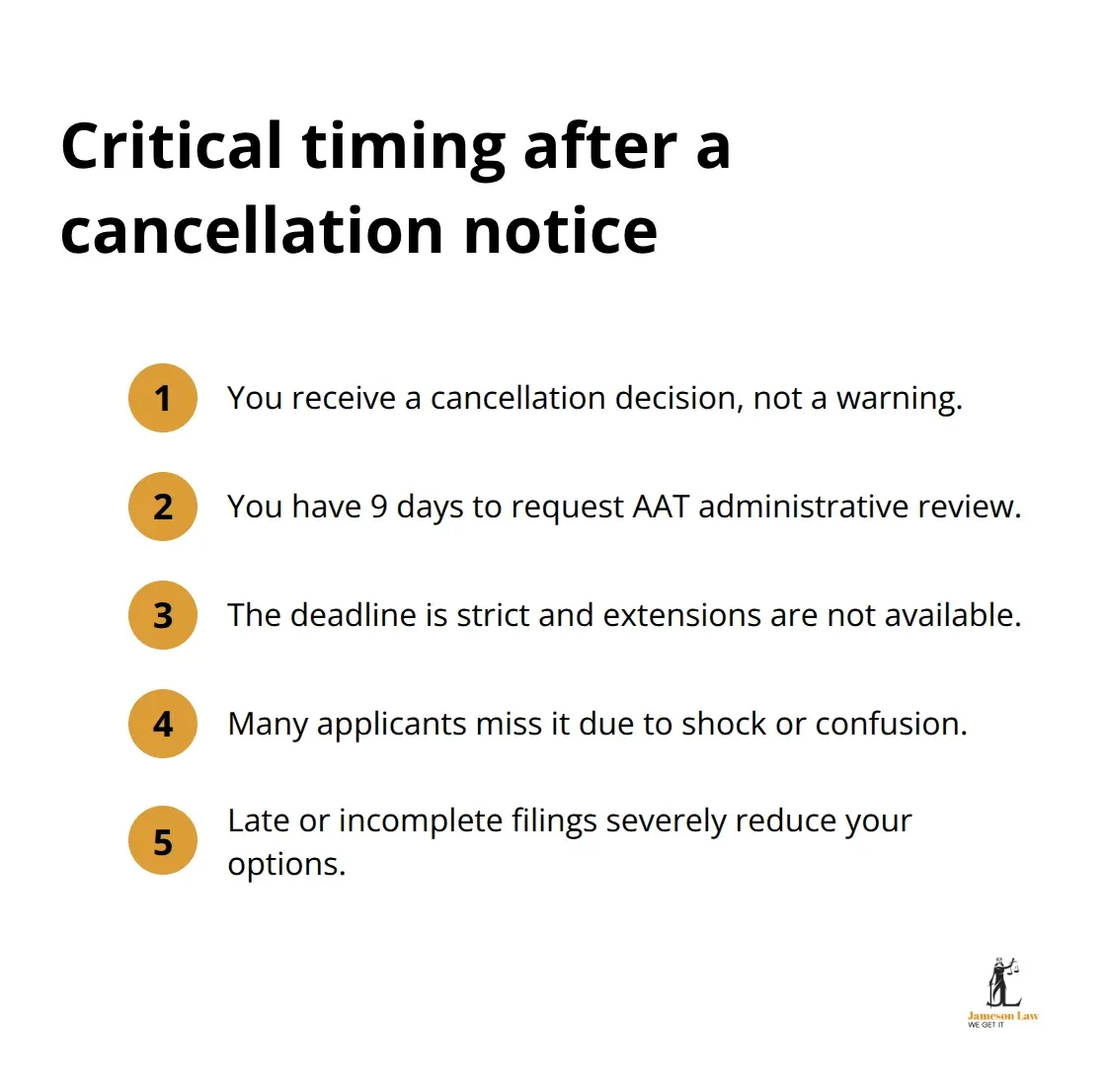
Once this window closes, your ability to challenge the decision becomes significantly harder.
What Administrative Review Actually Covers
You do have the right to challenge the decision, but that right operates within strict limits. Section 501CA of the Migration Act allows you to request administrative review, yet the tribunal cannot overturn ASIO’s national security assessment itself. The tribunal accepts ASIO’s security concerns as established fact.
Your realistic avenue is to argue that the Minister failed to follow proper procedures or misapplied the law to the facts ASIO presented. This is a much weaker position than having the security assessment itself tested. The tribunal reviews whether the Minister properly applied the law, not whether ASIO got it right.
Why Legal Representation Changes Everything
You have the right to legal representation throughout this process, and this right matters enormously. You need a lawyer who understands migration law and ASIO cancellations specifically. Many general practitioners lack experience with these cases.
A specialist migration lawyer will lodge your administrative review application correctly, identify procedural errors the Minister may have made, and prepare submissions that address ASIO’s concerns within the limited scope available to you. Visa holders with experienced legal representation have materially better prospects than those attempting to defend themselves.
Acting Within the Critical Window
You should contact a lawyer within days of receiving a cancellation notice, not weeks. The 9-day deadline for administrative review is unforgiving, and preparation takes time. A lawyer experienced in these matters will immediately assess whether procedural errors occurred, gather evidence to support your position, and draft submissions that work within the tribunal’s narrow jurisdiction.
The difference between acting quickly and acting slowly often determines whether you have any realistic chance of success. Delays mean missed deadlines, incomplete applications, and weaker submissions. Your next step after receiving a cancellation notice is to seek legal advice from someone who handles ASIO cases regularly. This decision shapes everything that follows.
Your First Actions After Receiving a Cancellation Notice
Understanding Your Cancellation Letter
The moment you receive a cancellation notice from Home Affairs, you have entered a compressed timeframe where every decision matters. Your cancellation letter will state that your visa has been cancelled under section 501 of the Migration Act 1958 (Cth) and will reference ASIO’s national security assessment. The letter typically provides minimal detail about the specific grounds for cancellation, which is frustrating but standard practice. What matters now is understanding exactly what the letter says about your rights and deadlines.
Read the letter carefully and identify the date you received it, because your 9-day window for requesting administrative review begins from that date. If you received the letter by mail, the date of receipt is when you physically opened it, not when it was posted. This distinction matters if you later dispute whether you met the deadline.
Acting Within 48 Hours
Contact a migration lawyer who handles ASIO cancellations within 48 hours of receiving the notice. This isn’t an exaggeration. The ones with the strongest outcomes are those prepared by lawyers who act immediately. A lawyer will assess whether procedural errors occurred in the cancellation decision, review what information might be available to you through freedom of information requests, and determine whether your circumstances support a review application.
Lodging Your Administrative Review Application
Your administrative review application must be lodged with the Administrative Appeals Tribunal within 9 days of receiving notice. The application requires specific information and must be submitted through the correct channel, either online via the AAT website or by post to the Melbourne registry. Incomplete applications or applications that miss the deadline face rejection, and the tribunal has no discretion to extend the time limit.
The tribunal’s role is narrow: it examines whether the Minister properly applied the law, not whether ASIO’s assessment was correct. Your lawyer will focus on identifying procedural defects, such as whether the Minister failed to consider relevant material, whether ASIO’s assessment was based on classified information that should have been disclosed, or whether the decision-making process breached natural justice principles.
What Happens at the Tribunal Hearing
If your review proceeds to a hearing, you will appear before an AAT member and present your case. ASIO rarely attends these hearings in person but provides written submissions. The process typically takes 3 to 6 months from lodgement to decision.
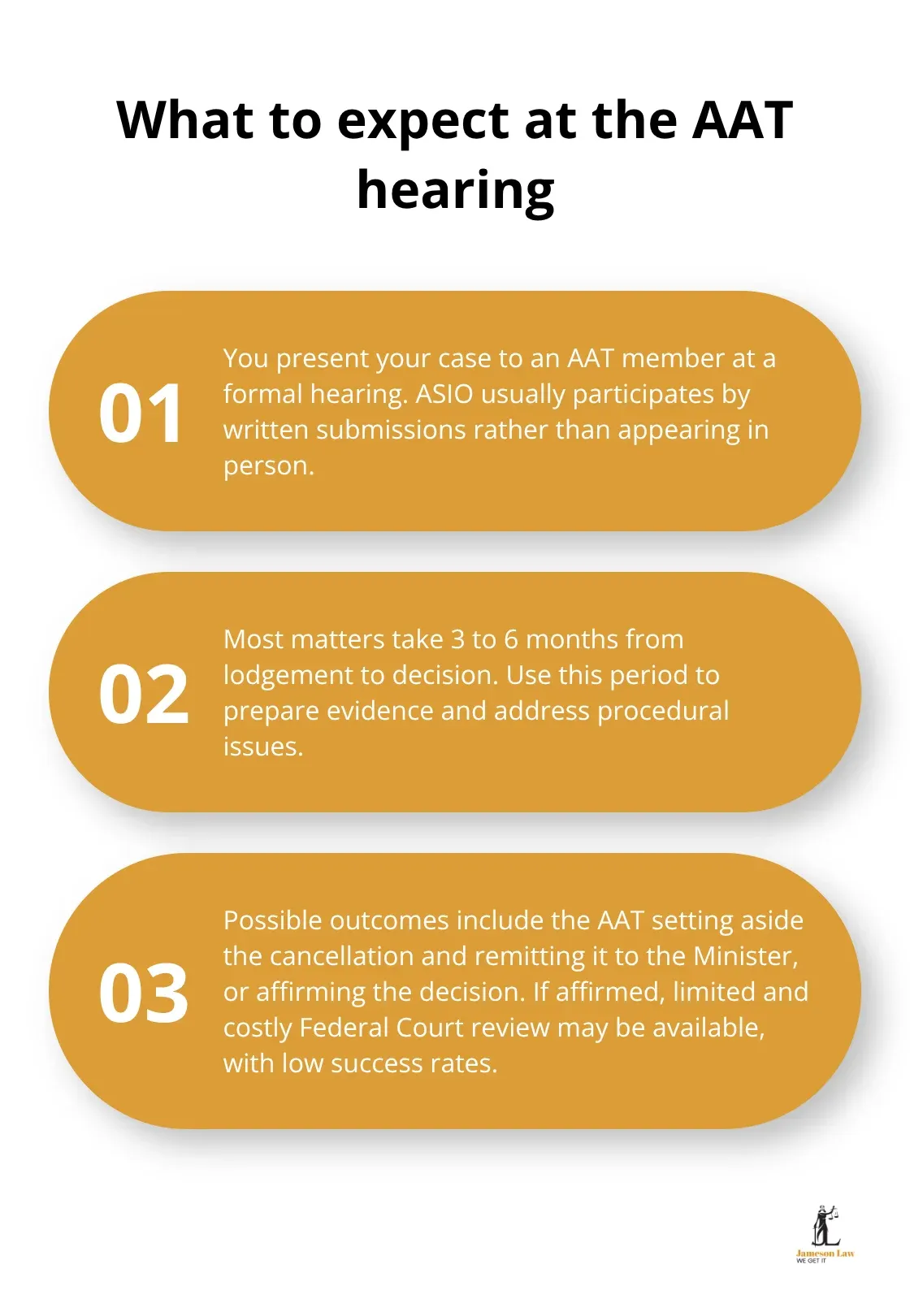
If the tribunal finds the cancellation was unlawful, it can set aside the decision and remit the matter to the Minister for reconsideration. If the tribunal affirms the cancellation, you retain limited rights to seek judicial review in the Federal Court, though this path is expensive and success rates are low.
The Cost of Delay
The difference between acting within days and acting within weeks often determines whether your application is thorough and compelling or rushed and incomplete. Delays mean missed deadlines, incomplete applications, and weaker submissions that fail to identify procedural errors the Minister may have made.
Final Thoughts
Visa cancellation risk in Australia remains stark because ASIO acts quickly with minimal warning, and you must prove your case once the decision arrives. Compliance with your visa conditions matters far more than most people realise, since every breach creates a record that ASIO can reference during assessment. Your associations, online statements, travel history, and financial connections all fall within ASIO’s assessment scope, meaning you don’t need to have done anything illegal for ASIO to flag you as a security concern.
Your social media presence, community involvement, and activism all warrant careful attention because security agencies review these activities closely. If you’re involved in advocacy work or community organising, document your activities clearly so the legitimate nature of your involvement stands out. Early legal advice protects you far more effectively than waiting until a cancellation notice arrives, particularly if you’re aware of circumstances that might trigger ASIO’s attention.
Contact Jameson Law if you face visa cancellation or worry about your security status. We provide practical legal guidance tailored to your circumstances and help you navigate immigration law challenges effectively.