


Facing criminal charges in NSW is serious. The decisions you make in the first hours and days after arrest can determine the outcome of your criminal trial.
At Jameson Law, we’ve seen countless cases where early legal representation made the difference between conviction and acquittal. Getting a defence lawyer before court isn’t optional-it’s your best protection against the system.
When to Get Legal Help
Act Immediately After Police Contact
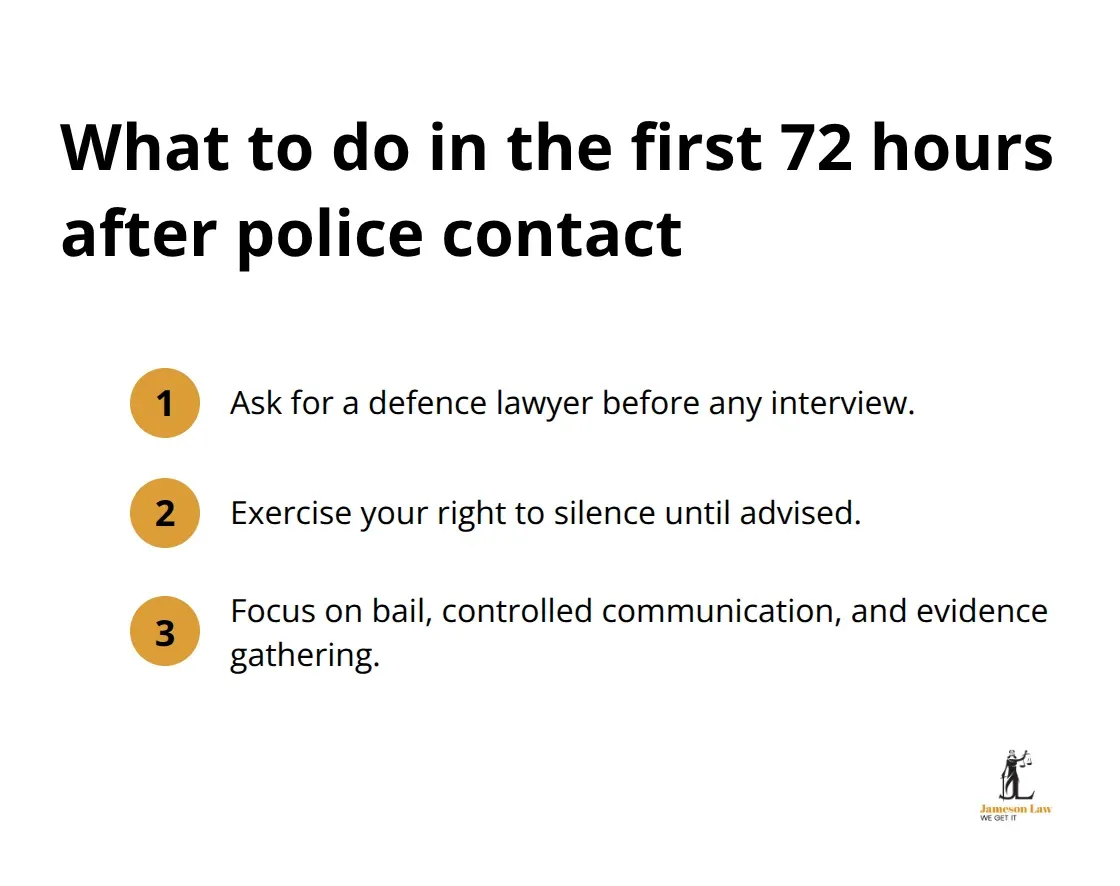
The moment police contact you, the clock starts ticking. In NSW, you have a right to silence – this means that you do not have to answer Police questions, you do not have to make a statement and you do not have to do an interview. If police arrest or take you into custody, you can request a lawyer before any interview. This isn’t weakness-it’s strategy. Police are trained to extract information, and anything you say can be used against you in court.
A defence lawyer present at your first police interview protects you from making statements that seem harmless but later destroy your case. Casual comments about your whereabouts or actions, when taken out of context by prosecutors, become the prosecution’s strongest evidence. Within the first 24 to 72 hours after arrest, decisions about bail, what you communicate to police, and what evidence gets gathered will shape your entire defence. Waiting until your court date to hire a lawyer means you’ve already lost critical time to challenge police procedures, gather witness statements, or identify weaknesses in the prosecution’s case.
Understand Your Charges and Penalties
Understanding what you’re charged with requires more than reading the charge sheet. Different charges carry vastly different penalties and defences. A charge of assault can range from a summary offence in the Local Court to an indictable offence in the District Court, with penalties ranging from fines to years in prison. A defence lawyer immediately identifies which category your charge falls into and explains your realistic options.
Some charges have specific legal defences you might not know about. If you’re charged with driving under the influence, a lawyer can determine whether the breath or blood test was administered correctly and whether police followed proper procedures. Early intervention also means your lawyer can assess whether bail conditions are fair and push back if police imposed unreasonable restrictions.
Enter Court Informed and Prepared
Getting legal advice before your first court appearance allows you to enter that courtroom informed, with a clear strategy, and with someone in your corner who understands the system. The next section covers how a defence lawyer actively protects your interests throughout the legal process.
How a Defence Lawyer Protects Your Interests
Testing Police Procedures and Excluding Illegally Obtained Evidence
A defence lawyer doesn’t simply show up on your court date. From the moment you engage representation, your lawyer works to dismantle the prosecution’s case before trial even begins. In NSW, the prosecution carries the burden of proving guilt beyond reasonable doubt, and a skilled defence lawyer exploits every weakness in their evidence.
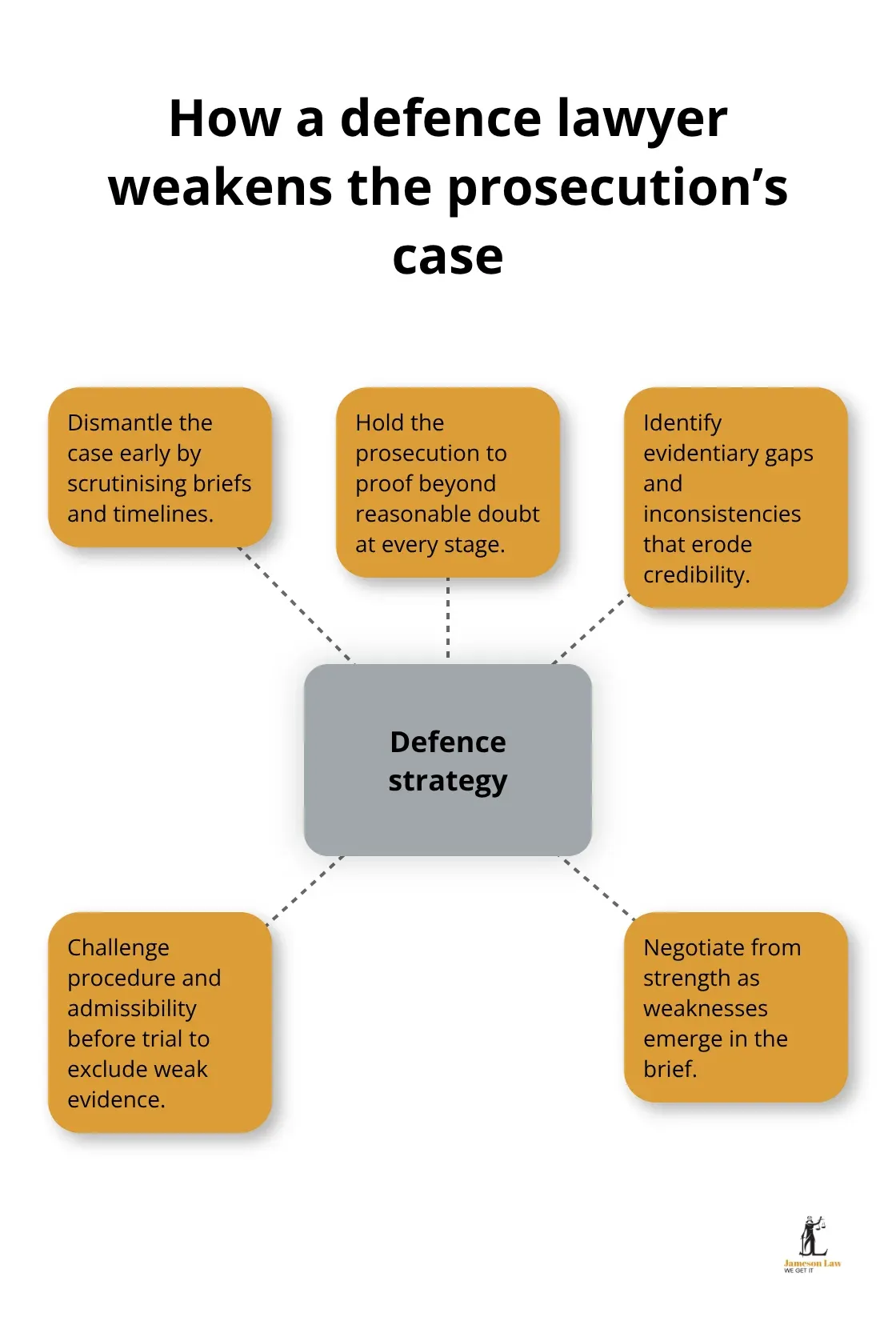
This starts with testing police procedures. If police failed to record your interview, didn’t caution you properly, or obtained evidence through improper methods, that evidence can be excluded from court. A defence lawyer identifies these procedural breaches early and files applications to have illegally obtained evidence suppressed, which often weakens the prosecution’s position so severely that charges are dropped or downgraded.
Gathering Evidence and Cross-Examining Witnesses
Building your defence strategy requires gathering evidence the prosecution won’t present. Your lawyer obtains police statements, witness accounts, CCTV footage, and expert reports that support your version of events. They cross-examine prosecution witnesses in court, testing the reliability of their testimony and exposing inconsistencies or bias.
If you’re charged with assault, a lawyer might obtain medical records showing the alleged victim had pre-existing injuries, or CCTV proving you acted in self-defence. This evidence shifts the narrative and forces the prosecution to answer difficult questions about their case.
Negotiating Outcomes and Reducing Penalties
Negotiating with prosecutors happens throughout the process, not just at trial. Many cases resolve through discussions where your lawyer argues for charge reduction or withdrawal based on the strength of your defence. If you plead guilty, your lawyer presents mitigating evidence to the court during sentencing, which can reduce your penalty significantly.
Character references, evidence of remorse, rehabilitation efforts, and personal circumstances all influence sentencing outcomes. Without a lawyer advocating for leniency, courts have limited information about your circumstances and often impose harsher penalties than necessary. The next section covers the common mistakes people make when they face court without legal representation-mistakes that a defence lawyer prevents from the outset.
Common Mistakes People Make Without Legal Representation
Talking to Police Without a Lawyer Present
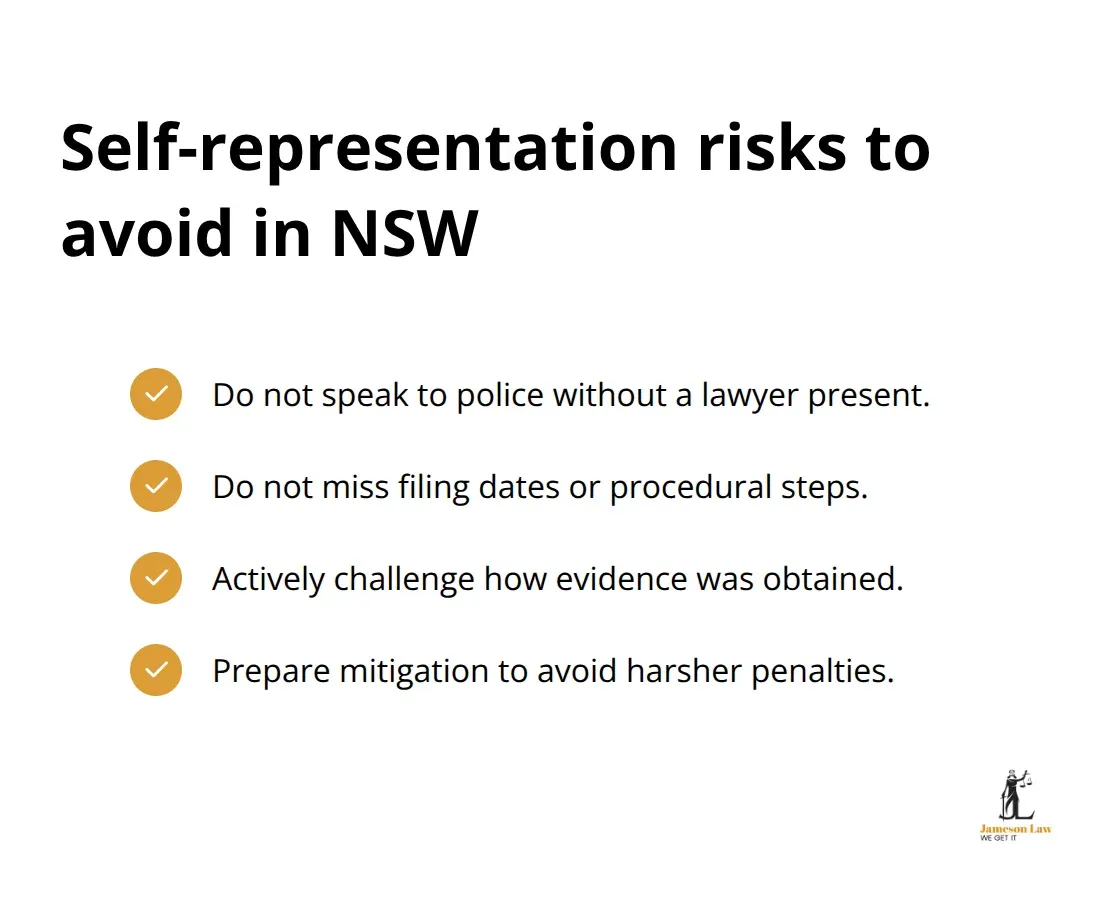
People who represent themselves in criminal court make preventable mistakes that destroy their defence. The first mistake is talking to police without legal advice. In NSW, anything you say during a police interview becomes evidence, and police are trained to extract statements that sound innocent in the moment but become damaging when prosecutors present them selectively in court.
A person arrested for assault might mention they were at the location, thinking this helps their case. Police then use that admission to anchor their narrative, and suddenly the defendant has handed prosecutors half their case. Without a lawyer present, you have no one objecting to leading questions, no one clarifying your words for the record, and no one protecting your right to silence.
Missing Court Deadlines and Procedural Requirements
The second critical mistake is missing court deadlines or procedural requirements. NSW courts operate on strict timelines for filing bail applications, disclosure requests, and defence evidence. A single missed deadline can result in losing your right to present evidence, having bail conditions imposed without challenge, or facing default judgement.
Courts do not extend deadlines for people representing themselves out of sympathy. A Magistrates Court in NSW processes hundreds of cases annually, and the system moves forward regardless of whether you understand the rules. Self-represented defendants often discover too late that they missed a filing deadline or failed to comply with court orders.
Failing to Challenge Evidence Properly
The third mistake is failing to challenge evidence properly. Self-represented defendants often accept the prosecution’s version of events without questioning how police obtained statements, whether breath testing equipment was calibrated correctly, or whether witness identification procedures were conducted fairly. These procedural failures are where defence cases are won.
If police failed to record an interview or didn’t caution you properly before questioning, that evidence should be excluded, but only if someone files the right application at the right time with proper legal arguments. Self-represented defendants typically don’t know these applications exist. They sit in court watching their case collapse because they couldn’t identify that a piece of prosecution evidence was obtained illegally.
Receiving Harsher Penalties Without Advocacy
The financial cost of representing yourself appears low initially, but the real cost emerges in the sentence you receive. Courts impose harsher penalties on unrepresented defendants because no one presents mitigating evidence, character references, or rehabilitation efforts to the judge (factors that significantly influence sentencing outcomes).
A person convicted without legal representation might receive 12 months in custody when proper defence advocacy could have reduced that to community corrections. The difference between these outcomes often comes down to whether someone presented the court with a coherent narrative about your circumstances, your remorse, and your prospects for rehabilitation. Without that advocacy, judges have limited information and often impose penalties that exceed what proper legal representation would have achieved.
Final Thoughts
Facing a criminal trial in NSW without legal representation puts you at a severe disadvantage against a prosecution team with resources, training, and procedural knowledge. The prosecution knows how to exploit procedural gaps, and without a defence lawyer, you navigate a system designed by lawyers while operating blind to its rules. Early legal representation protects your rights from the moment police contact you, and the decisions made in those first hours determine whether evidence gets excluded, whether bail conditions remain reasonable, and whether the prosecution’s case survives scrutiny.
The cost of self-representation extends far beyond legal fees-unrepresented defendants receive harsher sentences because no one advocates for mitigating circumstances, they miss court deadlines that strip away their right to present evidence, and they make statements to police that prosecutors weaponise against them. These patterns repeat across criminal cases in NSW, and they reflect the real consequences of facing the system alone. A defence lawyer identifies weaknesses in the prosecution’s evidence before trial, challenges procedural breaches that contaminate their case, and negotiates outcomes that protect your interests.
Contact Jameson Law today to discuss your situation with someone who understands NSW criminal law and can guide you through what comes next.