

An Australian visa interview can feel intimidating, but preparation removes most of the uncertainty. We at Jameson Law have guided thousands of applicants through this process, and we know what makes the difference between a smooth interview and a stressful one.
These visa interview tips for Australia will walk you through exactly what to expect, how to prepare properly, and how to present yourself confidently when it matters most.
What Happens During Your Visa Interview
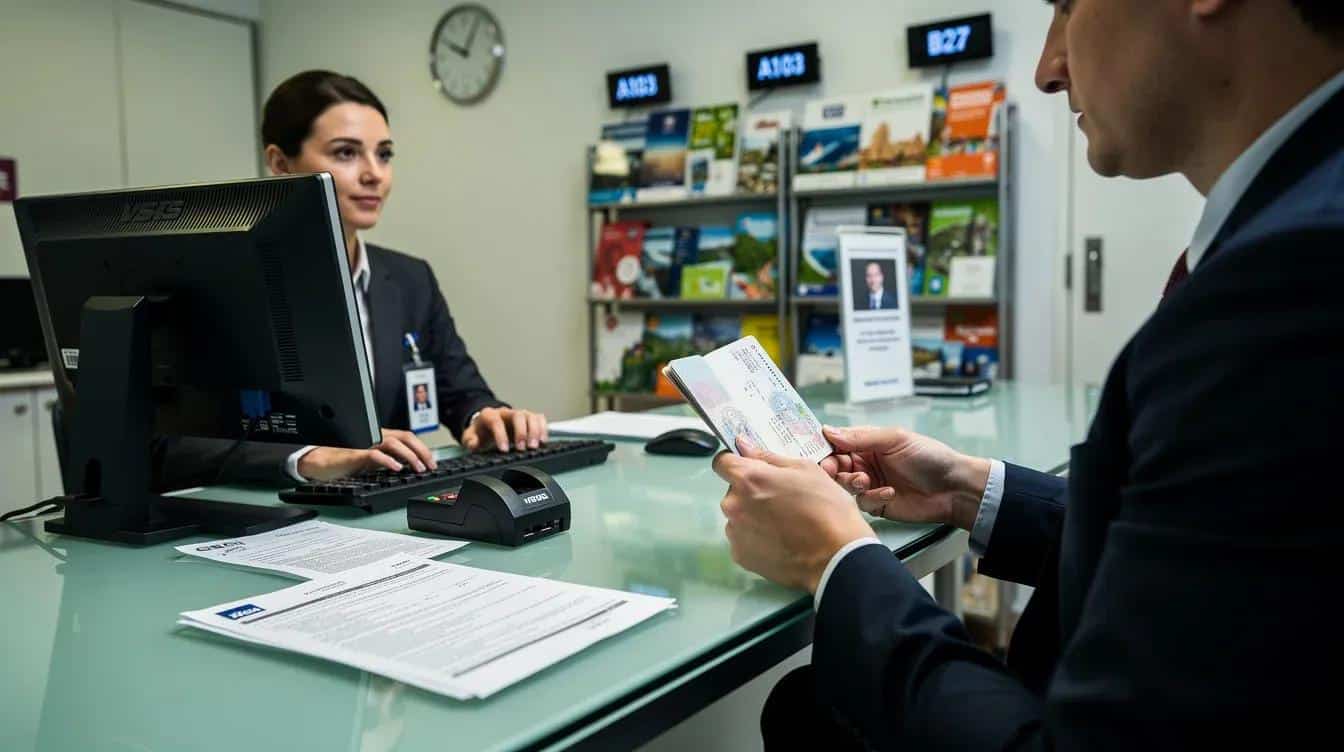
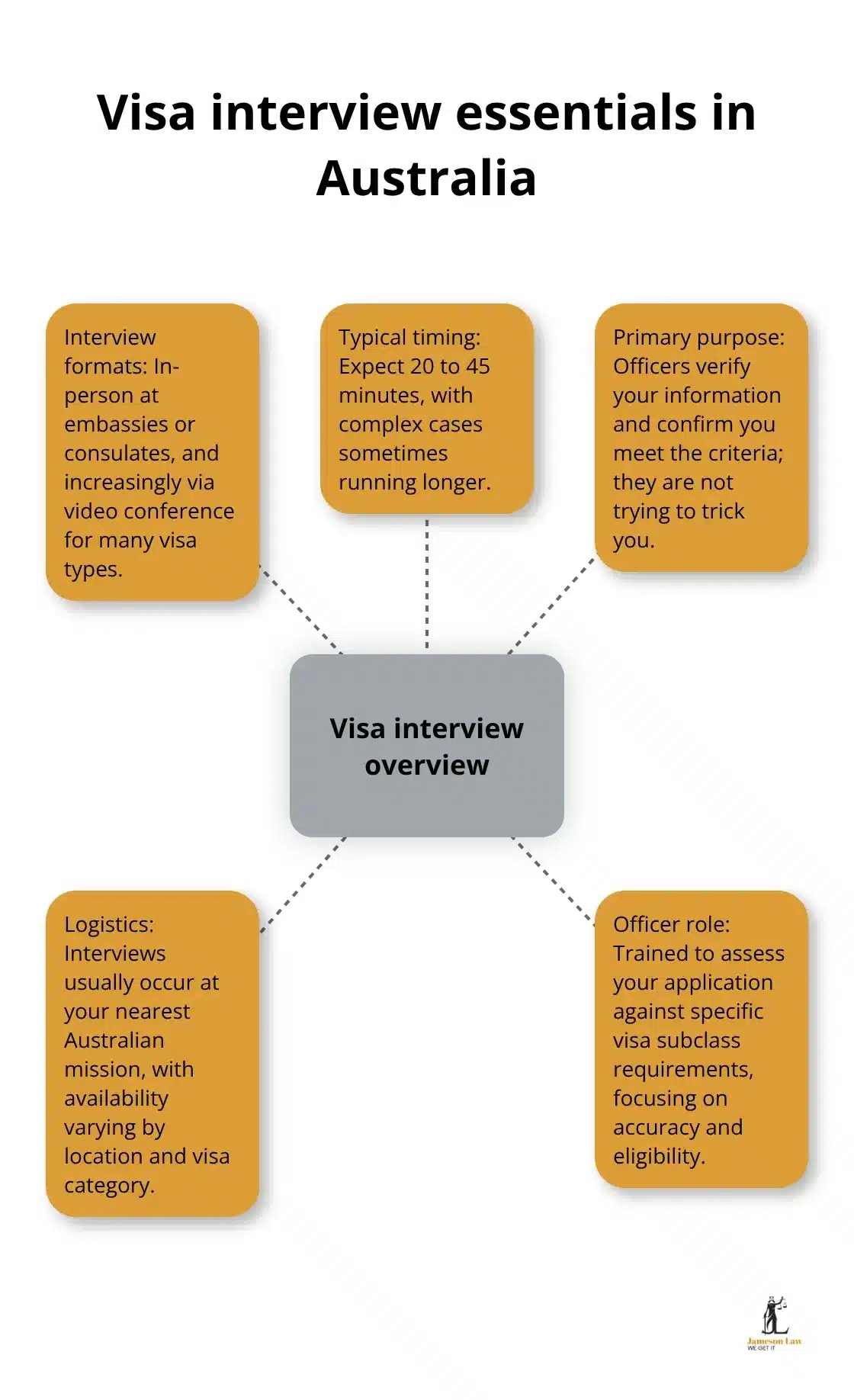
Australian visa interviews vary significantly depending on your visa subclass and circumstances. The Department of Home Affairs conducts most interviews either in person at an Australian embassy or consulate, or increasingly via video conference. Video interviews have become increasingly common for many visa types, particularly skilled migration and visitor visas. In-person interviews typically occur at your nearest Australian mission, though processing times and interview availability depend on your location and visa category.
Interview Format and Duration
You should expect your interview to last between 20 and 45 minutes, though complex cases can extend longer. The interviewer will be an immigration officer trained to assess your application against the specific requirements of your chosen visa subclass. They are not trying to trick you or find reasons to refuse your application. Their role is to verify the information you have provided and confirm you meet the visa criteria.
Questions About Your Work and Skills
Immigration officers ask targeted questions to verify key claims in your application. For skilled migration visas, they will ask detailed questions about your work experience, qualifications, and how your skills address Australian labour shortages. The officer may ask you to explain gaps in your employment history, clarify educational credentials, or describe specific projects you have completed. If you claim to be a software developer, the officer may ask technical questions to verify your expertise.
Your answers must match your written application precisely. If details have changed since you submitted your application, explain this clearly and provide updated documentation. The most common mistake applicants make is providing vague answers or appearing uncertain about information they submitted in their application.
Questions About Your Ties to Home
For visitor visas, questions focus on your ties to your home country, the purpose of your visit, and your financial capacity to support yourself in Australia. The officer will ask you to discuss your employment, family relationships, property ownership, and financial assets in detail. Visa applications can be rejected based on insufficient evidence of ties to the home country. If you state you have family support, be ready to explain those relationships and provide evidence.
Organising Your Documentation
Bring original documents or certified copies of everything you referenced in your application. This includes your passport, birth certificate, educational qualifications, employment references, and financial statements. If you submitted documents in translation, bring both the original and the certified English translation.
Keep documents organised in the order they appear in your application, or group them by category such as education, employment, and financial evidence. A well-organised folder with clearly labelled sections demonstrates professionalism and makes the officer’s job easier. The officer may ask to sight documents you did not mention in your application but that support your case (for example, professional memberships, awards, or additional qualifications).
Do not bring excessive paperwork hoping something will stick. If documents are in another language and you did not provide certified translations beforehand, the officer may reject them or request you provide translations within a specified timeframe. This delays your decision. Have a backup copy of critical documents stored separately in case originals are damaged or lost during the interview process.
Understanding what the officer will ask and what documentation you need to bring removes much of the uncertainty. The next section covers how you should present yourself and communicate during the actual interview.
Preparing for Your Australian Visa Interview
Proper preparation separates applicants who sail through their interviews from those who stumble on basic questions. Start by obtaining the exact visa subclass requirements from the Department of Home Affairs website. Each visa category has distinct criteria, and immigration officers expect you to know what you are being assessed against. If you apply for a skilled migration visa, the officer will test your knowledge of the occupation list requirements and Australian skills assessments. If you apply for a visitor visa, they will probe your financial capacity and ties to home.
Understand Your Visa Requirements
Spend time reading the specific criteria for your visa type, not just the general information. Write down the five to ten key requirements your application must satisfy, then cross-reference them against your submitted documents. This exercise reveals gaps before the interview happens. Many applicants waste preparation time on irrelevant topics because they have not clarified exactly what the officer will assess.
Practise Your Answers Out Loud
Record yourself on your phone and listen back, or ask a friend to conduct a mock interview. This reveals nervous habits like filler words, long pauses, or rambling answers that make you sound uncertain. Immigration officers assess credibility partly through how you communicate, not just what you say. If your application states you worked as a project manager for five years but you struggle to describe a single project in detail, the officer will note the inconsistency.
Prepare specific examples from your work history with concrete details about your responsibilities, outcomes, and relevant skills. Write these down beforehand and practise delivering them in under two minutes each. For visitor visa applicants, prepare a clear explanation of your travel purpose, how long you plan to stay, and exactly how you will support yourself financially. If family members are sponsoring you, know their names, occupations, and relationship to you without hesitation.
Organise Your Supporting Documents
Arrange your supporting documents in the exact order they appear in your application, with page numbers clearly marked. Use a document checklist to verify you have originals or certified copies of every item you referenced. If any documents are in a language other than English, bring certified English translations prepared by a professional translator recognised by the Department of Home Affairs.
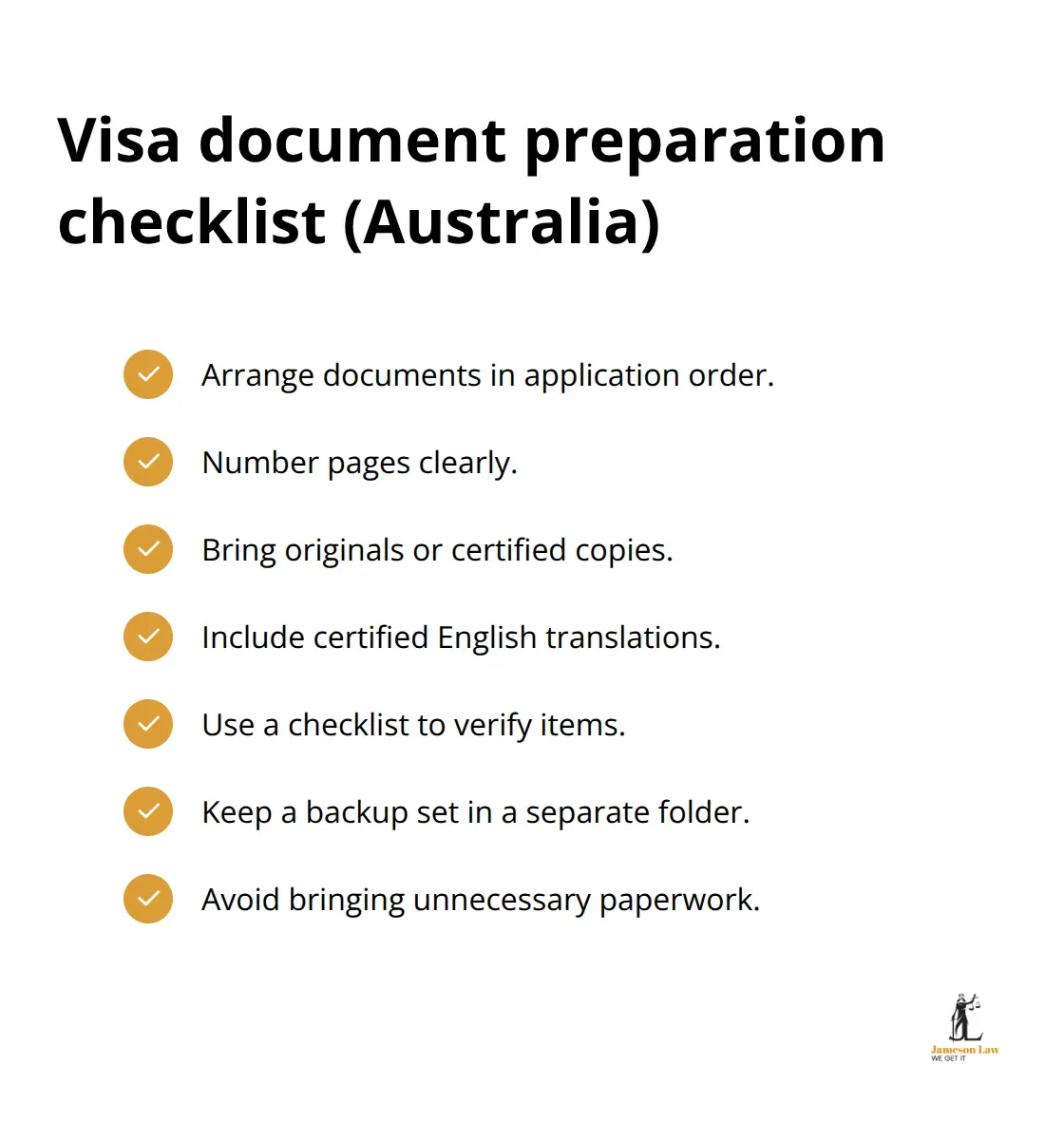
Do not assume the officer will accept documents you did not provide beforehand. Arriving at your interview with missing or improperly translated documents forces you to request extensions or resubmit materials, delaying your decision unnecessarily. Keep a second set of critical documents in a separate folder as backup (in case pages are damaged or misplaced during the interview process).
Present Yourself Professionally
The way you present yourself during the interview matters as much as your documentation. Dress in business casual or formal attire, arrive at least 15 minutes early, and bring all required documents in an organised folder. Immigration officers form impressions quickly, and your appearance and punctuality signal respect for the process. When the officer asks questions, answer directly and honestly without volunteering unnecessary information. If you do not understand a question, ask for clarification rather than guessing at what they mean.
With your visa requirements clear, your answers practised, and your documents organised, you now need to focus on how you will actually perform when the officer sits across from you.
How to Actually Perform During Your Interview
Your technical preparation means nothing if you fall apart when the immigration officer asks their first question. The difference between applicants who receive visa approvals and those who face refusals often comes down to how they present themselves in those 20 to 45 minutes.
Make a Strong First Impression
Dress in business casual or formal clothing and arrive at least 15 minutes early with your documents organised in a folder. Immigration officers assess your credibility from the moment you enter the room. Your appearance signals respect for the process, and arriving early removes the stress of rushing, which inevitably makes you sound uncertain and defensive. If you arrive flustered after running late, the officer will already have formed a negative impression before you answer a single question.
Control Your Body Language and Speech
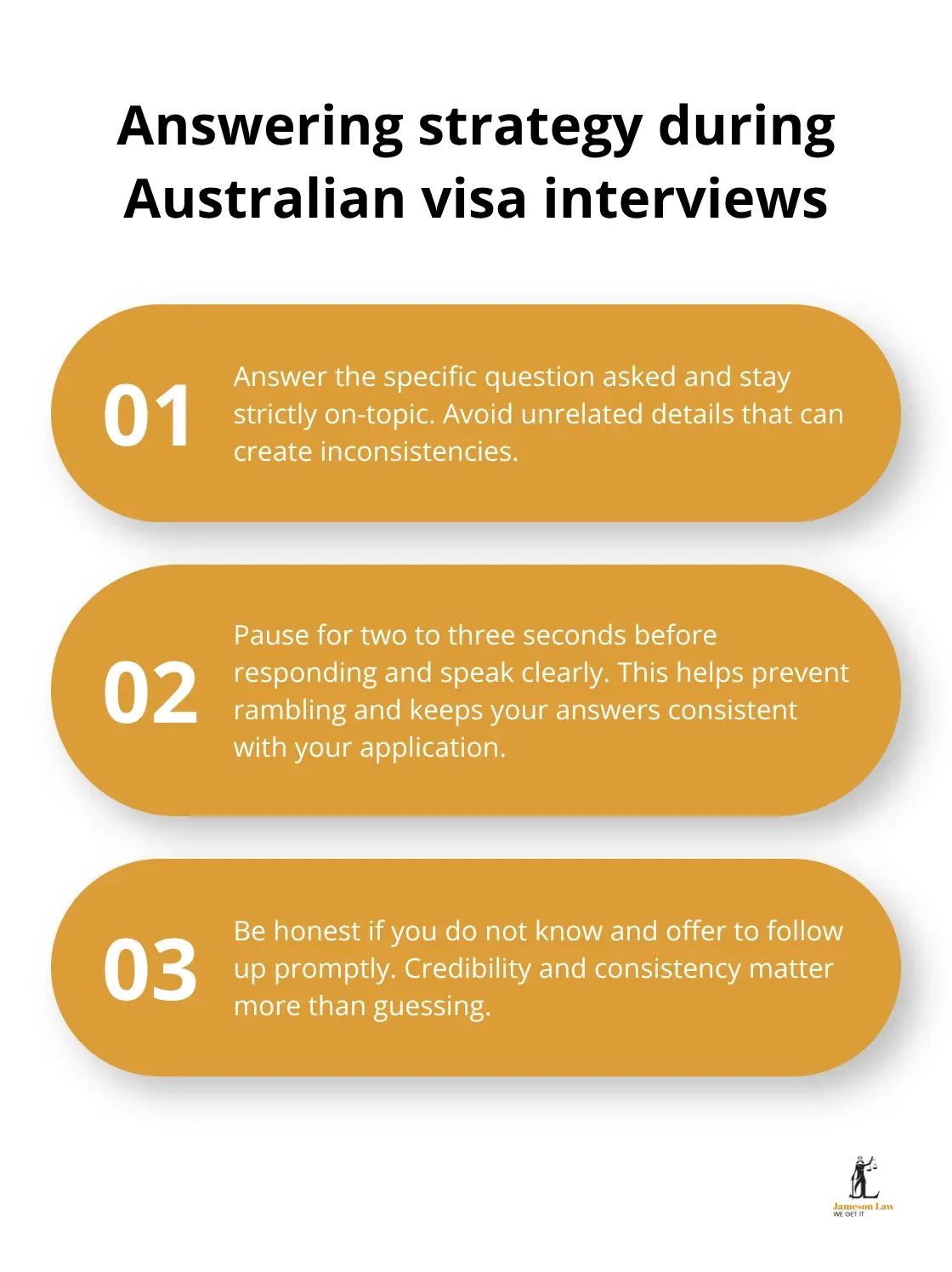
Sit up straight, make eye contact, and speak at a measured pace. When the officer asks a question, pause for two or three seconds before answering. This pause feels uncomfortable but prevents you from rambling or providing information that contradicts your application. Speak clearly without rushing through sentences. If your hands shake, keep them on the table rather than fidgeting with your folder. Take slow, deliberate breaths if you feel anxious.
Answer Questions Directly
Answer the specific question asked rather than volunteering extra details hoping something will strengthen your case. If you claim you worked as a marketing manager and the officer asks about your experience, answer directly about your marketing role without suddenly mentioning unrelated volunteer work or family connections. Unnecessary information creates inconsistencies that officers notice immediately. Immigration officers conduct hundreds of interviews annually and recognise nervous applicants, but they distinguish between normal nervousness and evasive behaviour.
Normal nervousness is understandable. Evasive behaviour, where you avoid eye contact, contradict yourself, or provide vague answers to straightforward questions, raises red flags that damage your application.
Be Honest About What You Know and Don’t Know
Honesty is non-negotiable because immigration officers have access to your full file and can verify details through employer records, educational institutions, and financial documentation. If your application states you earned AUD 75,000 annually but your tax records show AUD 55,000, the officer will ask why. Admit the discrepancy exists and explain it clearly, whether you miscalculated, received bonuses not reflected in base salary, or made an error on your application. Officers expect humans make mistakes; they do not expect dishonesty.
If you do not know an answer to a question, say so instead of guessing. Saying “I am not certain, but I can provide that information within one week” is infinitely better than providing incorrect information that contradicts your documents. If the officer asks technical questions about your field and you cannot answer confidently, this signals your claimed expertise may not be genuine. If you freeze or cannot articulate basic concepts related to your profession, the officer will doubt whether your qualifications are legitimate.
Final Thoughts
Your visa interview success rests on three foundations: understanding exactly what the Department of Home Affairs will assess, preparing your answers and documents thoroughly, and presenting yourself with clarity and honesty when it matters. The visa interview tips Australia applicants need most are straightforward-know your visa requirements, practise your answers out loud, organise your documents properly, and communicate directly without volunteering unnecessary information. Immigration officers are not trying to reject your application; they are verifying that you meet the criteria for your chosen visa subclass and that the information you provided is accurate.
When you walk into that interview room prepared, dressed professionally, and ready to answer questions honestly, you remove the uncertainty that makes applicants anxious. The officer will notice your preparation and your confidence. After your interview concludes, the Department of Home Affairs will contact you with a decision within the timeframe specified for your visa type, and you will receive either a visa grant notification with conditions and validity dates or a detailed letter explaining any refusal reasons.
If you need professional guidance preparing for your visa interview or have questions about your specific circumstances, contact Jameson Law to discuss your visa application with our immigration law team.