

Sexual assault allegations are serious matters that demand immediate attention. The decisions you make in the first hours and days can significantly impact your case outcome and legal rights.
At Jameson Law, we understand that a sexual assault defence requires swift action. Getting experienced legal representation early protects your interests and ensures you navigate the criminal process effectively.
What Sexual Assault Actually Means Under NSW Law
Sexual Assault Offences and Their Legal Definitions
Sexual assault in New South Wales covers far more than most people realise, and the legal definitions are precise and broad. Under sexual assault under section 61I of the NSW Crimes Act 1900, sexual assault means non-consensual sexual intercourse, which includes penetration that is anal, oral, or by an object or body part. The maximum penalty is 14 years imprisonment with a standard non-parole period of 7 years. If aggravating factors exist-such as inflicting or threatening bodily harm, acting with others present, or the victim having a serious physical or cognitive disability-the offence becomes aggravated sexual assault under section 61J, carrying a maximum of 20 years. Men can be victims of rape under NSW law, a point often overlooked. Consent must be free and voluntary; it is invalid if the person lacks capacity due to age or cognitive impairment, is unconscious or asleep, is threatened, or is unlawfully detained.
What Consent Means in Law
What matters is whether consent existed at the time of the incident, not what happened before or after. Sexual touching without consent falls under section 61KC, with a maximum penalty of five years, or seven years if aggravated by authority, presence of others, or the victim’s disability. A sexual act performed without consent-which does not require direct physical contact-carries up to 18 months under section 61KE.
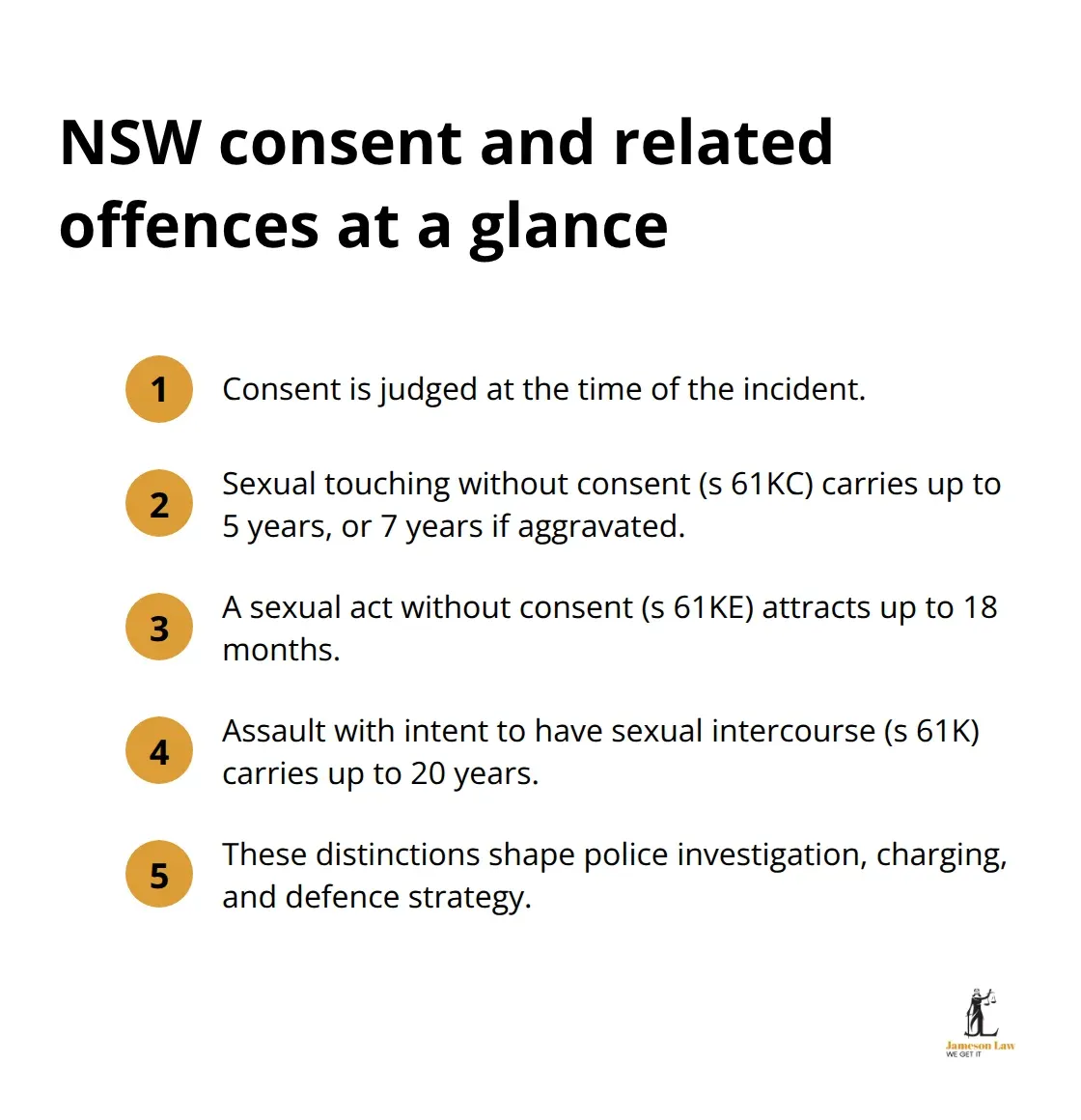
Assault with intent to have sexual intercourse under section 61K attracts up to 20 years and is distinct from attempted sexual assault. These distinctions matter enormously because they affect how police investigate, how prosecutors charge, and ultimately what defence strategy works best.
The Investigation and Court Timeline
The investigation timeline in NSW typically spans three to twelve months, during which police gather statements, forensic evidence, and digital records. The Brief of Evidence must reach your legal representative within six to eight weeks and includes witness statements, CCTV footage, phone records, and expert reports. Early legal intervention allows your lawyer to scrutinise this evidence immediately, identify weaknesses in the prosecution case, and preserve your own evidence before it disappears. Committal proceedings generally occur three to six months after your first court appearance and test whether the prosecution has a case strong enough to proceed.
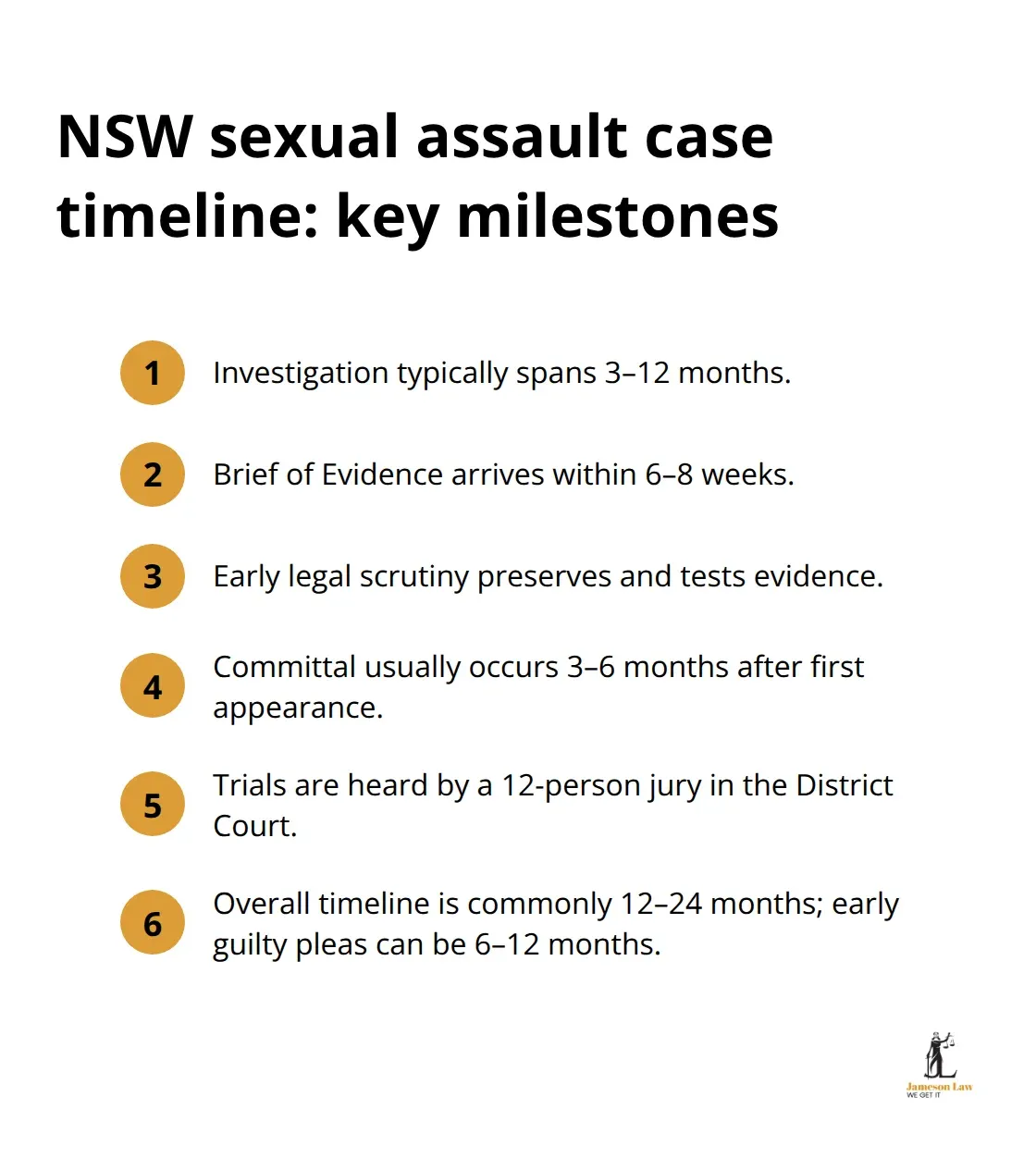
If committed for trial, the matter moves to the NSW District Court, where a twelve-person jury hears sexual assault cases. The overall timeline from charge to trial commonly ranges twelve to twenty-four months, though early guilty pleas can shorten this to six to twelve months.
Bail Applications and Legal Costs
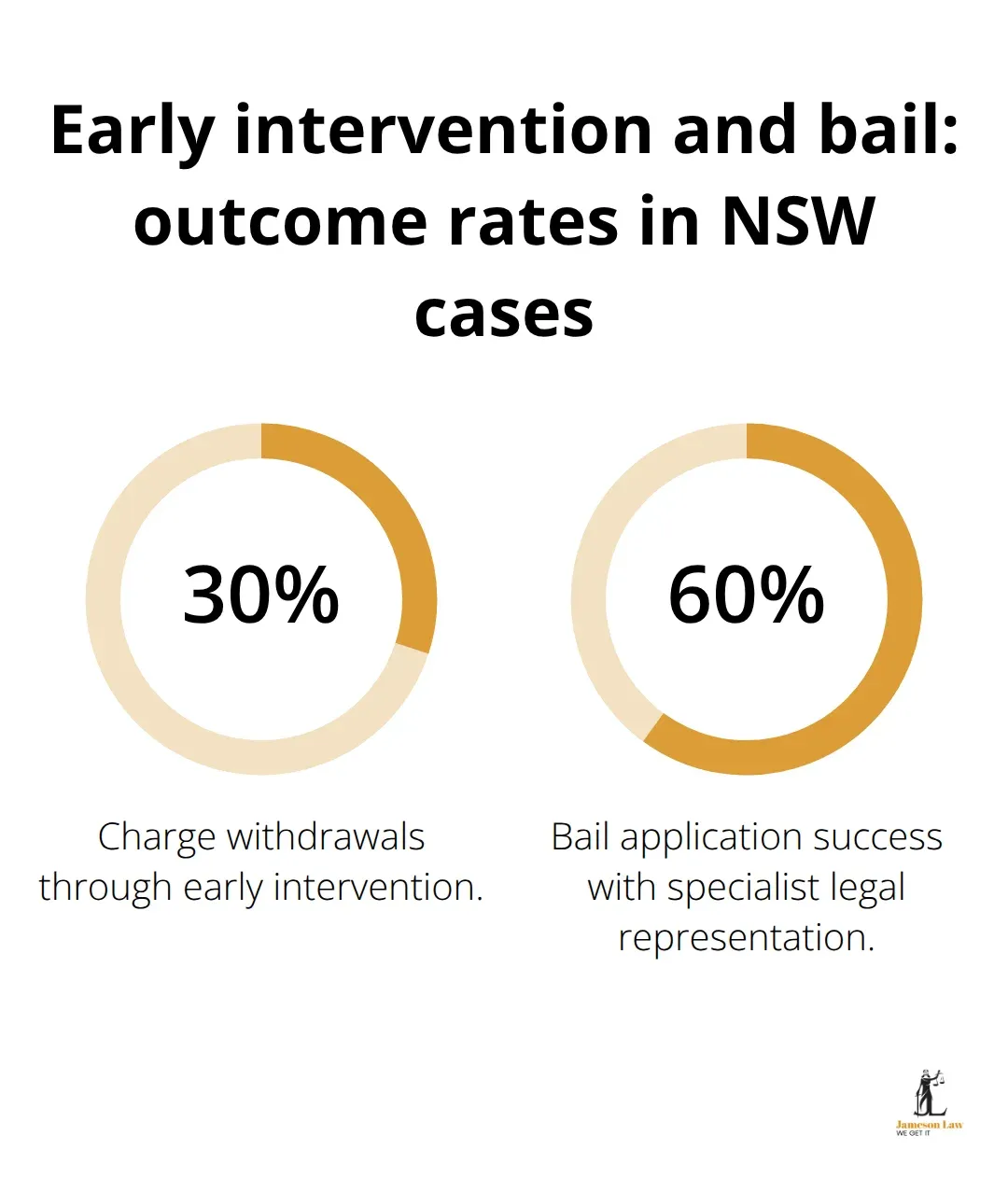
Bail applications for sexual assault charges are often refused initially, but specialist legal representation succeeds in approximately sixty per cent of such applications with detailed planning and proposed conditions. This means your first appearance in court, usually within six weeks of charge, is where bail strategy becomes critical. Lawyers with sexual assault experience understand how to structure bail applications with specific conditions that satisfy judicial concerns while protecting your freedom. The cost structure for defending sexual assault matters starts with an initial consultation at around $295 for sixty minutes, then escalates through bail applications at $3,000–$8,000, committal representation at $15,000–$35,000, and District Court trial representation at $25,000–$75,000, though Legal Aid may cover eligible defendants. Understanding this process early gives you realistic expectations and allows you to make informed decisions about your defence strategy from day one. The moment you face an allegation, understanding which offence applies to your situation is essential because each carries different evidentiary requirements and sentencing ranges, and your lawyer must act fast to protect your position before the prosecution builds its case.
Why Acting Immediately Protects Your Defence
The Critical First Seventy-Two Hours
The first seventy-two hours after a sexual assault allegation surfaces represent your most important window for action. Police move quickly to secure statements, collect forensic evidence, and build their case during this period. Every hour that passes without legal representation working on your behalf is an hour the prosecution uses to strengthen its position. When you contact a criminal defence lawyer immediately, that lawyer begins preserving evidence that matters to your defence, communicates with police on your behalf to protect your legal rights, and prepares a strategy before you face your first police interview or court appearance.
What You Must Do If Police Contact You
If police contact you, do not speak to them without legal advice. Do not wait to be taken to the station. Do not assume that remaining silent makes you look guilty. You have the right to remain silent and demanding to speak to a lawyer is the single most important step you can take. Your lawyer will advise on what information to provide-your name, address, and their contact details-and nothing more. Intimate and non-intimate forensic procedures should never receive your consent without legal advice, because those procedures generate evidence that will be used against you in court, and your lawyer needs to understand the implications before you agree.
How Early Intervention Changes Outcomes
Specialist representation in sexual assault matters produces measurably different outcomes than general criminal defence. Charge withdrawals occur in approximately thirty per cent of cases through early intervention, which means that one in three allegations can be stopped before trial if your lawyer acts strategically from the beginning. Bail applications for sexual assault charges face refusal initially in many cases, but specialist lawyers succeed in approximately sixty per cent of bail applications with detailed planning and proposed conditions, whereas unrepresented defendants or those with inexperienced counsel face far lower success rates.
Securing and Scrutinising Evidence
The Brief of Evidence must reach your legal representative within six to eight weeks of your first court appearance and includes witness statements, CCTV footage, phone records, and expert reports that form the prosecution’s case. Your lawyer must scrutinise this evidence immediately to identify inconsistencies in witness accounts, gaps in the prosecution timeline, and forensic evidence that may support your version of events. If you have preserved your own evidence (emails, text messages, social media interactions, time-stamped receipts, travel records, bank transactions, CCTV footage), your lawyer needs this material locked down now before memory fades or devices are lost. Alibi evidence such as GPS data from your phone, location history from your vehicle, or contemporaneous records documenting where you were at the time of the alleged incident can make the difference between conviction and acquittal.
Taking Your First Step
Contact a criminal defence lawyer with genuine sexual assault experience immediately. Initial consultations cost approximately $295 for sixty minutes, and this conversation allows you to understand the process, the timeline, and what defending your case will realistically cost. The investigation timeline typically spans three to twelve months, but the decisions you make now determine whether your lawyer has access to critical evidence or whether it has already been lost, contaminated, or mishandled. Once you understand your legal position and the realistic costs involved, you can then move forward with confidence into the bail application process and evidence preparation that will shape your defence strategy.
Moving Through Court and Bail Before Trial
Your First Court Appearance and Bail Strategy
Your first court appearance occurs within six weeks of being charged, and this appearance determines whether you remain free on bail or face remand in custody while your case progresses. The bail application is not a minor administrative step-it is your immediate fight for freedom, and the outcome hinges on having a lawyer who understands how NSW courts assess bail risk in sexual assault matters. Courts apply a presumption of innocence, but they also assess the strength of the prosecution case, the seriousness of the alleged offence, and whether you pose a flight risk or danger. Specialist legal representation succeeds in approximately sixty per cent of bail applications through detailed planning and proposed conditions, whereas unrepresented defendants or those with general criminal lawyers face significantly lower success rates.
Your lawyer must present a bail application that addresses judicial concerns head-on. They propose specific conditions such as reporting to police, surrendering your passport, residing at a fixed address, and maintaining distance from the complainant. These conditions satisfy the court that you will appear for trial and pose no threat to the complainant or community.
Understanding the Brief of Evidence
The Brief of Evidence arrives within six to eight weeks of your first appearance and contains witness statements, CCTV footage, phone records, and expert reports that form the prosecution’s case. This material requires immediate scrutiny because inconsistencies in witness accounts, gaps in timelines, and forensic evidence weaknesses can form the foundation of your defence strategy and may support a no-case submission at committal proceedings. Your lawyer must examine every document, cross-reference dates and times, and identify where the prosecution’s narrative breaks down or lacks support.
Committal Proceedings and the Path to Trial
Committal proceedings occur three to six months after your first court appearance in the Local Court, and this hearing tests whether the prosecution has gathered sufficient evidence to commit you for trial in the NSW District Court. Your lawyer must prepare a detailed defence case at committal: cross-examine prosecution witnesses to expose weaknesses, present your own evidence and witnesses where strategically appropriate, and make submissions about whether a prima facie case exists. Approximately thirty per cent of sexual assault cases result in charge withdrawal through early intervention or successful no-case submissions at committal, meaning one in three allegations stop before trial if your lawyer acts strategically from the start.
If the magistrate commits you for trial, arraignment occurs within approximately eight weeks in the District Court, where the judge allocates your trial date and hears legal arguments about evidence admissibility. Sexual assault trials in NSW are heard before a twelve-person jury, with the overall timeline from charge to resolution ranging twelve to twenty-four months.
Preserving Your Evidence Throughout the Process
During this entire process, your lawyer must preserve your own evidence meticulously: emails, text messages, social media interactions, time-stamped receipts, travel records, bank transactions, and CCTV footage showing your location at the time of the alleged incident. Digital evidence including phone records and GPS data often provides the most reliable timelines, and your lawyer needs this material secured on USB drives and properly documented before memories fade or devices are lost. Quarantine copies of critical evidence immediately and provide them to your legal representative so that your defence team controls the chain of custody and can present this material with full credibility in court.
Final Thoughts
Sexual assault allegations demand action within hours, not days. The window for preserving evidence, protecting your legal rights, and building an effective sexual assault defence closes quickly as police investigations progress and witnesses’ memories fade. Waiting to contact a lawyer costs you access to critical evidence, weakens your position at bail hearings, and reduces your chances of a successful outcome at committal or trial.
Contact a criminal defence lawyer with genuine sexual assault experience today. An initial consultation costs approximately $295 for sixty minutes and gives you clarity on the process, realistic timelines, and what defending your case will cost. During this conversation, your lawyer assesses the strength of the prosecution case, identifies what evidence matters most, and explains your options at each stage from bail through trial.
Jameson Law provides criminal law services across Australia with extensive legal experience in NSW criminal procedures and court expectations. If you face an allegation, contact us immediately to protect your position and begin building your defence strategy before the prosecution’s case solidifies.