


Personal injury settlement negotiation can feel overwhelming when you’re recovering from an injury and facing mounting bills. Most people don’t know what their claim is actually worth, which puts them at a disadvantage when dealing with insurance companies.
At Jameson Law, we’ve helped countless Australians secure fair settlements by understanding the process and knowing their rights. This guide walks you through everything you need to know to negotiate confidently.
What Damages Can You Actually Claim
Economic and Non-Economic Loss Categories
When we assess a personal injury claim, most people underestimate what they’re entitled to recover. Your settlement should restore your financial position to what it was before the injury, which means covering far more than just your immediate medical bills. Under NSW law, compensation falls into two main categories: economic loss and non-economic loss. Economic loss covers everything with a dollar figure attached-your lost wages, medical expenses, rehabilitation costs, home modifications like installing ramps or rails, vehicle adaptations, and ongoing care assistance. Non-economic loss compensates for pain and suffering, and this is where NSW law sets a strict cap. As of 2026, the maximum you can claim for non-economic loss in NSW is $829,000 under the Civil Liability Act 2002. This cap applies regardless of how severe your injury is, so understanding what qualifies matters enormously.
The 15% Impairment Threshold
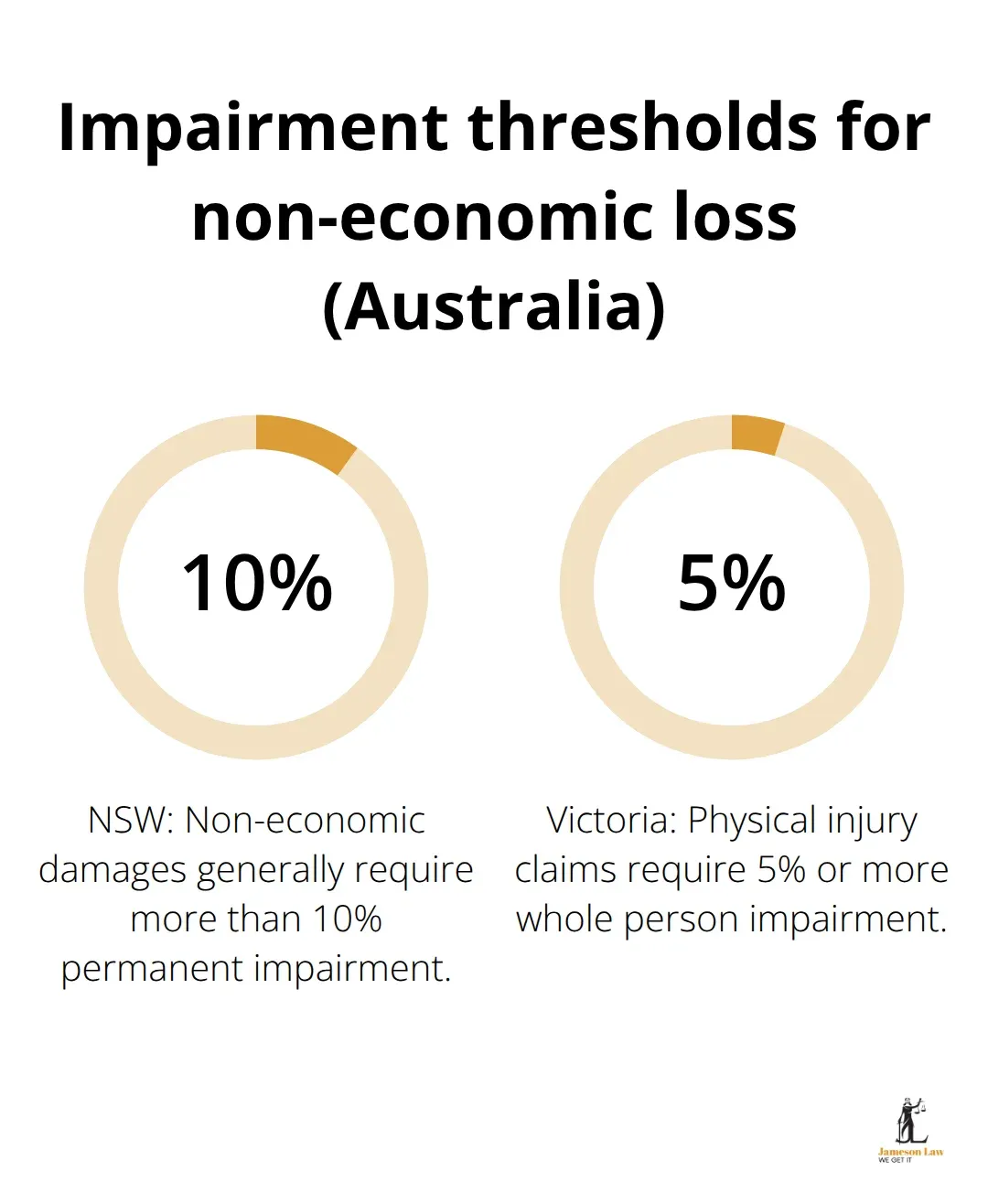
To access non-economic damages at all, you must meet a minimum threshold: your injury must result in permanent impairment of more than 10% according to the Medical Examination of Claimants scale. This threshold exists across most Australian states with variations-Victoria requires 5% or more whole person impairment for physical injuries-but it represents a real barrier that many claimants don’t anticipate. If your impairment falls below this threshold, you can still claim economic loss, but pain and suffering compensation disappears entirely.
How Insurance Companies Calculate Your Compensation
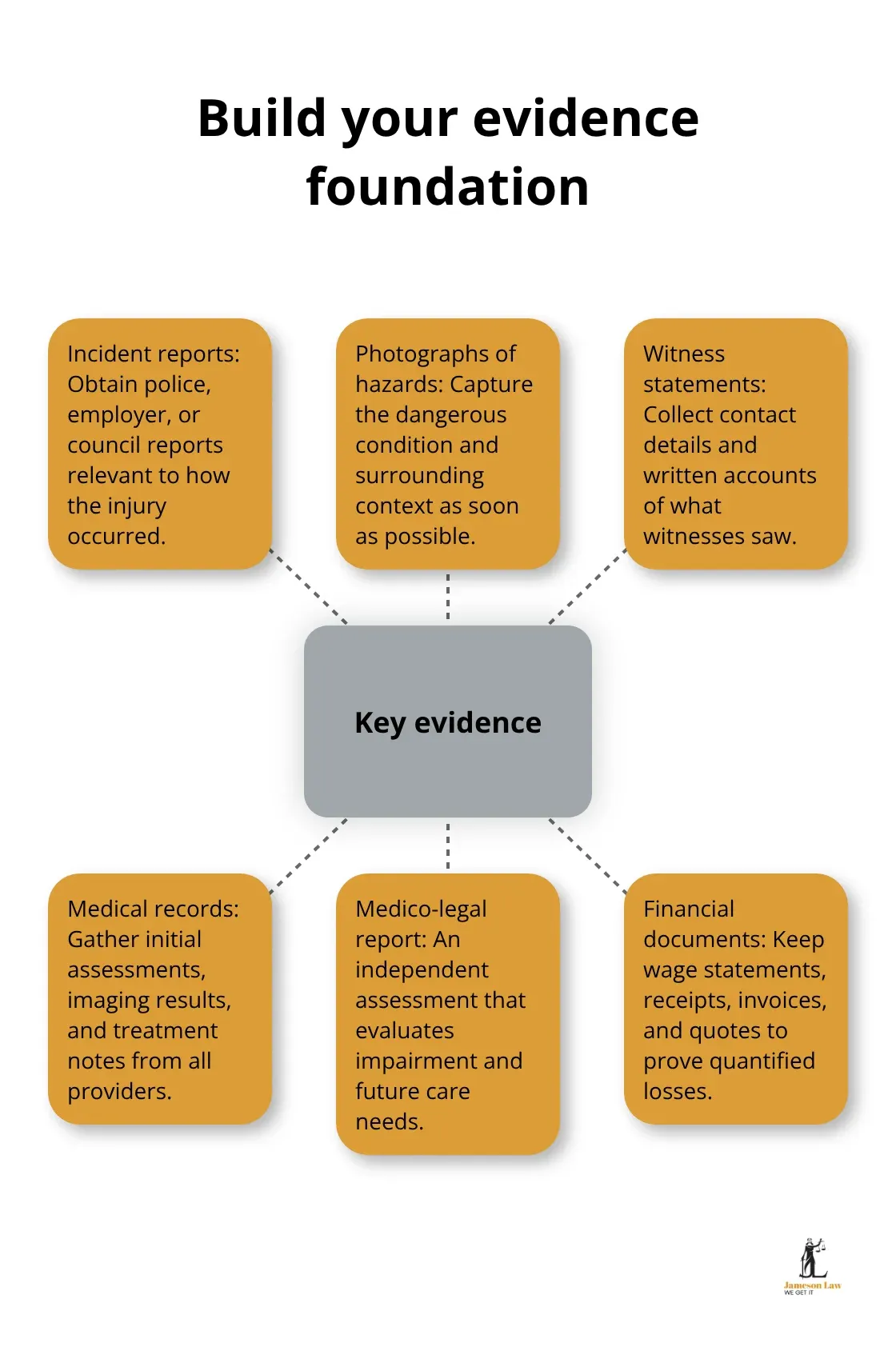
The way compensation gets calculated in NSW relies heavily on evidence and documentation. Insurance companies won’t simply accept your word that you’ve lost income or require ongoing physiotherapy; they want medical reports, wage statements, and receipts. A medico-legal examination becomes central to this process-an independent medical assessment that evaluates your injuries, prognosis, and future care needs. This report carries significant weight in settlement negotiations because it provides objective evidence of your condition. When calculating economic loss, insurers look at your actual lost wages (not speculative future income), documented medical and rehabilitation costs, and reasonable future care expenses based on your medical prognosis.
Settlement Ranges Based on Injury Severity
The severity of your injury dramatically affects settlement value. Slip and fall claims in Australia demonstrate this range clearly: mild injuries typically settle between $10,000 and $50,000, moderate injuries between $50,000 and $500,000, and severe injuries often exceed $500,000 to $2,000,000 depending on ongoing care requirements. In many cases, the bulk of the payout comes from future income loss or long-term care rather than just medical bills.
Proving Negligence: The Four Essential Elements
Proving negligence forms the foundation of your entire claim under NSW law. You must establish four elements: that the defendant owed you a duty of care, that they breached that duty, that this breach caused your injury, and that you suffered quantifiable loss. A property owner owes a duty to visitors to maintain safe premises; a driver owes a duty to other road users; an employer owes a duty to provide a safe workplace. The defendant must have known or should have reasonably understood there was a substantial risk of harm, and a reasonable person would have taken precautions to prevent it. Without proving all four elements, your claim fails regardless of how serious your injuries are. This is why you need to gather evidence early-incident reports, witness statements, photographs of hazardous conditions, and expert reports all strengthen your negotiating position and settlement outcome. The strength of your evidence directly determines how insurers value your claim and what they’ll offer to settle.
Building Your Settlement Case
Gather Evidence Immediately After Your Injury
The gap between what insurance companies initially offer and what you actually deserve often comes down to one thing: the quality of your evidence. Without solid documentation, you negotiate blind, and insurers know it. Start collecting evidence immediately after your injury, before memories fade and details disappear. Obtain incident reports from the relevant authority-police reports for motor vehicle accidents, your employer’s incident report for workplace injuries, or a formal complaint to the property owner or local council for public liability claims. Photograph the hazardous condition that caused your fall if it still exists, or ask witnesses to describe it in writing while their memory remains fresh. Collect witness contact details and request written statements about what they saw, not what they think happened. Request medical records from every healthcare provider you’ve seen, including initial assessments, imaging results, and treatment notes. Insurance companies won’t accept vague claims about your condition or losses-they want objective proof.
The Medico-Legal Examination: Your Clinical Evidence
The medico-legal examination sits at the centre of your case preparation. This independent medical assessment, separate from your regular treatment, evaluates your injuries, determines your level of permanent impairment, and projects your future care needs. The examining doctor will ask detailed questions about your medical history, current symptoms, and how your injury affects daily activities, work capacity, and quality of life. Answer honestly and comprehensively-downplaying pain or limitations weakens your case, while exaggerating them creates inconsistencies that undermine your credibility. The resulting report carries substantial weight in settlement negotiations because it provides objective clinical evidence rather than your subjective account. Insurance companies rely heavily on this report to determine whether you meet the 10% impairment threshold required for non-economic loss claims in NSW.
Document Your Losses with Precision
Once you have your medico-legal report, calculate your actual losses meticulously. Document lost wages with payslips and employer confirmation letters showing the exact income you’ve lost due to your injury. Gather receipts and invoices for medical expenses including doctor appointments, physiotherapy, medications, and hospital stays. If your injury requires home modifications (such as installing grab rails or ramps), obtain quotes from contractors showing the cost. Calculate the cost of ongoing care assistance if you need help with daily tasks, using current market rates for personal care services in your area. Insurance companies scrutinise these figures closely, so every expense must be supported by documentation, not estimates.
Present a Detailed Schedule of Losses
When you present your settlement demand, include a detailed schedule of losses backed by evidence-this shifts the negotiation from what the insurer wants to offer toward what your actual losses prove you deserve. Your documentation transforms the settlement discussion from a guessing game into a fact-based negotiation. The insurer can no longer dismiss your claim as inflated or speculative when you present medical reports, wage statements, and receipts that support every figure. This evidence foundation also strengthens your position if the claim proceeds beyond settlement negotiations. With your case thoroughly prepared and your losses clearly documented, you’re ready to understand how insurance companies evaluate what they’ll actually offer and what tactics they use during negotiations.
Negotiating Your Settlement Offer
How Insurance Companies Open Negotiations
Insurance companies approach settlement negotiations with a formula, not fairness. They calculate what they think they can pay you based on their assessment of your claim strength, and they open with a figure substantially lower than what your documented losses prove you deserve. This is standard practice, not an insult-it represents their starting position in a negotiation where they expect you to push back.
The critical mistake most claimants make is accepting the first offer because they feel exhausted, in pain, or simply don’t know what their claim is worth.
You’ve already collected your evidence and calculated your actual losses, which means you now have leverage the insurer doesn’t expect. Your medico-legal report, wage statements, and detailed schedule of losses transform the conversation from what they want to offer into what the facts actually support. The insurer’s initial offer typically covers only immediate medical expenses and a portion of lost wages, deliberately excluding future care costs and undervaluing pain and suffering components.
Evaluating and Rejecting Low Offers
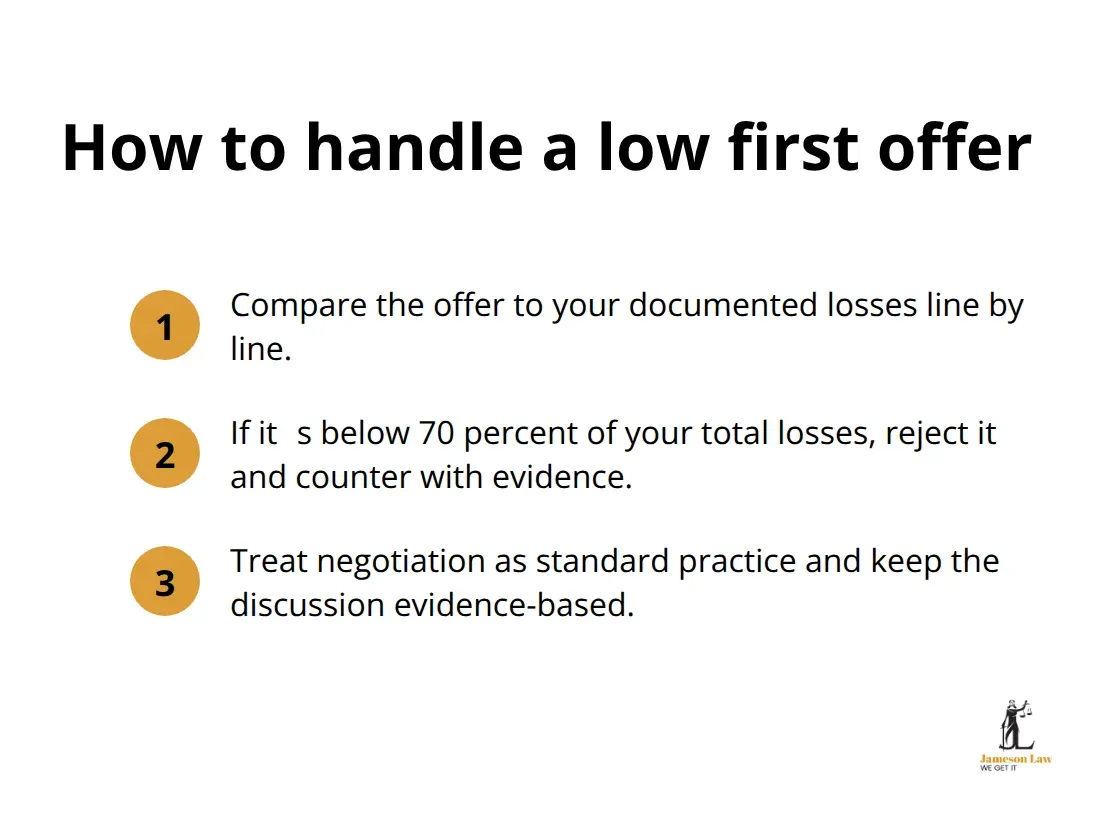
When you receive an offer, compare it against your documented losses dollar by dollar. If the offer falls below 70 percent of your total calculated losses, reject it and provide a counter-proposal backed by your evidence. This isn’t aggressive-it represents standard settlement practice. The insurer expects negotiation, and your documented case foundation gives you credibility to demand more.
Settlements in NSW typically involve several rounds of offers and counter-offers over weeks or months, with each side adjusting their position based on the strength of evidence presented. If the insurer continues offering significantly below your documented losses after multiple rounds, this signals they either dispute liability or underestimate your injuries, both of which warrant escalating to formal litigation rather than accepting an unfair settlement.
Understanding How Insurers Evaluate Your Claim
Insurance companies evaluate claims using specific criteria that you need to understand to anticipate their tactics. They assess liability strength first-if fault is clear and documented, they move quickly toward settlement because litigation costs them more than paying a fair amount. If liability is disputed or complex, they drag out negotiations hoping you’ll accept less due to financial pressure.
They examine your medical evidence next, using their own doctors to review your medico-legal report and look for inconsistencies or exaggeration. They calculate your future care costs conservatively, often assuming you’ll recover faster than your medical prognosis suggests, which artificially lowers their offer. They factor in litigation risk, meaning if they think a court would award you significantly more than their offer, they’ll increase it to avoid trial.
The Advantage of Professional Legal Representation
This is why having a skilled legal representative matters enormously-they understand these evaluation criteria and know how to present your evidence in ways that shift the insurer’s risk calculation. Your lawyer communicates directly with the insurer’s representative, removing emotional reactions from the discussion and keeps negotiations focused on evidence and legal principles. They also know when to recommend rejecting an offer and when settlement makes sense for your circumstances.
If you negotiate alone, the insurer has every advantage-they handle hundreds of claims annually and know exactly how to pressure individual claimants into accepting less. Professional legal representation levels this playing field entirely, and the cost of that representation almost always proves cheaper than the difference between a fair settlement and what you’d accept under pressure.
Final Thoughts
Injury settlement negotiation succeeds when you document everything, calculate your losses accurately, and understand what insurers will actually offer. Your wage statements, medical records, receipts, and expert reports transform a conversation where the insurer holds all the power into one where facts drive the discussion. Without this documentation, you negotiate blind; with it, you have leverage that shifts the entire negotiation in your favour.
The settlement deed you sign outlines what the insurer will pay, when they’ll pay it, and what you agree not to pursue further. Some settlements include structured payments over time rather than lump sums, which affects your financial planning significantly. Once you sign, the matter closes, so understanding the terms completely before you commit matters enormously.
We at Jameson Law handle injury settlement negotiations regularly and know exactly how insurers evaluate claims and what tactics they use to pressure claimants into accepting less. We offer no-win, no-fee arrangements for personal injury claims, meaning you don’t pay our costs if your claim is unsuccessful. Contact us for a free consultation to discuss your claim and understand what your injury is actually worth.