


Buying property in NSW involves more than just finding the right home and agreeing on a price. Conveyancing searches NSW uncover hidden issues that could affect your investment, from building defects to flooding risks.
At Jameson Law, we’ve seen how the right searches at the right time protect buyers from costly surprises. This guide walks you through what these searches reveal and why they matter before you commit to your purchase.
What Conveyancing Searches Actually Reveal
Understanding the scope of conveyancing searches
Conveyancing searches in NSW are formal investigations that licensed conveyancers conduct to examine property records, council files, and government databases before settlement. These searches form the backbone of due diligence in property transactions. Without them, you purchase based on incomplete information. Most NSW property transactions involve between five and eight separate searches, each targeting specific risk areas. The NSW Land Registry holds title information, councils maintain development and compliance records, and water authorities track drainage and flooding data. Each search costs between $100 and $400 depending on complexity and the search provider’s fees.
Combined, a full search package typically costs $800 to $2,400. These costs pale against the potential expense of discovering issues after settlement when remedies become your responsibility alone.
The timing and conduct of searches
Licensed conveyancers or solicitors conduct these searches on your behalf, usually after you’ve made an offer but before you’ve committed to exchange of contracts. This timing matters significantly. Searches take between 5 and 14 business days to return results, depending on council responsiveness and the property location. Rural properties often face longer delays because some councils process searches manually. You should never exchange contracts until search results arrive and your legal representative has reviewed them thoroughly. The conveyancer orders searches in your name, meaning councils and authorities respond directly to your legal team. This protects your interests and means results reach your adviser before you’re legally bound. Some buyers push to exchange quickly to secure a deal, but rushing past search results creates unnecessary risk. A property that appears perfect in photos can carry council notices, building violations, or environmental concerns that searches reveal within days.
What searches uncover
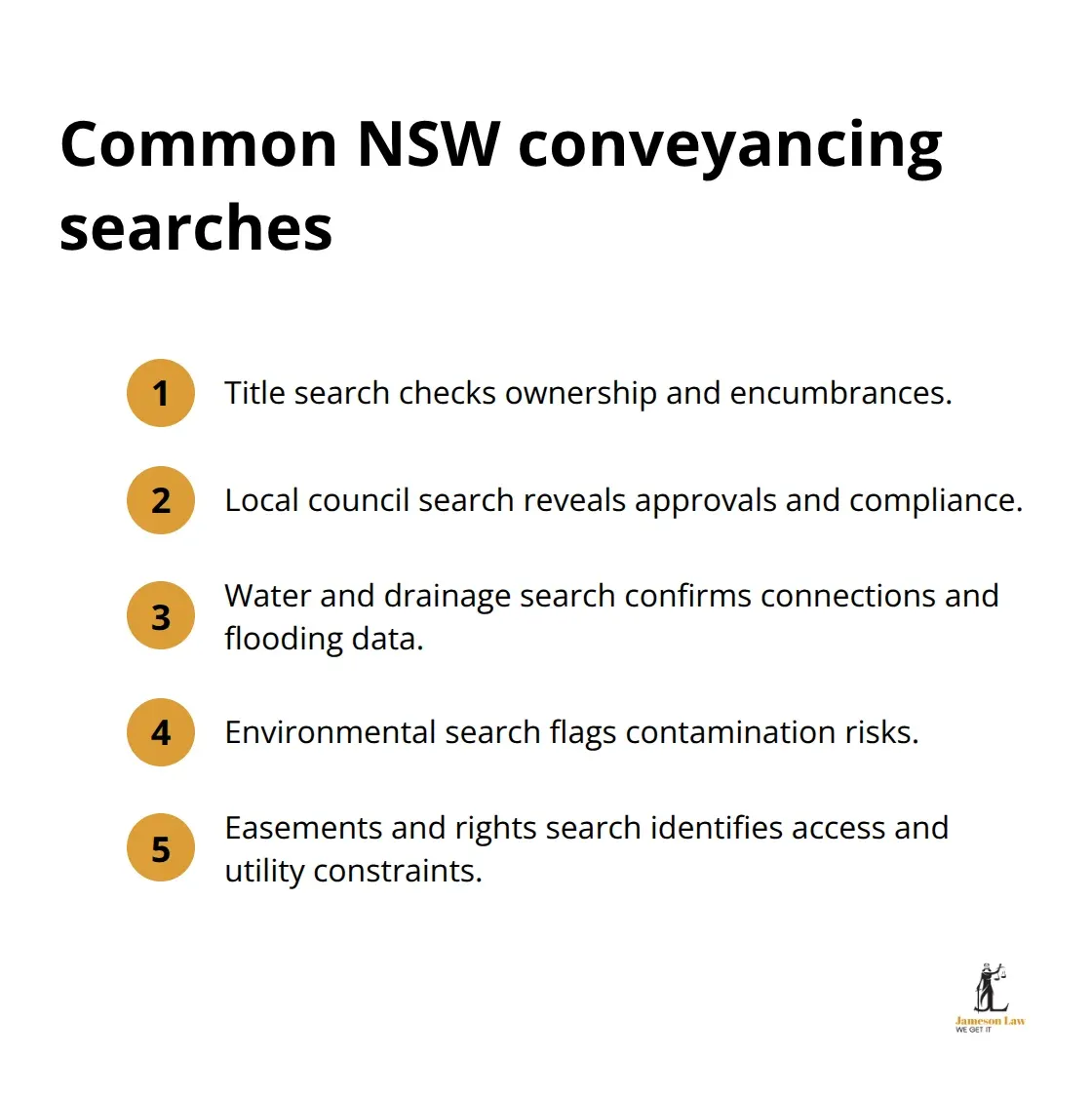
The searches identify issues ranging from minor to deal-breaking. Title searches reveal whether the seller actually owns the property free and clear or whether mortgages, caveats, or other encumbrances exist. Local council searches expose development approvals, building permits, and planning breaches. Water searches confirm drainage connections and historical flooding data. Environmental searches flag contamination risks. Without these searches, buyers have purchased properties with undisclosed building defects, discovered flooding risks only after heavy rain, or inherited council enforcement notices requiring expensive rectification. The NSW Court of Appeal has confirmed that conveyancers owe a duty of care in conducting searches, meaning failures can result in professional negligence claims. This underscores how seriously the legal system treats search obligations. Your conveyancer’s responsibility is to order appropriate searches for your specific property and flag any concerning results immediately, not after you’ve exchanged contracts.
Moving forward with your search results
Once your conveyancer receives the search results, they review each one against the property details and your circumstances. Any red flags require immediate attention and discussion with your legal team before you proceed to exchange. The next section examines the specific searches that appear in most NSW transactions and what each one actually reveals about your potential purchase.
What Each Search Reveals About Your Property
Title search: Confirming ownership and identifying encumbrances
The title search forms the foundation of your conveyancing investigation and returns results from the NSW Land Registry within 3 to 5 business days. This search confirms ownership of the property, reveals whether the seller holds title free and clear, and identifies any mortgages, caveats, liens, or other encumbrances registered against the property. If a previous buyer’s finance fell through and a caveat remains on title, your conveyancer spots it immediately. If the seller owes money to a creditor who has registered a charge, this appears in the title search results. The NSW Court of Appeal has established that conveyancers must conduct title searches with sufficient care to identify defects that would affect a buyer’s interests. A title search typically costs between $150 and $250. More importantly, it answers the critical question: does the seller actually own what they claim to sell? Without this search, you could exchange contracts only to discover the property carries undisclosed debt or legal claims that must be resolved before settlement proceeds.
Local council search: Exposing planning and building compliance issues
The local council search exposes planning and building compliance issues and typically returns results within 7 to 10 business days depending on council efficiency. This search reveals whether building permits were obtained for renovations, whether development approvals exist for the current use, whether the property has breached planning regulations, and whether council has issued enforcement notices requiring rectification. Council records in NSW often show that extensions or pool installations proceeded without permits, meaning the current owner faces potential enforcement action or costly retrospective approval processes. A property that appears well-maintained may carry a notice requiring the owner to demolish an unauthorised structure or remedy a building defect. The local council search costs between $200 and $350.
Water and drainage search: Understanding flood risk and drainage connections
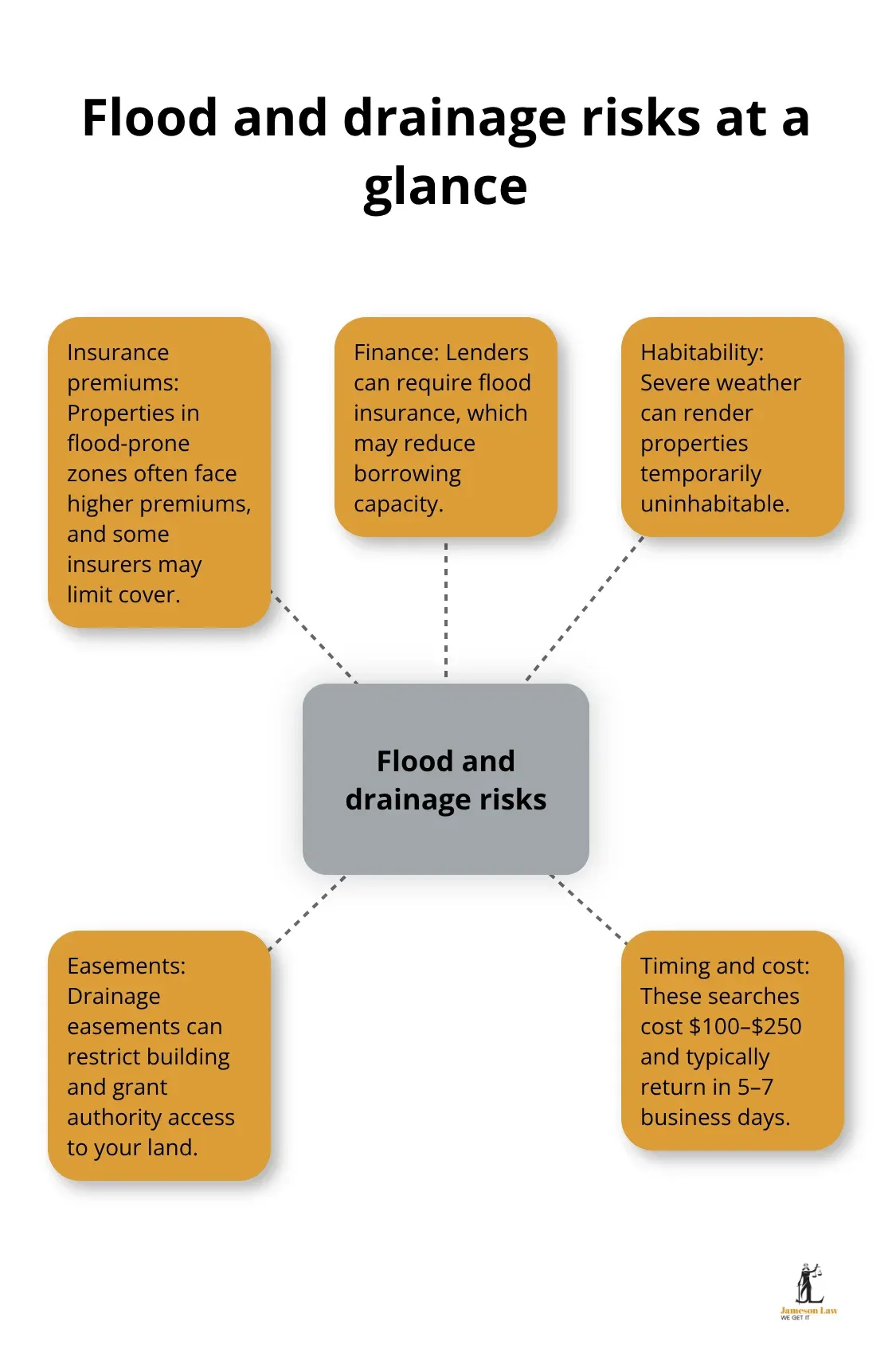
Water and drainage searches confirm whether the property connects to mains water and sewerage, reveal historical flooding data for the property and surrounding area, and identify any drainage easements affecting the site. These searches typically cost between $100 and $250 and take 5 to 7 business days. NSW experiences increasing flood events, and a property in a flood-prone area may face higher insurance premiums, difficulty obtaining finance, or potential uninhabitability during severe weather events.
Environmental and contamination search: Identifying hazards and previous land use
Environmental and contamination searches investigate whether the land has industrial history, previous contamination, or environmental hazards. These searches cost between $150 and $400 and are essential for properties near former factories, petrol stations, dry cleaners, or other potentially contaminating land uses. Contamination can render a property unmarketable or require expensive remediation before you can safely occupy or develop it. Each search targets specific risks that could cost tens of thousands of dollars to remedy after settlement becomes your responsibility.
Your conveyancer reviews all search results together to build a complete picture of the property’s legal status and physical condition. When concerning results emerge, your legal team discusses options with you before you proceed to exchange of contracts. The next section examines what happens when searches uncover significant issues and how these findings affect your purchase decision.
What Search Results Actually Reveal About Property Problems
Unregistered dealings and financial claims on title
Search results often expose issues that transform a property purchase from straightforward to complicated. When your conveyancer receives results, they look for specific red flags that affect your legal position and financial exposure. Unregistered dealings appear frequently in title searches, meaning previous owners made informal arrangements that never reached the NSW Land Registry. A property might have a second dwelling or granny flat built without formal subdivision, leaving the current owner unable to sell that portion separately or claim it as an asset. Liens from unpaid contractors or creditors also emerge in title searches, and these debts transfer to you at settlement unless the seller discharges them first.
Buyers frequently discover that sellers haven’t paid council rates or water bills, creating liens that must be cleared before settlement proceeds. The title search costs between $150 and $250 but prevents you from inheriting someone else’s financial obligations. Without this search, you could exchange contracts only to find yourself responsible for debts you knew nothing about.
Building work and council enforcement issues
Council searches frequently reveal building work completed without permits, particularly renovations, pool installations, or structural modifications. NSW councils maintain detailed records, and a property with an unauthorised extension faces potential enforcement notices requiring demolition or costly retrospective approval applications. One buyer discovered a second storey added without approval, forcing them to either spend $30,000 on retrospective certification or negotiate a price reduction before exchange.
Council restrictions also limit future use, meaning a property zoned for residential purposes cannot be converted to commercial use without formal rezoning applications that may face community opposition. These restrictions affect your ability to develop or repurpose the land, so your conveyancer must flag them immediately when results arrive.
Flooding, insurance, and environmental contamination
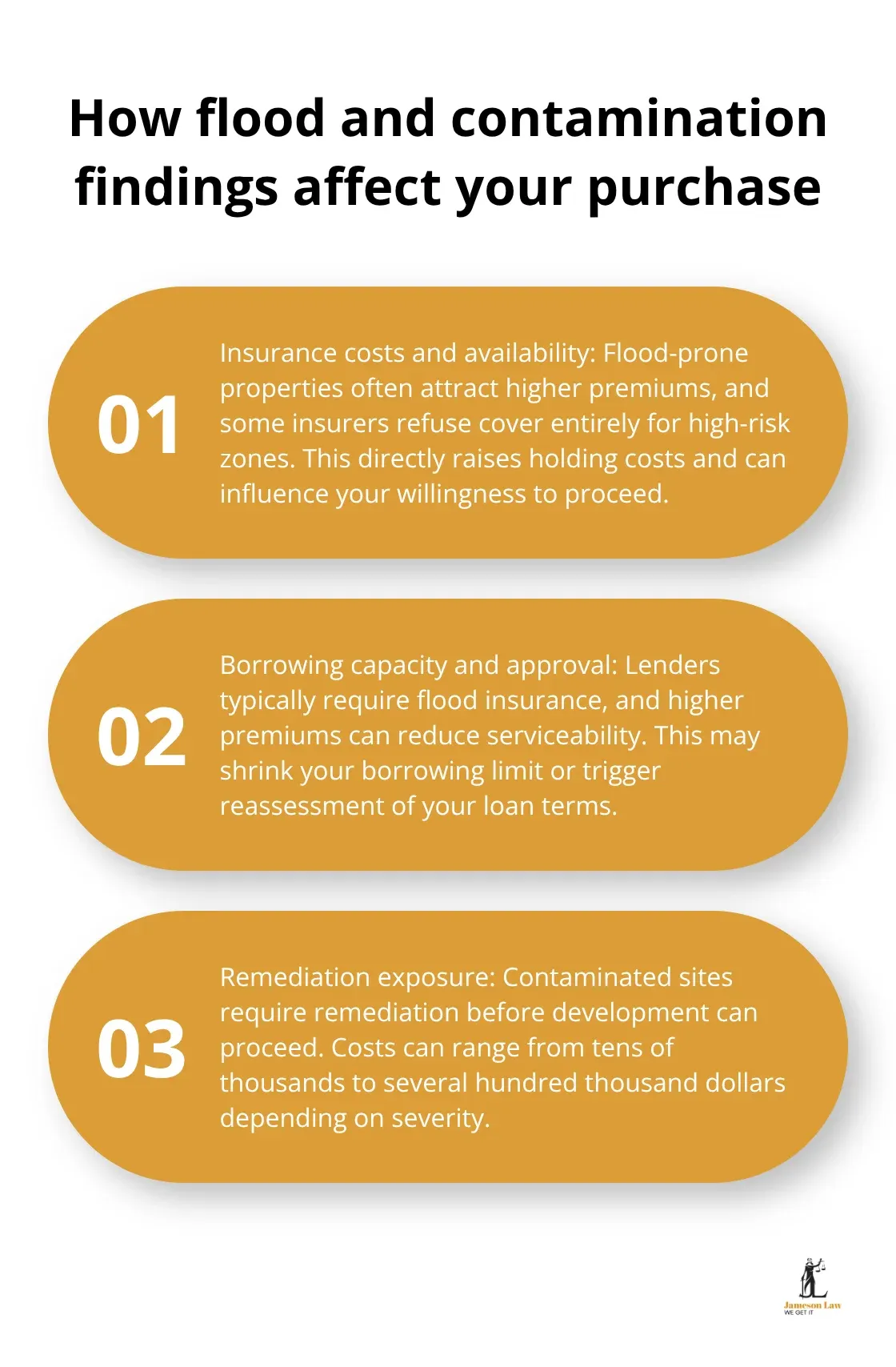
Flooding and environmental risks demand serious attention because they affect insurability, mortgageability, and long-term habitability. Water and drainage searches reveal whether a property sits in a flood-prone zone, and NSW experiences increasing flood events that make this information critical. Properties in flood-affected areas face higher insurance premiums, sometimes doubling or tripling standard rates, and some insurers refuse coverage entirely for high-risk zones.
Your mortgage lender will require flood insurance, meaning the cost affects your serviceability assessment and borrowing capacity. Environmental searches uncover previous land uses that created contamination, particularly properties near former petrol stations, dry cleaners, factories, or chemical storage facilities. Contaminated land requires remediation before development, with costs ranging from $10,000 to several hundred thousand dollars depending on contamination severity.
Easements and rights restricting land use
Easements and rights affecting the property also emerge through searches, including drainage easements that allow council or water authorities to access your land for maintenance, rights of way that permit neighbours to cross your property, or utility easements for power lines and telecommunications infrastructure. These don’t prevent you from purchasing but they do restrict how you can use and develop the land.
A property might have a drainage easement running through the backyard, meaning you cannot build a permanent structure in that area and the water authority retains access rights indefinitely. When concerning search results arrive, your conveyancer discusses them with you before exchange of contracts, giving you time to negotiate price reductions, request seller remediation, or withdraw from the purchase entirely.
Final Thoughts
Conveyancing searches NSW protect your investment by exposing problems before you commit legally to purchase. The searches cost between $800 and $2,400 combined, but discovering a $50,000 building defect or inheriting council enforcement notices after settlement costs far more. Your conveyancer orders searches within days of your offer acceptance, and results typically arrive within 5 to 14 business days depending on council responsiveness and property location.
Never exchange contracts until your legal team reviews all search results thoroughly. Once results arrive, your conveyancer flags any concerning findings immediately, giving you time to negotiate price reductions, request the seller remediate issues, or withdraw from the purchase entirely. This window between receiving results and exchanging contracts represents your only opportunity to walk away without legal consequences.
If you’re purchasing property in NSW and need guidance through the conveyancing process, Jameson Law provides practical legal advice on property transactions and explains search results in plain language before you exchange contracts.