

Visa processing times in Australia vary significantly depending on your visa type and circumstances. At Jameson Law, we’ve helped hundreds of applicants navigate this process, and we know how frustrating delays can be.
The good news is that most delays are preventable. This guide walks you through realistic timeframes, proven strategies to speed things up, and the common pitfalls that slow applications down.
How Long Does Your Visa Actually Take
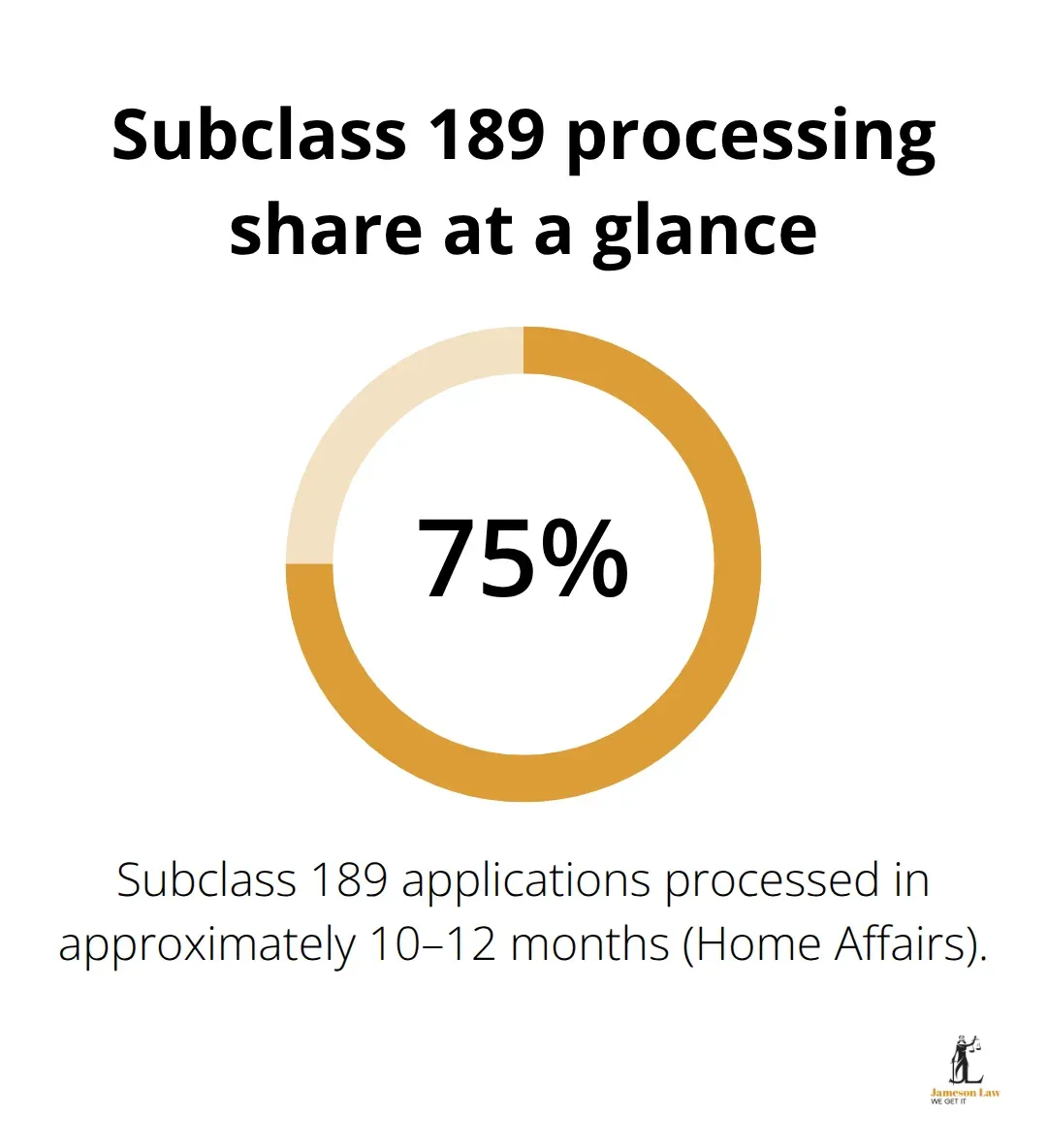
Processing times for Australian visas range from a few weeks to several years. The Department of Home Affairs publishes median processing times for each visa subclass. Skilled independent visas (subclass 189) currently sit at around 10–12 months for 75% of applications, while partner visas (subclass 820/801) typically take 18–24 months according to Home Affairs data. Student visas process much faster, usually within 4–6 weeks, because the assessment criteria are more straightforward.
Visitor visas can be decided in days if your application is complete, but complex cases involving character or health concerns stretch into months.
These timeframes assume your application is complete and raises no red flags. Applications with missing documents, unresolved health assessments, or character concerns routinely exceed these timeframes by months.
Processing Volumes and System Capacity
The Department of Home Affairs processes over 200,000 permanent migration visas annually. Officers must conduct security checks, verify employment history, and assess health declarations for each applicant. This workload creates genuine processing backlogs, even when applications are submitted correctly.
Skilled visa applications face additional delays if your occupation requires verification through external bodies or if your qualifications need assessment by a professional authority. Partner visas hit delays when the relationship evidence is weak or when one partner has previous visa refusals that require detailed explanation. Health assessment delays occur frequently-your medical examination results take time to reach the department, and if the panel raises concerns, you may need additional tests.
Tracking Your Application Status
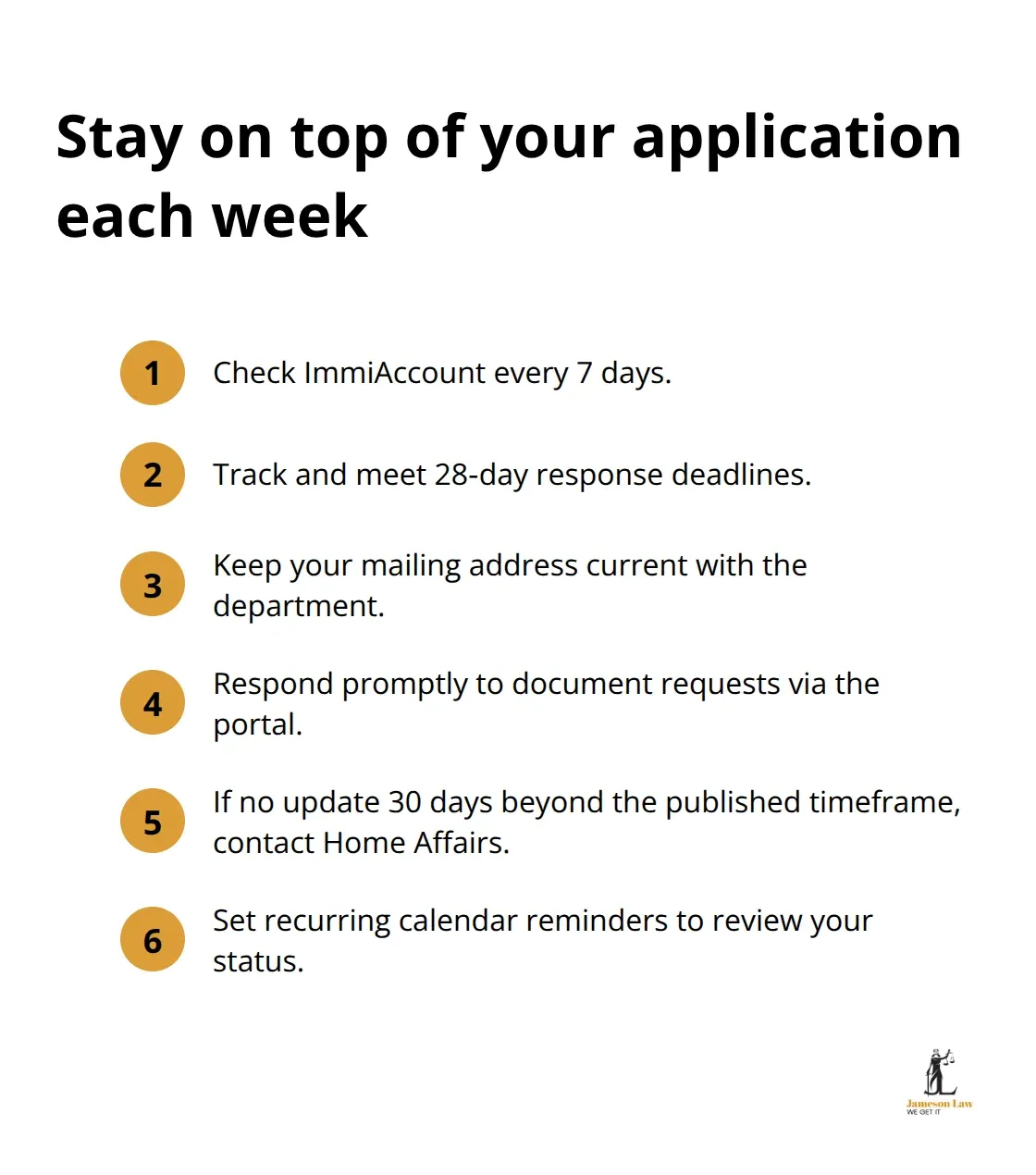
You can check your application status through the ImmiAccount portal, which shows whether the department is requesting additional information or conducting background checks. If your status hasn’t updated in 30 days beyond the published processing time, contact Home Affairs directly rather than waiting passively.
The department’s communication failures are real. Officers sometimes request information through ImmiAccount without sending email notifications, so checking the portal weekly is non-negotiable. This simple habit prevents many applicants from missing critical deadlines.
The Documentation Factor
Providing complete documentation upfront eliminates the most common cause of delays-requests for clarification that restart the processing clock. Missing or unclear information forces the department to contact you, and each exchange adds weeks to your timeline. The applications that move fastest are those where applicants anticipated what the department would need and provided it without being asked.
Understanding these delays helps you prepare strategically. The next section covers concrete steps you can take to speed up your application.
Speed Up Your Visa Application
The fastest way to move your visa forward is submitting a complete application the first time. The Department of Home Affairs processes applications in the order they’re received, but applications with missing information move to the back of the queue each time you submit additional documents. If the department requests clarification on your employment history, qualifications, or relationship evidence, you’ve essentially restarted the clock. One missing tax return or an unclear statement adds 4–8 weeks to your timeline. Applicants who spend an extra week preparing their initial submission save themselves months of waiting. Check the department’s specific requirements for your visa subclass before lodging-the ImmiAccount portal lists exactly what the department needs, and many applicants miss this step entirely.
Complete Documentation Prevents Delays
The applications that move fastest are those where applicants anticipated what the department would need and provided it without being asked. The Department of Home Affairs scrutinises certain documents more heavily than others, depending on your visa type. For skilled visas, employment history verification takes time; for partner visas, relationship evidence requires careful attention; for visitor visas, financial capacity documentation matters most. Providing clear, organised documentation upfront eliminates requests for clarification that restart the processing clock. Each exchange with the department adds weeks to your timeline, so anticipate questions and answer them before they’re asked.
Priority Processing and Paid Options
The Department of Home Affairs offers paid priority processing for certain visa types, though it’s not widely advertised. Skilled Independent visas (subclass 189) and some employer-sponsored visas qualify for priority processing, which can reduce waiting times significantly. The cost varies, but expect to pay several hundred dollars for this service. Partner visas and visitor visas rarely qualify for expedited processing through paid options, so check whether your visa type is eligible before spending money. Some visa categories have no priority option at all, which means you’re locked into standard timelines regardless of how much you’re willing to pay.
Professional Immigration Assistance
Working with a qualified immigration lawyer or registered migration agent changes your processing timeline substantially. These professionals know which documents the department scrutinises most heavily and which details commonly trigger requests for clarification. They catch errors before submission that would otherwise cost you weeks. If your case involves any complexity (previous visa refusals, character concerns, health assessments, or employment verification delays), professional assistance becomes genuinely valuable rather than optional. The cost of engaging an immigration lawyer is typically recouped through faster processing and reduced back-and-forth communication with the department.
The next section addresses the delays that still occur despite careful preparation-and how to navigate them when they happen.
What Actually Stops Your Visa Application
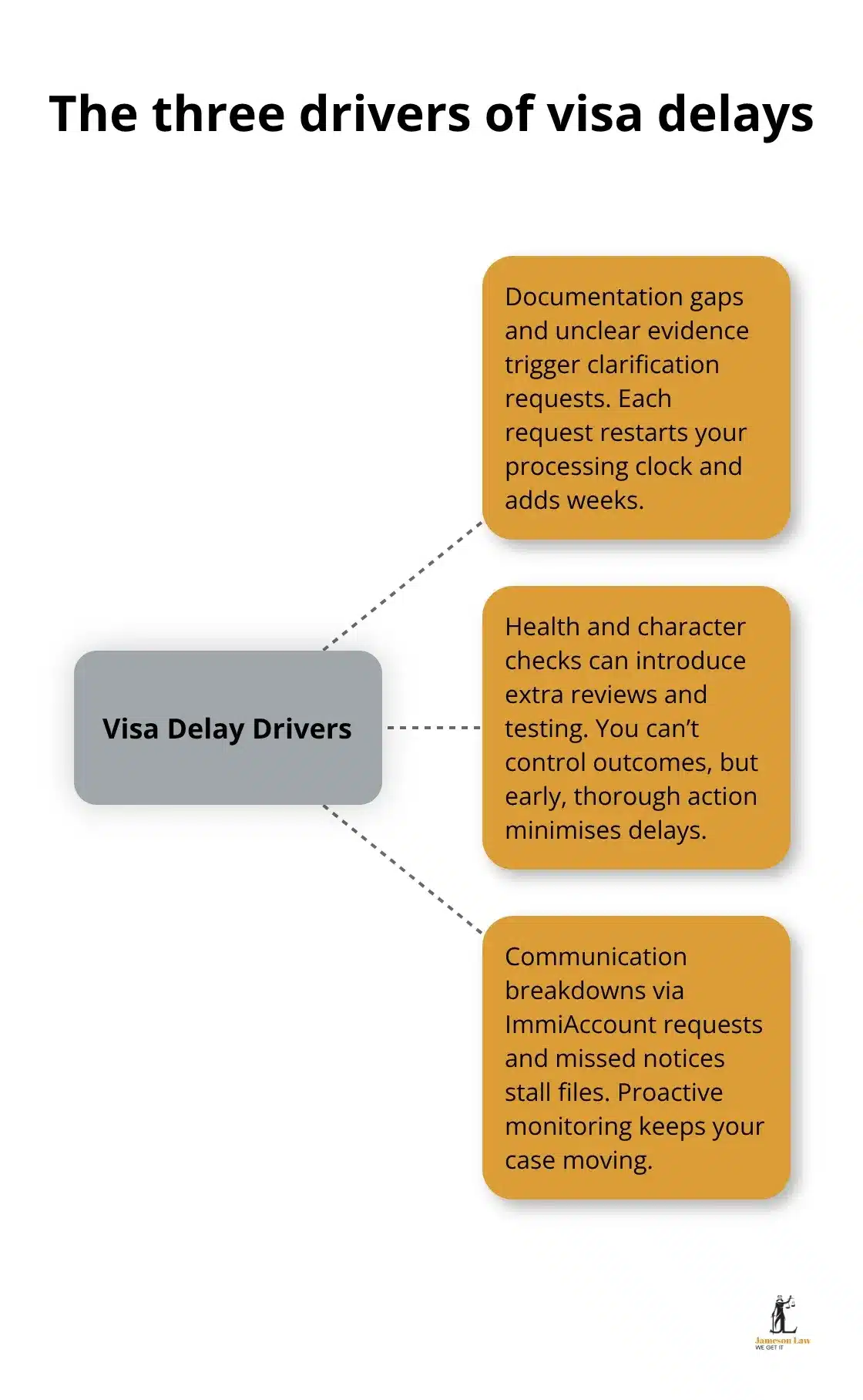
Most visa delays fall into three distinct categories, and you can prevent or minimise each one with the right approach. Applications with complete documentation move through the system faster than those requiring clarification. Missing information is the leading cause of delay, but it’s entirely preventable. The second category involves health and character assessments, which sit outside your direct control but respond to proactive management. The third is communication breakdown between you and the department, which happens more often than Home Affairs admits.
Incomplete or Vague Documentation Creates Cascading Delays
Documentation gaps force the department to request clarification, and each request essentially restarts your processing timeline. A missing tax return, an unclear employment letter, or relationship evidence that doesn’t clearly establish your connection to your partner will trigger a request through ImmiAccount. The department then waits for your response, which typically takes 2–4 weeks if you monitor your account actively. If you miss the deadline because you didn’t check the portal frequently, your application sits dormant until you respond, adding another 2–4 weeks on top. One missing document can easily cost you 8–12 weeks.
Applicants often assume the department will accept vague information and clarify later, but this approach backfires consistently. For skilled visas, employment verification letters must state your job title, employment dates, and responsibilities with precision. The department cross-references this information against your qualification assessment, and inconsistencies trigger requests for additional evidence. For partner visas, relationship evidence must demonstrate ongoing cohabitation and genuine commitment. A statutory declaration stating you’ve been together for three years isn’t enough if you can’t show shared financial commitments, joint property ownership, or evidence of shared living arrangements. Visitor visa applications require clear financial documentation showing you can support yourself during your stay. Bank statements alone won’t suffice if they show irregular deposits or unexplained withdrawals. The department needs to understand where your money comes from and why you have it.
Health and Character Assessments Require Anticipation
Health assessments delay applications when your medical examination results contain flagged conditions requiring specialist review. You can’t control whether your health assessment triggers additional scrutiny, but you can manage the timeline by obtaining your medical examination early and ensuring your doctor completes all required tests thoroughly. The Department of Home Affairs contracts with panel doctors who conduct the examinations, and results can take 4–6 weeks to reach the department after your appointment. If the panel raises concerns, you’ll need additional testing, which adds another 4–8 weeks.
Character assessments create delays when applicants have previous visa refusals, criminal convictions, or driving offences they haven’t disclosed clearly. The department discovers these issues through background checks and then requests detailed explanation. If your application omits this information, the department views it as dishonesty, which can result in refusal regardless of the underlying issue. If you’ve had a previous visa refusal, provide a written explanation addressing exactly why it occurred and why your current application is different. If you have a criminal conviction, disclose it upfront with context about rehabilitation and the time elapsed since the offence. Driving offences and traffic violations should be listed with dates and outcomes. Transparency here prevents the department from viewing you as deceptive, which is far worse than the underlying issue itself.
The Department Doesn’t Always Tell You What It Needs
Communication failures happen because the department requests information through ImmiAccount without sending email notifications, and many applicants don’t check the portal regularly enough. If you submit your application and then check your account status only every few weeks, you’ll miss requests that require urgent response. The department sets response deadlines, typically 28 days, and missing these deadlines can result in application refusal. Set a calendar reminder to check ImmiAccount every 7 days without fail. The department also sometimes requests information through mail to your registered address, so ensure your address is current and check your mailbox regularly. If you’ve moved house since submitting your application, contact the department immediately to update your details.
Delays also occur when the department processes your application stage by stage but doesn’t update your status in the portal. Your application might sit with a security officer or health assessor, but the portal shows no change for weeks. This silence creates anxiety, but it’s normal for certain visa types. If you haven’t received communication for more than 30 days beyond the published processing timeframe, contact Home Affairs through their official channels to confirm your application is still progressing.
Final Thoughts
Visa processing times Australia demand realistic expectations and strategic preparation. Standard timeframes range from weeks for visitor visas to years for partner visas, but these timelines assume complete applications and straightforward assessments. The Department of Home Affairs processes over 200,000 permanent migration visas annually, and processing capacity directly affects how quickly your application moves through the system.
Your preparation determines whether you meet these timeframes or exceed them significantly. Applications with complete documentation, clear evidence, and transparent disclosure of relevant information progress faster than those requiring clarification. Each request for additional information restarts your processing clock, costing you weeks or months, so anticipate what the department needs and provide it without being asked.
Health and character assessments sit outside your direct control, but proactive management minimises delays. Obtain your medical examination early, disclose previous visa refusals or character issues upfront with clear explanation, and monitor your ImmiAccount portal weekly without fail (communication failures between you and the department happen regularly, and checking your account status every seven days prevents you from missing critical deadlines). If your case involves complexity, previous visa refusals, or employment verification challenges, contact Jameson Law to discuss your visa journey and get your application right the first time.