


A workers comp appeal can feel overwhelming when your claim has been rejected or reduced. At Jameson Law, we’ve helped countless injured workers navigate this process and recover the benefits they deserve.
Your appeal rights are stronger than you might think, and understanding the steps involved makes a real difference. This guide walks you through exactly what you need to do.
Understanding Your Appeal Rights
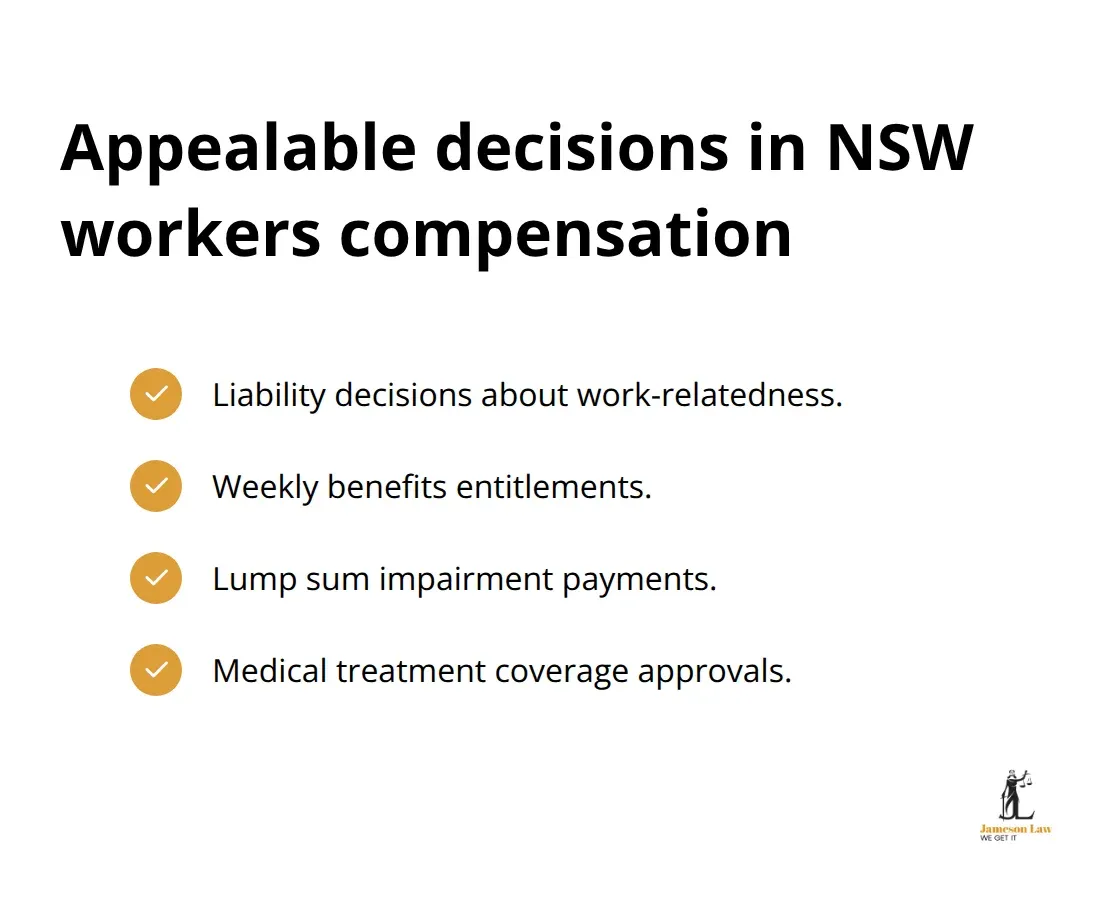
Not every workers compensation decision qualifies for appeal, and understanding which ones do matters significantly. In NSW, you can appeal decisions about liability (whether your injury is work-related), weekly benefits, lump sum payments, and medical treatment coverage. The Workers Compensation Commission handles these appeals and takes them seriously. You cannot appeal decisions made by judges after a full hearing at the Commission has already occurred, unless exceptional circumstances involving procedural unfairness apply.
This distinction saves you time and money by directing your energy toward decisions that are actually reviewable.
Getting the Timing Right
The clock starts ticking immediately after you receive a decision letter from your insurer. You have 20 business days to lodge an appeal with the Workers Compensation Commission, and this deadline is enforced strictly. Claims have been rejected simply because paperwork arrived on day 21. If your insurer denies your claim or reduces your benefits, mark day 20 on your calendar and work backwards from there.
The appeal must be formally lodged, not discussed over the phone or sent via email to the wrong department. Most insurers accept online lodgement through their portal, which creates a timestamped record and eliminates the excuse that paperwork got lost in transit. If you miss this window, your right to appeal disappears entirely, so treating this deadline as non-negotiable protects your financial security during recovery.
Who Has Standing to Appeal
You can lodge an appeal if you are the injured worker making the claim, but employers and insurers can also appeal decisions they disagree with. This matters because if your insurer appeals a decision in your favour, you will need to be prepared to defend that outcome. Workers hold a strong position in appeals because the workers compensation guidelines contain information to help you understand the system, but do not assume that success is automatic.
If a lawyer, solicitor, or union delegate represents you, they lodge the appeal on your behalf using their professional credentials. Self-representation is permitted, but the Commission’s forms and procedural requirements demand precision that most injured workers cannot manage alone while managing pain and recovery. Legal representation at this stage significantly improves your chances because experienced advocates know which evidence the Commission actually values and how to present procedural arguments that sway decisions.
What Happens Next in the Process
Once you lodge your appeal, the insurer receives formal notice and must respond to your grounds for appeal. The Workers Compensation Commission then reviews both your submission and the insurer’s response to determine whether the original decision was correct. You will need to prepare evidence and documentation that supports your case, which forms the foundation of whether your appeal succeeds or fails.
How Your Appeal Moves Through the System
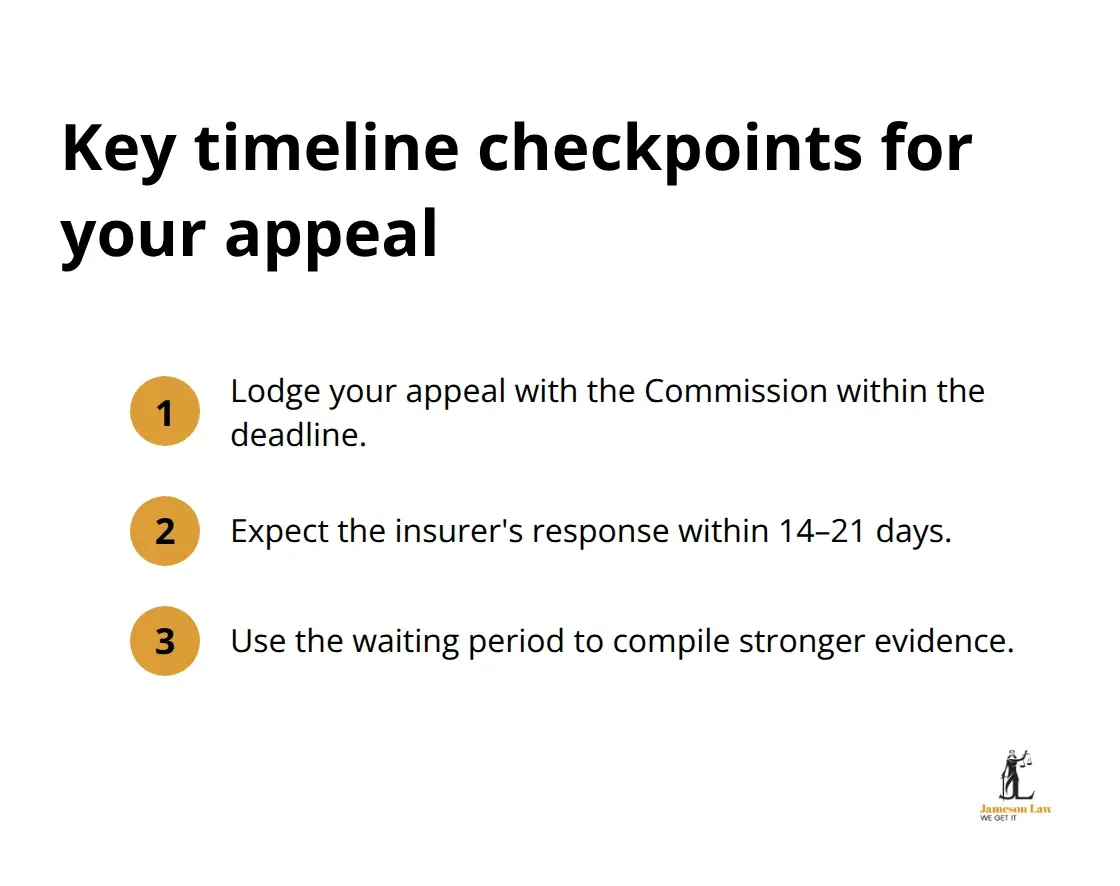
Your appeal enters a formal process the moment you lodge it with the Workers Compensation Commission, and understanding each stage helps you prepare effectively. The insurer receives your appeal documentation and must respond with their reasons for maintaining the original decision. This response period typically runs between 14 and 21 days, though the exact timeline depends on the complexity of your claim. During this waiting period, you should compile additional evidence that strengthens your position, because the Commission will consider everything submitted by both parties before making a determination.
When Your Matter Goes to Hearing
The Workers Compensation Commission schedules your matter for review, which can occur on the papers alone (meaning a decision based on written submissions) or at a formal hearing where you present your case in person or via video link. Hearings provide a significant advantage because you can explain the impact of the decision on your recovery and livelihood, something written documents struggle to convey with the same persuasive force. If your matter proceeds to a hearing, you typically receive four to eight weeks notice, giving you adequate time to prepare evidence and arrange legal representation if needed.
Medical Evidence Carries the Most Weight
Submitting strong documentation separates appeals that succeed from those that fail, and most injured workers underestimate what the Commission actually values. Medical evidence ranks highest in the Commission’s decision-making, particularly reports from your treating practitioners that address your work capacity and functional limitations as they relate to the specific grounds of your appeal. If the original decision hinged on liability, you need contemporaneous evidence like witness statements, incident reports, or communications showing work-relatedness. If the decision concerned your capacity to work, obtain a detailed Certificate of Capacity from your doctor that specifically responds to the insurer’s concerns rather than providing generic statements.
Organising Your Documentation Matters
The Commission pays minimal attention to emotional narratives or complaints about the insurer’s conduct; they focus exclusively on whether the original decision followed the legislation and whether the facts support the conclusion reached. Gather payslips, treatment receipts, and correspondence showing the timeline of your claim, because these documents establish credibility and demonstrate you took the matter seriously from the outset. If your appeal involves new medical evidence that wasn’t available when the original decision was made, this becomes your strongest argument for overturning that decision. Arrange everything chronologically and cross-reference key documents in your written submission so the decision-maker can follow your argument without wasting time hunting through pages (disorganised bundles frustrate the Commission’s review process and weaken even strong cases).
What Evidence the Commission Actually Values
The Commission requires you to address the specific grounds on which the insurer made their decision, not simply argue that you disagree with the outcome. If liability formed the basis of rejection, focus your evidence on establishing work-relatedness through objective documentation rather than your account alone. If the insurer disputed your work capacity, ensure your medical evidence directly contradicts their reasoning with specific functional limitations and treatment recommendations. Supporting documents (payslips, receipts, correspondence) establish the timeline and demonstrate your engagement with the claims process from the beginning, which influences how the Commission perceives your credibility throughout the appeal.
Once you understand what evidence matters and how to present it, the next stage involves recognising which types of decisions actually succeed on appeal and why certain grounds prove more persuasive than others.
Why Appeals Succeed
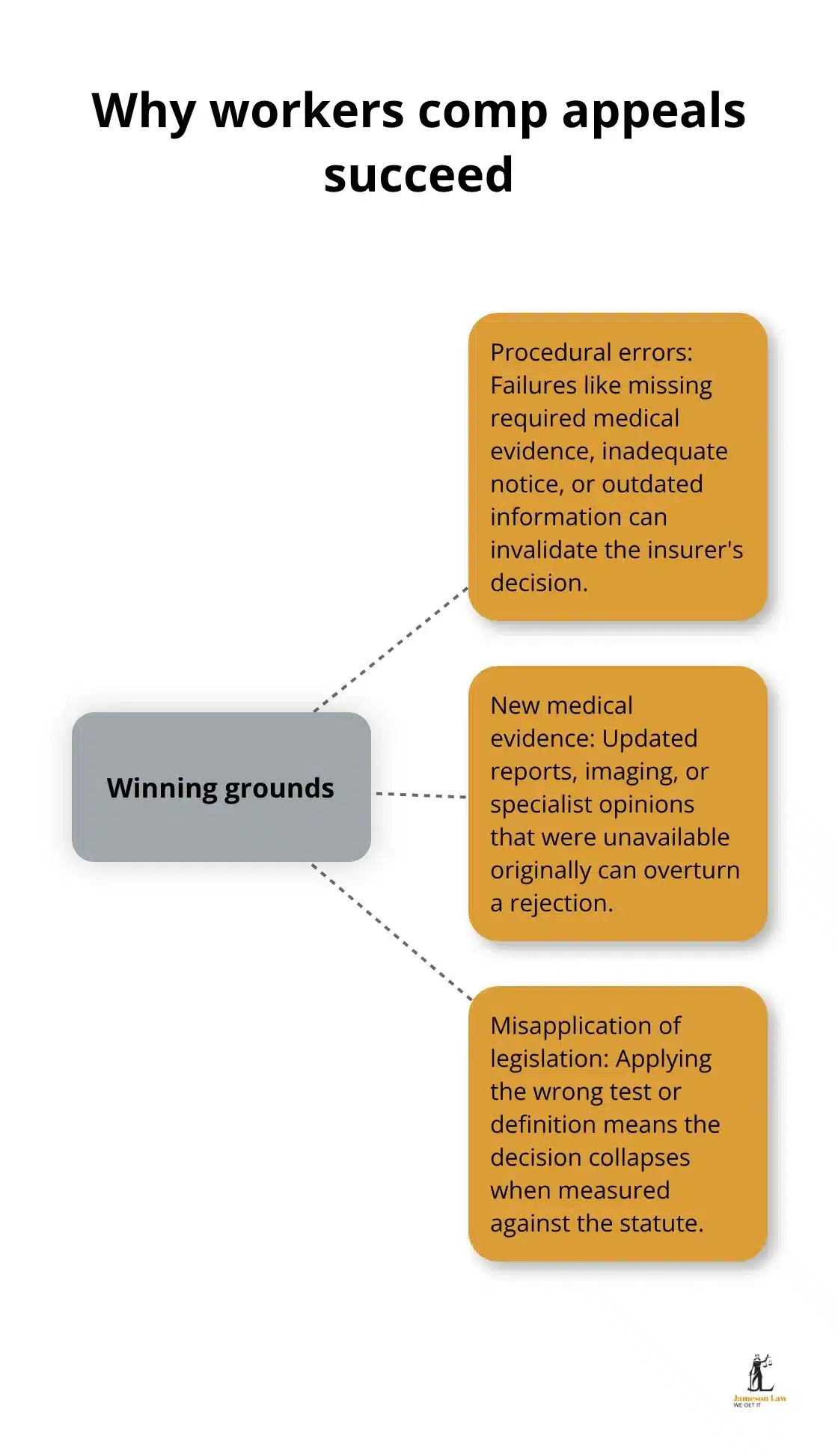
The Workers Compensation Commission overturns insurer decisions regularly, but appeals don’t succeed by accident. Understanding the specific grounds that actually persuade decision-makers separates winning appeals from those that fail at the first hurdle. The most successful appeals target one of three areas: procedural failures in how the original decision was made, medical evidence that wasn’t available when the insurer decided, or misapplication of the legislation to your circumstances. Focusing your appeal on these grounds rather than emotional arguments about unfairness transforms your case into something the Commission takes seriously.
Procedural Errors Change Outcomes
Insurers make technical mistakes that invalidate their decisions, and these errors form the strongest foundation for overturning a rejection. When an insurer fails to obtain required medical evidence before deciding your claim, makes a decision without proper notification to you, or relies on outdated information, the Commission views this as grounds for allowing your appeal. The Workers Compensation and Rehabilitation Act 2003 sets out specific procedural requirements, and deviation from these requirements means the original decision becomes vulnerable regardless of its merits.
If your insurer decided your claim without obtaining a Certificate of Capacity from your treating doctor, or failed to give you adequate opportunity to respond to their concerns, document this breach explicitly in your appeal submission. The Commission prioritises procedural fairness, so when an insurer skips required steps, your appeal gains significant momentum. Examine the original decision letter carefully for what the insurer actually did versus what the legislation required them to do before deciding.
New Medical Evidence Overturns Rejections
Medical evidence that wasn’t available when the insurer made their original decision forms your strongest argument for appeal success. If your condition deteriorated after the initial rejection, or if your treating doctor now provides evidence contradicting the insurer’s conclusions, this becomes persuasive material the Commission must consider. The key is demonstrating that this evidence is genuinely new, not information you possessed but failed to submit earlier.
A recent report from your physiotherapist addressing your functional capacity, updated imaging showing the extent of your injury, or specialist opinion confirming work-relatedness all qualify as material that changes the picture. The Commission distinguishes between evidence you should have provided initially and evidence that legitimately emerged after the original decision. If your appeal hinges on new medical evidence, obtain detailed reports that directly contradict the insurer’s reasoning rather than general statements about your condition. Your treating practitioners should specifically address why the original decision was wrong based on current clinical findings.
Misapplication of Legislation Creates Appeal Opportunities
Insurers sometimes apply the wrong legislative test or interpret the legislation incorrectly when deciding your claim, and this misapplication becomes grounds for appeal that the Commission takes seriously. If an insurer rejected your claim based on liability but applied the wrong causation test, or determined your work capacity without properly considering the statutory definition of incapacity, the decision collapses under scrutiny.
The legislation contains specific definitions and tests that insurers must follow, and when they deviate, your appeal has substance. Your submission should identify the precise legislative requirement, explain how the insurer failed to apply it correctly, and demonstrate how proper application supports your appeal. This requires careful reading of both the legislation and the original decision letter to identify where the insurer’s reasoning diverged from what the law actually requires. The Commission respects appeals that misapplication of legislation grounds rather than those that simply disagree with how the insurer exercised their discretion.
Final Thoughts
A workers comp appeal succeeds when you lodge within 20 business days, submit documentation that directly addresses your grounds for appeal, and present material the Workers Compensation Commission actually values. Most injured workers lose appeals not because their case lacks merit, but because they submit disorganised evidence, miss deadlines, or argue emotional points rather than legal ones. Your appeal stands on procedural errors, new medical evidence, or misapplication of legislation rather than general complaints about unfairness.
Self-representation is legally permitted, but the Commission’s procedural requirements and the technical nature of workers compensation legislation create significant obstacles for injured workers managing recovery simultaneously. Legal representation transforms your appeal from a submission the Commission processes to one they take seriously, because experienced advocates know which evidence persuades decision-makers and how to structure arguments that survive scrutiny. The cost of legal assistance typically proves far smaller than the difference between a successful and unsuccessful appeal, particularly when your weekly benefits or lump sum entitlements hang in the balance.
If your appeal succeeds, the insurer must implement the Commission’s decision and provide the benefits they previously withheld. If it fails, you should obtain legal advice about whether grounds exist for further challenge before accepting the outcome as final. Contact Jameson Law if you’re considering a workers comp appeal or need guidance on whether your grounds are strong.