

Buying property in NSW involves a series of complex legal steps that can feel overwhelming if you are unfamiliar with the process. Conveyancing NSW steps are explicitly designed to protect both buyers and sellers, but understanding the timeline makes the journey significantly smoother.
At Jameson Law, our expert property team has guided hundreds of buyers through seamless transactions. This comprehensive 2026 guide breaks down exactly what happens at each stage, from your initial property inspection to the final electronic settlement.
Understanding Conveyancing in NSW
What Conveyancing Actually Does
Conveyancing is the formal legal process that transfers property ownership from the seller to the buyer. It is not a single event—it is a meticulous series of investigations that ensure the title is clear, all financial obligations are met, and the transaction complies strictly with NSW law.
Without proper conveyancing, you risk inheriting the previous owner’s debts, discovering undisclosed land easements, or facing severe disputes over unapproved building extensions.
Who Handles This Work and Why It Matters
A licensed conveyancer or property solicitor handles the transaction on your behalf. In NSW, professionals must hold proper licensing and carry professional indemnity insurance to protect you against negligence. Your representative actively protects your financial interests by:
- Examining the 2026 Contract for Sale of Land.
- Checking for outstanding arrears or government interests in the land.
- Uncovering undisclosed issues like fence disputes or illegal building works.
- Calculating precise rate adjustments so you do not overpay at settlement.
The Legal Framework in 2026
NSW conveyancing operates under strict legislation. As of 1 June 2026, all residential transactions must use the newly updated Contract for the Sale and Purchase of Land 2026 Edition, which includes mandatory new cooling-off notice wording and updated Foreign Resident Capital Gains Withholding (FRCGW) thresholds (now increased to 15%).
Furthermore, all physical settlements have been replaced by PEXA, a highly secure digital eConveyancing platform.
| Conveyancing Phase | Key Actions Taken |
|---|---|
| 1. Pre-Contract Phase | Review the Contract for Sale, conduct building/pest inspections, and secure formal finance approval. |
| 2. Exchange of Contracts | Both parties sign, the 10% deposit is paid, and the 5-day cooling-off period begins (unless waived). |
| 3. Pre-Settlement | Title searches are finalised, stamp duty is paid, and rate adjustments (water/council) are calculated. |
| 4. Electronic Settlement | Funds are digitally transferred via PEXA, and NSW Land Registry updates the title to your name. |
The Key Steps in a NSW Property Transaction
What Happens Before You Exchange Contracts
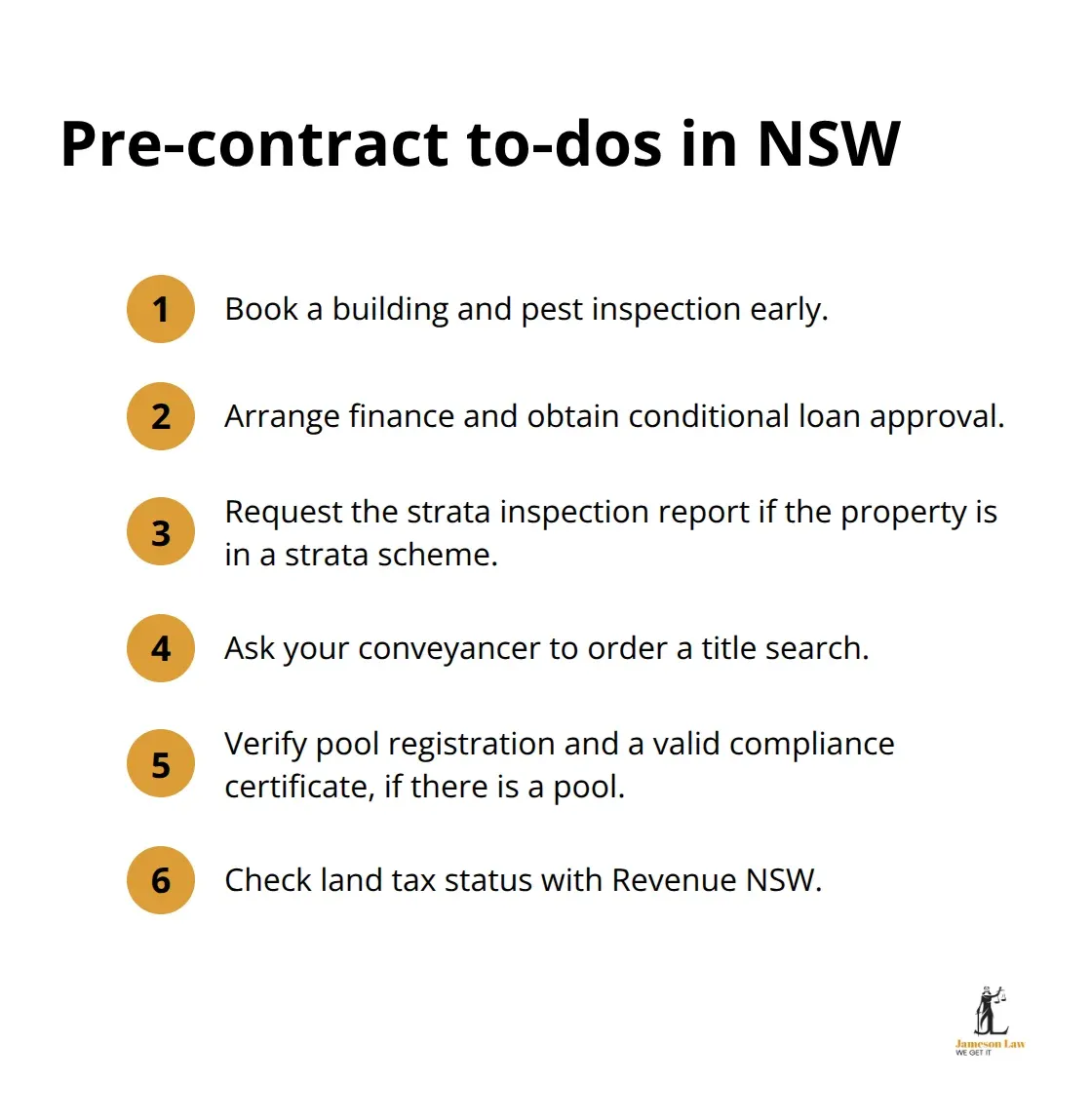
The pre-contract phase typically spans two to four weeks. During this time, you must order a building and pest inspection to protect yourself from discovering severe structural damage or termite infestations after you are legally committed.
For strata schemes (apartments or townhouses), requesting a strata inspection report is critical to check for common property defects or upcoming special levies. If the property has a pool, the vendor must supply a valid certificate of compliance from the NSW Swimming Pool Register.
Contract Exchange and Your Cooling-Off Rights
Once you make an offer and it is accepted, your legal representative reviews the draft contract. NSW law mandates a five-business-day cooling-off period for residential purchases. If you withdraw during this time, you forfeit 0.25% of the purchase price to the vendor.
However, in competitive Sydney markets, many buyers waive this period by having their solicitor provide a Section 66W certificate. At exchange, the formal deposit—traditionally 10%—is paid into the real estate agent’s trust account.
Settlement: The Final Transfer of Ownership
Settlement usually occurs six weeks after the exchange, though this is negotiable. On settlement day, your solicitor attends the digital workspace via PEXA. Your lender securely transfers the mortgage funds, the seller’s mortgage is discharged, and NSW Land Registry Services registers you as the official owner.
Common Issues and How to Avoid Them
Title Defects That Stall Your Settlement
Title defects surface far more often than buyers realise. Unregistered easements, third-party caveats, or undisclosed mortgages can halt a settlement immediately. If your solicitor uncovers an unregistered easement (such as a neighbour’s right of way), you can negotiate, obtain indemnity insurance, or legally withdraw. Acting fast during the due-diligence period is essential to prevent settlement delays that incur penalty interest.
Budget Blowouts and Hidden Costs (2026 Estimates)
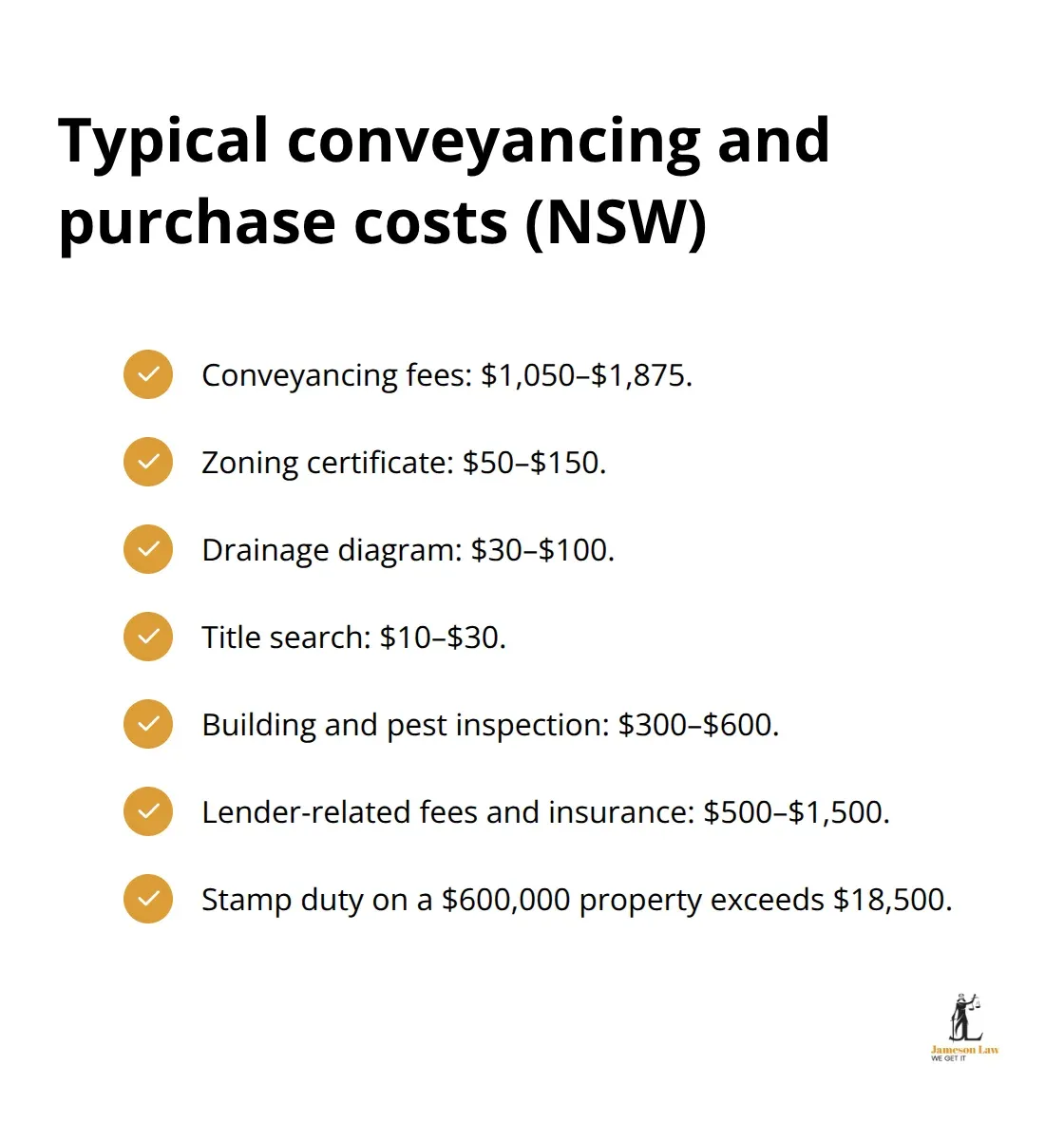
Budget blowouts occur when buyers underestimate the total cost of acquiring property. Professional conveyancing fees range from $1,050 to $1,875, but mandatory disbursements add up quickly:
| Expected Expense | Estimated Cost Range |
|---|---|
| Building and Pest Inspection | $300 – $600 |
| Strata Report (If Applicable) | $250 – $350 |
| PEXA Electronic Settlement Fee | ~$146.30 (Single Title Transfer) |
| Council Zoning / Drainage Certificates | $80 – $250 combined |
Additionally, Stamp Duty (Transfer Duty) is a major expense. For 2026, under the First Home Buyers Assistance Scheme (FHBAS), eligible first-time buyers pay zero stamp duty on homes valued up to $800,000, with concessional discounts applying up to $1,000,000. Standard investors and repeat buyers must calculate this tax carefully.
Missing Documents and Contract Disputes
Contract disputes frequently arise over chattels (e.g., dishwashers, curtains) if they are removed before settlement. Ensure your representative lists all included items explicitly in the contract. Delays also stem from missing disclosure documents, like outdated pool compliance certificates, which can push settlement back by weeks.
Final Thoughts
Navigating the conveyancing NSW steps effectively protects you at every stage of a property transaction. From investigating the 2026 Contract for Sale to arranging digital PEXA settlements and calculating utility rate adjustments, an experienced property lawyer ensures you do not overpay or inherit legal liabilities.
Professional guidance matters because property law involves strict deadlines and complex government platforms. Resolving title defects before they derail your settlement is far less expensive than fighting a legal battle after the transfer has taken place.
If you are preparing to make an offer, contact a solicitor as early as possible. At Jameson Law, we provide expert conveyancing services across NSW, guiding you through the entire process with clear, practical advice. Start your property journey safely and efficiently with our dedicated team today.