

Lodging a visa in NSW requires careful planning and rigorous attention to detail. Every year, thousands of applicants miss critical procedural steps that severely delay their applications or lead to outright rejections.
At Jameson Law, our highly experienced immigration team has helped hundreds of people navigate the Australian visa process successfully. This comprehensive guide walks you through each stage—from identifying the correct visa types to submitting your application with absolute confidence in 2026.
Visa Types That Matter in NSW
Australia offers distinct visa pathways, and selecting the right one determines your success before you even log in to lodge. Skilled migration visas provide the most direct route for professionals who are already in high demand.
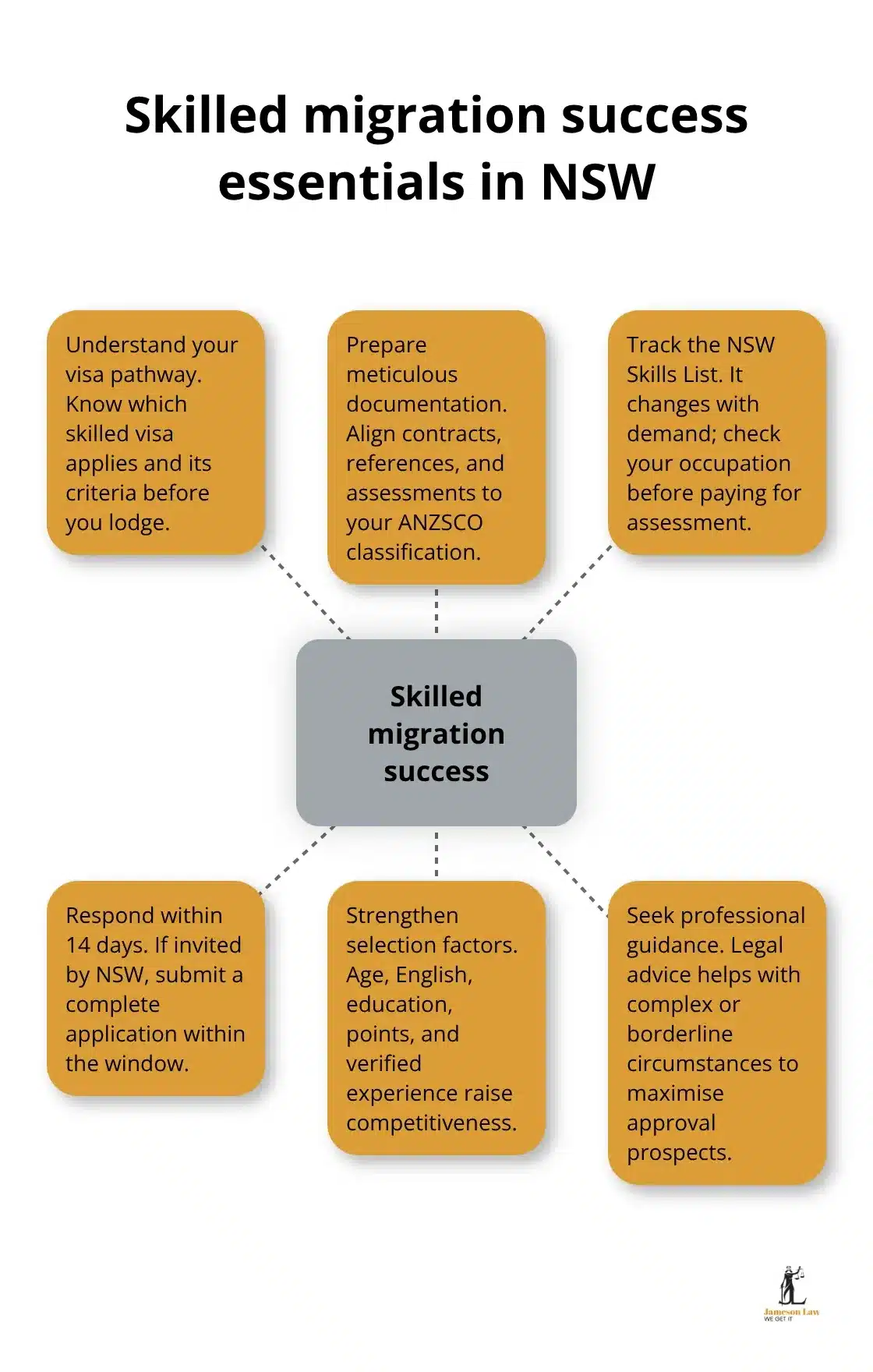
The NSW Skilled Nominated visa (subclass 190) stands as the primary pathway—it leads to permanent residency if approved. The Australian Government Department of Home Affairs reports that the median processing time for skilled permanent visas currently reaches around 9 months. Your occupation must appear on the NSW Skills List, which fluctuates based on workforce demand, so you must verify your role before paying for a formal skills assessment.
Critical Deadline: If NSW invites you to apply, you have exactly 14 days to respond with a complete, decision-ready application. This window cannot be extended.
The invitation system is highly competitive. NSW selects candidates based on a combination of age, English proficiency, education, overall points score, and verified years of skilled work experience.
Understanding Migration Pathways
| Visa Category | Key Documentation Required | Core Focus |
|---|---|---|
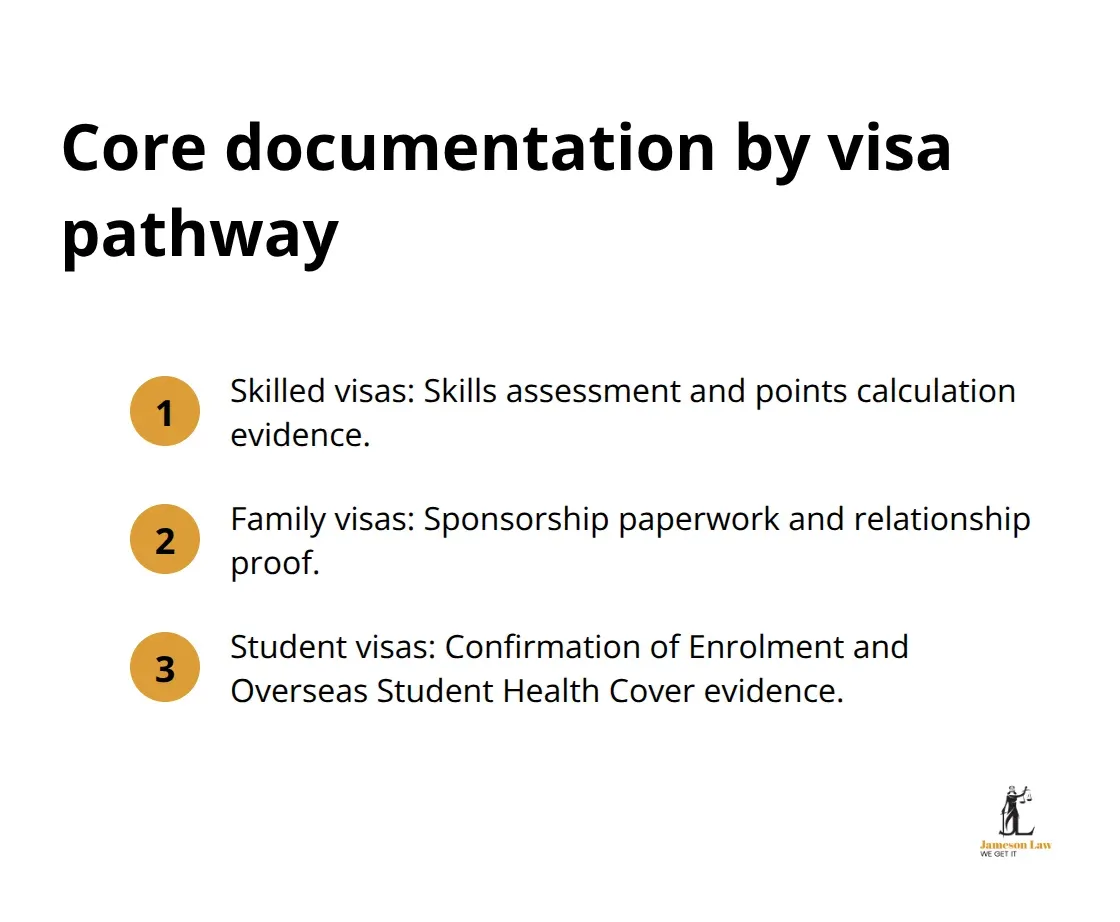
| Skilled Migration | Valid skills assessment, certified employment contracts, ANZSCO-aligned references, NAATI-certified translations. | Strict points thresholds; health and character checks. |
| Family Sponsorship | Proof of genuine relationship, joint financial records, statutory declarations from witnesses. | Sponsor financial capacity; strict health and character criteria. |
| Student Visas | Confirmation of Enrolment (CoE), Genuine Student (GS) evidence, academic transcripts. | Must demonstrate access to at least AUD $29,710 for annual living expenses; OSHC is mandatory. |
The key distinction lies in permanence: skilled and family visas build toward indefinite residence in Australia, while student and temporary work visas remain strictly time-bound.
Building Your Application From Start to Finish
The gap between understanding your visa type and actually submitting your application is where most applicants falter. This stage demands precision because the Department receives thousands of applications monthly. Incomplete or disorganised submissions face immediate delays or requests for further information (RFIs) that can add months to processing times.
1. Download Your Official Checklist First
Start by downloading the official checklist for your specific visa subclass from the Department of Home Affairs website. This checklist is not optional advice—it is your roadmap. For skilled visas, you need certified employment contracts that clearly state your job title, duties, and dates of employment seamlessly aligned with your ANZSCO classification.
If your qualifications came from overseas, you must obtain NAATI-certified translations before you lodge anything.
2. Prepare Documentation That Matches Your Visa Type
Student visas demand completely different documentation than skilled visas. You will need your Confirmation of Enrolment (CoE) from your education provider and proof of Overseas Student Health Cover (OSHC) for your entire stay. The Department currently specifies at least $29,710 in accessible funds for living expenses.
Consistency across all documents matters intensely. You must cross-check every claim against supporting evidence before touching the portal.
3. Navigate ImmiAccount With Precision
Lodging through ImmiAccount is straightforward but unforgiving. Attach documents in the correct format (PDF files work best) and verify each attachment uploads fully before you submit. Payment issues frequently block submissions, so confirm your payment method works and check your bank statement immediately after attempting payment.
4. Monitor Your Application and Respond Promptly
Do not contact NSW or Home Affairs during the assessment period unless explicitly requested; these departments operate on strict timelines, and unsolicited contact can actually delay your case. Instead, monitor your application status through ImmiAccount and respond immediately to any official RFIs.
Where Visa Applications Fail Most Often
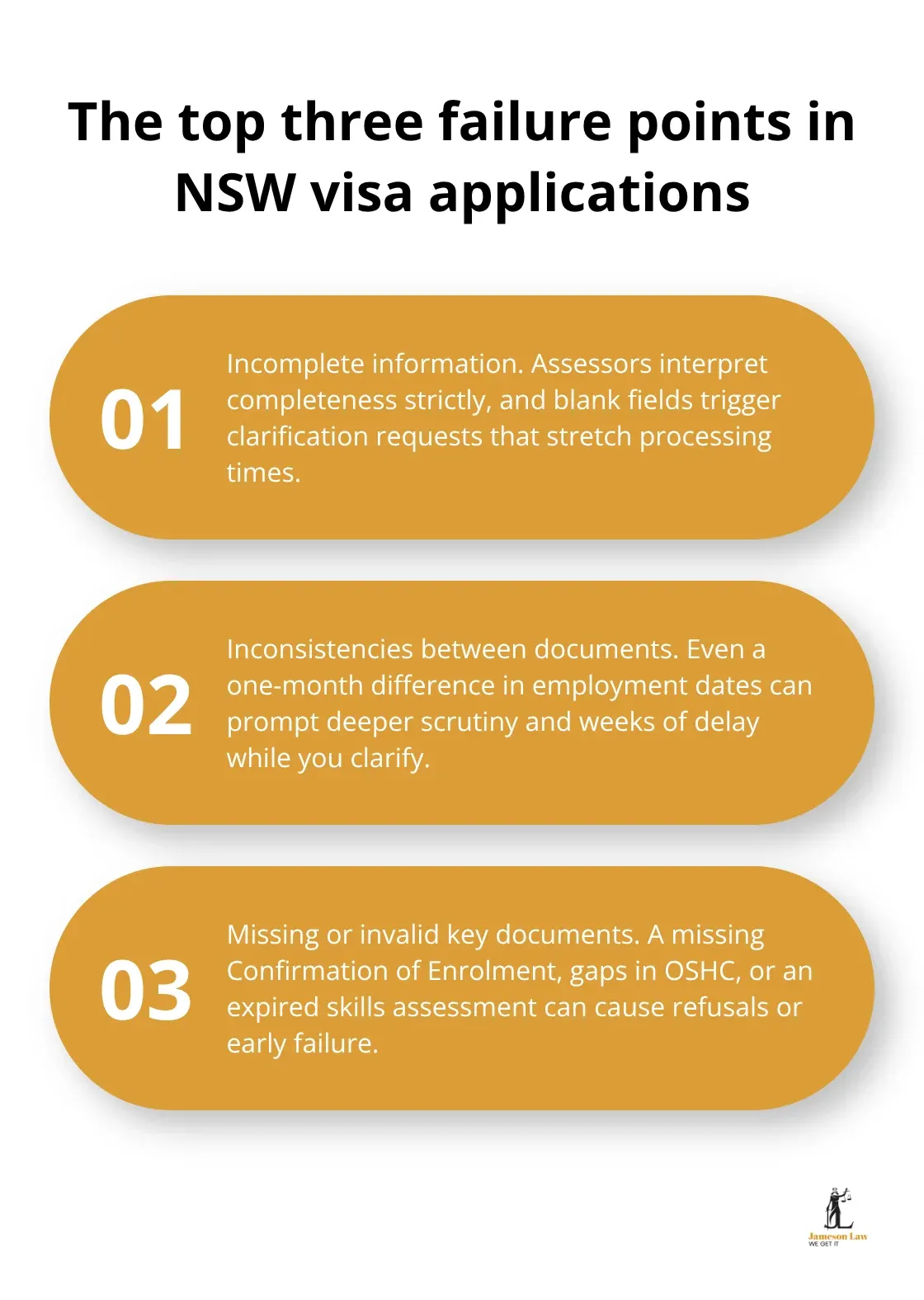
The difference between approval and rejection often comes down to details that seem minor until the Department flags them. Incomplete information tops the list of reasons applications stall.
- Inconsistencies: If your employment contract states you worked from January 2020 to June 2023, but your reference letter says January 2020 to July 2023, the department will ask you to clarify the discrepancy, costing you weeks of waiting time.
- Weak References: Generic reference letters that say you “worked hard and performed well” carry almost no legal weight. Strong reference letters explicitly confirm specific duties that align with your required ANZSCO classification.
- Missing Documents: For student visas, the CoE is non-negotiable. For skilled visas, if your skills assessment has expired, your application fails at the first stage.
Health and Character Requirements
Use the My Health Declarations service to complete required health checks before you submit. Character requirements demand police background checks from every country where you have lived for more than 12 months in the past 10 years. Delays in obtaining overseas police clearances can extend your processing time by many months.
Dishonesty and Non-Disclosure
Failing to disclose relevant information is treated as fraud and leads to outright refusal and potential visa cancellation. If you have a criminal record, declare it. If you have been refused a visa before, declare it. Honesty gives you a chance to explain your circumstances through expert legal counsel. Dishonesty guarantees rejection.
Final Thoughts
Visa lodgement succeeds when you thoroughly understand your pathway, prepare meticulous documentation, and recognise when authoritative legal advice matters. Skilled migration visas demand absolute consistency across every document, student visas require health cover and financial proof, and incomplete applications invariably trigger delays that stretch well beyond standard processing windows.
While you possess tools like official checklists and ImmiAccount, Australian migration law contains layered complexities that generic guides cannot fully address. Your circumstances may span multiple countries, or involve qualifications that do not align neatly with ANZSCO classifications.
If your situation involves complexity, uncertainty, or potential refusal grounds, contact Jameson Law today. Our highly experienced Sydney immigration team understands how case officers evaluate files and identifies where your specific application faces risk. Reach out to discuss how our expert legal guidance can strengthen your submission and secure your future in Australia.