Australia employment visa requirements can feel overwhelming when you’re navigating multiple visa categories and complex documentation. The good news is that understanding your options—from skilled independent visas to employer-sponsored pathways—makes the process far more manageable.
At Jameson Law, we’ve helped countless professionals move to Australia by identifying the right visa strategy. This guide walks you through the three main visa categories and what you’ll need to prepare.
Your Three Main Visa Pathways
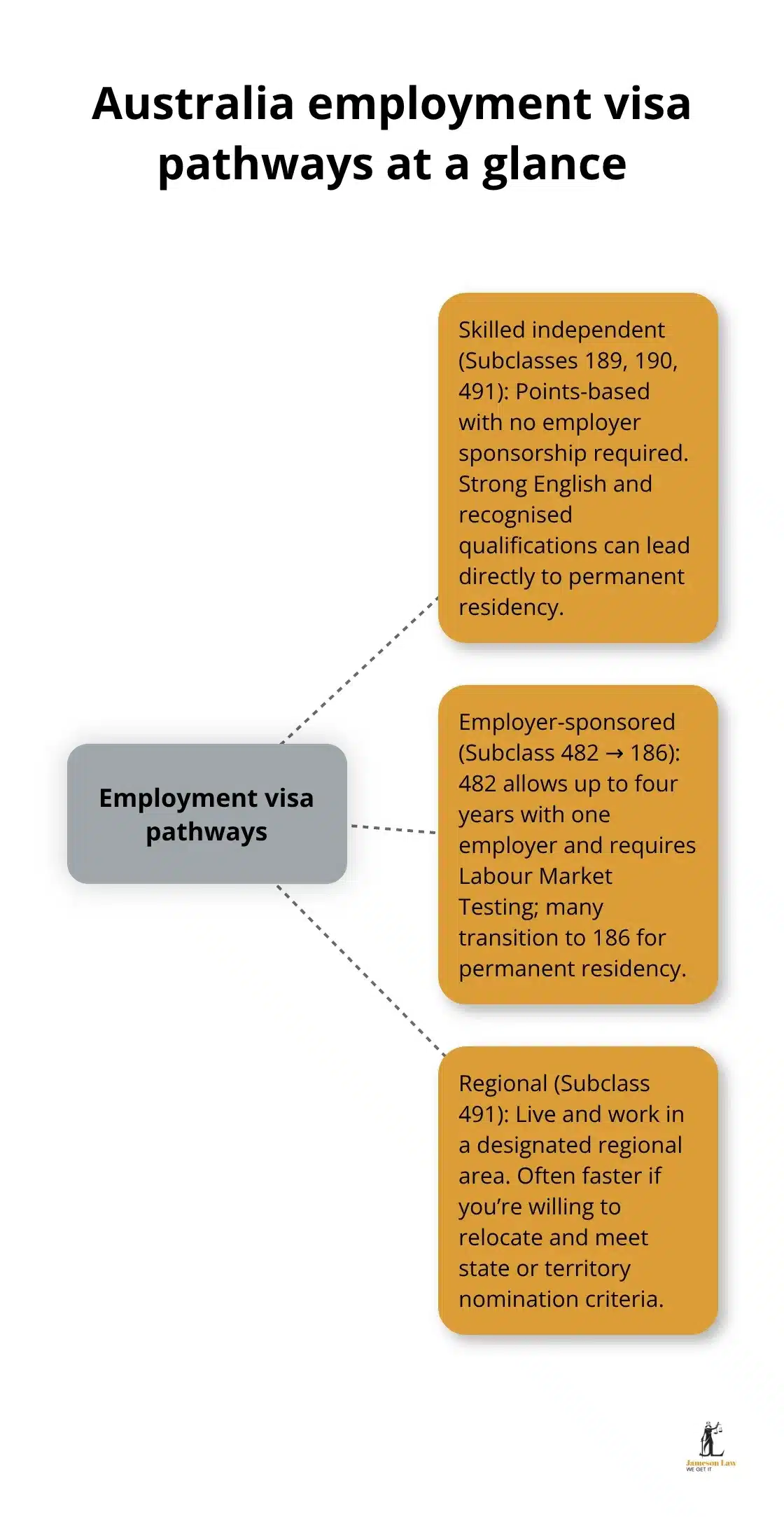
Australia offers three fundamentally different employment visa routes. The Skilled Independent Visas (Subclasses 189, 190, and 491) operate on a points-based system. You accumulate points based on age, English proficiency, and work experience, then submit an Expression of Interest via SkillSelect.
Skilled Independent Visas Require Strong Credentials
Skilled independent visas suit professionals with qualifications listed on the Skilled Occupation List. You must obtain a formal skills assessment from your profession’s authority. Engineers Australia handles engineering, Trades Recognition Australia (TRA) manages trades, and the Australian Computer Society (ACS) processes IT roles.
For healthcare, the Australian Health Practitioner Regulation Agency (AHPRA) handles assessments. Accountants should contact CPA Australia or Chartered Accountants ANZ.
Employer-Sponsored Routes Offer Faster Entry
The Subclass 482 Temporary Skill Shortage visa is the most common entry point. It allows employment for up to four years. After approximately three years, you may transition to the Subclass 186 Employer Nomination Scheme, which grants permanent residency.
Regional Visas Provide a Faster Alternative
The Subclass 491 Regional Visa requires you to live and work in a designated regional area. If you are willing to relocate to regional NSW or Queensland, this pathway can be substantially faster than competing in the national points pool.
What Documentation You Actually Need?
Skills Assessments Form Your Foundation
Skills assessments form the foundation of your application. Most applicants make a costly mistake by waiting until after they submit their visa application to request one. You should begin this process immediately as the assessment must be valid at the time of application.
English Language Tests Must Meet Current Standards
English proficiency is non-negotiable. Only tests taken at secure testing centres qualify. Approved tests include IELTS Academic, PTE Academic, and TOEFL iBT.
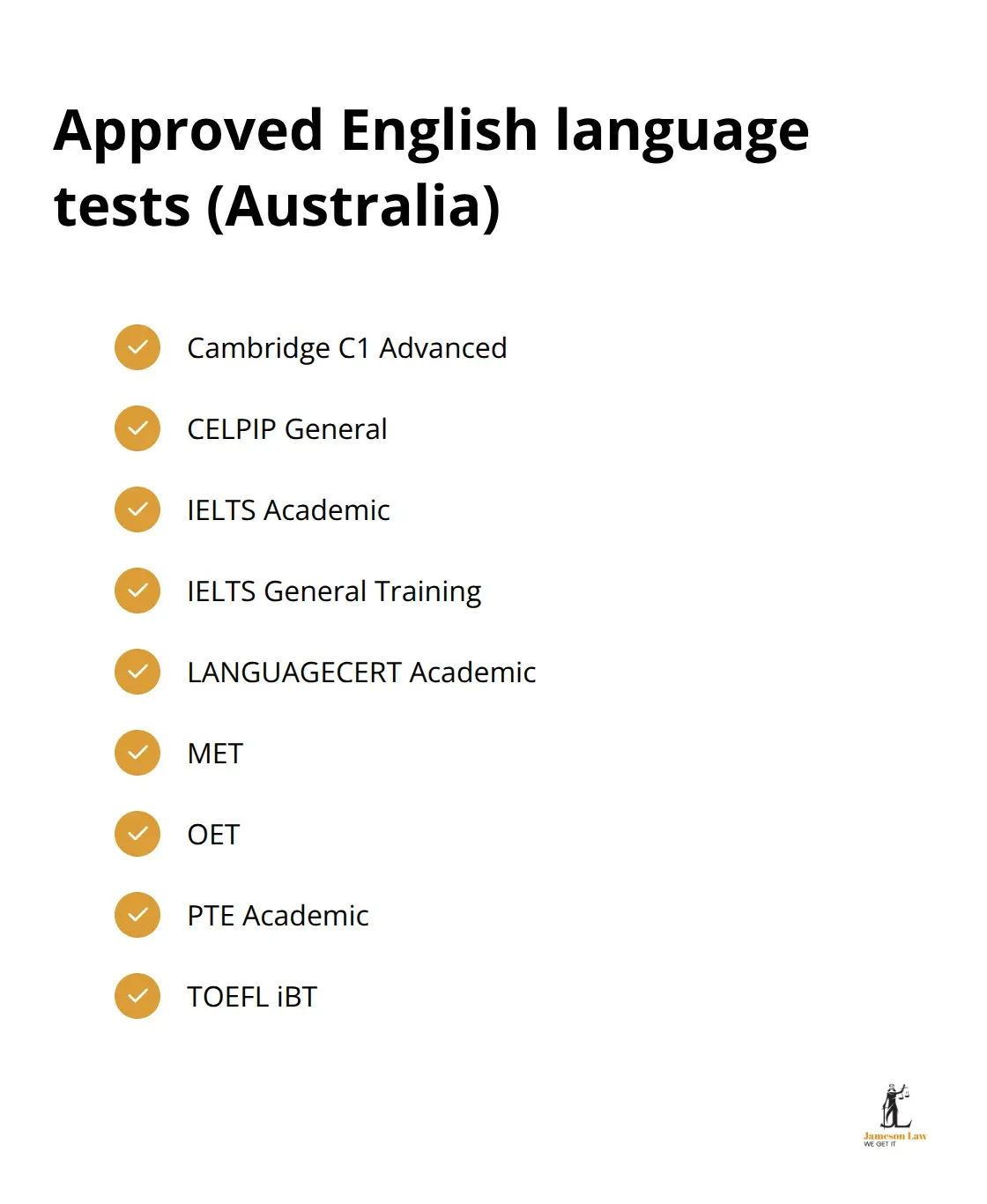
Requirements vary by visa subclass. Skilled independent visas typically demand Competent English (IELTS 6.0), while nursing positions often require 7.0 per band.
Health and Character Clearances Run in Parallel
You must obtain police certificates from every country where you have lived for 12 months or more. Medical examinations must be conducted by Bupa Medical Visa Services. Start these processes immediately to avoid delays.
Submitting Your Application and Timeline
Upload Complete Documentation to ImmiAccount
Submit your application via ImmiAccount. Upload all documents as PDF files. Submitting a complete application with every required document beats submitting an incomplete application early.
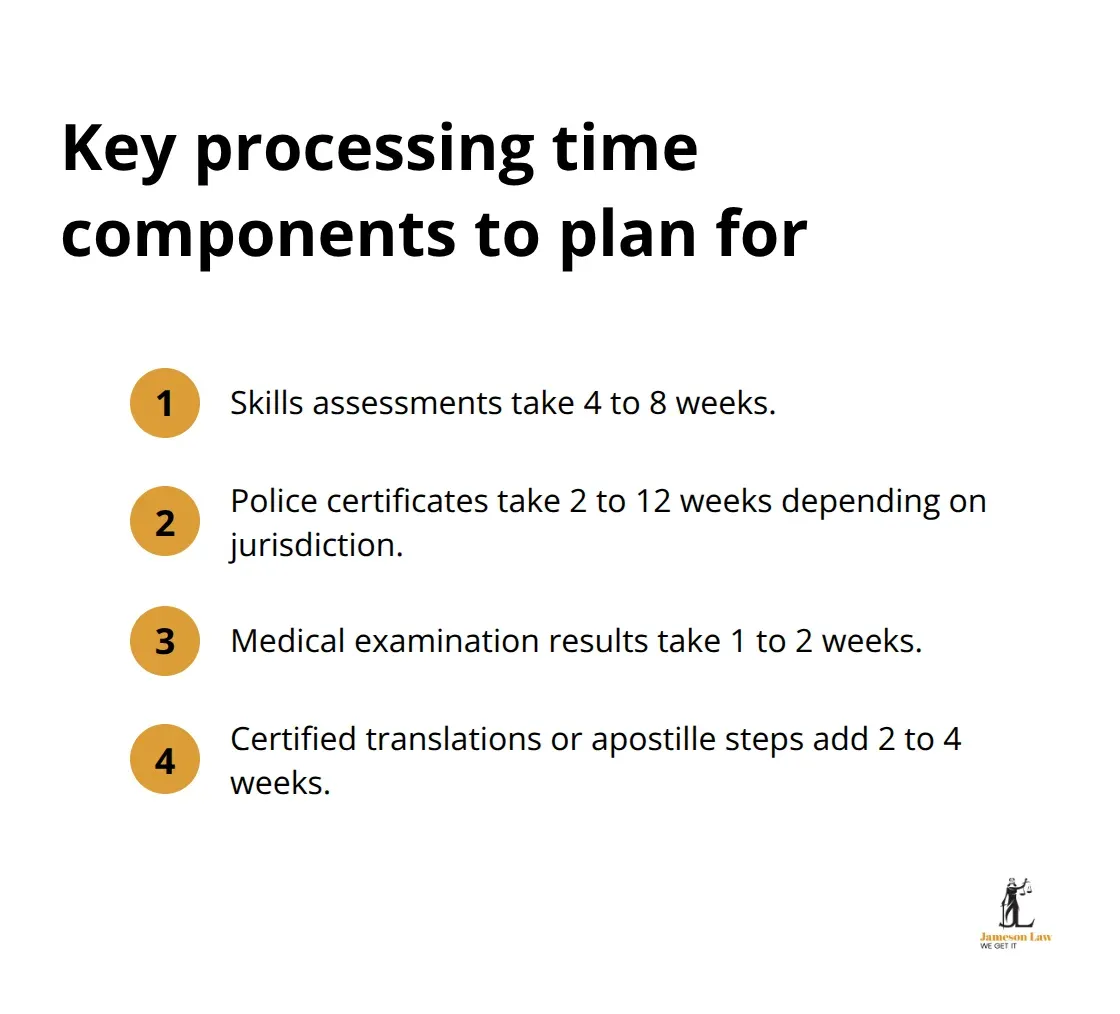
Processing Times Vary by Visa Subclass
Subclass 482 applications typically complete within 2 to 4 months, while Subclass 186 applications can stretch to 12 months. Subclass 189 visas often process faster as they do not require employer verification. Track your status using VEVO.
Final Thoughts
Australia employment visa requirements demand precision. The three pathways—skilled independent, employer-sponsored, and regional—each offer distinct advantages. Starting your skills assessment and English test early cuts weeks from your timeline.
We at Jameson Law have guided hundreds of professionals through this process. Contact Jameson Law to discuss your visa strategy and identify the fastest pathway for your situation.