

Moving to Australia and securing residency is a significant decision that requires understanding your options. We at Jameson Law know that Sydney residency pathways NSW can feel overwhelming without clear guidance.
This guide walks you through the main visa routes available, what you’ll need to qualify, and how to navigate the application process from start to finish in 2026.
Your Residency Options in NSW
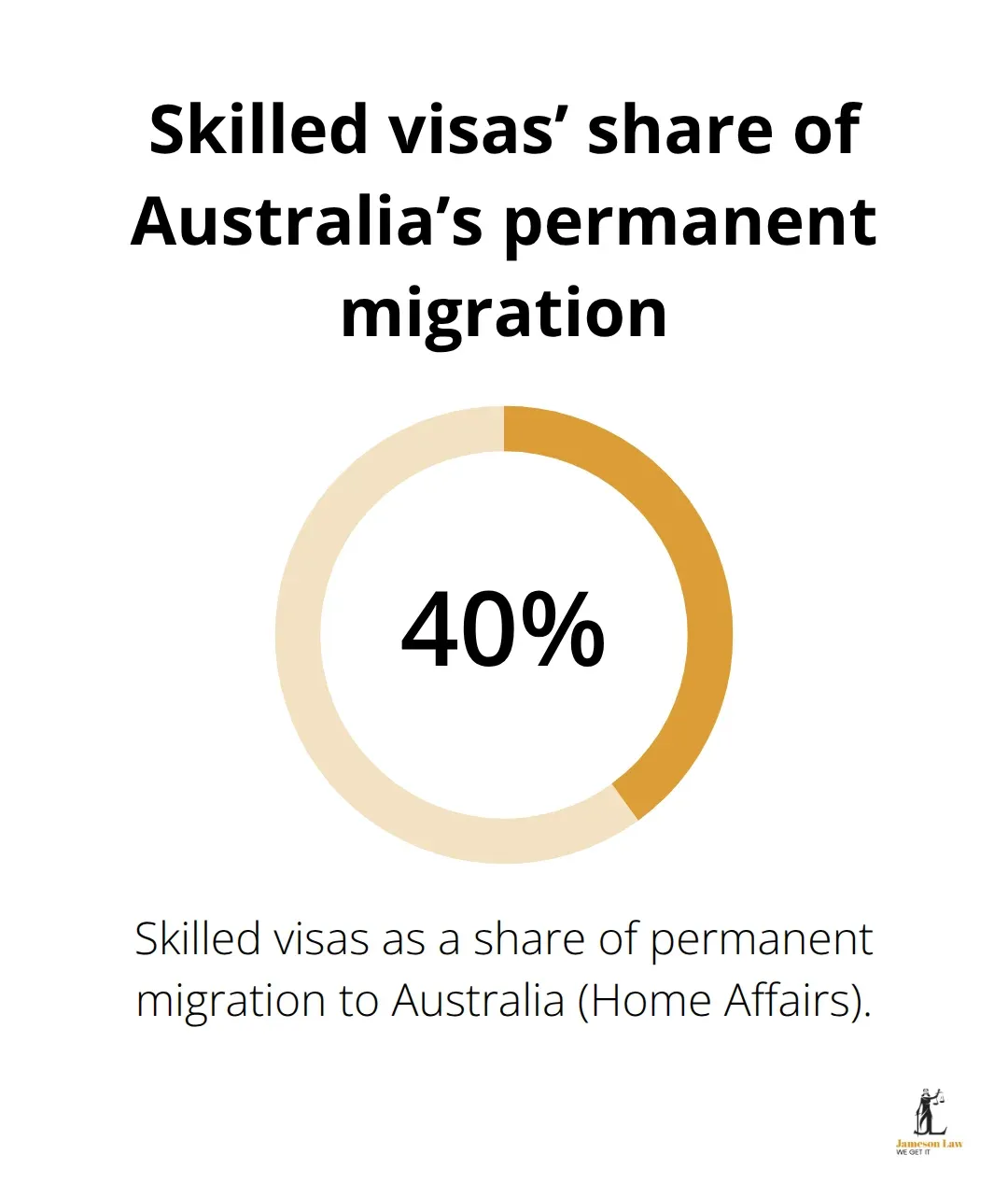
Australia offers three primary pathways to residency, each with distinct eligibility requirements and timelines. According to the Department of Home Affairs, skilled visas account for approximately 40 per cent of permanent migration to Australia, making points-based systems the dominant entry method for qualified professionals.
| Visa Pathway | Subclass Type | Residency Status | Key Requirement |
|---|---|---|---|
| Skilled Nominated | Subclass 190 | Immediate PR | NSW State Nomination & Points Test. |
| Skilled Work Regional | Subclass 491 | 5-Year Provisional (PR Pathway) | Must live/work in designated regional NSW. |
| Employer Nomination | Subclass 186 / 494 | PR / Regional Provisional | Genuine employment at or above TSMIT rate. |
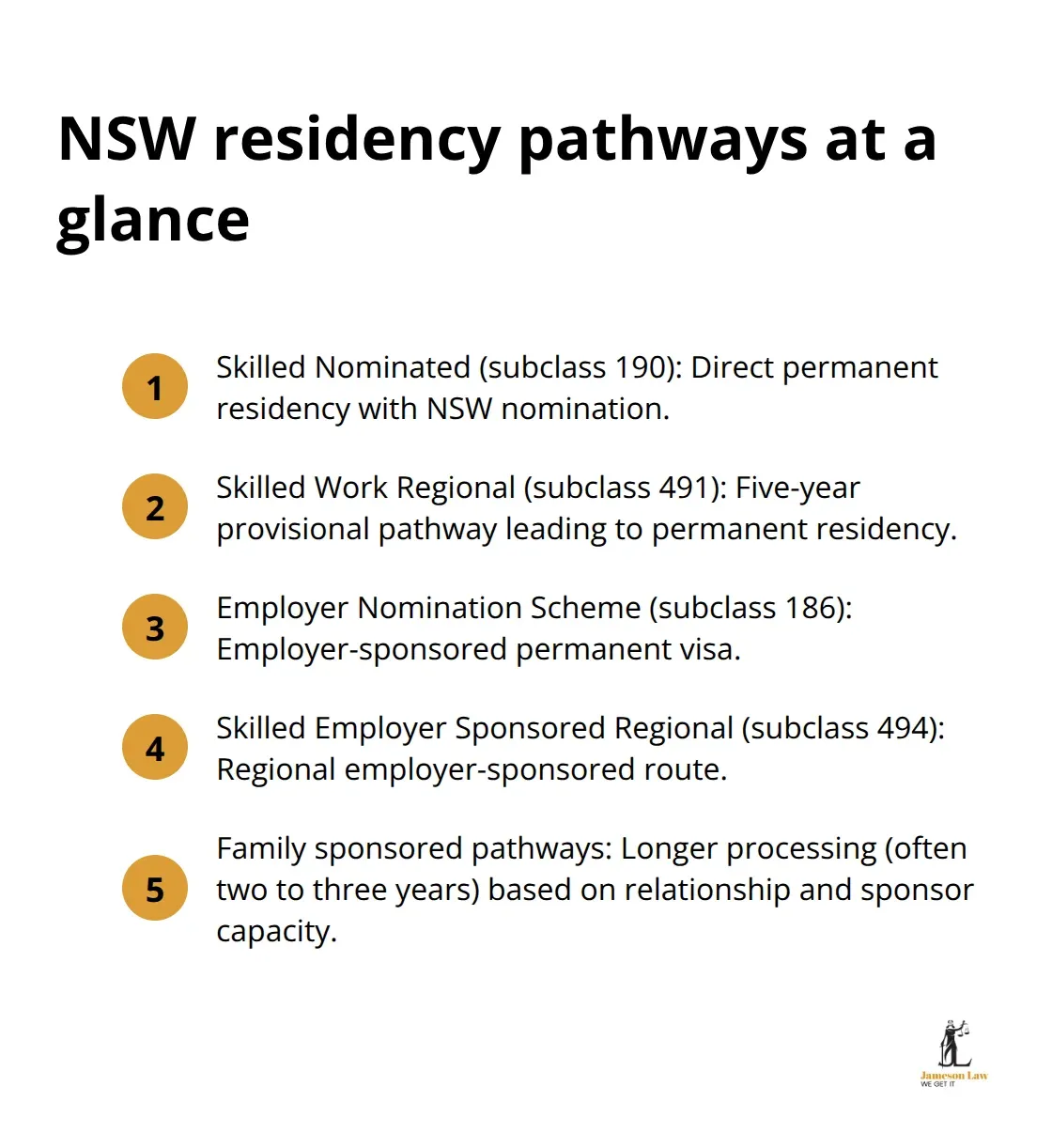
The Skilled Nominated visa subclass 190 provides permanent residency directly if you meet NSW nomination criteria, while the Skilled Work Regional visa (subclass 491) offers a five-year provisional pathway. Both require a valid skills assessment, an occupation on the NSW Skills List, and a points score that meets competitive thresholds.
NSW actively nominates professionals in health, education, ICT, infrastructure, and agriculture to address critical workforce shortages. Employer-sponsored visas operate differently—your business sponsor must nominate you under schemes like the Employer Nomination Scheme (subclass 186). This approach bypasses the points competition entirely but requires genuine employment at or above the TSMIT rate.
Family-sponsored pathways allow Australian citizens or permanent residents to sponsor relatives, though processing times stretch much longer—often two to three years—and eligibility depends heavily on relationship categories and financial sponsorship capacities.
Understanding the Points System
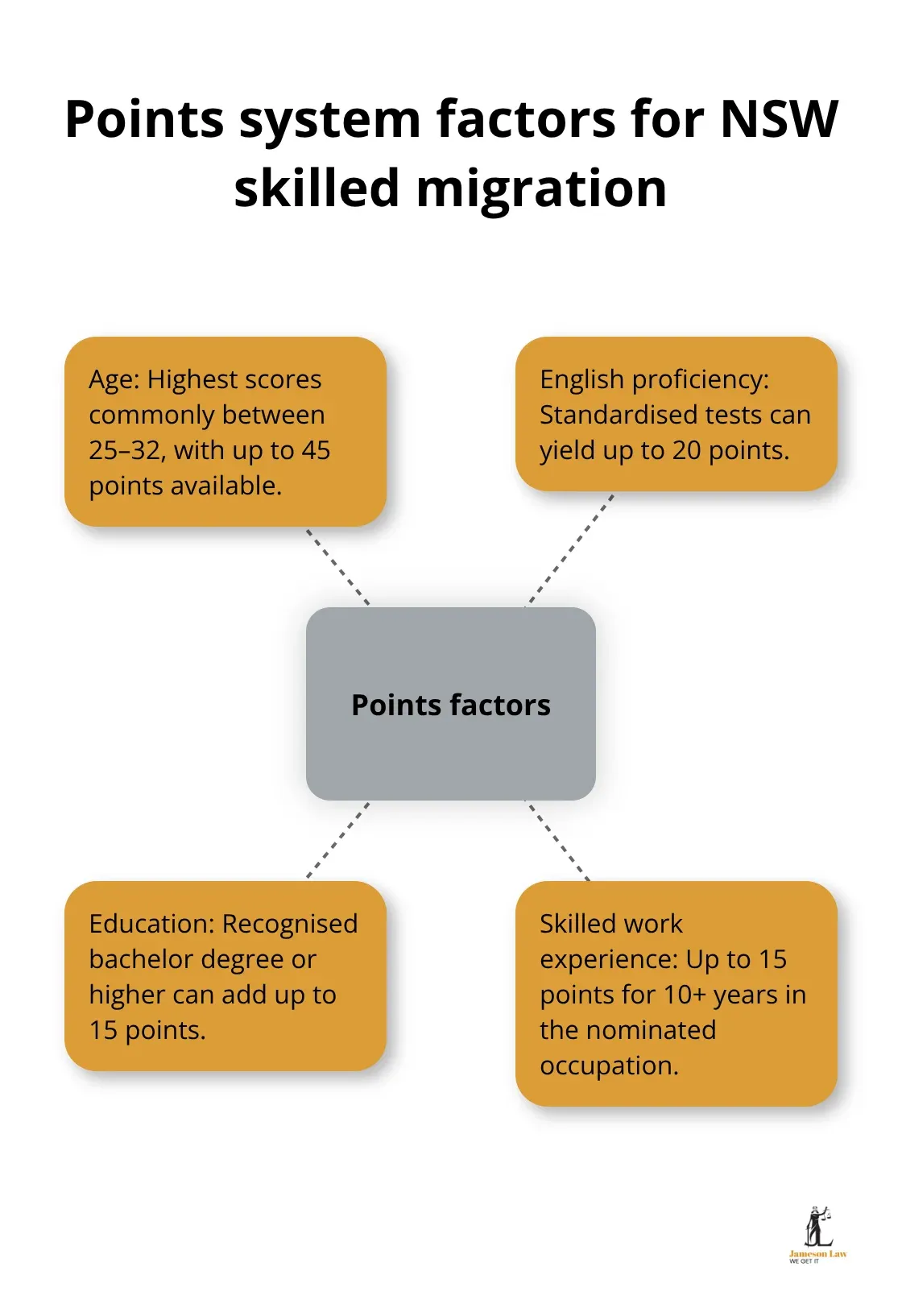
The points-based system rewards specific personal attributes. NSW publishes selective invitation rounds throughout the financial year without predetermined dates, and only Expression of Interest (EOI) applications matching priority fields receive assessment:
- Age Brackets: Maximum points are awarded if you are between the ages of 25 and 32.
- English Capabilities: Superior or Proficient scores significantly boost your overall application weight.
- Skilled Employment: Points accumulate based on years of verified post-qualification experience.
- Educational Background: Recognised Bachelor, Master, or Doctorate degrees contribute to your score.
Within each occupation group, the highest-ranked EOIs receive invitations—meaning your score relative to others determines success, not an absolute threshold. If invited, you have a non-extendable 14 days to respond with substantiating evidence.
Employer Sponsorship and Regional Pathways
Employer-sponsored visas eliminate points competition but demand strict operational compliance. Under the subclass 491 regional pathway, candidates can also qualify via alternative streams, including direct invitations from Investment NSW based on the Regional Skills List, or by graduating from a regional NSW tertiary institution within the past two years.
What You Must Satisfy to Qualify
Meeting the eligibility criteria for Sydney residency demands careful attention to multiple requirements that work together as interconnected filters.
The Skills Assessment Foundation
You must obtain a formal skills assessment from an Australian authority recognised by the Department of Home Affairs that validates your occupation matches an eligible ANZSCO unit group. The assessment body examines your qualifications and work experience against Australian industry standards. Without a valid skills assessment outcome letter, the Department will not process your application, making it the essential first step in your residency pathway.
Points and Competitive Thresholds
Your points score determines your entry ranking within the pool. While the absolute legislative minimum is 65 points, competitive occupations regularly demand higher totals. Using the official government points calculator allows you to estimate your score before lodging an EOI, preventing wasted effort on profiles that fall short of realistic selection thresholds.
Health and Character as Absolute Barriers
Health and character assessments operate as mandatory legal barriers rather than scoring factors. The Department conducts health assessments through designated panel doctors, and applicants must declare all medical conditions honestly.
Character requirements demand police certificates from every country where you have resided for more than six months over the past ten years. A single undisclosed conviction can result in a visa refusal based on fraud or failure to meet character tests, meaning total transparency is vital to protecting your residency prospects.
English Language Standards
English language proficiency must meet minimum standards set by Home Affairs, typically IELTS 6.0 overall or equivalent scores in examinations such as TOEFL or Cambridge. Submitting false documents or misrepresenting language test results constitutes severe migration fraud, attracting long-term exclusion bans from future visas.
Moving Your Application Forward
Once NSW invites you to apply, the Department expects a swift and thorough response. You have exactly 14 days from the invitation date to submit your formal application with complete documentation—this deadline cannot be extended under any circumstances.
Critical Process Note: Because the invitation window closes rapidly, you should collect your police certificates, skills assessment results, English test scores, and educational transcripts immediately after submitting your EOI, rather than waiting for an invitation to arrive.
The Department processes applications in order of receipt once formally lodged. For subclass 190 and 491 applications, state nominations are typically finalised within six weeks of paying the state application fee, assuming your evidence package is completely decision-ready. If the department identifies missing information or inconsistencies, your processing timeline extends significantly while case officers issue requests for further evidence.
Visa Conditions and Compliance Requirements
Once granted, your official visa grant letter will outline binding conditions, which typically specify your approved ANZSCO occupation code, your nominated employer (if applicable), and your regional geographical parameters. Breaching visa conditions—such as working outside your nomination stream or failing to notify authorities of address modifications within 14 days—results in visa cancellation and potential deportation liability.
Organising Your Evidence Package
To avoid processing delays, construct a comprehensive folder containing certified copies of every document required by the Department, including:
- Certified copies of passports, birth certificates, and marriage certificates.
- A valid skills assessment outcome letter from your relevant assessing authority.
- Official English language test results (completed within three years of application).
- Police certificates from every country you have resided in for 6+ months.
- Certified employment references, payslips, and tax records matching your EOI claims.
If you are applying under an employer-sponsored stream, your employer must provide a formal nomination packet and a declaration confirming your role, commencement date, and base remuneration. The Department cross-references your employment claims against tax audits, meaning any discrepancy between what you claim and what payroll records show will result in immediate refusal.
Final Thoughts
Securing permanent residency through Sydney residency pathways NSW requires methodical planning. You must verify that your occupation aligns with active skills lists, secure a valid skills assessment, and calculate a competitive points score using official tools. Because the 14-day response window following a state invitation is unforgiving, gathering your evidence package early remains your primary strategic defense against visa refusal.
Professional legal representation becomes essential when your circumstances involve background complexities such as character concerns, previous visa refusals, or intricate employer sponsorship compliance requirements. At Jameson Law, our highly experienced team provides expert immigration law services to ensure your application satisfies every statutory requirement under federal policy. Contact us today to map out your secure pathway to Australian residency.