

Australia’s temporary visa system offers multiple pathways for people wanting to live, work, or study here. Whether you’re planning a short visit, pursuing education, or building a career, understanding your options is the first step.
At Jameson Law, our expert team helps people navigate these visa categories and plan their next moves. This guide breaks down the main temporary visa types, walks you through the application process, and shows you how to transition toward permanent residence if that’s your goal.
Your Temporary Visa Options in Australia
Australia’s temporary visa system splits into three broad streams, each designed for different purposes and circumstances:
- Visitor Visas: Formulated for short stays encompassing tourism, business conferences, or family visits, usually lasting between three and twelve months.
- Student Visas: Structured for international students pursuing formal qualifications at registered Australian educational institutions.
- Skilled Work Visas: Designed to address immediate regional and national labour shortages by connecting qualified workers with Australian sponsors.
The Department of Home Affairs publishes comprehensive quarterly reports tracking temporary resident skilled programmes, grant allocations, and holder numbers across various professional occupations and states, reflecting ongoing national demand patterns.
Visitor Visas for Short-Term Stays
Visitor visas remain the simplest entry point if you plan a holiday, attend conferences, or visit family for a limited period. Most Commonwealth countries qualify for streamlined digital processing via official government portals.
To secure a positive assessment, applicants must satisfy baseline criteria outlined by the Visitor visa framework. You must provide solid proof of funds to support yourself, an onward or return travel ticket, and verified evidence of socio-economic ties to your home country. Overstaying a visitor visa carries serious long-term consequences, including deportation and future exclusion periods.
Student Visas and Education Pathways
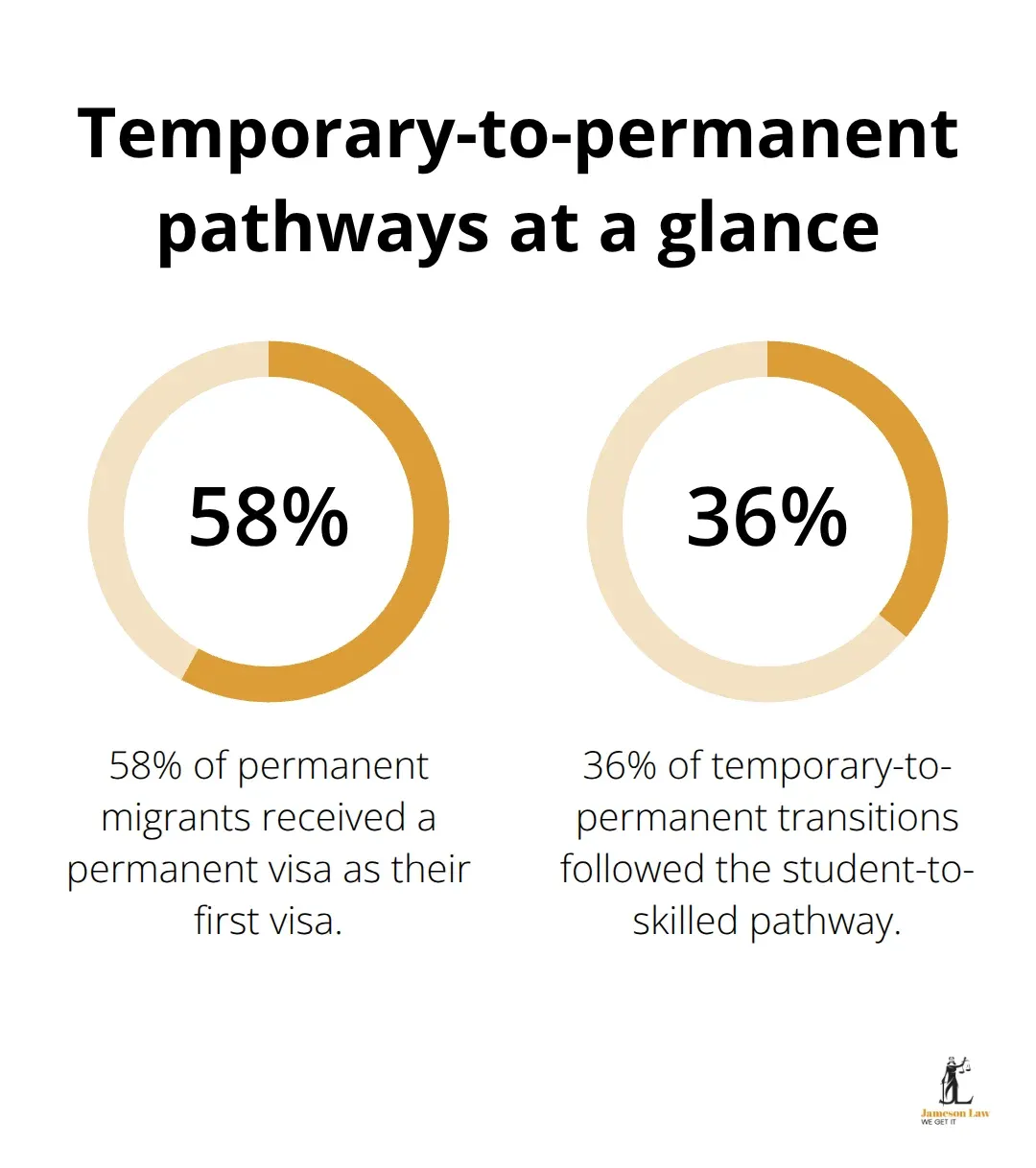
Student visas create long-term planning opportunities because they often lay the structural groundwork for residency. Statistical analysis indicates that 36 per cent of temporary migrants transitioning to permanent status follow the student-to-skilled pathway, making it a dominant route to permanency.
Your chosen educational institution must be actively registered on the Commonwealth Register of Institutions and Courses for Overseas Students (CRICOS). Student visa holders must maintain full-time enrolment and hit satisfactory academic progress milestones to avoid mandatory cancellation actions. After graduation, eligible students can access a post-study work visa, extending their stay for one to three years depending on their qualification field.
Skilled Work and Regional Visas
The temporary skilled stream delivers the most direct pathway to permanency for qualified professionals. Two main visa types dominate this functional space: the Skills in Demand visa (subclass 482) and regional provisional visas (subclasses 491 and 494).
The Skills in Demand framework explicitly targets fields suffering from genuine domestic skill shortages. Regional provisional visas require state government nomination or regional employer sponsorship, tying the applicant to defined regional postcodes for a set period. Professional services, construction, and healthcare represent heavily nominated industry sectors within quarterly department migration data sheets.
How to Get Your Temporary Visa Application Right
Submitting a temporary visa Australia application demands precision. Incomplete forms or mismatched dates create grounds for immediate refusal, meaning understanding exact documentation requirements matters far more than rushing to lodge.
Documentation Requirements by Visa Type
- Visitor Streams: Bank statements covering a three to six-month period, valid passport documentation, and proof of ongoing employment or property ownership offshore.
- Student Streams: A valid Confirmation of Enrolment (CoE), proof of financial capacity to meet living costs, and certified English language test results from approved providers like IELTS or TOEFL.
- Skilled Work Streams: Professional qualifications verification, formal skills assessments, federal police clearances, and health evaluations performed strictly by authorised panel physicians.
Processing Timelines and Visa Conditions
While visitor visas routinely resolve within two to four weeks, student visas require four to eight weeks, and complex skilled employer nominations can take three to six months. You can track your file status in real-time using the ImmiAccount portal.
Compliance Warning: Temporary visa conditions are strictly binding. Student visa holders are limited to legislated fortnightly work hour caps during active semesters, and skilled visa holders must work solely for their nominating employer within their approved ANZSCO occupation code.
If your employment or study circumstances change, you must formally lodge a variation request via ImmiAccount before the change takes effect to avoid immediate visa cancellation and subsequent deportation liability.
How Temporary Visas Lead to Permanent Residence
The majority of permanent residents in Australia initially arrived on temporary visas. According to the Australian Bureau of Statistics, approximately 58% of permanent migrants were granted their permanent visa while already residing onshore.
The transition from a temporary status to permanent residency follows distinct strategic timelines depending on your baseline stream:
| Temporary Visa Pathway | Average Transition Window | Primary Target Sectors |
|---|---|---|
| Student-to-Skilled Pathway | Approximately 5 Years | Business, Accounting, Engineering |
| Temporary Skilled-to-Permanent | Approximately 2 Years & 10 Months | Healthcare, Construction, ICT |
Strategic Steps for Onshore Applicants
To maximize permanent prospects during a post-study or work visa period, focus on building a stable record with a single employer in your nominated field for at least twelve months. Your remuneration level also heavily influences processing speeds: department data demonstrates that temporary workers earning in higher salary percentiles encounter streamlined permanent visa pathways because they demonstrate genuine, critical skill shortages to assessors.
When moving to a permanent application, candidates must navigate either an independent points-tested pool via SkillSelect or look to a long-term employer sponsorship stream. Points-tested streams weigh parameters including age brackets (with maximum points allocated between ages 25 and 32), qualification levels, and English capabilities. Alternatively, maintaining an excellent relationship with an approved employer can unlock direct permanent sponsorship pathways, bypassing independent point requirements entirely.
Final Thoughts
Australia’s temporary visa system creates genuine pathways toward permanent residence when approached with clear foresight. Most individuals who successfully lock in permanent status began their journey on temporary visas, using their initial stay to accumulate highly valued local qualifications and professional experience.
Every decision made on a temporary visa—from course selection to geographical work postcodes—directly impacts your long-term migration prospects. Given the rigid document assessments and absolute compliance standards applied by authorities, executing your strategy correctly from day one is essential to avoid costly application rejections.
At Jameson Law, our highly experienced Sydney immigration team provides clear, authoritative guidance tailored to your specific goals. Whether you are looking to secure a new student visa, lodge a complex Skills in Demand application, or map out a robust pathway to permanent residency, contact our expert legal firm today to discuss your options.