Finding the best Sydney criminal lawyers can feel overwhelming when you’re facing charges. The difference between adequate representation and exceptional advocacy often determines the outcome of your case.
At Jameson Law, we’ve seen firsthand how the right lawyer transforms a client’s situation. This guide walks you through exactly what to look for and how to evaluate your options.
What Matters Most When Choosing Your Lawyer
Experience With Your Specific Charges
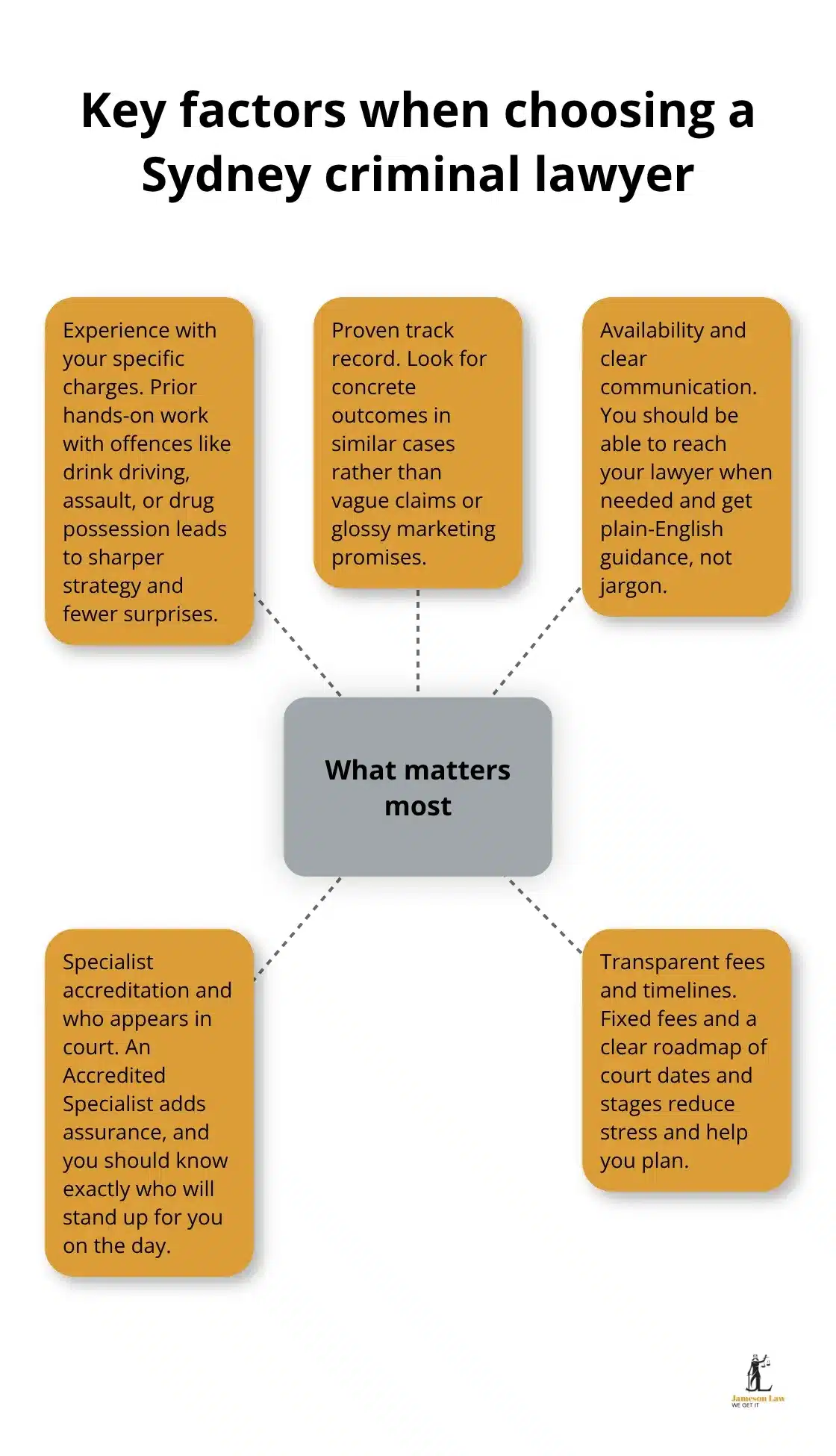
The lawyer you pick will shape everything from how you navigate court to what happens after your case ends. Three factors separate lawyers who merely handle cases from those who actually fight for their clients. First, you need someone who has genuinely handled charges like yours before. A lawyer with 15 years of experience might be useless to you if they spent that time on commercial litigation instead of the specific offence you’re facing. When you call around, ask directly: How many cases have you handled for drink driving specifically, or assault, or drug possession? The answer matters far more than their total years in practice.

Concrete Track Records and Real Outcomes
Second, track record isn’t about winning percentages that sound too good to be true. Instead, look for concrete outcomes in cases similar to yours. Did they secure bail for clients facing serious charges? Have they obtained not guilty verdicts or non-conviction orders? Ask to see case studies or examples from their website that show what they’ve actually achieved. You want evidence of real results, not marketing promises.
Availability and Clear Communication
Third, availability and communication style determine whether you’ll feel supported or abandoned. Criminal charges create stress that doesn’t follow business hours. Your lawyer needs to be reachable when you need guidance, not just during 9-to-5 consultations. Some firms offer 24/7 hotlines specifically for this reason. When you meet with a lawyer, pay attention to whether they explain things in plain English or hide behind jargon. A good criminal lawyer makes you feel informed, not confused.
Specialist Status and Courtroom Representation
Many people assume all criminal lawyers operate the same way, but they don’t. Some specialise in specific offences like drug cases or driving offences, while others claim expertise across everything. Accredited Specialists in Criminal Law exist in NSW, and they represent a small percentage of the profession. Accreditation requires proven expertise and ongoing professional development. When you evaluate options, ask whether the lawyer will personally represent you in court or whether you’ll be handed off to someone else. Some firms guarantee a specialist will appear in your matter, while others don’t.
Transparent Fees and Clear Timelines
If cost concerns you, seek transparent pricing upfront. Fixed fees remove the anxiety of surprise bills, and many Sydney firms now offer them for common offences. During your first consultation, you should walk away with a clear timeline of court dates, filing deadlines, and what each stage involves. If a lawyer can’t explain this simply, they won’t be able to guide you through the actual process effectively. The right lawyer becomes your advocate, not just your paperwork processor. Once you’ve identified lawyers who meet these standards, the next step involves evaluating how well they understand the specific legal landscape of NSW courts and the particular strategies that work for your type of charge.
What NSW Criminal Lawyers Actually Need to Know
NSW Courts Operate Under Specific Rules
NSW criminal law operates under specific rules that differ significantly from other states, and your lawyer must know these rules inside out. The Law Society of NSW accredits specialists in criminal law, but this status goes to fewer than 6% of lawyers across Australia. That small percentage matters because NSW courts expect lawyers to understand the state’s criminal procedure, evidence rules, and sentencing guidelines.
When you speak with a potential lawyer, ask them directly about their experience in NSW courts specifically. A lawyer with 20 years of experience in Victoria won’t help you navigate the District Court or Supreme Court in Sydney. Ask which courts they regularly appear in and how many cases they’ve handled in the specific court where your matter will be heard. If they hesitate or give vague answers, that’s your signal to keep looking.
Pre-Trial Negotiation Separates Experienced Lawyers From the Rest
Negotiation skills separate lawyers who actually achieve outcomes from those who simply show up to court. Before trial, experienced lawyers negotiate with prosecutors to withdraw charges or reduce them significantly. This happens through formal representations and pre-trial conferences, not through friendly conversations.
When you consult with a lawyer, ask specifically what pre-trial negotiations they plan to pursue in your case. What evidence will they challenge? Which witnesses will they cross-examine aggressively? A lawyer who can articulate a clear negotiation strategy before your first court date demonstrates real expertise. The lawyer who thinks strategically about your case before stepping into the courtroom will position you far better than one who waits to see what happens on the day.
Transparent Pricing Removes Financial Uncertainty
Transparent pricing in NSW typically starts around $2,200 for fixed-fee specialist criminal defence on straightforward matters, though complex cases cost significantly more. Many Sydney firms now offer fixed fees for common offences like drink driving or minor assault, which removes uncertainty.

During your consultation, insist on a written fee agreement that outlines exactly what’s included and what costs extra. Some firms charge per court appearance, others charge a flat rate regardless of how many times you appear. Get this in writing before you commit. If a firm won’t provide transparent pricing upfront, that’s a red flag about how they’ll treat you throughout your case. Understanding your financial obligations from the start allows you to focus on your defence strategy rather than worrying about unexpected bills.
Finding the Right Criminal Lawyer in Sydney
Verify Credentials With the Law Society of NSW
Start by checking the Law Society of NSW website and search the lawyer’s name to confirm they hold a current licence to practise criminal law in NSW. This five-minute step protects you from unlicensed operators or lawyers who’ve faced disciplinary action. Look for Accredited Specialist status in Criminal Law, a credential held by fewer than 6% of lawyers across Australia. This accreditation requires demonstrated expertise, continuing education, and peer recognition. When you contact a firm, ask directly whether the lawyer handling your case holds Accredited Specialist status. If they say no, ask why not. Some excellent lawyers aren’t accredited, but accreditation removes doubt about their qualifications.
Assess Experience in NSW Courts
Investigate their specific experience in NSW courts before you commit. Ask which courts they appear in regularly and how many cases they’ve handled in the Local, District, and Supreme Court. A lawyer who regularly appears in the District Court has different experience than one who only handles Local Court matters. Request specific examples of cases similar to yours.
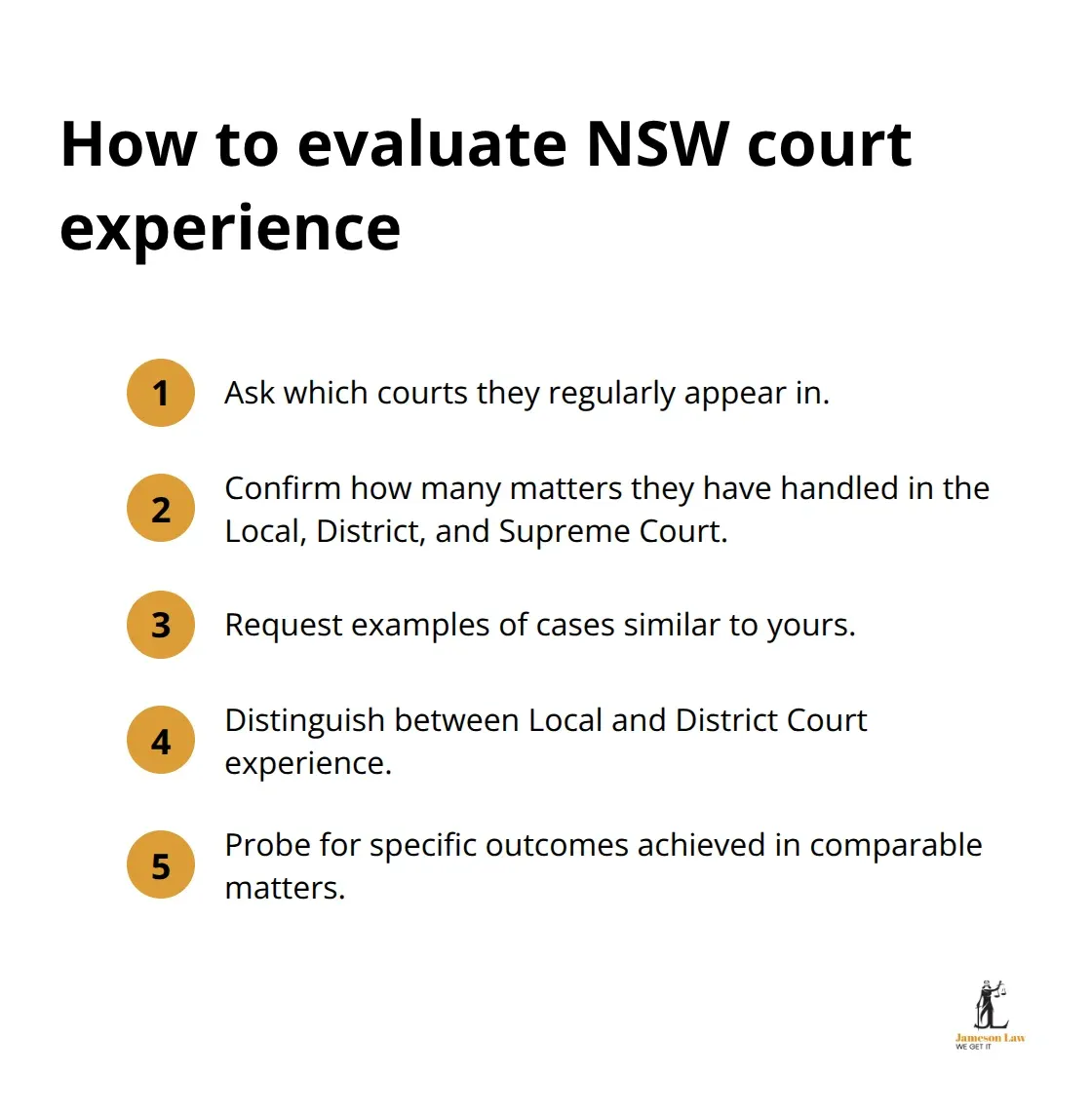
If they’ve handled multiple drink driving matters or assault charges in the court where your case will be heard, that signals stronger capability than general criminal law experience.
Read Reviews and Contact References
Client reviews and references reveal how lawyers actually treat people, not just what they claim. Read reviews on Google and legal directories, but treat glowing reviews with healthy scepticism. Instead, look for patterns in what clients mention. Do they consistently praise communication? Do multiple reviews mention that the lawyer explained things clearly or was accessible when needed? These patterns matter more than a single five-star review. When a firm offers references, contact at least two previous clients and ask specific questions: Did the lawyer return calls promptly? Were fees exactly as quoted? Did they feel informed throughout the process? Ask whether the client felt confident in their criminal lawyer’s strategy, not just the outcome.
Schedule Consultations and Assess Strategy
Schedule consultations with at least three lawyers before deciding. Most offer free initial consultations, which gives you a chance to assess whether they understand your charges and can articulate a clear strategy. During each consultation, notice whether they listen more than they talk. A lawyer who immediately tells you their plan without asking detailed questions about your situation hasn’t properly evaluated your case. Ask what they’d do differently if you were their family member facing these charges. Their answer reveals whether they’re thinking strategically about your situation or just processing another case. Before you leave, request a written fee proposal and a timeline of next steps. If they won’t provide these during a consultation, they won’t provide clarity throughout your case either.
Final Thoughts
The best Sydney criminal lawyers specialise in your specific charges, communicate clearly about strategy and costs, and demonstrate real results through concrete case outcomes. When you face criminal charges, these factors determine whether you navigate the system effectively or struggle through it unprepared. Contact at least three lawyers this week and schedule consultations to assess their experience in NSW courts, their track record with cases like yours, and their fee structure.
Criminal charges affect your future in ways that extend far beyond the courtroom. A conviction impacts employment prospects, travel, professional licensing, and housing applications, while a non-conviction order can reshape your life entirely. The difference between these outcomes often comes down to the quality of representation you secure from the start.
When you’re ready to discuss your case with lawyers who specialise in NSW criminal law, contact Jameson Law to arrange your consultation. Your first step toward effective representation starts with a conversation with someone who understands your charges and the NSW courts where your case will be heard.