

Drink driving remains one of the most serious traffic offences in NSW, with penalties that can devastate your life, finances, and freedom on the road.
At Jameson Law, we’ve seen firsthand how quickly a single decision behind the wheel can result in criminal convictions, hefty fines, and years of licence disqualification. Understanding the drink driving consequences you face-and how the law applies to your specific situation-is essential before it’s too late.
What Are NSW’s Legal Alcohol Limits for Drivers
Legal Limits for Fully Licensed Drivers
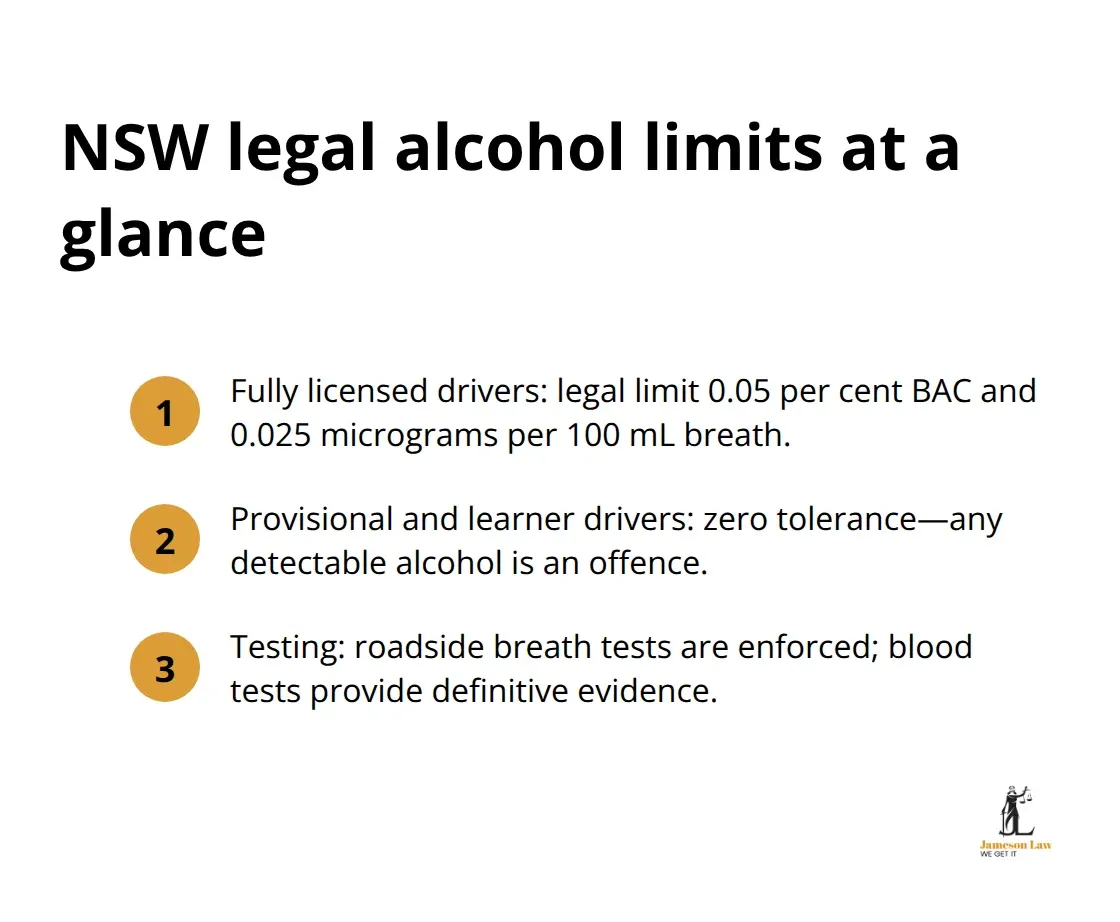
NSW sets strict alcohol limits that differ depending on your licence type, and these thresholds are non-negotiable under the law. For fully licensed drivers, the legal limit is 0.05 per cent blood alcohol concentration, which translates to a breath alcohol reading of 0.025 micrograms per 100 millilitres of breath. This standard applies across all driving conditions and times of day. The NSW Police enforce these limits through roadside breath testing, and the consequences of exceeding them escalate rapidly depending on how far over the limit you are.
Zero Tolerance for Provisional and Learner Drivers
Provisional and learner drivers face zero tolerance, meaning any detectable alcohol in their system constitutes an offence. This stricter standard reflects the additional risk that inexperienced drivers pose when they operate vehicles under the influence of alcohol. The law treats these drivers differently because they lack the experience to compensate for alcohol’s effects on reaction time and judgment.
How Testing Works in NSW
Testing accuracy matters significantly in drink driving cases because breath and blood tests form the foundation of prosecutions. Modern breath testing devices used by NSW Police are calibrated regularly to meet Australian standards, and they measure the concentration of alcohol in your breath as a proxy for blood alcohol content. Blood tests, which are more accurate than breath tests, become relevant when you either refuse a breath test or when the prosecution wants definitive evidence for court proceedings. The conversion between breath and blood readings follows a standard formula, though individual variation exists due to factors like metabolism and body composition.
Your Legal Obligations During Testing
If NSW Police pull you over for a random breath test, you must comply with the request. Refusing without a lawful excuse is itself a serious offence that carries penalties comparable to or exceeding drink driving convictions. This legal obligation applies regardless of whether you believe you are over the limit. If you need legal advice about your rights during testing, support is available.
High-Range Offences and Escalated Penalties
NSW Police statistics show that high-range drink driving offences, defined as exceeding 0.15 per cent blood alcohol concentration for fully licensed drivers, account for a significant proportion of drink driving charges. These offences attract substantially harsher penalties than low-range offences. The difference between 0.04 and 0.05 per cent can mean the difference between driving legally and facing criminal charges, which is why understanding exactly where the legal line sits for your licence type matters. If you face drink driving charges, the specific blood alcohol reading at the time of testing will significantly influence the penalties you receive and the legal options available to you.
Drink Driving Penalties and Consequences
Financial Penalties and Licence Disqualification
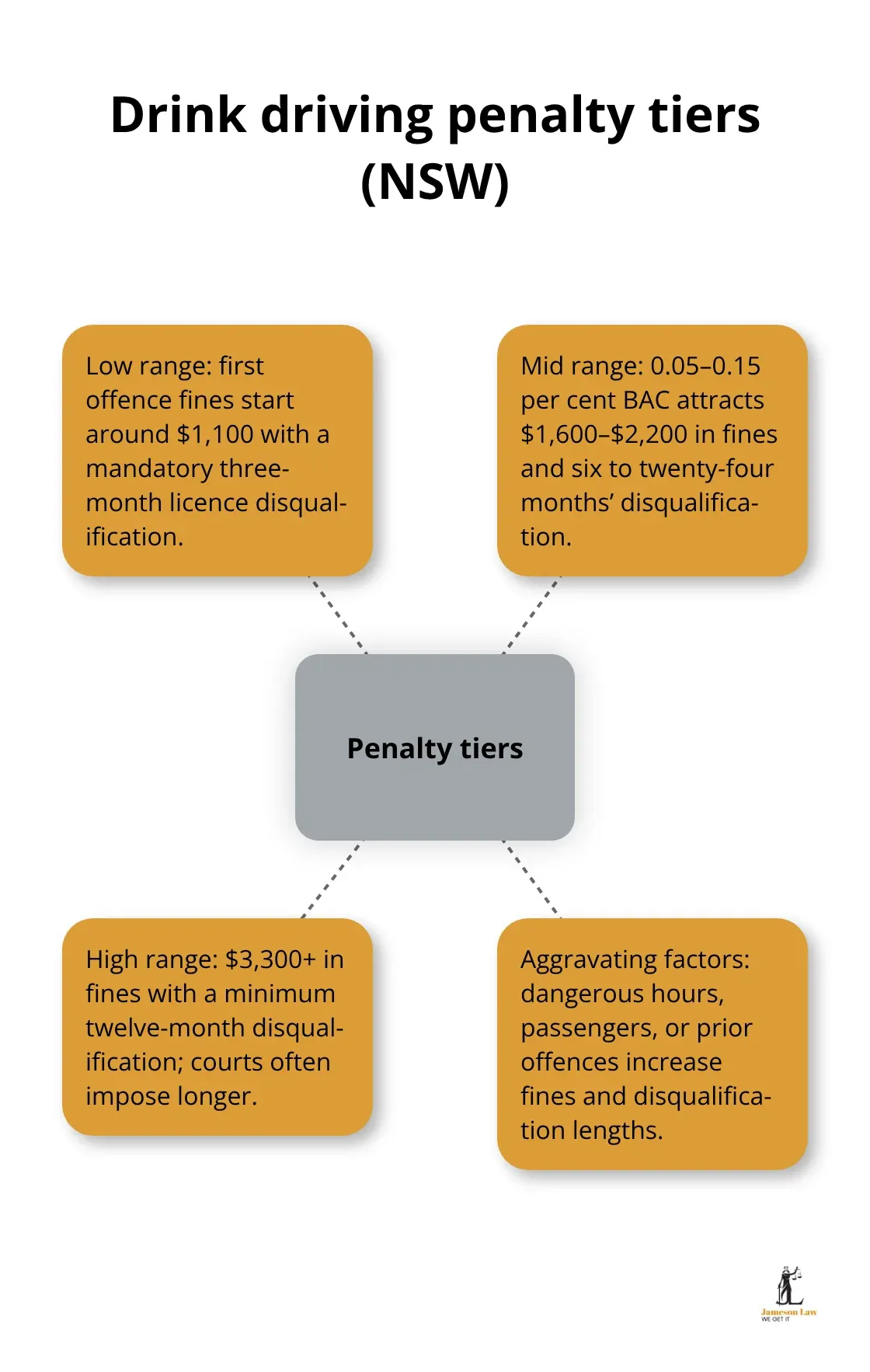
NSW courts impose financial and driving penalties that escalate sharply based on your blood alcohol reading at the time of the offence. For a first low-range drink driving conviction, fines start at around $1,100 for fully licensed drivers, though courts have discretion to increase this amount depending on circumstances. A mandatory licence disqualification of three months applies as a minimum for low-range offences. Mid-range offences, which involve a blood alcohol concentration between 0.05 and 0.15 per cent, attract fines ranging from $1,600 to $2,200, with mandatory disqualification periods of six months to two years. High-range offences push fines to $3,300 or more, and mandatory disqualification extends to a minimum of 12 months. Magistrates frequently impose longer disqualification periods when aggravating factors are present, such as driving during dangerous hours, carrying passengers, or having prior traffic offences on your record.
Criminal Conviction and Employment Impact
A drink driving conviction becomes a permanent criminal record in NSW, which affects employment prospects, professional licensing, travel permissions, and housing applications. Courts treat this offence seriously because of its connection to road safety outcomes. The conviction remains on your record indefinitely, and employers conducting background checks will identify it during recruitment processes. Certain professions-including healthcare, education, and roles requiring security clearance-face particular restrictions when applicants carry drink driving convictions. If you work in an industry where your driving record matters, a conviction can end your career prospects or force you into different employment entirely.
Alcohol Interlock Device Requirements
If your blood alcohol concentration exceeded 0.15 per cent, NSW legislation now mandates installation of an alcohol interlock device on your vehicle once your disqualification period ends. This device prevents your vehicle from starting unless you provide a breath sample below 0.02 per cent, and you cover the installation and monthly monitoring costs. The interlock requirement lasts a minimum of 12 months and can extend significantly longer depending on your offence severity and whether you have previous drink driving convictions. You must maintain the device throughout the mandated period, and any tampering or attempts to circumvent it result in additional criminal charges.
Court Proceedings and Legal Defence
Court proceedings in NSW for drink driving cases occur in the Local Court for most first offences, where the magistrate hears evidence from NSW Police and determines guilt or innocence based on the breath or blood test results and officer testimony. If you contest the charge, the accuracy of the testing device and proper police procedure become central to your defence. Technical defences exist in drink driving cases-such as challenges to breath testing calibration records, improper administration of the test, or breaches of your legal rights during arrest-and these defences can result in charges being withdrawn or dismissed. The specific circumstances of your case, including how police conducted the breath test and whether they followed proper procedures, significantly influence the legal options available to you. Legal representation matters substantially in these cases because experienced lawyers identify procedural errors that prosecutors and courts may otherwise overlook.
What Makes Drink Driving Penalties Worse
High-Range Offences and Steep Penalty Increases
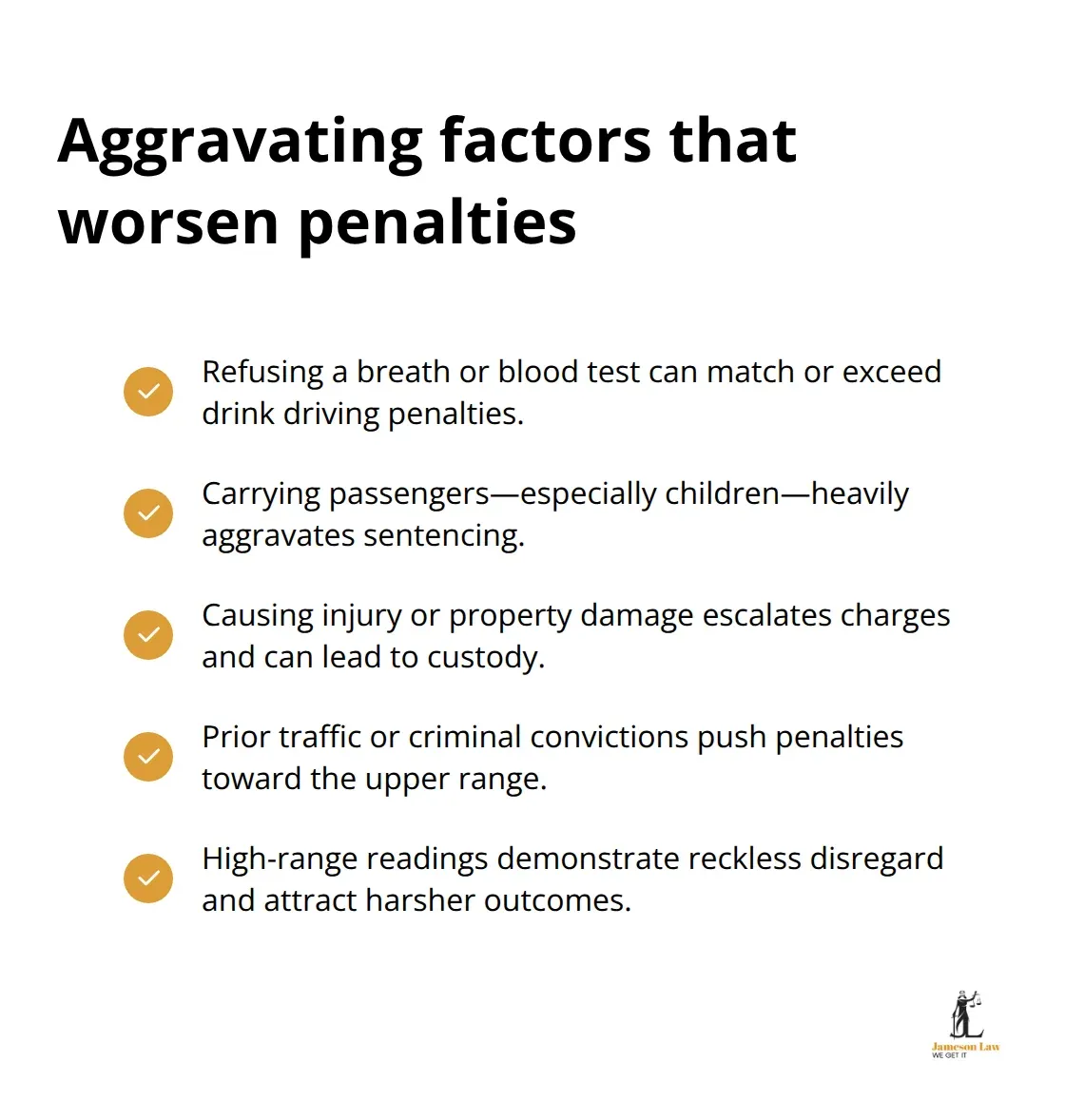
NSW courts apply substantially harsher penalties when specific aggravating factors are present at the time of your offence. High-range drink driving, defined as exceeding 0.15 per cent blood alcohol concentration for fully licensed drivers, sits at the top tier of severity. A first high-range conviction results in a minimum fine of $3,300 and mandatory licence disqualification of at least 12 months, with magistrates regularly imposing 18 to 24 month disqualifications when other aggravating circumstances exist. The penalty gap between a mid-range offence at 0.10 per cent and a high-range offence at 0.16 per cent is substantial, yet the difference in your actual impairment level is relatively small. This steep penalty structure exists because NSW courts treat higher blood alcohol readings as demonstrating reckless disregard for road safety.
Refusing a Breath or Blood Test
If you refuse a breath or blood test, NSW legislation treats this as a separate offence that carries penalties matching or exceeding the drink driving charge itself. Refusing a test prevents police from establishing your exact blood alcohol level, which prosecutors argue shows consciousness of guilt. A first refusal conviction attracts a $1,600 fine and three-month licence disqualification as minimums, though courts frequently impose 12-month disqualifications. The practical consequence is that refusing a test often results in harsher outcomes than submitting to testing would have produced, which is why legal advice before deciding whether to comply matters significantly.
Passengers and Injury as Aggravating Factors
Driving with passengers in your vehicle, particularly children, constitutes a serious aggravating factor that magistrates weigh heavily during sentencing. NSW courts view passenger presence as evidence that your decision to drive while intoxicated endangered multiple people, not just yourself. A high-range offence with child passengers present frequently results in licence disqualifications extending beyond 24 months and substantially increased fines. Causing injury or property damage while drink driving escalates the matter into more serious territory, potentially moving charges from the Local Court to the District Court depending on injury severity. If your drink driving caused bodily injury to another person, courts impose custodial sentences in addition to fines and disqualification, with imprisonment periods ranging from weeks to several years depending on injury severity.
Prior Convictions and Court Outcomes
NSW Police data consistently shows that drink driving accidents involving injury result in court outcomes including jail time, extended licence disqualification periods of three to five years or more, and mandatory interlock device installation lasting 24 months or longer. Prior traffic or criminal convictions act as additional aggravating factors that magistrates consider during sentencing, often resulting in penalties at the upper end of sentencing ranges. If you face drink driving charges with aggravating circumstances present, the difference between legal representation and self-representation becomes critical, as experienced defence lawyers identify procedural errors and present mitigating factors that significantly influence court outcomes.
Final Thoughts
NSW drink driving laws protect road safety, and the consequences of breaking them are severe and lasting. A single decision to drive after alcohol consumption results in criminal convictions, substantial fines, years of licence disqualification, mandatory interlock devices, and permanent damage to your employment prospects. The drink driving consequences outlined in this article demonstrate why understanding these laws matters before you face charges.
The penalties escalate dramatically based on your blood alcohol reading, whether you have passengers in your vehicle, and whether you caused injury (high-range offences, refusals to submit to testing, and prior convictions all push penalties toward the harshest end of sentencing ranges). Courts in NSW treat drink driving seriously because the offence directly threatens public safety on our roads. If you face drink driving charges or are uncertain about your legal position, seeking professional legal advice is essential.
The specific circumstances of your case, including how police conducted testing and whether procedural errors occurred, significantly influence your legal options and court outcomes. We at Jameson Law have extensive experience defending drink driving cases and identifying technical defences that can result in charges being withdrawn or dismissed. Contact Jameson Law to discuss your situation with experienced criminal law practitioners who understand NSW traffic offences and can explain your rights and options clearly.