


A whiplash injury claim can be complex, and understanding what compensation you’re entitled to makes a real difference. At Jameson Law, we’ve helped countless clients navigate these claims and recover fair payouts for their injuries.
The amount you can claim depends on several factors, from medical evidence to lost income and your pain and suffering. This guide walks you through exactly how NSW courts assess whiplash compensation.
Establishing Your Whiplash Injury and Its Impact
Whiplash occurs when your neck experiences sudden acceleration and deceleration, typically from motor vehicle accidents. Your head moves rapidly forward and backward, straining the soft tissues in your neck. In NSW, whiplash claims fall under personal injury law, and courts assess compensation based on medical evidence showing how the injury affects your daily life. The severity ranges significantly-some people recover within weeks, while others experience chronic pain lasting years. Medical records prove essential because NSW courts rely heavily on objective evidence like imaging reports, physiotherapy notes, and specialist assessments to determine both liability and compensation amounts.
Getting Your Injury Properly Documented
Medical documentation forms the foundation of your claim’s success. You should obtain a report from your GP immediately after the accident, even if symptoms seem minor. This creates a contemporaneous medical record that courts accept as reliable. Specialist assessments from physiotherapists or chiropractors strengthen your claim, particularly when they document your range of motion restrictions and functional limitations. Court-appointed medical examiners often review these reports to verify injury severity, so accurate documentation directly influences how much compensation you receive. Without proper medical records, courts struggle to assess your injury objectively and typically award lower amounts.
How Severity Determines Your Compensation Range
NSW courts apply the Guidelines for the Assessment of General Damages in Personal Injury Cases to whiplash claims. Minor whiplash injuries with full recovery within three months typically attract compensation between $2,000 and $5,000. Moderate injuries cause persistent symptoms and functional limitations for 6–12 months, generally ranging from $5,000 to $15,000. Severe whiplash with chronic pain, ongoing treatment requirements, and lasting disability can exceed $30,000. The court considers your pain levels, treatment frequency, impact on work capacity, and whether symptoms persist long-term.
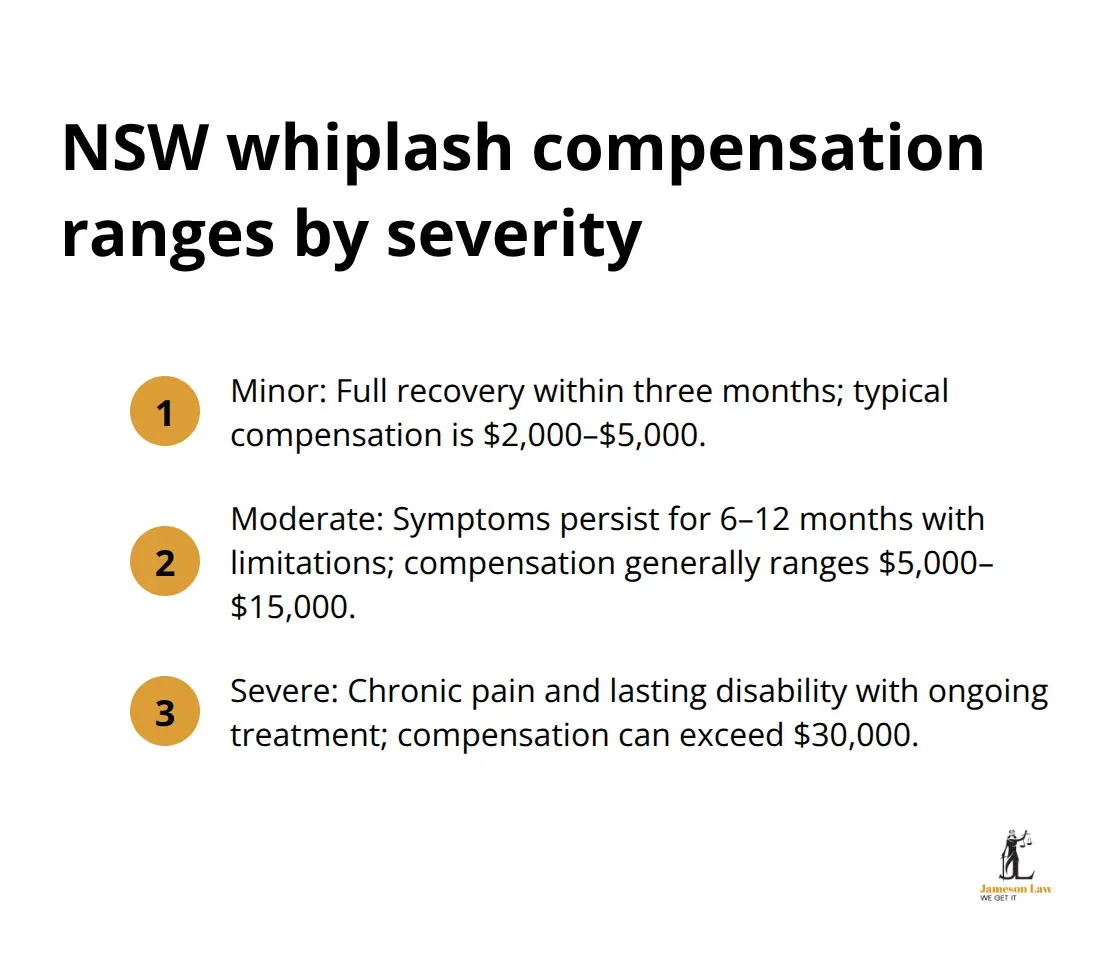
A person whose whiplash resolves quickly receives significantly less compensation than someone who requires ongoing physiotherapy and medication for years. Your medical evidence must clearly demonstrate which category your injury falls into, as this directly determines the compensation band the court applies.
What Courts Look for in Medical Evidence
NSW courts examine specific details in your medical records to assess compensation fairly. Your GP’s initial assessment establishes the baseline injury and your immediate symptoms. Physiotherapy notes document your functional limitations-how far you can turn your head, whether you can work at a desk, or if you struggle with daily activities like driving. Imaging reports (X-rays or MRI scans) provide objective evidence of soft tissue damage. Specialist reports from neurologists or orthopaedic surgeons carry significant weight, particularly when they link your symptoms to the accident and predict recovery timeframes. Courts also consider whether you followed recommended treatment consistently, as gaps in treatment can suggest your injury was less severe than claimed.
Moving Forward with Your Claim
The strength of your medical documentation directly shapes your compensation outcome. Courts award amounts based on what your medical evidence proves, not on what you believe your injury deserves. The next section examines the other major factors that influence compensation-including lost wages, liability determination, and how courts assess your pain and suffering beyond the medical evidence alone.
Factors That Influence Compensation Claims
Establishing Liability in Your Whiplash Claim
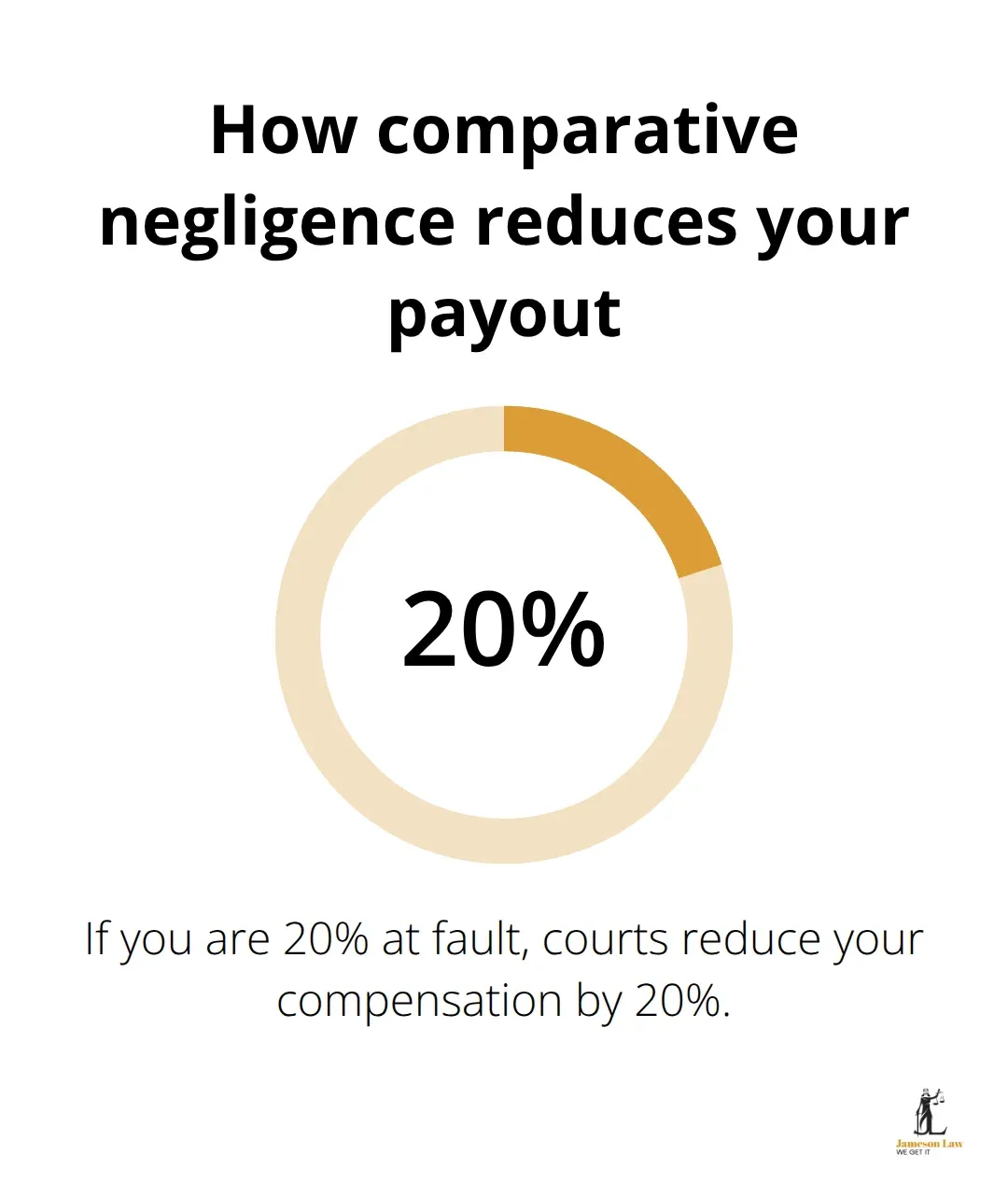
Liability forms the foundation of any whiplash claim-without it, medical evidence alone won’t secure compensation. In NSW, the at-fault party must owe you a duty of care and breach that duty through negligent conduct. Motor vehicle accident claims typically involve straightforward liability assessments. If the other driver ran a red light or failed to maintain a safe distance, liability is usually clear. However, liability becomes contested when both parties share fault. NSW courts apply comparative negligence principles, meaning your compensation reduces by your percentage of fault. If you’re found 20% responsible for the accident, your compensation reduces by 20%.
Police reports and witness statements prove invaluable, as courts rely heavily on objective evidence about how the accident occurred. Dash cam footage, photographs of vehicle damage, and witness contact details should be collected immediately after the accident, before memories fade and evidence disappears.
Calculating Your Lost Wages and Financial Losses
Financial losses extend far beyond pain and suffering, and NSW courts award compensation for genuine economic hardship resulting from your injury. Lost wages constitute the largest financial component for most claimants. If your whiplash forces you to take time off work, you can claim the income you actually lost during that period. This includes not just salary but also bonuses, commissions, or self-employment income you would have earned. Provide your employer with detailed records of days missed and income lost-payslips and employment letters strengthen these claims considerably.
Additional expenses mount quickly during recovery. Medical consultations, imaging scans, and specialist appointments accumulate rapidly. Medication expenses for pain management or muscle relaxants are claimable. Transport costs incurred specifically for medical appointments can be included. However, courts only award expenses directly caused by your injury and supported by receipts or invoices. General living expenses you would have incurred regardless of the injury are not claimable.
Assessing Pain, Suffering and Loss of Enjoyment of Life
Pain and suffering compensation represents the non-financial impact of your injury-the physical discomfort, emotional distress, and loss of life enjoyment. NSW courts assess this subjectively, examining how your whiplash affected your capacity to work, exercise, socialise, and engage in hobbies. A person unable to play sport for six months due to neck pain receives different compensation than someone who returns to normal activities within weeks.
Sleep disruption caused by pain, anxiety about driving again, and reduced social participation all influence these assessments. Courts recognise that whiplash creates genuine psychological effects, particularly when accidents trigger ongoing fear of driving. Your medical evidence should document these impacts-physiotherapy notes mentioning restricted range of motion and functional limitations directly support pain and suffering claims. The combination of lost income, medical expenses, and documented pain and suffering creates a comprehensive picture of your total losses, which courts then translate into a compensation amount that reflects the true impact of your injury on your life.
The Claims Process in New South Wales
Collect Evidence at the Accident Scene
The first hours after your accident determine how strong your whiplash claim becomes. Most people focus on their injuries and miss the critical evidence collection window that closes fast. At the scene, photograph vehicle damage from multiple angles, road conditions, traffic signs, and any visible skid marks. Obtain the other driver’s name, phone number, address, driver’s license details, and vehicle registration. Contact information from at least two independent witnesses who saw the accident happen-not passengers in either vehicle-proves invaluable later.
Write down the exact time, date, location, and weather conditions while your memory remains sharp. Police attend serious accidents, so obtain incident report details. This scene documentation becomes your foundation because memory fades quickly and physical evidence disappears. Insurance companies later scrutinise claims lacking contemporaneous evidence, often denying or reducing payouts when witness statements contradict each other or details remain vague.
Report the Accident Promptly
Report the accident to your insurer promptly-most policies require notification within a set timeframe, typically seven to ten days. Delaying notification gives insurers grounds to reject your claim entirely, regardless of its merit. Provide factual information about what happened without admitting fault or speculating about causes. Insurance adjusters will contact you for a statement, so stick to the facts you observed directly. Avoid discussing your injuries in detail with the insurer at this stage-that conversation belongs with your medical professionals and lawyer.
Seek Medical Assessment Within Days
Seek medical assessment promptly after your accident. Visit your GP immediately and describe all symptoms, even minor ones that seem insignificant. Whiplash symptoms sometimes emerge gradually over 24 to 48 hours as inflammation develops, so early medical records establish the genuine injury timeline. Request a detailed medical report documenting your symptoms, range of motion limitations, and functional restrictions.
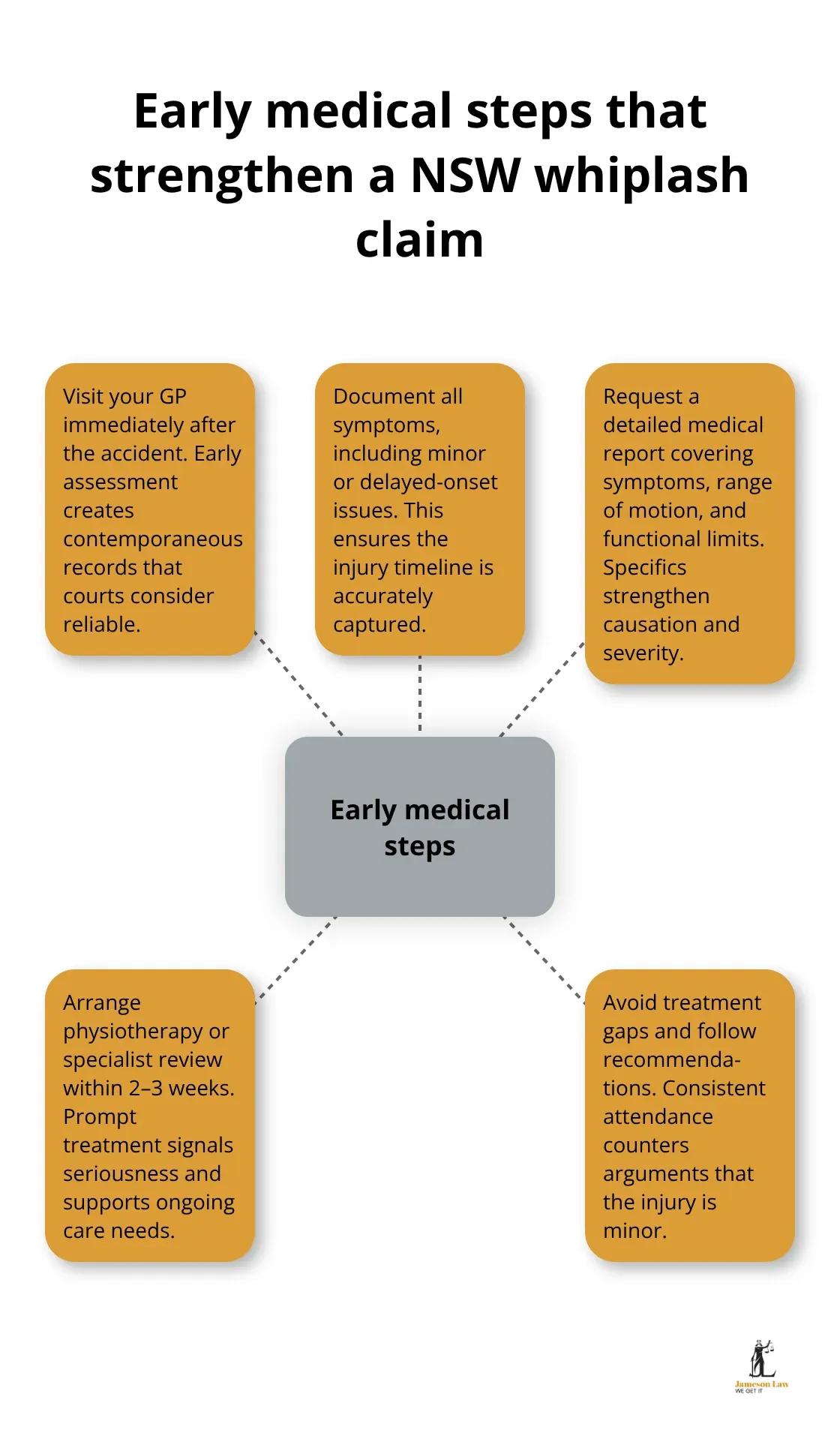
Your GP’s notes create the contemporaneous medical evidence NSW courts rely on heavily-courts treat medical records created immediately after injury as more credible than those created months later. Arrange physiotherapy or specialist assessment within two to three weeks, as this demonstrates you took your injury seriously and sought appropriate treatment. Insurance companies scrutinise treatment gaps, interpreting long delays as evidence the injury was minor.
Protect Your Claim Through Careful Communication
Once you have initial medical evidence and scene documentation, contact a personal injury lawyer. Early legal advice prevents costly mistakes-many claimants inadvertently damage their claims through statements to insurance adjusters or social media posts showing them doing activities that contradict their injury claims. Your lawyer coordinates with medical professionals, manages insurance communications, and handles negotiations, protecting you from saying something that undermines your compensation entitlement.
Avoid posting about your accident or injury on social media. A photograph showing you at a social event or doing physical activity can contradict your claims about pain and functional limitations, even if the image misrepresents your actual condition. Insurance adjusters use social media evidence to challenge compensation claims, so maintain privacy throughout your claim process. Your lawyer can advise on what communications are safe and which statements might harm your case.
Final Thoughts
Whiplash injury claims succeed when you combine strong medical evidence, established liability, and documented financial losses. Courts award compensation based on concrete proof, not assumptions-your GP’s initial assessment, scene photographs, witness statements, and police reports form the foundation that supports everything else. The documentation you collect in the first days after your accident determines whether insurers accept or challenge your claim, so act quickly while memories remain sharp and physical evidence still exists.
Managing your claim requires careful coordination between medical treatment and insurance communications. Many claimants inadvertently damage their cases through careless social media posts or statements to insurers before obtaining legal advice, so protect yourself by discussing your situation with a lawyer before speaking with insurance adjusters. Your legal representative guides you through each decision, ensuring every communication supports rather than undermines your compensation entitlement.
If you’ve suffered whiplash from a motor vehicle accident, we at Jameson Law can help you navigate the claims process and recover fair compensation. We handle personal injury claims on a no win, no fee basis for plaintiff claims, meaning you pay nothing unless we secure compensation for you. Contact Jameson Law to discuss your whiplash injury claim with experienced legal professionals who understand NSW compensation law.