

Australian visa applications are complex, with strict requirements and tight deadlines that catch many applicants off guard. Getting your documentation wrong or missing a deadline can derail your entire application.
At Jameson Law, we’ve helped countless clients navigate these challenges successfully. An immigration attorney in Sydney can guide you through each step, from eligibility assessment to final submission.
Australia’s Main Visa Pathways
Skilled Migration Visas
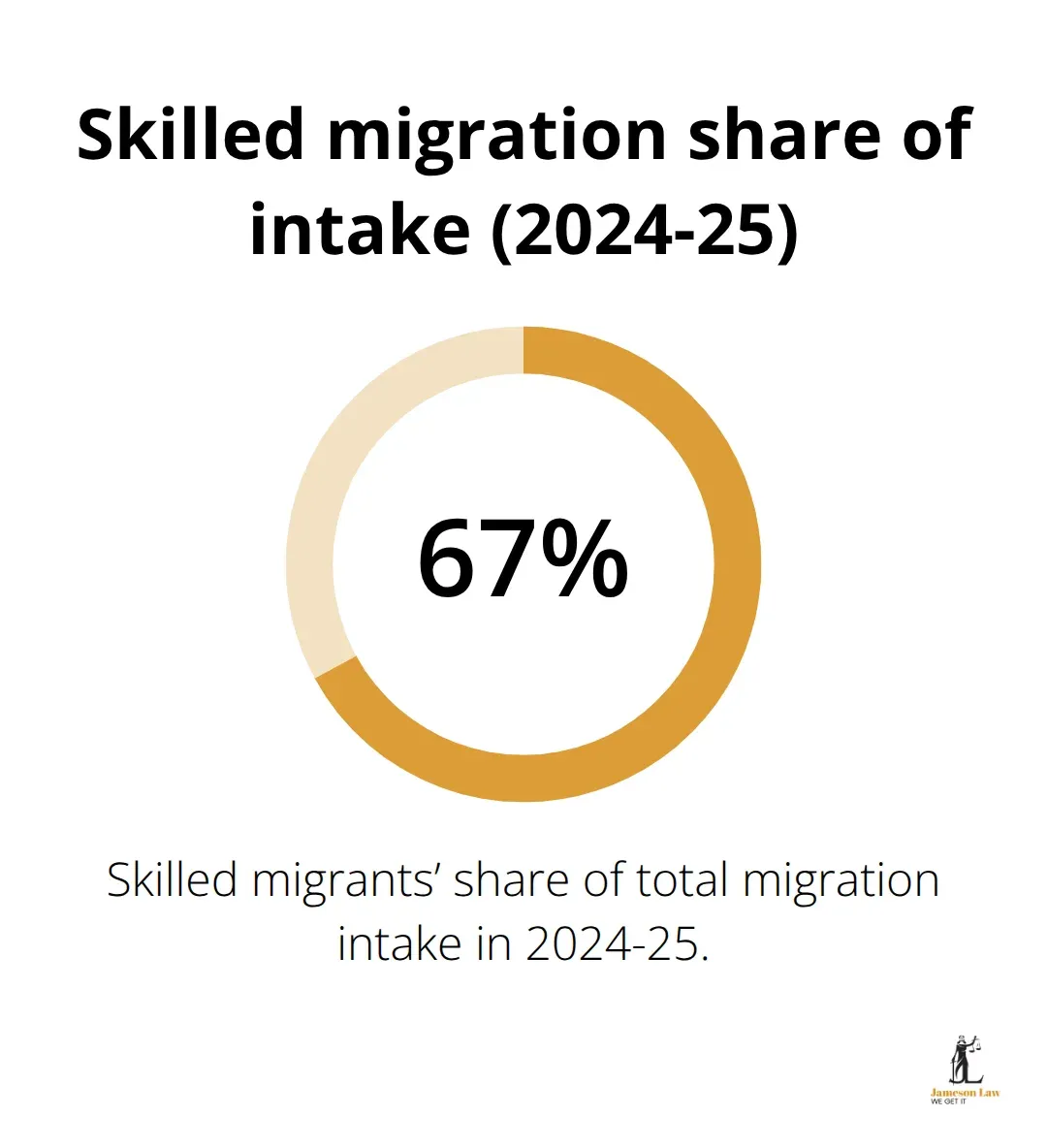
Australia offers three primary visa routes, each serving different circumstances and timelines. Skilled Migration Visas target workers in occupations on Australia’s skilled occupation lists, with the Department of Home Affairs reporting that skilled migrants contributed approximately 67% of migration intake in 2024-25. These visas require applicants to meet points-based criteria including age, English language proficiency, and work experience relevant to your nominated occupation.
The processing timeframe varies significantly-skilled independent visas can take 12 months or longer, whilst employer-sponsored visas may move faster depending on the employer’s track record.
Family Sponsorship Visas
Family Sponsorship Visas operate differently, prioritising relationships over occupational demand. These include partner visas, parent visas, and child visas, though they face substantial waiting periods. Partner visas currently process in around 13-15 months for onshore applications, according to Home Affairs data, whilst parent visas can exceed five years due to high demand and limited places. The character and health requirements for family visas are equally strict as skilled pathways-criminal convictions, even minor ones, can trigger investigation and potential refusal.
Student and Temporary Visas
Student and Temporary Visas represent a third distinct category that many Australians overlook as an entry strategy. Education is Australia’s third-largest export, after iron ore and coal, with over 50,000 international university students and roughly 50,000 studying at vocational and English-language schools, reflecting substantial visa numbers in this category. Student visas require proof of enrolment at an Australian education provider, financial capacity to support yourself, and genuine intention to study. Processing times typically range from 1-3 weeks for onshore applications and 4-12 weeks for offshore applications.
Temporary Work and Visitor Options
Temporary visas including working holiday visas, visitor visas, and temporary skill shortage visas each have distinct eligibility criteria and validity periods. Working holiday visas, available to citizens of certain countries aged 18-35, allow 12 months of work and travel, though eligibility depends entirely on your nationality. Temporary skill shortage visas require employer sponsorship and tie you to a specific employer, creating less flexibility than independent skilled visas.
Choosing Your Pathway
Understanding which pathway suits your circumstances-whether you’re a skilled worker, family member, student, or temporary visitor-determines everything about processing timeframes, costs, and long-term options. Each visa type carries different compliance obligations once granted (meaning choosing the right initial pathway prevents costly complications later). The mistakes applicants make during this selection phase often compound throughout the entire application process, which is why identifying common errors early becomes essential to your success.
Common Visa Application Mistakes to Avoid
Documentation Errors Trigger Automatic Refusal
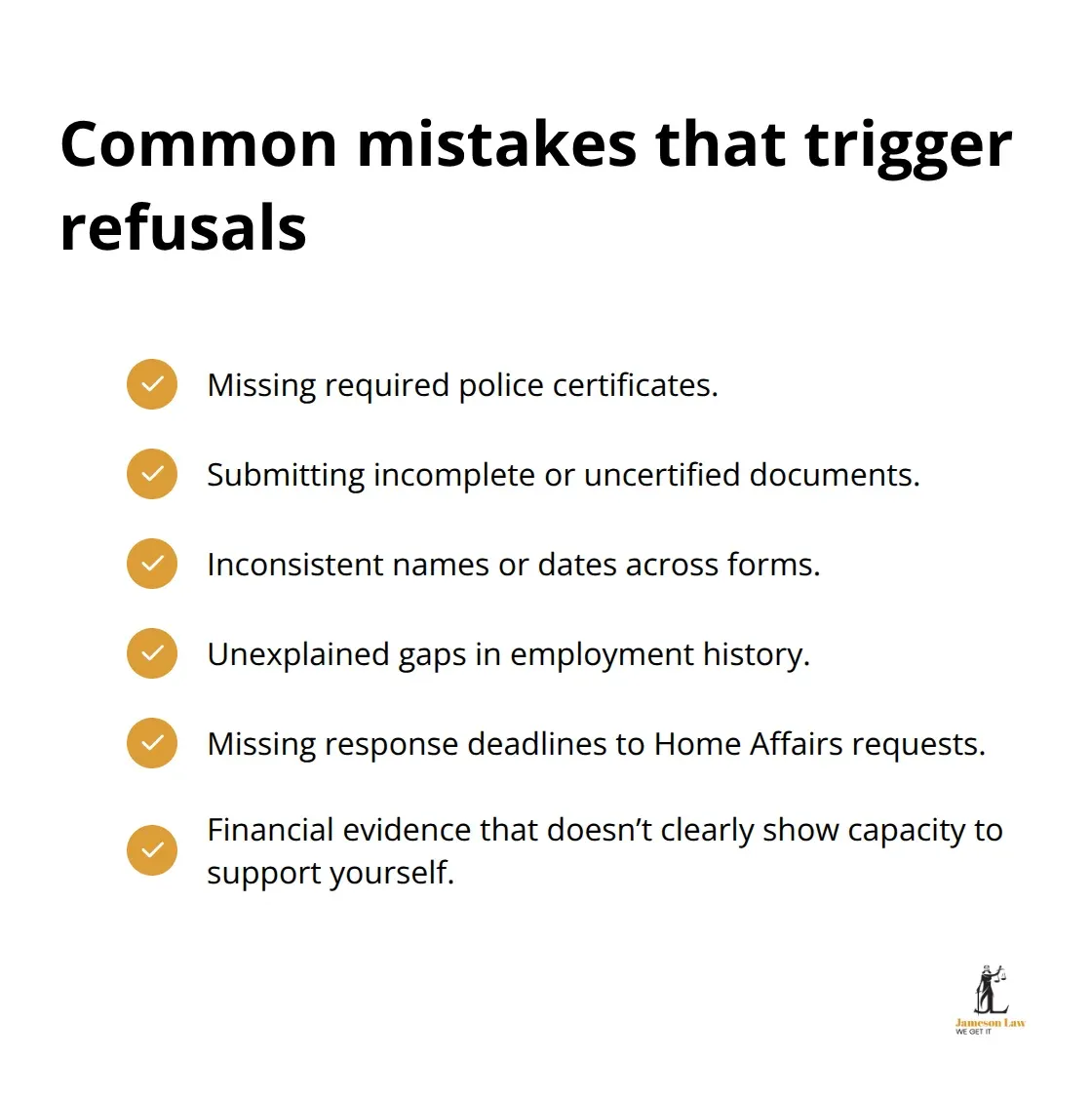
The Department of Home Affairs refuses applications most often due to documentation errors. Incomplete character references, missing police certificates from countries where you’ve lived, or financial documents that fail to clearly demonstrate your capacity to support yourself will trigger a refusal notice. The department will not contact you to request missing information-they simply refuse your application.
You then face a new application fee, fresh processing times, and the original refusal recorded on your file.
We at Jameson Law have observed applicants spend thousands of dollars on subsequent applications because their first submission lacked a single certified document or contained a mismatch between stated employment history and provided references. Accuracy matters far more than speed. If your passport shows you lived in a country for more than 12 months, Home Affairs will request a police certificate from that jurisdiction. Many applicants underestimate how long these certificates take to obtain-some countries require 8-12 weeks-and miss their lodgement deadline entirely.
Inconsistencies across your documents create immediate red flags. Inaccurate spelling of names, inconsistent dates, or employment gaps that lack explanation in your statutory declaration will trigger additional scrutiny and processing delays. These errors compound when multiple documents contain variations, signalling to the assessing officer that your application lacks attention to detail.
Character and Health Requirements Demand Proactive Planning
Character and health failures are equally devastating and often preventable with proper planning. The character requirement applies to all visa applicants, not just those with criminal records. Traffic offences, minor drug convictions, or driving under the influence charges that occurred years ago will be examined under this requirement. Home Affairs assesses whether you pose a risk to Australian society, and the threshold remains subjective-a conviction that seems minor to you may concern an assessing officer.
Health failures occur when applicants fail to complete required medical examinations before submission or when health results reveal conditions that make you ineligible under health requirements. Some visa types exclude applicants with tuberculosis, hepatitis B, or other communicable diseases. Waiting until after you’ve lodged your application to discover a health issue means starting the entire process again, wasting both time and money.
Processing Timeframes and Deadline Compliance
Processing timeframes vary dramatically across visa types. Skilled independent visas exceed 12 months, partner visas sit at 13-15 months, and parent visas stretch beyond five years according to Home Affairs data. Missing a single deadline in the application journey-whether for submitting documents, responding to requests for information, or providing updated police certificates-results in automatic refusal. The system offers no extensions or compassion for delays.
Applicants who fail to understand these timeframes often assume their application remains under consideration when it has actually been refused due to non-response to a department request they missed. This misunderstanding compounds the original error, leaving applicants unaware they must lodge a fresh application entirely. Understanding your specific visa type’s processing timeline and all associated deadlines becomes essential to avoiding this preventable failure.
Strategic Planning Prevents Costly Mistakes
Each visa pathway carries distinct documentation requirements and compliance obligations. Selecting the wrong initial pathway or failing to gather required documents before lodgement creates cascading problems throughout your application. The mistakes applicants make during the initial stages often compound throughout the entire process, which is why identifying and preventing common errors early becomes essential to your success. Professional guidance at this stage can identify gaps in your documentation, clarify character and health obligations specific to your circumstances, and establish realistic timelines before you commit to an application.
How an Immigration Attorney Guides Your Application
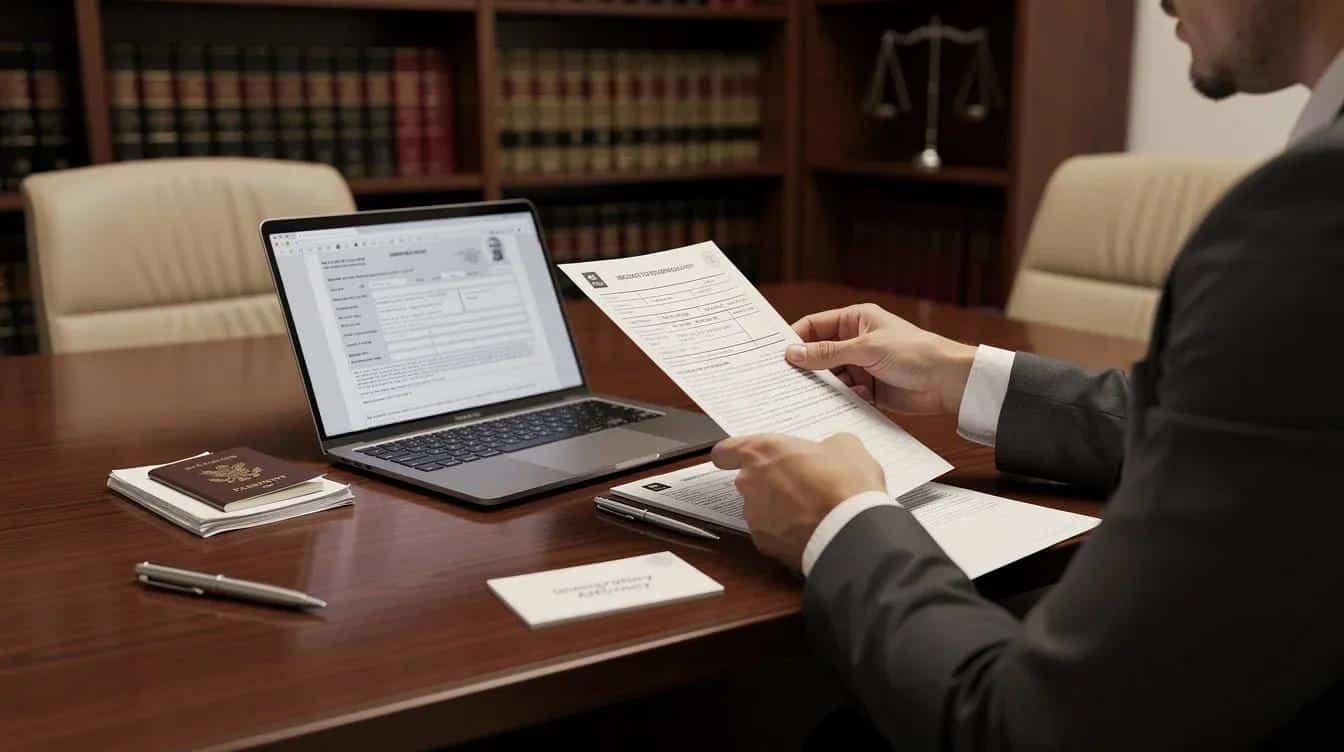
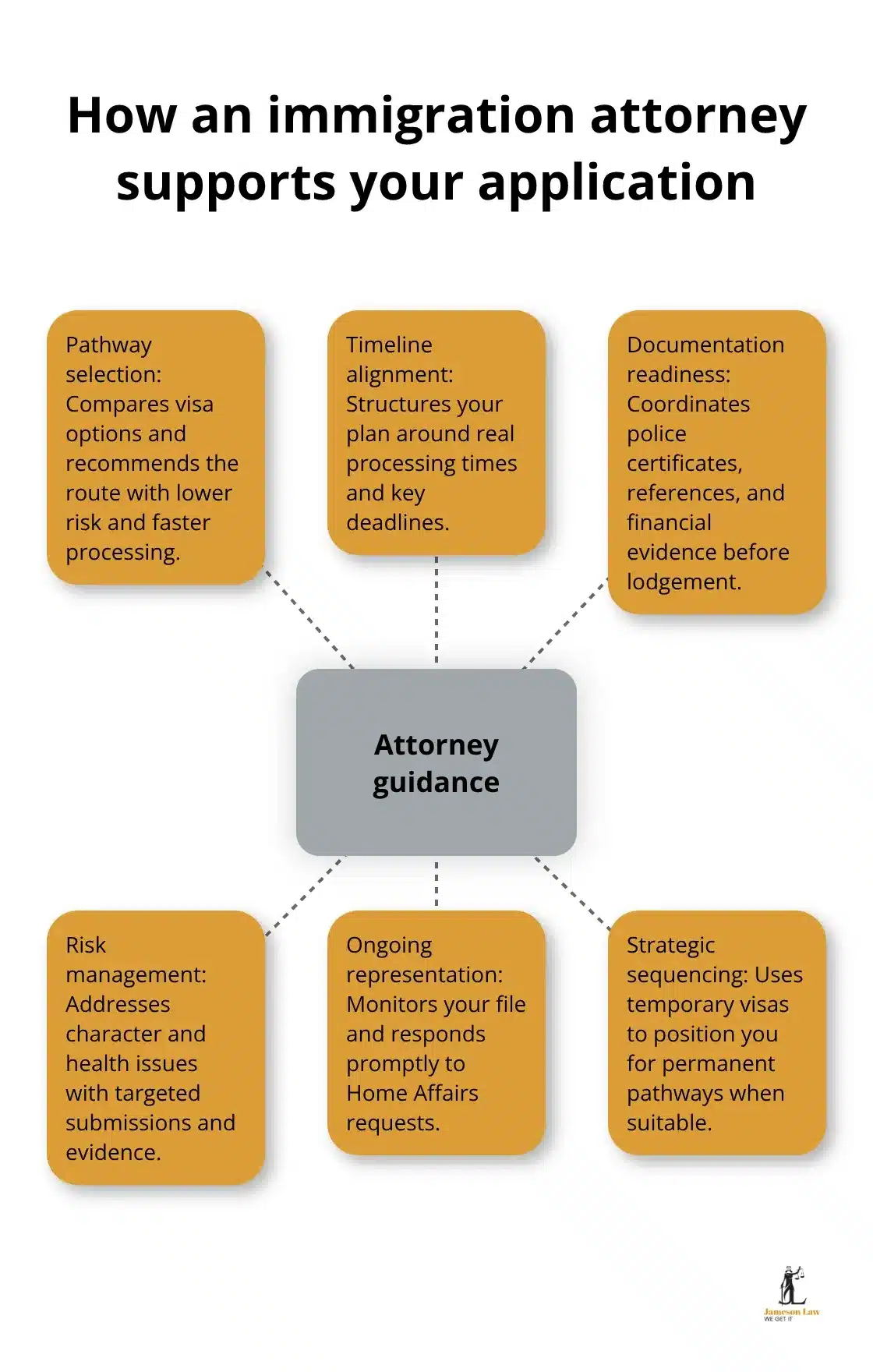
An immigration attorney reviews your complete circumstances before you lodge anything with Home Affairs. This assessment identifies whether your chosen visa pathway genuinely suits your situation or whether an alternative route offers faster processing and lower risk. An attorney examines your employment history, family connections, health status, and character background to flag potential obstacles early. This evaluation prevents applicants from investing time and money in a pathway that will likely face refusal. For instance, if your character history includes a conviction that triggers investigation, an attorney identifies this immediately and advises whether the character requirement presents a genuine barrier or remains manageable with proper documentation and explanation.
Applicants who skip this step often discover mid-application that their chosen pathway was never viable, forcing them to restart entirely.
Strategic timing determines your visa outcome
Processing timeframes vary so dramatically that your visa type selection directly determines when you can realistically begin work or study in Australia. A skilled independent visa exceeds 12 months according to Home Affairs data, whilst a partner visa sits at 13-15 months onshore. An attorney structures your application to align with your actual timeline rather than your hoped-for timeline. If you require permanent residency within 18 months, a parent visa becomes impossible regardless of your eligibility. Conversely, if you hold relevant work experience and qualify for skilled migration, pursuing family sponsorship first wastes years when a faster pathway exists. An attorney also identifies whether temporary visas offer strategic advantages for your long-term outcome. International students studying in Australia for two years, for example, may qualify for post-study work visas that lead toward skilled migration pathways unavailable to offshore applicants. This sequencing prevents costly delays and positions you for success at each stage.
Documentation preparation determines your outcome
Your attorney coordinates collection of every required document before lodgement, preventing the automatic refusals that plague incomplete applications. This means obtaining police certificates from every country where you’ve lived for more than 12 months, which some jurisdictions require 8-12 weeks to process. An attorney identifies these extended timelines upfront and builds them into your application schedule rather than discovering them after you’ve already committed your application fee. Character references require specific formatting and must come from people who’ve known you in professional or community contexts for defined periods. Generic references from neighbours or casual acquaintances fail the requirement entirely. Your attorney instructs referees precisely what information Home Affairs requires and ensures each reference meets departmental standards before submission. Financial documentation must clearly demonstrate your capacity to support yourself throughout your visa period. Bank statements alone prove insufficient if they lack context. An attorney prepares statutory declarations explaining your financial position, how funds were accumulated, and your genuine capacity to meet costs. Employment history requires matching across your CV, references, tax records, and statutory declaration with absolute consistency. Discrepancies trigger investigation and processing delays. Your attorney identifies and resolves these inconsistencies before submission rather than after Home Affairs has already questioned your credibility.
Representation throughout your application process
An attorney represents you throughout the entire application journey, responding to Home Affairs requests and managing communication on your behalf. When Home Affairs requests additional information (a common occurrence that catches many applicants off guard), your attorney responds within the specified timeframe and provides documentation that directly addresses the department’s concerns. Missing these response deadlines results in automatic refusal, yet many applicants remain unaware a request has been issued. Your attorney monitors your application status and ensures no deadline passes unmet. If Home Affairs raises character or health concerns, your attorney prepares submissions that explain your circumstances and address departmental concerns with supporting evidence. This representation transforms a stressful, confusing process into a managed pathway where you understand each step and your obligations remain clear.
Final Thoughts
Australian visa applications demand precision, strategic planning, and understanding of complex departmental requirements that shift across visa types. The mistakes applicants make during documentation preparation, character assessment, and deadline management often prove irreversible, forcing costly restarts and extended delays. Processing timeframes stretch from weeks for student visas to years for parent visas, meaning your pathway selection determines not just your eligibility but your realistic timeline for beginning work or study in Australia.
Professional legal guidance transforms this complexity into a manageable process. An immigration attorney in Sydney can assess your circumstances before you commit time and money to an application, identifying obstacles early and recommending the fastest viable pathway for your situation. Your attorney coordinates documentation collection, ensures police certificates and character references meet departmental standards before submission, and monitors deadlines throughout your application journey to prevent the automatic refusals that catch unrepresented applicants off guard.
We at Jameson Law understand that visa applications represent significant financial and personal investment. Contact Jameson Law today to discuss your specific circumstances and visa pathway options with experienced legal guidance supporting each decision.