


A personal injury can turn your life upside down, leaving you with medical bills, lost wages, and uncertainty about what comes next. If you’ve been injured due to someone else’s negligence in NSW, you have the right to pursue compensation through injury claims NSW.
We at Jameson Law understand how overwhelming this process can feel. This guide walks you through everything you need to know, from identifying your claim type to understanding your legal options and costs.
What Injury Claims Can You Pursue in NSW
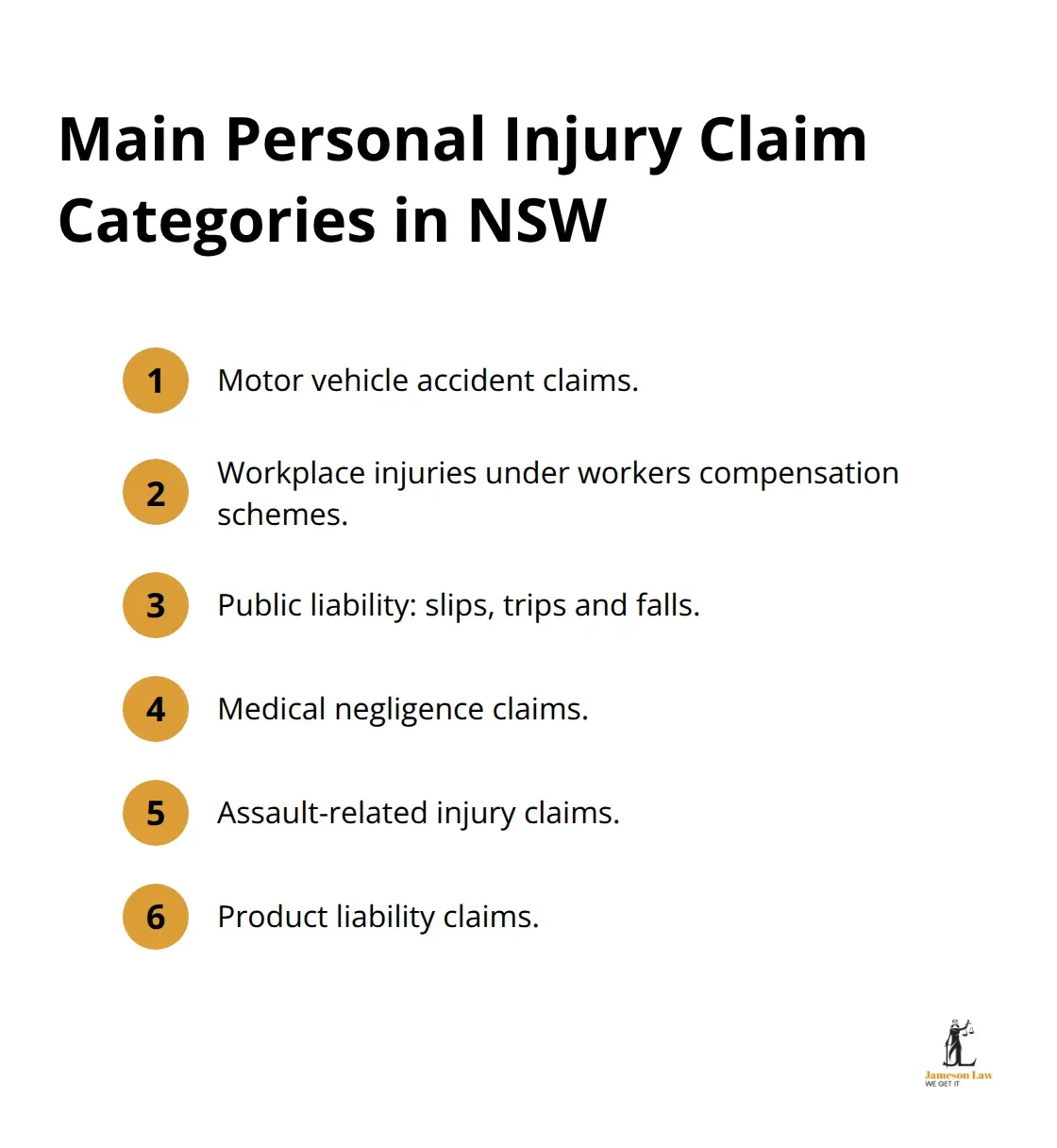
Personal injury claims in NSW cover a broad spectrum of situations, but not every accident or injury gives you a legal right to compensation. The key distinction lies in whether someone else’s negligence or wrongdoing caused your injury. Motor vehicle accidents represent the most common claims, accounting for a significant portion of personal injury litigation in NSW. Workplace injuries also form a major category, though these often fall under workers compensation schemes rather than general negligence claims. Slip and fall incidents on someone else’s property, medical negligence, assault, and product liability claims round out the main categories. The NSW Civil Procedure Act 2005 establishes the framework for how these claims proceed through the courts, and understanding which category your injury falls into directly affects your timeline and legal strategy.
Establishing Negligence and Compensability
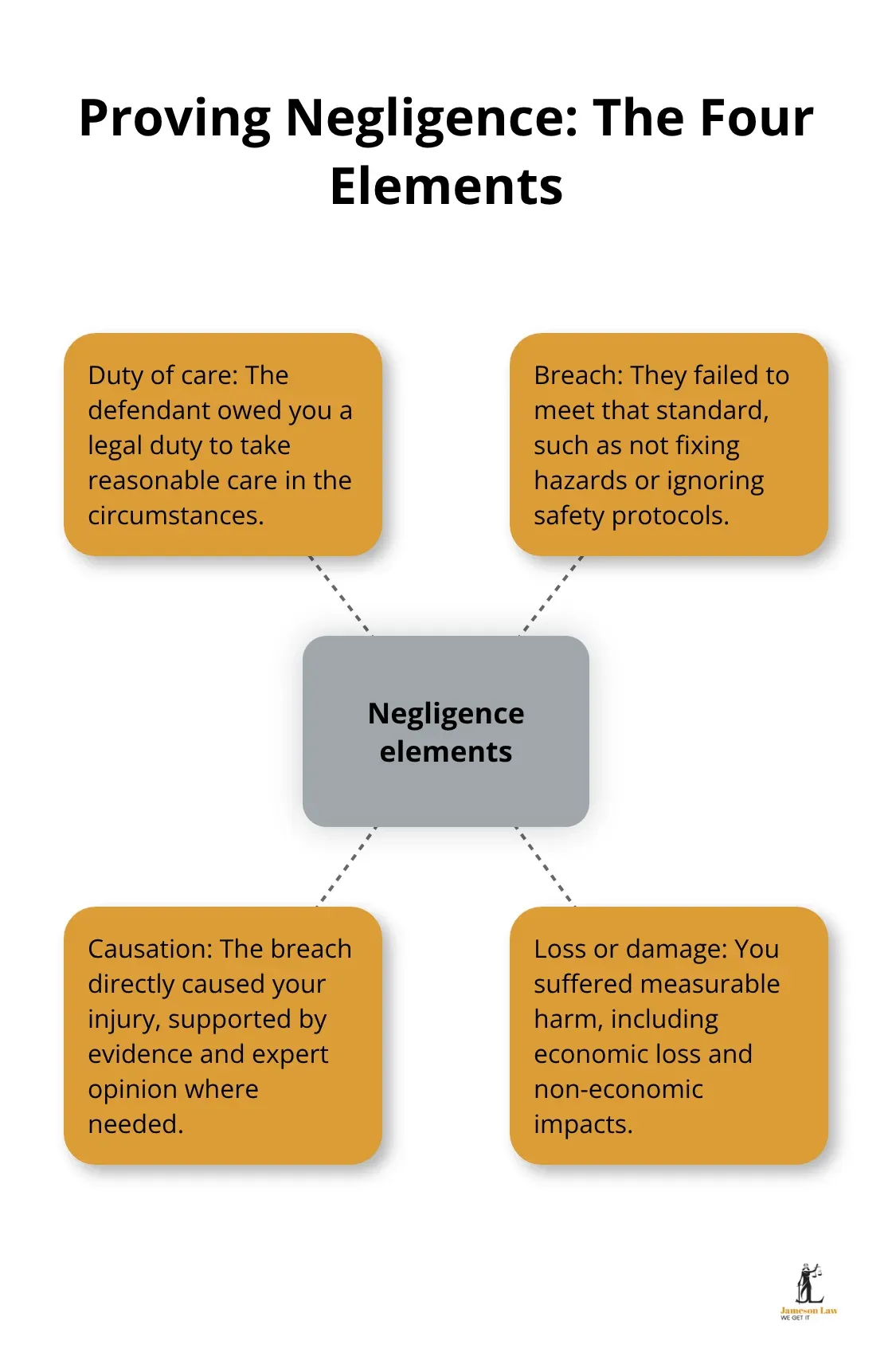
To have a compensable injury claim in NSW, you must prove four essential elements: duty of care, breach of that duty, causation, and measurable loss or damage. A property owner holds a duty to maintain their premises in a reasonably safe condition, so if you slip on unmarked spilled liquid in a shopping centre, that breach is often straightforward to establish. An employer must provide safe working conditions and equipment, making workplace negligence claims relatively clear cut when proper safety protocols were ignored.
Medical negligence requires you to prove that a healthcare provider fell below the standard of care expected of a competent professional in similar circumstances, which typically demands expert evidence. The law recognises both economic losses (like medical expenses and lost income) plus non-economic losses like pain and suffering. However, minor injuries with minimal medical treatment rarely justify the cost of legal proceedings, so claims generally need to involve substantial medical intervention or significant ongoing impact on your capacity to work and enjoy life.
Understanding the Time Pressure You Face
NSW law imposes strict time limits on personal injury claims that you cannot ignore. The standard limitation period is three years from the date of injury, set out in the Limitation Act 1969. This three-year window applies to most negligence claims, including motor vehicle accidents and slip-and-fall incidents. For claims involving minors, the clock doesn’t start until they turn 18, meaning parents have until the child’s 21st birthday to commence proceedings. Medical negligence claims also operate on a three-year limit, but this can be complicated by the fact that some injuries don’t become apparent immediately after treatment. If you discover the injury later, the three-year period may start from the date of discovery rather than the date of the negligent act, though this requires careful legal analysis. Missing this deadline means losing your right to compensation entirely, with no exceptions for circumstances beyond your control.
What Happens Next in Your Claim Journey
Once you understand which category your injury falls into and confirm you’re within the time limit, the next step involves gathering the evidence and documentation that supports your case. The strength of your claim depends heavily on what records and information you can produce to demonstrate negligence and the extent of your losses.
Building Your Evidence Foundation
Act Immediately After Your Injury
The moment after an injury occurs, most people focus on getting medical help, which is exactly right. However, what you do in the days and weeks following the injury directly determines whether your claim will succeed or stall. You must act quickly, before memories fade and details blur. Photograph the scene where the injury happened, including hazards, weather conditions, and any visible defects. If you slipped on a wet floor in a supermarket, photograph the exact location, the lack of warning signs, and the condition of the floor. For motor vehicle accidents, take photos of vehicle damage, road conditions, traffic signals, and the overall scene from multiple angles.
You should collect contact information from any witnesses at the scene-not just their names but phone numbers and email addresses. Witness statements matter enormously because they provide independent corroboration of what happened, and people’s memories deteriorate rapidly. If security cameras were present, identify which business owns them and request footage preservation immediately, as many businesses delete recordings after 30 days.
Document Your Losses and Impact
You must keep all receipts, invoices, and records related to your injury, including transport costs to medical appointments, medication purchases, and any equipment you needed during recovery. These documents prove your economic losses and form part of your compensation claim. You should also document how the injury affected your daily life by maintaining a personal diary that notes pain levels, activities you couldn’t perform, and work you missed. This contemporaneous record carries more weight than trying to reconstruct details months later when your memory has faded.
Obtain Your Medical Records
Medical records form the backbone of any personal injury claim, and you must obtain them through proactive effort. You should contact every healthcare provider who treated you, including your GP, specialists, physiotherapists, and hospitals, and request copies of all treatment records, test results, and clinical notes. These requests typically take 10 to 20 business days, so you must start this process early. The records you collect will demonstrate the nature and extent of your injuries, the treatment you received, and your prognosis for recovery.
Notify the Responsible Party Promptly
You must notify the responsible party or their insurer promptly, ideally within 30 days of the injury, even though the three-year limitation period provides more time. Most insurance policies require prompt notification to preserve your claim rights, and delays can be used against you later. When you notify them, you should keep your communication simple and factual without admitting fault or speculating about liability. A brief written notice stating the date, location, nature of the injury, and that you may pursue a claim is sufficient.
From this point forward, you must document all communication in writing, whether by email or letter, so you have a clear record of what was said and when. You should never accept any settlement offer or sign documents without seeking legal advice first, because early offers are typically far below what your claim is worth. Understanding your legal options means recognising that you can pursue a claim through negotiation with the insurer, or through court proceedings if necessary-and a lawyer can advise which path suits your circumstances best.
No Win No Fee Explained
How No Win No Fee Works
A No Win No Fee arrangement removes a major barrier that stops injured people from pursuing legitimate compensation. Under this model, you pay no legal fees if your claim is unsuccessful, meaning your lawyer carries the financial risk alongside you. Personal injury law in NSW operates on a contingency basis, where lawyers recoup their costs from the compensation you recover rather than charging upfront fees. This model has fundamentally changed access to justice for everyday Australians who lack the funds to pay lawyers by the hour. When you engage a lawyer on a No Win No Fee basis, that lawyer has genuine financial incentive to build the strongest possible case, because their income depends entirely on your success. This alignment of interests means your lawyer won’t waste time on weak claims or pursue cases that don’t justify the legal costs involved.
Understanding Your Costs Agreement
The costs structure under No Win No Fee works like this: if your claim succeeds, your lawyer recovers their fees and the costs they’ve incurred from your compensation payout before you receive your settlement. Lawyers must disclose upfront what percentage of your settlement they’ll take as their fee, typically ranging from 20 to 30 per cent depending on claim complexity and the stage at which settlement occurs. You must receive a clear costs agreement in writing before any work begins, and this document must explain exactly what you’ll owe if you win and what you’ll owe if you lose.

If your claim fails, you pay nothing to your lawyer, but you may still face court costs and your opponent’s legal costs if you’ve proceeded to court and lost, though your lawyer should advise you of this risk before litigation begins. Many people assume No Win No Fee means they pay nothing under any circumstance, but that’s incorrect-if the court orders you to pay the other party’s costs because your claim failed, you remain liable for those costs even though your lawyer charged you nothing.
What Happens If Your Claim Fails
The outcome when your claim is unsuccessful depends entirely on how far your case progressed. If your lawyer assessed your claim and decided the evidence didn’t support pursuing it further, you simply don’t proceed and you owe nothing. If your claim went to settlement negotiations and the insurer rejected reasonable settlement offers, your lawyer might recommend proceeding to court, but they must warn you about the cost risks first. Court proceedings carry real financial exposure because if you lose at trial, the judge may order you to pay the defendant’s legal costs, which can reach tens of thousands of dollars. This is why your lawyer must have genuine confidence in your case before recommending litigation, and why many claims settle during negotiation rather than proceeding to court. If you lose at trial and face a costs order, your No Win No Fee lawyer won’t pursue you for their own fees, but you’ll still owe the defendant’s legal costs. Some lawyers recommend after-the-event insurance to cover the risk of paying your opponent’s costs if you lose, and this insurance typically costs between 3 and 8 per cent of your claim value.
Final Thoughts
Starting an injury claim in NSW requires action, clarity, and the right support. The three-year limitation period gives you time, but not unlimited time, so you must act within the first few months to protect your position and preserve evidence while memories remain fresh. Your claim’s strength depends on the evidence you gather immediately after injury, the medical records you obtain, and the documentation of your losses.
Negligence claims succeed when you prove duty of care, breach, causation, and measurable damage, which is why you must build a solid evidence foundation from day one. The No Win No Fee model removes financial barriers that prevent injured Australians from pursuing legitimate compensation, and your lawyer’s fees come from your settlement if you succeed (meaning your lawyer only pursues claims with genuine merit). However, you must understand that losing at court can expose you to the defendant’s legal costs, which is why your lawyer will advise carefully before recommencing litigation.
The right time to seek legal advice is now, not months down the track. A lawyer can assess whether your injury qualifies as compensable, confirm you remain within the limitation period, and explain your realistic options and costs. Contact Jameson Law to discuss your injury claims NSW situation with someone who understands personal injury law and can guide you through the process with practical, accessible advice.