


Getting permanent residency in Australia requires understanding multiple pathways and meeting specific criteria. Whether you’re pursuing a skills-based visa, family sponsorship, or business investment route, the eligibility requirements differ significantly.
At Jameson Law, we’ve guided hundreds of applicants through this process. This guide breaks down permanent residency eligibility in Australia, the documentation you’ll need, and realistic timelines for each stage.
Three Pathways to Australian Permanent Residency
Understanding Your Route Options
Australia offers three distinct routes to permanent residency, each designed for different circumstances and skill levels. The skills-based pathway attracts workers in occupations listed on Australia’s skilled migration programme, with the Department of Home Affairs reporting that skilled migrants made up approximately 67% of all permanent migration intake in 2024-25. This route requires you to work in a field where Australia has demonstrated labour shortages, such as healthcare, engineering, trades, or information technology.
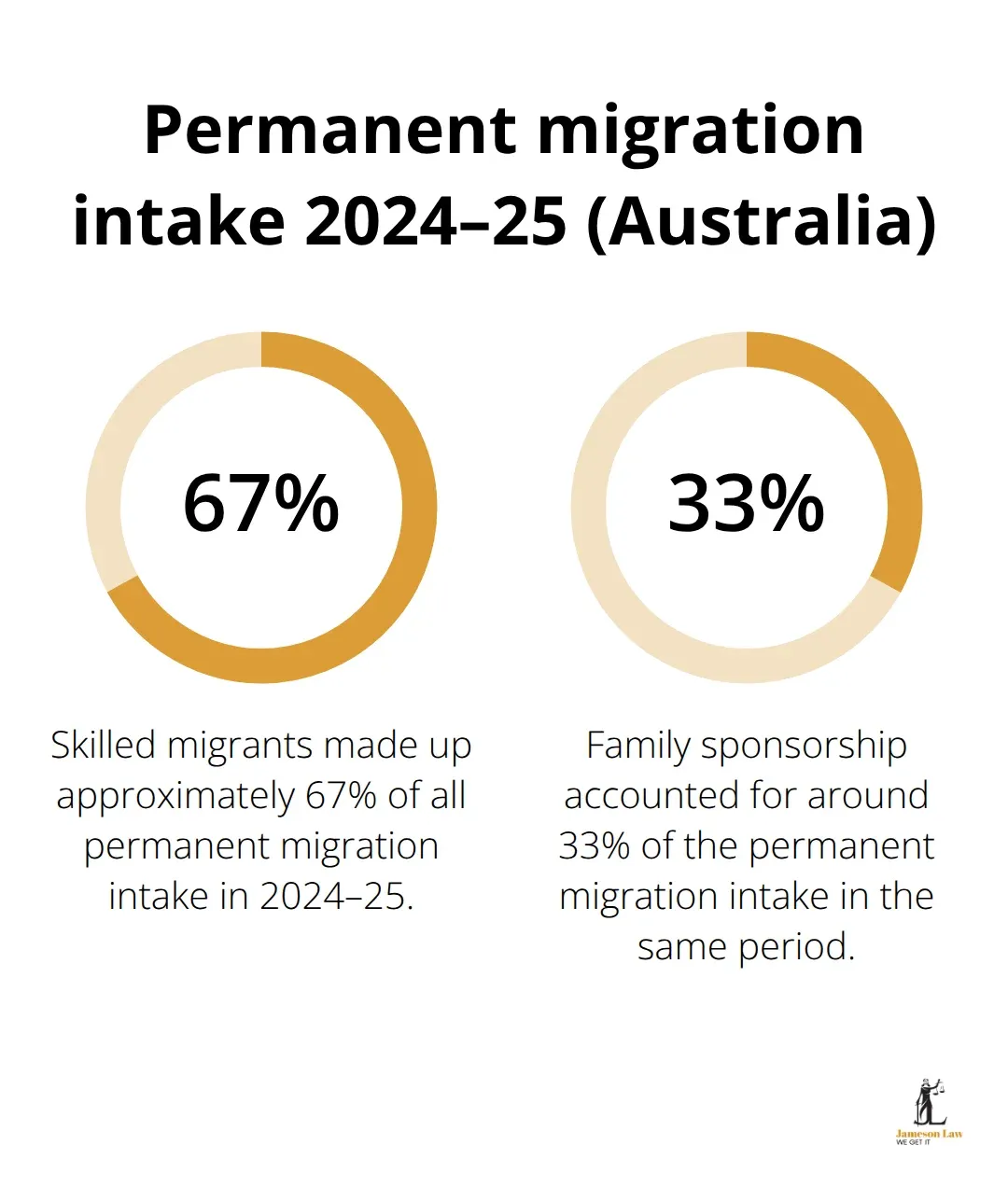
The family sponsorship pathway allows Australian citizens and permanent residents to sponsor relatives, and this accounted for around 33% of permanent migration in the same period. The business and investment pathway targets entrepreneurs and investors willing to establish or acquire businesses in Australia, though this route remains highly competitive and requires substantial capital commitment.
Skills-Based Migration Requirements
Skills-based migration demands that your occupation appears on either the Medium and Long-term Strategic Skills List or the Short-term Skilled Occupation List maintained by the Department of Home Affairs. If your occupation is listed, you must demonstrate relevant work experience, typically at least three to five years in your field, though some occupations require more. Your eligibility depends entirely on which pathway matches your circumstances, and selecting the wrong route wastes time and money.
Family Sponsorship Pathways
Family sponsorship requires your sponsor to meet income thresholds set by the Department of Home Affairs, which vary depending on how many dependants they have and whether they are employed or receiving government benefits. Your sponsor must satisfy character and health assessments before the Department of Home Affairs approves your application.
Business and Investment Routes
Business and investment visas typically require you to have owned a business for at least two years or invested a minimum of AUD $200,000 to AUD $500,000 depending on the specific visa subclass. These pathways attract entrepreneurs with proven business experience and substantial financial resources. Each route carries different character and health assessment requirements, English language standards, and processing timeframes that directly affect your application outcome.
Key Eligibility Criteria for Permanent Residency
Health, Character, and Age Assessments
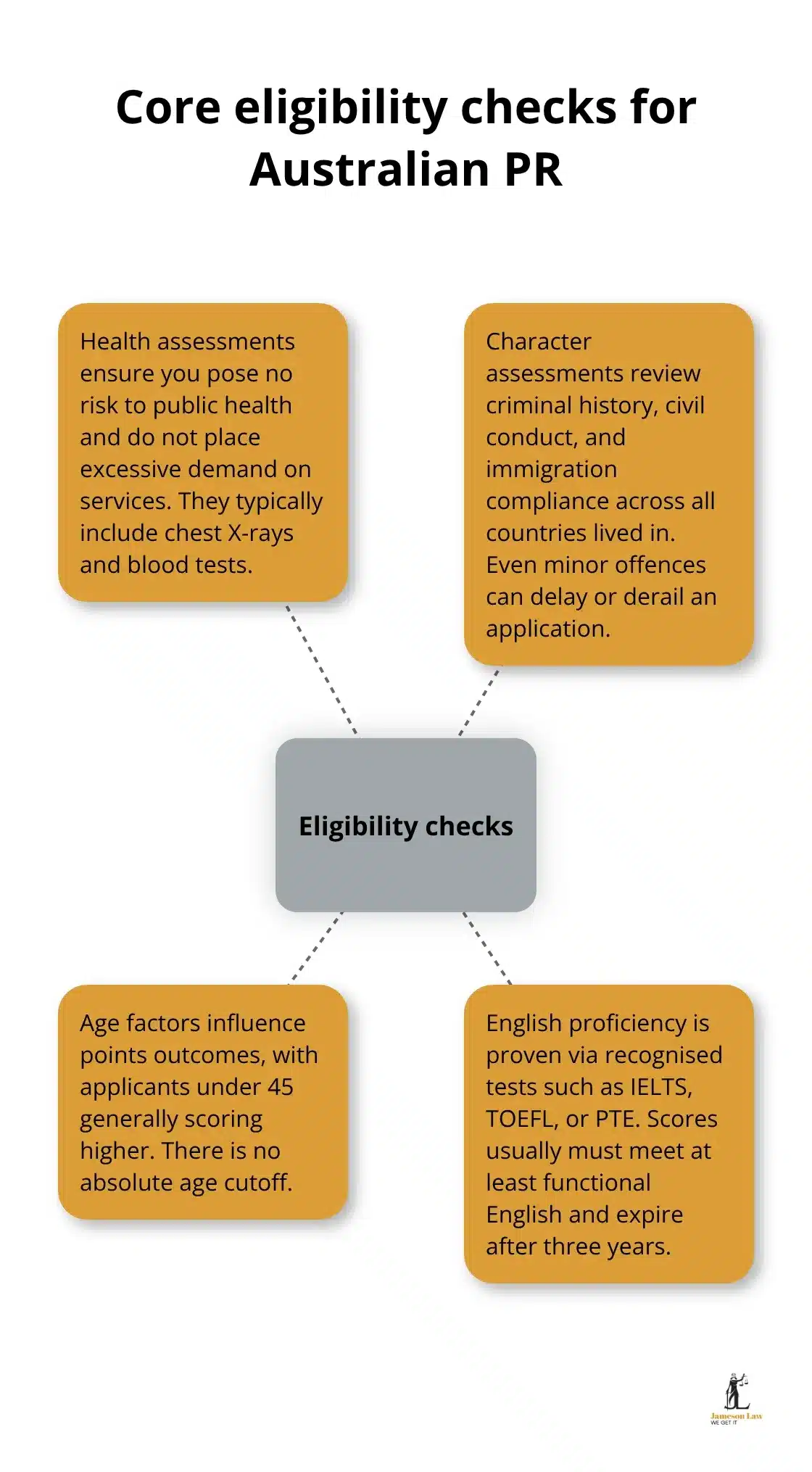
Health assessments confirm you don’t pose a risk to public health or place excessive demand on Australian healthcare services. Most applicants undergo chest X-rays and blood tests as part of this process. Character assessments examine your criminal history, civil conduct, and immigration compliance across all countries where you’ve lived, and the Department takes this seriously-even minor offences can delay or reject your application. Age affects your eligibility significantly, particularly for skills-based pathways where applicants under 45 generally score higher on the points system, though no absolute age cutoff exists.
English Language Requirements
English language proficiency is assessed through recognised tests like IELTS, TOEFL, or PTE, with most pathways requiring a minimum score equivalent to functional English. This requirement applies regardless of which route you’re pursuing. Test scores expire after three years, so you must sit the test again if your application hasn’t progressed by then-a costly and time-consuming setback.
Work Experience and Qualifications
Work experience and qualifications must directly match your claimed occupation, with the Department verifying credentials through your previous employers and educational institutions. Generic experience won’t suffice for approval. Your qualifications must be formally assessed by the relevant Australian assessing body for your profession, whether that’s Engineers Australia, Australian Computer Society, or your industry’s specific authority. This assessment typically takes four to eight weeks.
Common Assessment Failures
Character assessments extend beyond criminal convictions to include civil disputes, visa cancellations, and overstay history. Even a single undisclosed issue can result in outright rejection. Health assessments occasionally uncover pre-existing conditions that require specialist evaluation, which adds weeks to processing-obtaining your health assessment early prevents unnecessary delays. Work experience verification fails when applicants can’t produce employment contracts, payslips, or referee statements that clearly demonstrate they performed the claimed occupation at the required level. The Department contacts your referees directly, so they must provide consistent accounts. Qualifications assessment rejection occurs when your degree isn’t considered equivalent to Australian standards, particularly common for applicants with qualifications from countries with less rigorous accreditation systems.
When to Seek Professional Guidance
If you’re uncertain about how your experience or eligibility criteria align with Department requirements, professional legal advice early in your planning stages prevents costly application rejections. The application process itself demands careful attention to documentation and timing, which we’ll examine in detail in the next section.
How to Prepare and Lodge Your Permanent Residency Application
Collecting Your Documentation
Preparing your application documentation takes considerably longer than most applicants expect. Start your document collection at least three to four months before you plan to lodge, as obtaining verification letters from previous employers and formal qualifications assessments creates unavoidable delays. The Department of Home Affairs requires original employment references that specifically confirm your job title, duties, employment dates, and salary details-generic letters stating you worked there won’t suffice. Contact each employer directly and request a formal letter on company letterhead addressing these specifics, as the Department may contact your referees to verify information.
Your qualifications assessment must come from the relevant Australian assessing authority for your occupation, such as Engineers Australia, Australian Computer Society, or the nursing board depending on your field. Gather your health and character documentation simultaneously rather than sequentially; obtain your police clearance certificate from each country where you’ve lived for more than six months, and book your health examination with a Department-approved panel doctor early to avoid scheduling bottlenecks.
Managing Financial Documentation
Financial documentation for the visa application requires bank statements covering at least three months. The Department scrutinises the source of these funds carefully-unexplained deposits can trigger additional requests for evidence. Prepare clear explanations for any significant transfers or deposits, particularly if funds come from family members or business accounts. The Department contacts financial institutions directly to verify account ownership and transaction history, so your documentation must align precisely with your bank records.
Lodging Your Application Online
Lodging your application through the Department’s online portal demands meticulous attention to detail because incomplete submissions are returned without processing, wasting weeks. Upload documents in the exact format requested-PDFs are generally preferred, and file sizes must stay under 5MB per document. The Department processes applications in order of receipt for most visa subclasses, so timing your lodgement strategically matters, particularly if occupational ceilings exist in your field.
Understanding Processing Timelines
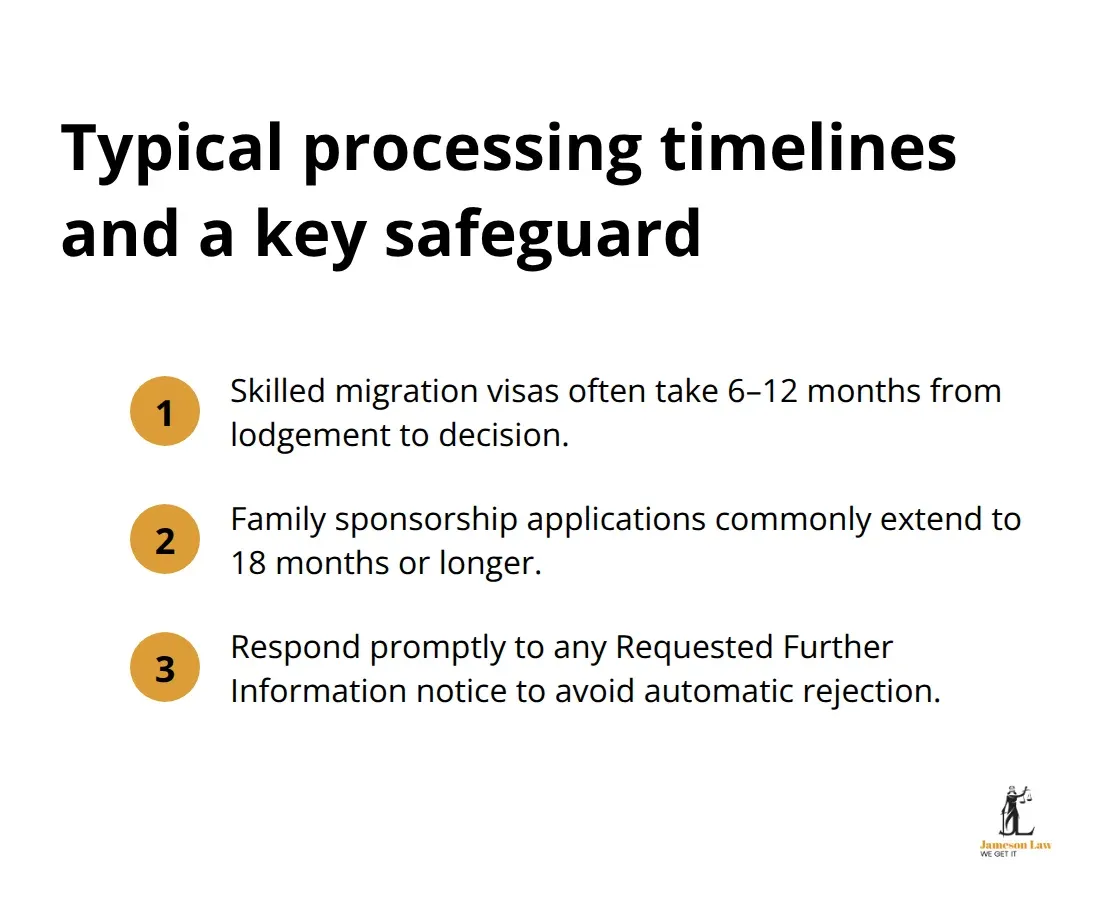
Processing times depend on your visa subclass and circumstances; skilled migration visas typically take six to twelve months from lodgement to decision, whilst family sponsorship applications often extend to eighteen months or longer if additional verification is required. The Department publishes processing time data on its website showing the 50th and 90th percentile timeframes, which means half of applications finish faster than the 50th percentile figure and half take longer. During processing, the Department may request additional information through a Requested Further Information notice, which sets a deadline for your response-missing this deadline results in automatic rejection.
After Your Decision
Once the Department makes a decision, you receive formal notification via email with conditions attached to your permanent residency grant, such as health undertakings or character requirements. Your visa activates upon arrival in Australia, at which point you must comply with any specific conditions outlined in your grant letter.
Final Thoughts
Permanent residency eligibility in Australia requires you to match your circumstances to the right pathway and satisfy strict criteria across health, character, qualifications, and English language proficiency. The three routes-skills-based migration, family sponsorship, and business investment-each demand different documentation and timelines, but all require meticulous preparation and attention to detail. Most applicants underestimate how long document collection takes and how thoroughly the Department of Home Affairs verifies every claim you make.
The most common mistakes we observe are incomplete employment references that lack specific job duties, delayed health assessments that push back entire timelines, and character issues that applicants thought were resolved years ago. Character assessments examine your entire history across every country where you’ve lived, not just Australia, so undisclosed civil disputes or visa cancellations result in outright rejection. Work experience verification fails when applicants cannot produce consistent evidence from multiple referees, and the Department contacts these referees directly to confirm your account.
If you’re uncertain whether your experience meets Department requirements or you’ve encountered complications with character or health assessments, professional legal advice early in your planning prevents costly rejections and wasted time. We at Jameson Law provide immigration law services to help you navigate this process correctly and understand your permanent residency eligibility in Australia. Contact us to discuss your application strategy.