Personal injury claims NSW can feel overwhelming when you’re dealing with an injury and its aftermath. We at Jameson Law understand the confusion around what you’re entitled to, how the process works, and what compensation you might receive.
This guide walks you through each stage of making a claim in NSW, from the initial steps after your injury through to settlement or court proceedings.
What Counts as a Personal Injury Claim in NSW
A personal injury claim in NSW rests on establishing that someone else’s negligence caused your injury. This extends far beyond workplace accidents or car crashes-NSW law covers a broad spectrum of situations. Under the Civil Liability Act 2002 (NSW), a successful claim requires four elements: duty of care, breach of that duty, causation, and damages. A property owner owes visitors a duty to prevent harm on their premises. A driver owes care to other road users. A medical professional owes patients care when providing treatment. If someone breaches these duties and causes your injury, you have grounds for a claim. The key distinction is that negligence must be proven-accidents alone do not qualify. You need evidence showing the other party owed you a duty, failed to meet that standard of care, and directly caused your injury. This applies whether the injury is physical, psychological, or a combination of both.
Three Categories of Claims You Should Know
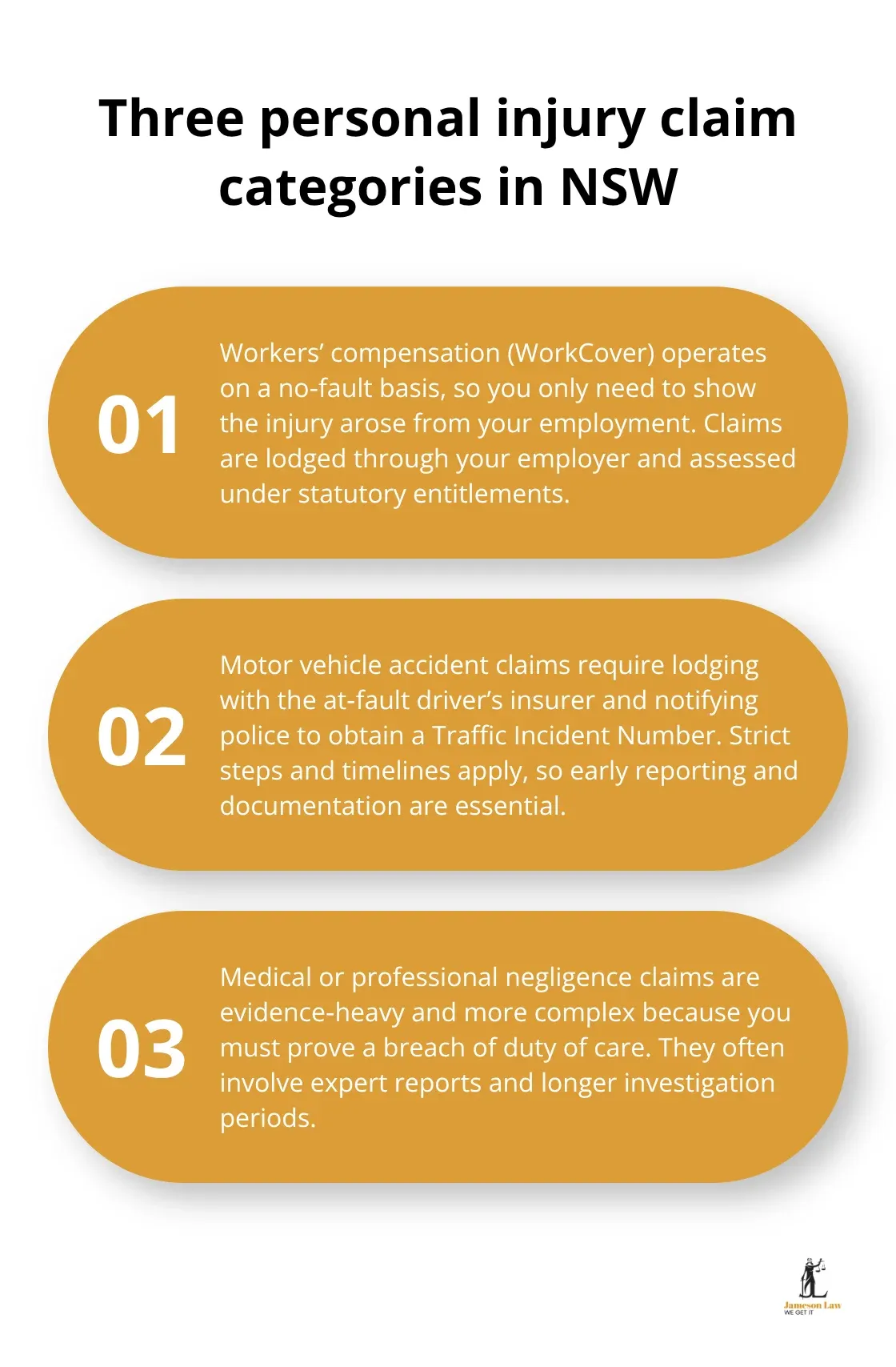
Work-related injuries follow a different path than other claims. If you suffer an injury at work in NSW, you typically claim through WorkCover under the workers’ compensation framework. This system operates on a no-fault basis, meaning you do not need to prove negligence-you only need to show the injury arose from your employment. Motor vehicle accident claims require specific steps: you must lodge a claim with the at-fault driver’s insurer and notify police to obtain a Traffic Incident Number. Medical or professional negligence claims present greater complexity because you must prove the professional breached their duty of care. All three categories fall under the personal injury umbrella, but each has distinct procedures and timelines. The critical difference is that WorkCover claims are statutory entitlements, while negligence-based claims require proof of fault. If you are unsure which category applies to your situation, obtaining legal advice early prevents costly mistakes.
The Time Window for Filing Your Claim
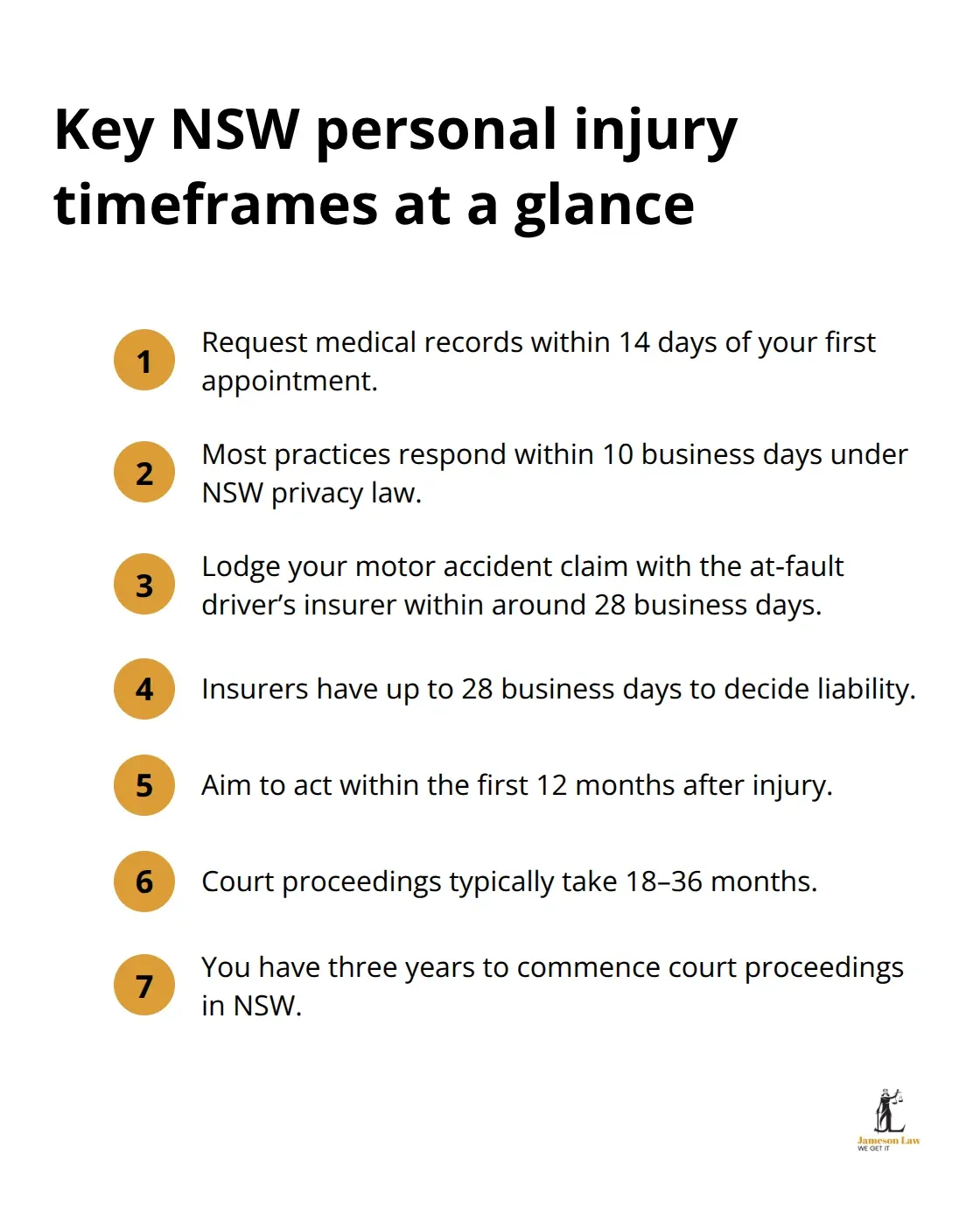
You have three years from the date of your injury to start court proceedings under the Limitation Act 1969 (NSW). This deadline is absolute. If you do not lodge proceedings within three years, your right to claim is barred permanently-no exceptions, no second chances. For injuries that develop gradually, the clock starts when you become aware of the harm, not when the initial incident occurred. If you were a minor at the time of injury, the three-year period begins on your 18th birthday. Courts can extend this timeframe in exceptional circumstances, but extensions are rare and never guaranteed. The practical reality is that waiting until year three puts your claim at serious risk. Witnesses disappear, memories fade, medical evidence becomes stale, and settlement discussions become harder. Try to take action within the first 12 months of your injury. Reporting the incident promptly to relevant authorities-your employer for workplace injuries, police for vehicle accidents, or local authorities for public place injuries-creates an official record that strengthens your position. Seeking medical evaluation immediately after injury documents your condition and provides the evidence insurers need to assess your claim.
What Happens Next in Your Claim
Once you understand which category your injury falls into and confirm you are within the time limit, the next phase involves taking concrete steps to support your claim. The initial actions you take (reporting the incident, obtaining medical records, and preserving evidence) form the foundation for everything that follows. Understanding these early steps helps you avoid delays and strengthens your position when you move toward negotiation or court proceedings.
The Personal Injury Claims Process in NSW
After your injury is reported and initial medical treatment is underway, the real work of building your claim begins. The next phase involves gathering solid evidence, understanding what insurers expect, and knowing when to push for settlement versus court action. Most motor accident and workplace claims are resolved through negotiated settlements. This means your approach to evidence collection and early communication with insurers shapes your outcome significantly.
Obtaining Medical Records and Building Your Evidence
You must obtain comprehensive medical records from every healthcare provider who has treated you since the injury. Request these within 14 days of your first appointment; most practices respond within 10 business days under NSW privacy law. Medical certificates and diagnostic reports form the backbone of your claim because insurers assess viability and value based on documented injury severity.
Collect witness statements from anyone who saw the incident occur. Photograph the accident scene or location where your injury happened if possible. Preserve all receipts for medical expenses, travel costs, and any equipment you purchased for recovery. These documents create a complete picture of your losses and demonstrate the injury’s impact on your daily life.
Lodging Your Claim With the Right Authority
The authority you contact depends on your injury type. If you were injured in a motor vehicle accident, you must lodge a claim with the at-fault driver’s insurer within the timeframe they specify (typically 28 business days). For workplace injuries, lodge your claim with WorkCover through your employer. For medical negligence or other negligence claims, contact the relevant professional’s insurer directly.
When you lodge your claim, include your medical records, incident reports, witness statements, and a clear narrative of how the injury occurred and its impact on your daily life. The insurer then has up to 28 business days to make a decision on liability. Providing complete documentation at this stage accelerates the assessment process and prevents delays caused by missing information.
Settlement Negotiations and Compensation Calculations
Negotiation and settlement discussions typically begin once the insurer acknowledges liability or while they are still assessing your claim. This is where your evidence matters most-insurers calculate settlement offers based on medical prognosis, lost wages, and treatment costs you can substantiate. Compensation in NSW covers pain and suffering, loss of income, medical and rehabilitation expenses, and domestic care costs. Weekly wage benefits apply depending on your injury classification and state scheme.
Do not accept the first offer without understanding the full scope of your losses. Many injured people underestimate future medical costs or the duration of their recovery. If settlement discussions stall or the insurer rejects your claim, your next step is to seek legal advice from a personal injury lawyer. A lawyer assesses whether your claim should proceed to court and handles the formal process.
Court Proceedings and the Path Forward
Court proceedings begin when negotiations fail and liability remains disputed or settlement figures are too low. Your lawyer lodges proceedings with the appropriate NSW court, and the case moves through discovery (exchanging evidence), expert reports, and potentially mediation before trial. The entire court process typically takes 18 to 36 months depending on court schedules and case complexity.
Throughout this phase, you must maintain ongoing medical treatment-it documents your continued care needs and demonstrates the injury’s ongoing impact. Stopping treatment signals recovery to insurers and weakens settlement negotiations or court arguments. Keep detailed records of all appointments, treatments, expenses, and how the injury affects your work and personal life. These records become critical evidence if your claim reaches court or settlement negotiations become contentious.
As your claim progresses through negotiation or court proceedings, the strength of your evidence and the quality of your legal representation determine whether you receive fair compensation. The next section examines the types of damages available to you and how compensation is actually calculated under NSW law.
Compensation and Damages in NSW Personal Injury Cases
NSW personal injury compensation breaks down into specific categories, and understanding each one prevents you from accepting inadequate settlement offers. Economic losses cover everything you can prove with receipts and documentation: medical treatment costs, rehabilitation expenses, travel to appointments, and lost wages. Non-economic damages compensate for pain and suffering, loss of enjoyment of life, and psychological distress. The NSW Personal Injury Commission publishes impairment evaluation guidelines that standardise how permanent injury severity is assessed, ensuring consistency across claims. Weekly wage benefits apply to workplace and motor accident claims depending on your injury classification, with rates set by legislation rather than negotiation.
Types of Damages Available
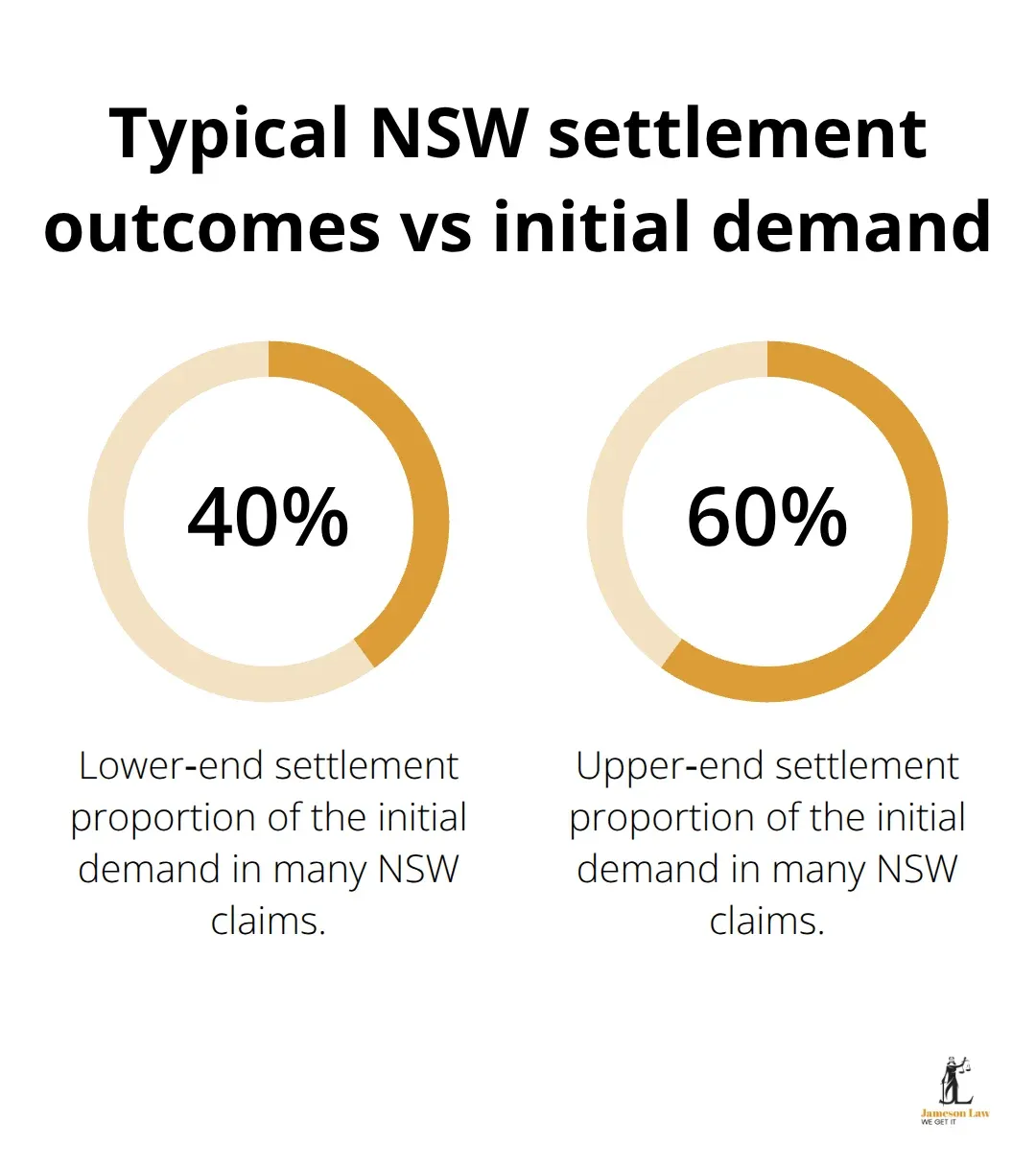
Medical negligence claims follow the same four-element negligence framework but typically generate higher compensation because proving a professional breached their duty of care establishes clear liability. Most NSW claims settle between 40% and 60% of the initial demand because insurers build in negotiation room from the start.
Economic damages cover quantifiable losses you can document with receipts, invoices, and payslips. Non-economic damages address intangible harm-pain, suffering, and reduced quality of life-that insurers calculate using established benchmarks and court precedent. Weekly wage benefits (available in workplace and motor accident claims) provide income replacement at legislated rates, protecting your financial stability during recovery.
How Insurers Calculate Your Compensation
The calculation of your compensation hinges on medical evidence and financial documentation. Insurers request detailed medical reports that specify your prognosis, ongoing treatment needs, and functional limitations. A medico-legal examination provides an independent medical assessment that insurers heavily weight in their calculations, so honesty and thoroughness during this assessment directly impacts your settlement. Lost income calculations multiply your weekly wage by the number of weeks you cannot work, then apply a discount for contingencies like early return to work or job changes. Future medical costs are estimated based on your prognosis and the treating doctor’s recommendations, then discounted to present value. Domestic care costs are calculated from quotes for services like cleaning, meal preparation, or personal care that you cannot perform due to your injury.
Factors That Affect Your Claim Value
Factors that significantly influence your final compensation amount include the severity of your injury, your age and earning capacity, whether you have permanent impairment, the clarity of liability evidence, and your jurisdiction within NSW. A 25-year-old tradesperson with permanent nerve damage receives substantially different compensation than a 60-year-old office worker with soft tissue injury, because earning capacity and life expectancy differ markedly. Court judgements in similar cases provide benchmarks, though every claim remains individual. The State Insurance Regulatory Authority Damages Calculator tool helps estimate motor accident compensation ranges, though your actual figure depends on your specific medical findings and circumstances.
When an Offer Falls Short
If an insurer’s offer seems low relative to your losses and medical evidence, you have solid grounds to reject it and pursue court proceedings or seek legal advice to strengthen your negotiating position. Accepting inadequate compensation locks you into that amount permanently-you cannot pursue additional claims for the same injury once settlement is finalised. This makes the negotiation phase critical to your financial recovery.
Final Thoughts
The personal injury claims NSW process demands attention to detail and timely action at every stage. From reporting your injury within days to gathering medical evidence and understanding your compensation options, each step shapes your final outcome. The three-year limitation period under the Limitation Act 1969 (NSW) is not a suggestion-it is a hard deadline that bars your claim permanently if missed, so act within the first 12 months whenever possible.
Seeking legal advice early maximises your claim value and prevents costly mistakes that injured people often make when navigating this process alone. A personal injury lawyer assesses whether your claim is viable, estimates its worth based on comparable cases and your specific circumstances, and handles negotiations with insurers on your behalf. We at Jameson Law understand that many injured people underestimate their losses or accept inadequate settlement offers because they lack proper guidance, and a lawyer protects your rights throughout the entire process.
Contact Jameson Law to discuss your personal injury claim today. We provide legal assistance on a no win no fee basis for plaintiff claims, meaning you pay nothing unless we recover compensation for you.