

Moving to Australia through skilled migration is achievable, and the Subclass 190 visa NSW offers a direct route to permanent residency for qualified professionals.
We at Jameson Law understand that navigating visa requirements can feel overwhelming. This guide breaks down eligibility, the application process, and the real benefits you’ll gain once approved.
What Makes You Eligible for Subclass 190 Sponsorship
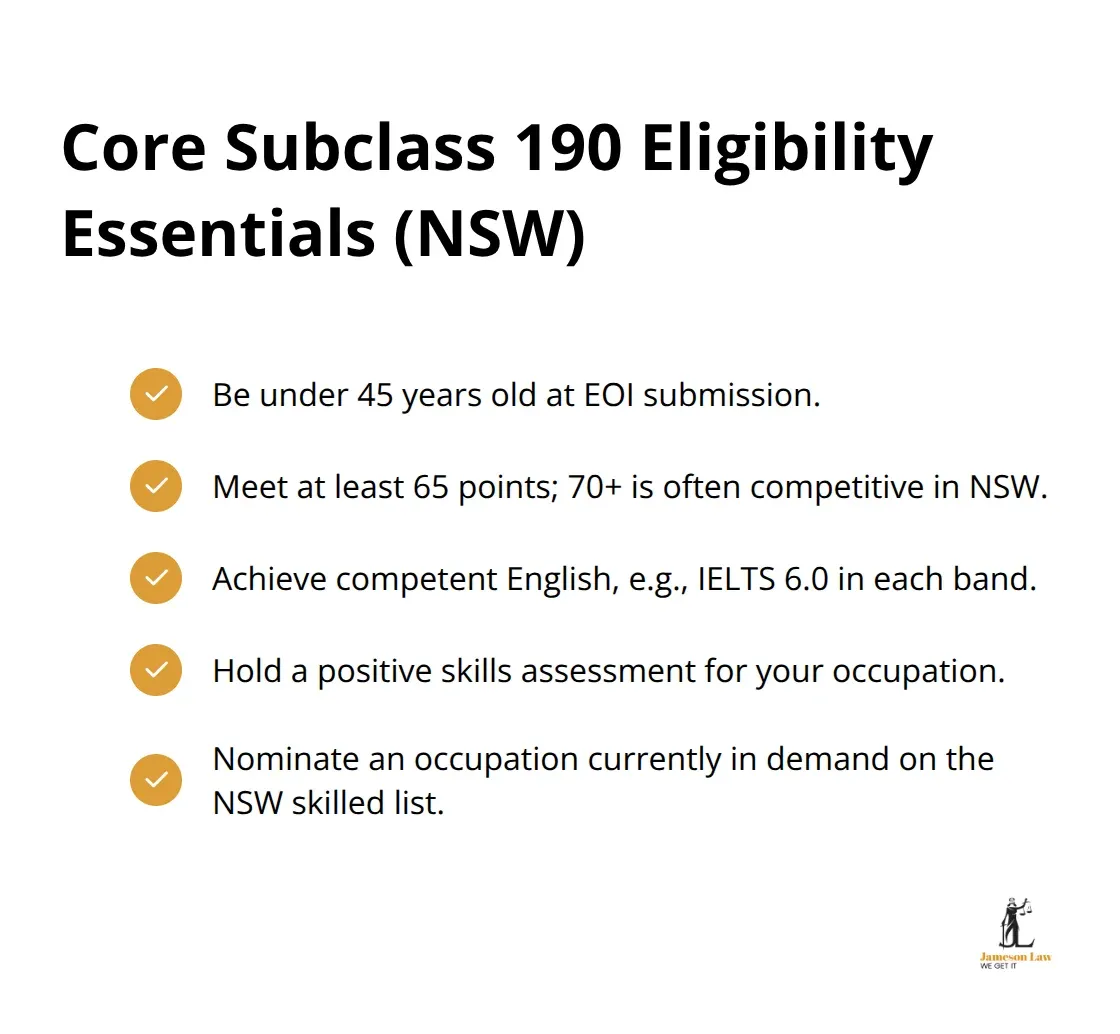
The Subclass 190 visa requires you to meet specific criteria across age, English proficiency, occupational skills, and points thresholds before NSW will sponsor you. You must be under 45 years old when you submit your Expression of Interest, and this age limit is non-negotiable. The Department of Home Affairs sets a minimum points requirement of 65 points, though NSW frequently sponsors applicants with 70 points or higher due to competitive demand. Your English language ability must meet competent level or higher on tests like IELTS, TOEFL, or PTE Academic. For IELTS specifically, you need a minimum band score of 6.0 in each component.
Poor English proficiency weakens your application and may affect your ability to work effectively in your nominated occupation once approved.
Your Occupation Must Appear on the Skilled List
Your occupation must appear on the skilled occupation list relevant to your visa subclass, and NSW must have genuine demand for that role in the current labour market. Occupations like registered nurses, software engineers, and accountants consistently receive sponsorship because NSW experiences documented labour shortages in these fields. You’ll need a skills assessment from the relevant assessing authority for your occupation-the Australian Computer Society for ICT roles, the Australian Society of Accountants for accounting positions, or the Nursing and Midwifery Board for nursing roles.
Skills Assessment Takes Time and Money
This assessment isn’t quick; most take 4 to 8 weeks to complete and cost between $500 and $1,500 depending on your occupation. The assessment confirms your qualifications and work experience align with Australian standards. Your work experience must be recent and relevant-ideally within the last 10 years-and you’ll provide detailed evidence including employment contracts, payslips, and references from previous employers.
NSW Evaluates Your Application Against State Needs
Once you have your skills assessment and meet the points threshold, NSW considers your application through its own nomination process, which evaluates whether your skills address genuine state workforce needs. This is where many applicants fail: having 65 points doesn’t guarantee sponsorship if NSW doesn’t need your occupation at that moment. The state prioritises occupations that fill real gaps in its labour market, so your timing and occupation choice matter significantly. Understanding what NSW currently needs shapes your entire application strategy and determines whether you move forward to the formal visa stage.
Application Process and Timeline
Submit Your Expression of Interest
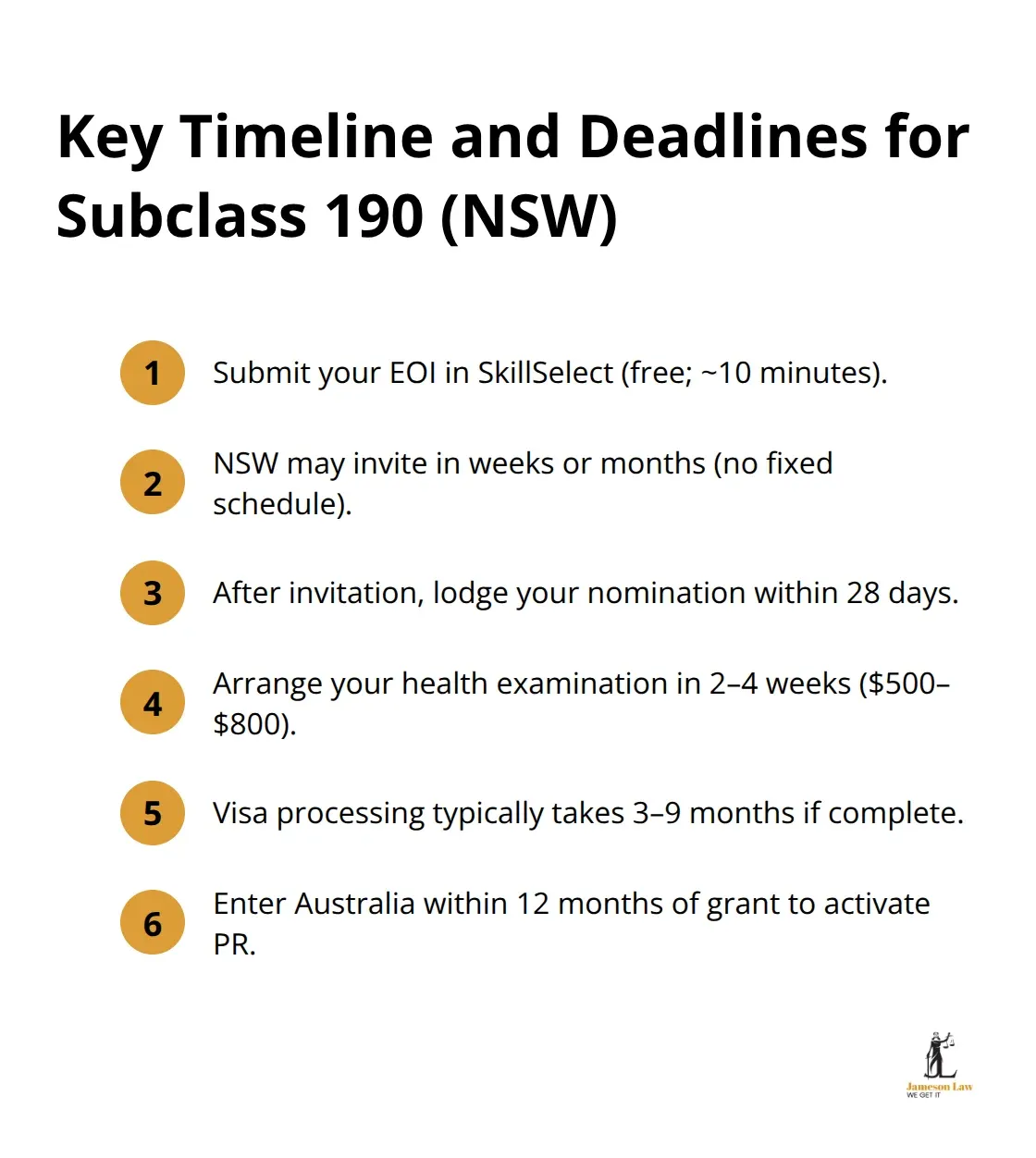
Your Expression of Interest marks the formal start of the visa process, and timing here matters more than most applicants realise. You submit your EOI through the Home Affairs SkillSelect portal, where you declare your occupation, points score, and state sponsorship intention. This stage costs nothing and takes roughly 10 minutes to complete online. NSW reviews EOIs regularly, but no fixed schedule exists-the state may invite you within weeks or months depending on occupation demand and application volume. Once NSW invites you to apply for state sponsorship, you typically have 28 days to submit your full nomination application. Missing this deadline means your EOI expires and you must resubmit. Many applicants underestimate this urgency and lose their opportunity through poor planning.
Prepare Your Nomination Application
When NSW approves your nomination, you then lodge your formal Subclass 190 visa application through the Home Affairs portal. This is where documentation becomes critical. You must provide certified copies of your birth certificate, passport, skills assessment, police clearance, health examination results, and proof of English proficiency. The health examination itself takes 2 to 4 weeks to arrange and costs around $500 to $800 depending on your medical history and testing requirements.
Home Affairs requires the examination from an approved panel doctor, and you can find the list on their website. You must not attempt to use any other medical provider-applications with non-approved health examinations face rejection outright. Your police clearance must cover every country where you lived for more than 12 months in the past 10 years.
Gather Employment and Medical Documentation
If you worked overseas, you should gather employment references and contracts now rather than scrambling later. These documents form part of your skills assessment verification and strengthen your application credibility. Overseas work experience requires additional scrutiny from Home Affairs, so thorough documentation (employment contracts, payslips, and reference letters) accelerates processing rather than causing delays.
Lodge Your Formal Application
Processing times for the formal visa application currently sit between 3 to 9 months from submission, though Home Affairs prioritises applications with complete documentation. Incomplete applications stall indefinitely, so you should submit everything upfront rather than trickling documents in one by one. Once Home Affairs grants your visa, you receive notification via email with your visa grant notice. You then have 12 months from the grant date to enter Australia and activate your permanent residency. This 12-month window gives you time to arrange your move, but you must not delay indefinitely-your visa grant notice specifies your activation deadline clearly.
What You Gain From Subclass 190 Permanent Residency
Unrestricted Work Rights and Employment Freedom
Permanent residency through the Subclass 190 visa delivers immediate work rights that temporary visa holders cannot access. You work for any employer in any occupation without restrictions, switch jobs freely, and negotiate salary without visa sponsorship constraints. Unlike skilled independent visas, the Subclass 190 ties you to NSW initially through a two-year residency requirement, but this obligation establishes your Australian work history and community connections. This foundation matters more than most applicants realise when employers later assess your reliability and commitment to the Australian workforce.
Healthcare and Financial Benefits
You gain unrestricted access to Medicare from your grant date, meaning you pay no out-of-pocket costs for hospital treatment and receive subsidised prescription medications through the Pharmaceutical Benefits Scheme. Medicare benefits save permanent residents an average of $3,000 to $5,000 annually compared to private health insurance costs, though you should verify current pricing against your personal circumstances. You become eligible for Centrelink payments if you meet residency and income tests, including the JobSeeker Payment if you lose employment. However, you must wait two years from your visa grant date before accessing most social security benefits. This waiting period reflects Australia’s policy that permanent residents contribute through taxes before accessing welfare support.
Pathway to Australian Citizenship
Citizenship eligibility opens after three years of permanent residency, and this timeframe shapes your long-term planning significantly. You must hold your Subclass 190 visa for a minimum of three years before applying for Australian citizenship, and Home Affairs processes citizenship applications within 3 to 12 months depending on application completeness. Australian citizenship grants you voting rights in federal and state elections, access to an Australian passport for international travel, and the legal right to bring eligible family members to Australia through family reunion visas.
Permanent Legal Status and Visa Security
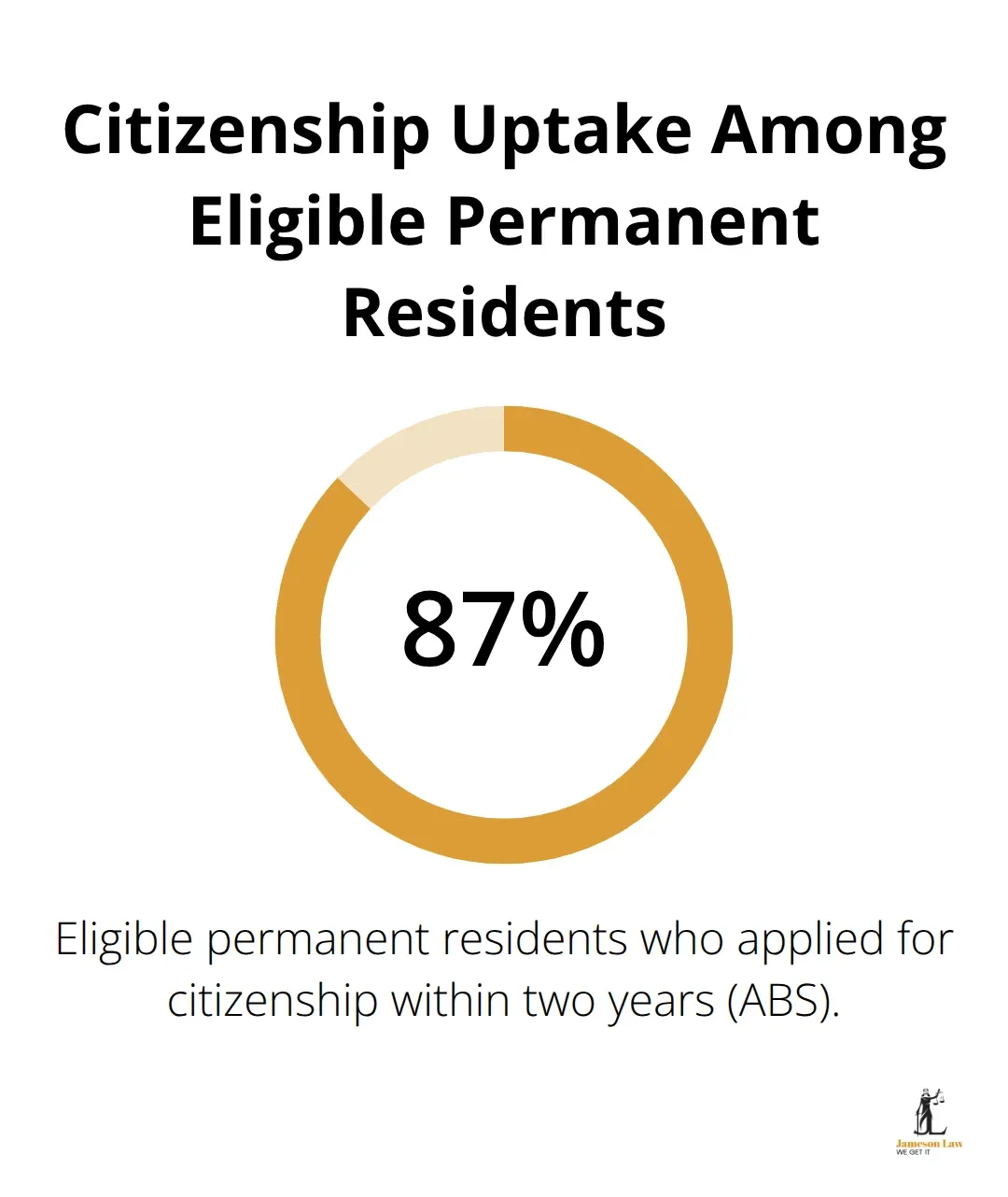
Citizenship provides job security that permanent residency does not guarantee. Home Affairs can theoretically cancel a permanent visa if you commit serious crimes or misrepresent your application, but Australian citizenship cannot be revoked except in rare cases involving fraud. Many professionals view citizenship as the true endpoint of migration planning because it removes visa cancellation risk entirely. The Australian Bureau of Statistics found that 87 percent of permanent residents who became eligible for citizenship applied within two years, indicating strong demand for the security citizenship provides. Your pathway continues through residency toward citizenship, and understanding this progression prevents costly mistakes around visa conditions and compliance obligations.
Final Thoughts
The Subclass 190 visa NSW represents a structured pathway to permanent residency, but success requires you to understand each stage and prepare thoroughly before submission. Your eligibility depends on meeting age, English, and points requirements, while your occupation choice determines whether NSW will actually sponsor you. The application process moves quickly once NSW invites you, so having your documentation ready beforehand prevents costly delays and keeps your timeline on track.
Once approved, you gain unrestricted work rights, Medicare access, and a clear route toward Australian citizenship after three years. The two-year NSW residency requirement builds your work history and community connections, establishing foundations that benefit your long-term career prospects. Many applicants underestimate how visa conditions affect their employment flexibility and financial planning, leading to compliance issues that could jeopardise their residency status.
Immigration law involves complex requirements that vary based on your personal circumstances, work history, and occupation. We at Jameson Law provide immigration law services to help you navigate these requirements and avoid costly mistakes. Contact us to discuss your Subclass 190 visa application and move forward with confidence.