Workplace injuries happen fast, but your recovery shouldn’t be complicated. If you’ve been hurt at work in Sydney, understanding your workers compensation rights is the first step toward getting the support you deserve.
At Jameson Law, our highly experienced team has helped countless NSW workers navigate claims and secure fair outcomes. This guide walks you through what you’re entitled to, how to lodge a claim, and what to do when insurers push back.
Sydney Workers Compensation: What the Scheme Covers and Who Qualifies
The Five Cost Buckets of NSW Workers Compensation
Workplace injuries happen fast, but your recovery shouldn’t be complicated. NSW workers compensation is a no-fault scheme administered under the guidelines of SIRA (State Insurance Regulatory Authority), which means you don’t need to prove your employer was negligent to receive benefits. If you’re injured at work, the system covers you regardless of who caused the accident. This differs fundamentally from suing for damages, and understanding what falls within the scheme matters.
The scheme covers five distinct cost buckets: medical treatment, weekly income payments, vocational rehabilitation, lump-sum permanent impairment, and legal costs for disputes. Medical treatment includes doctor visits, hospital stays, physiotherapy, surgery, and ongoing treatment related to your injury. Weekly income payments replace a percentage of your earnings while you’re unable to work.
How Weekly Income Payments Work
For the first 13 weeks, you receive 95 per cent of your pre-injury average weekly earnings, known as PIAWE. From week 14 onwards, if you have no work capacity, payments drop to 80 per cent of PIAWE, though top-ups apply if you work reduced hours. The weekly cap sits at $2,662.10 as of April 2026.
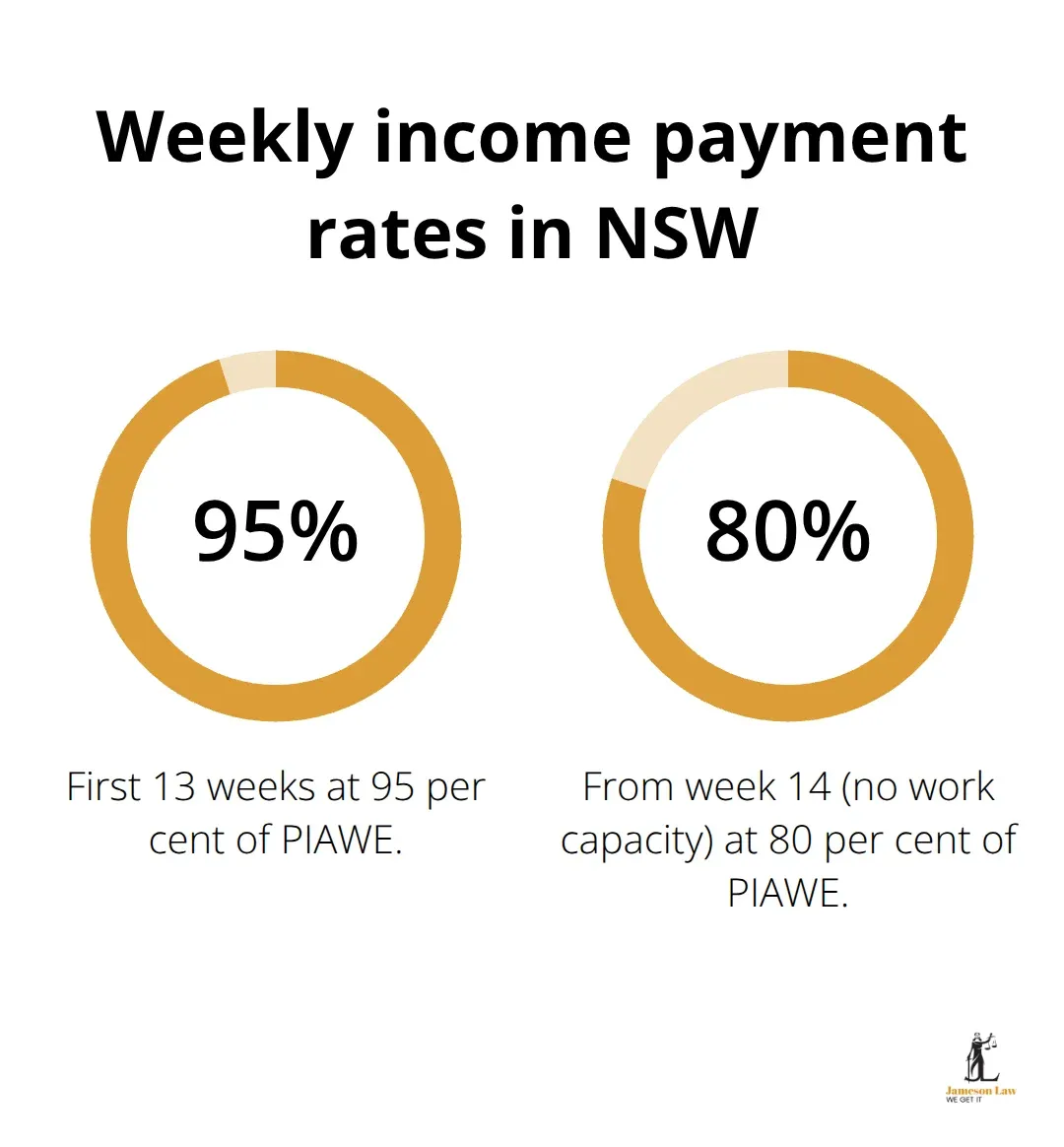
Your PIAWE calculation is based on your average earnings over the 52 weeks before your injury, including overtime and any second job you held. The updated PIAWE framework allows the employer and worker to agree on the PIAWE amount to be used for determining the worker’s weekly compensation payments. Casuals receive payments based on actual earnings. This calculation anchors all your weekly entitlements, so accuracy matters from the start.
Rehabilitation, Impairment, and Additional Support
Vocational rehabilitation helps you return to work through retraining, job placement assistance, or suitable duties within your current employer. If you suffer permanent impairment, you may qualify for a lump-sum payment depending on the severity. The threshold for physical injuries is 11 per cent Whole Person Impairment (WPI), while psychological injuries require 15 per cent WPI.
Additional entitlements beyond these core categories include travel costs for treatment, home modifications, domestic assistance, assistive devices, and for serious brain or spinal injuries, long-term care and support services. These supplementary benefits recognise that recovery extends beyond wages and medical bills.
Who Qualifies as an Eligible Worker
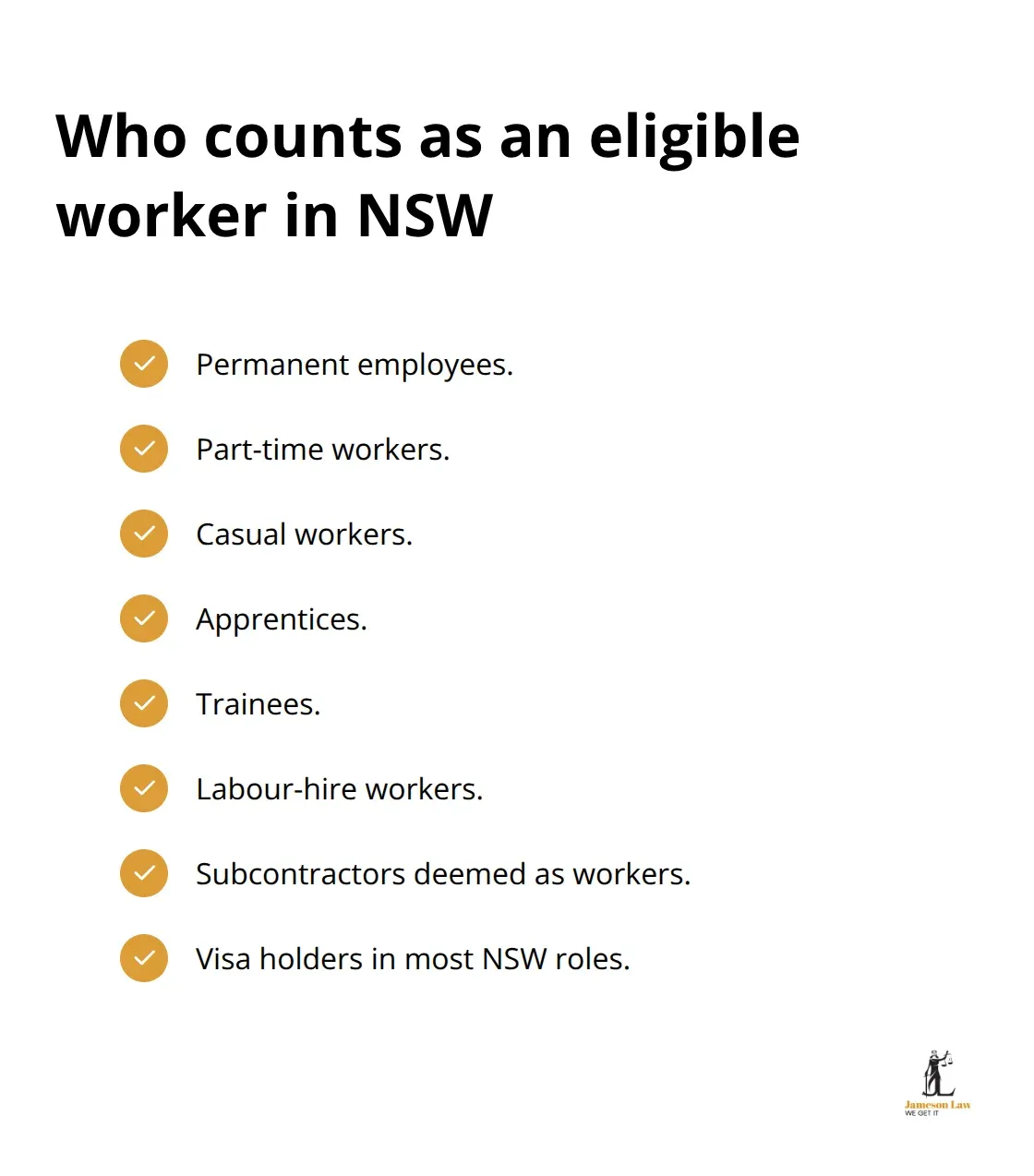
You’re eligible to claim if you’re an employee injured in the course of employment. This covers permanent employees, part-time workers, casuals, apprentices, trainees, labour-hire workers, and subcontractors under the deemed worker rule. Visa holders have the same rights as Australian citizens in most NSW roles, so immigration status doesn’t bar your claim. The no-fault principle applies to all eligible workers regardless of your employment classification.
Safe Work Australia recorded approximately 146,700 serious claims nationally in 2023–24, with NSW accounting for roughly one-third of these. Body-stressing injuries represent the largest category with around 50,326 claims nationally. Psychological injuries are the fastest-growing category, up 161 per cent over ten years, with about 17,600 serious mental health claims nationally in 2023–24. These figures illustrate just how common workplace injuries are across NSW industries.
The Critical Date of Injury and Your Six-Month Window
The date of injury matters significantly for your claim timeline. For sudden injuries like a fall or crush, the date is the incident itself. For cumulative injuries like repetitive strain or gradual hearing loss, the deemed date is when you first became aware the injury was work-related. This date anchors your six-month lodgement window and determines liability.
You must lodge your claim within six months of the date of injury. This deadline is strict and rarely extended, so acting quickly protects your entitlements. Notify your employer immediately after the injury occurs, as this starts the clock on your claim window. Your employer has obligations to report the injury to their insurer and provide you with claim forms. If your employer fails to co-operate, you can lodge directly with the insurer or contact the Independent Review Office.
The sooner you gather medical documentation and submit your claim, the sooner weekly payments can commence. Don’t wait to see if the injury improves on its own; medical evidence from the outset strengthens your position and creates a clear record of your condition at the time of injury.
Getting Your Claim Started
Report Your Injury Immediately
Your employer must receive notification of your injury as soon as practicable after it occurs—ideally on the same day or within 24 hours. Speed matters because your employer is legally required to provide you with a claim form and report the injury to their insurer. Many workers lose critical weeks because they waited for paperwork that never arrived. If your employer fails to provide a claim form within two weeks, contact their insurer directly or lodge with the Independent Review Office (IRO).
Gather Medical Evidence Without Delay
See a doctor within the first week of your injury. Bring a written account of how the injury occurred, including the date, time, location, and what you were doing. Your doctor’s report becomes the foundation of your claim, so be thorough and honest about your symptoms and limitations. Request copies of all medical records, test results, imaging, and treatment notes from your healthcare providers.
Complete and Submit Your Claim Form Accurately
Your employer should provide the standard claim form, but if they don’t, you can obtain it directly from icare or request one from the insurer. Complete every section of the form, including your full employment history, wage details, and a detailed description of the injury. Attach all medical documentation, including your doctor’s report. Incomplete forms lead to rejection—insurers often deny applications with missing details.
Track Insurer Timelines and Responses
The insurer has 21 days to accept or deny your claim. If they accept liability, weekly payments should commence within 7 days. If they dispute the claim, they must provide written reasons within that 21-day window. Track these timelines carefully.
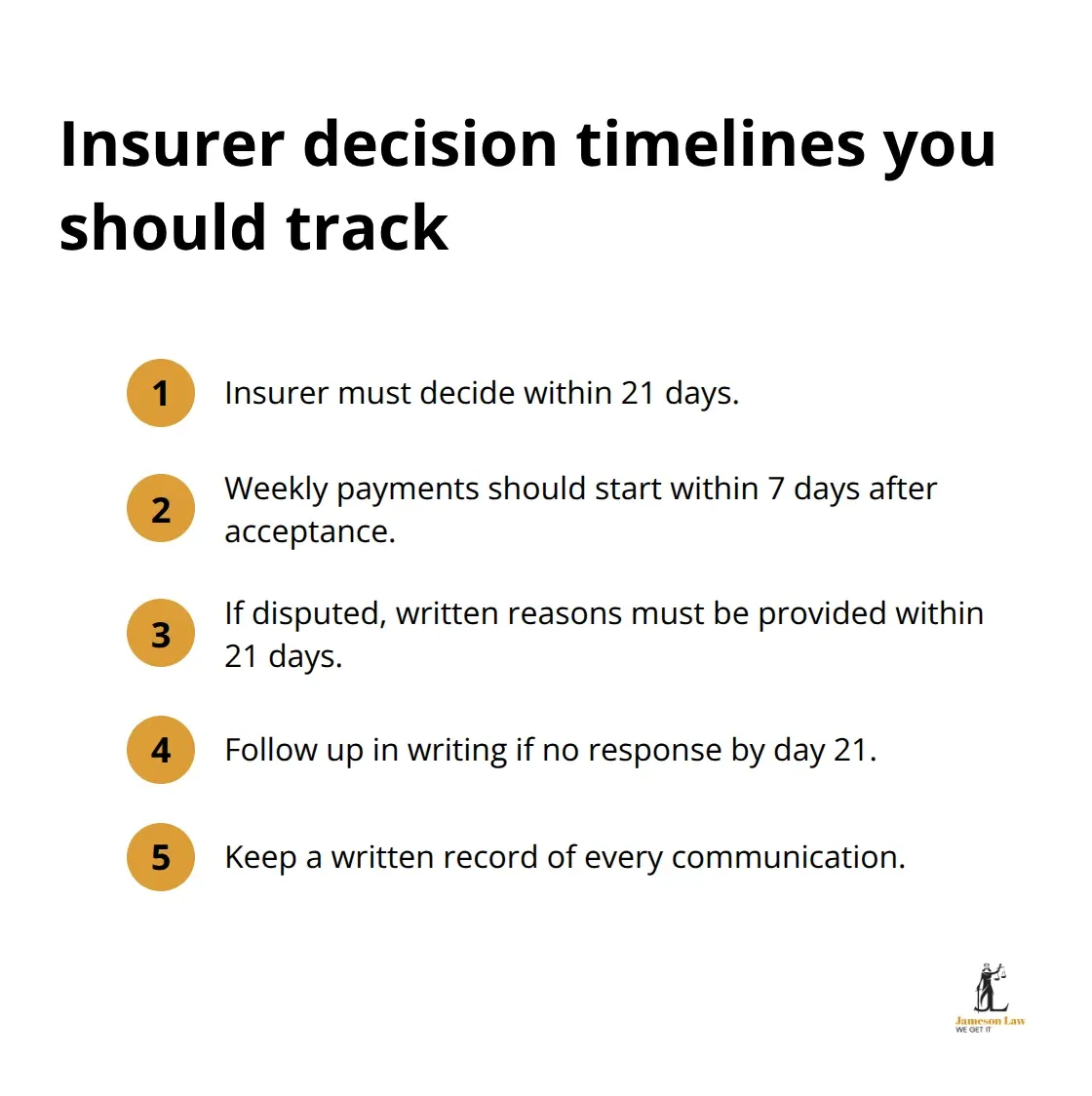
If the insurer hasn’t responded within 21 days, follow up in writing. Document every communication—emails create a written record that phone calls cannot match. If disputes emerge early, consider seeking expert legal advice before accepting any insurer decisions.
When Insurers Reject or Underpay Your Claim
Insurers deny or minimise claims regularly, and accepting their first offer often costs you thousands in lost entitlements. Workers settle for inadequate payments because they don’t understand their rights or the insurer’s tactics.
Understanding Why Insurers Reject Claims
If the insurer denies your claim within 21 days, they must provide written reasons stating why they reject liability. Common grounds for denial include arguing the injury didn’t arise from employment, disputing the date of injury for cumulative conditions, or claiming you failed to notify them promptly. Read their rejection letter carefully and challenge vague rejections by requesting specific factual grounds in writing.
Appealing Denials Through the Independent Review Office
If the insurer denies your claim or you disagree with their decision, the Independent Review Office (IRO) funds your legal costs through a dispute resolution process handled by the Personal Injury Commission. This means you can pursue an appeal without paying lawyer fees upfront, which removes a major barrier to fighting unfair outcomes. Lodge your appeal within three months of the insurer’s decision.
Psychological Injury Denials and Reasonable Management Action
Psychological injury claims present particular complexity. The insurer may argue your condition falls outside the scheme because it resulted from reasonable management action, meaning ordinary workplace decisions like performance reviews. However, this defence doesn’t apply if the management action was harsh, oppressive, or unreasonable. If you’re dealing with a mental health claim denial, obtain legal advice immediately.
Negotiating Settlement Offers Effectively
Settlement negotiations work better when you arrive with documentation showing your full loss, medical evidence supporting ongoing treatment needs, and clarity on your remaining work capacity. Many disputes resolve at this stage when workers demonstrate they understand their entitlements and won’t accept inadequate offers.
Final Thoughts
Your Sydney workers compensation claim doesn’t have to feel overwhelming when you act decisively from the start. Lodge your claim within six months of your injury date, provide complete medical documentation, and track every communication with the insurer. Weekly payments start at 95 per cent of your pre-injury earnings (PIAWE) for the first 13 weeks, and these entitlements are yours by law.
Disputes happen regularly. If your claim faces rejection, you have the right to appeal through the Independent Review Office, which funds your legal costs. Psychological injury claims require particular attention given recent reforms tightening eligibility thresholds.
Seek legal assistance early if your claim is disputed. A highly experienced compensation lawyer can review your claim, challenge weak denials, and negotiate fair outcomes without upfront costs. Contact Jameson Law today for a free claim evaluation to understand your rights and options under Sydney workers compensation law.