

Getting a temporary visa to Australia involves more than just filling out a form. You need to understand which visa type suits your situation, gather the right documents, and prepare your finances.
At Jameson Law, we’ve helped hundreds of people navigate temporary visa Australia requirements successfully. This guide walks you through each stage so you can apply with confidence.
Which Temporary Visa Type Matches Your Situation
Student Visas and Education Requirements
Australia attracts over 500,000 student visa holders as of 2025, making subclass 500 the most common temporary visa category. To qualify, you need an offer letter from an Australian education provider registered on the Commonwealth Register of Institutions and Organisations for Overseas Student Education. Your chosen institution must accept you into a full-time course before you can proceed with your application.
Financial capacity matters significantly. The Australian government sets a Student Maintenance Amount of approximately AUD 21,041 per year for a single student in most states during 2026. You must demonstrate you can cover both tuition fees and living expenses for your entire course duration.
English language proficiency is non-negotiable. Most institutions require IELTS scores of 5.5 or higher, though this varies by institution and course level. Many universities now accept alternative qualifications like TOEFL or Duolingo English Test, so contact your chosen provider directly rather than assuming IELTS is mandatory.
Work and Skilled Migration Visas
Work and skilled migration visas operate under far stricter conditions than student visas. The Temporary Skill Shortage visa (subclass 482) and Skilled Independent visa (subclass 189) dominate this category, but access depends entirely on occupations listed on the Department of Home Affairs skilled occupation lists. Australia faces genuine skills shortages in healthcare, engineering, and trades, which explains why these pathways exist.
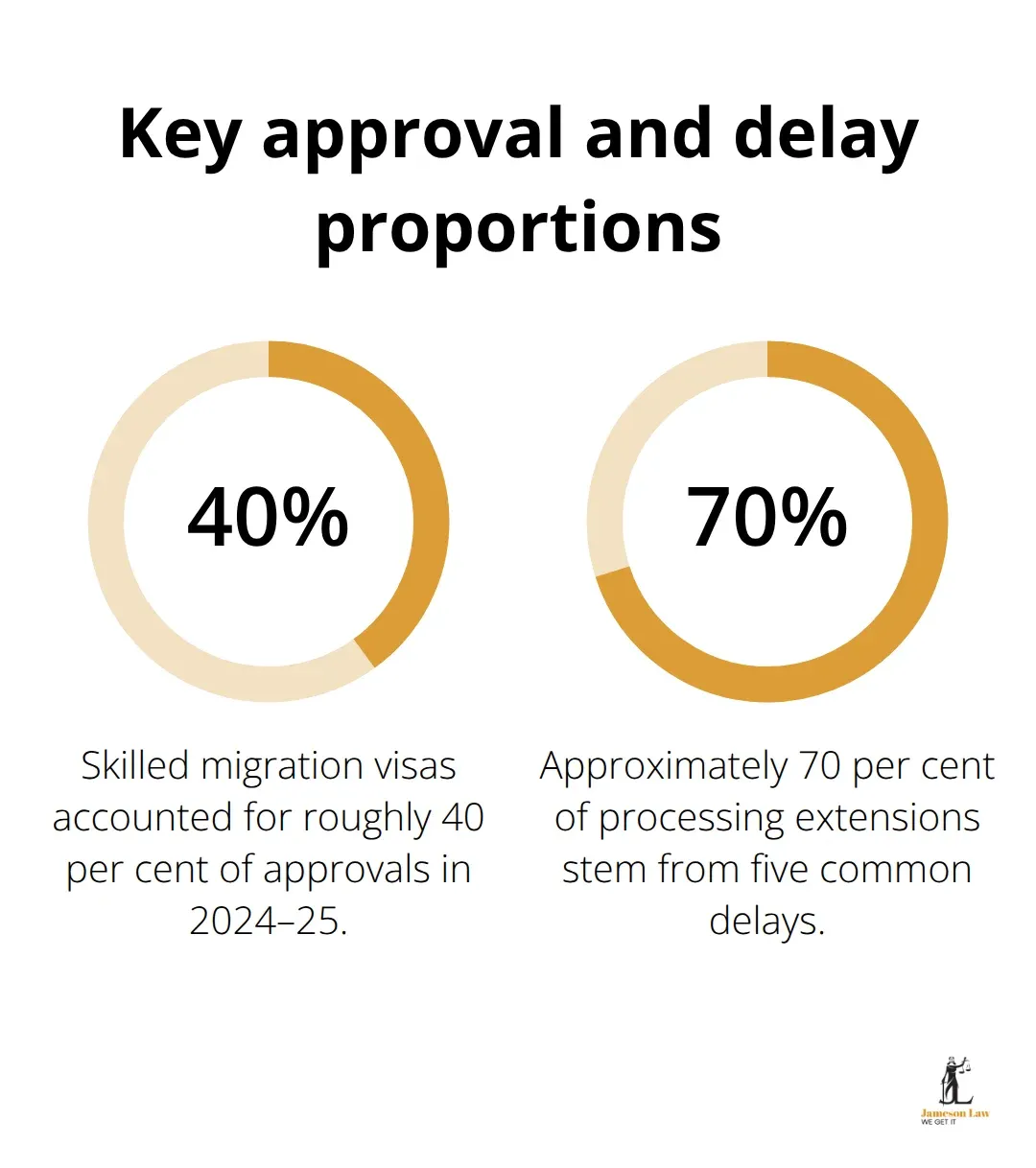
Competition for these visas is intense. The Department of Home Affairs received over 1.2 million visa applications in 2024-25, with skilled migration visas representing roughly 40 per cent of approvals. Your occupation must appear on the relevant skilled occupation list, and you typically need relevant work experience and qualifications to qualify.
Visitor Visas and Tourism Requirements
Visitor visas (subclass 600) carry no formal education or employment requirements, making them accessible to most applicants. However, strict conditions apply: you cannot work for Australian employers, study for more than three months, or stay longer than 12 months in most cases. These restrictions exist because visitor visas are designed for tourism and short-term visits, not employment or extended study.
Processing times for visitor visas average 21 days, making them the fastest temporary visa option available. This speed makes visitor visas attractive for those planning short trips to Australia.
Selecting the correct visa category before you prepare documentation is essential. Applying for the wrong visa type wastes both time and application fees. Your primary purpose-whether study, work, or tourism-determines which pathway suits your situation. Once you understand which visa matches your circumstances, you can move forward with gathering the specific documents and financial evidence your chosen visa requires.
What Documents and Finances You Actually Need
Your visa application approval depends on presenting the right documents in the right format. Most rejections stem not from ineligibility but from incomplete or poorly organised documentation. Start gathering documents immediately after selecting your visa type because some take weeks to obtain.
Identity and Police Clearance Documents
Your identity documents form the foundation of any temporary visa application. A valid passport is non-negotiable for all temporary visas, and the Department of Home Affairs requires it to remain valid for your entire intended stay plus six months beyond. If your passport expires soon, renew it before applying-the department will reject applications with insufficient passport validity.
Police clearance certificates create significant delays for many applicants. Australia requires these for most visa categories, and obtaining one from your home country can take 4 to 8 weeks depending on your location. Many applicants make the mistake of applying for police clearance after lodging their visa application, which inevitably triggers a request for further information and extends processing times unnecessarily.
Financial Proof Separates Approved Applicants from Rejected Ones
The Department of Home Affairs scrutinises financial evidence more heavily than most applicants realise. Student visa holders must demonstrate the Student Maintenance Amount, but you must show actual bank statements, not just a letter from your parents stating they have money. The department wants to see 12 months of bank statements proving consistent funds, not a sudden deposit the week before your application.
For skilled migration visas, financial requirements vary by visa subclass, but generally you must prove you can support yourself during your stay. Sponsorship adds another layer of complexity. If an employer sponsors you for a Temporary Skill Shortage visa, they must be listed on the Australian Business Register and meet specific sponsorship obligations set by the department. The sponsor bears legal responsibility if you breach visa conditions, which is why employers increasingly scrutinise visa applicants.
Health Examinations and Insurance Requirements
Health examinations cannot be postponed. The department requires a chest X-ray and blood tests for most visa categories, completed by an approved panel doctor only. Approved panel doctors in Australia cost between AUD 300 and AUD 500 for the full examination. Applicants from countries with higher tuberculosis prevalence face additional screening requirements, which can add 2 to 3 weeks to your timeline.
Overseas Health Cover is mandatory for student visa holders and strongly recommended for other temporary visa categories. Australian private health insurers typically charge between AUD 150 and AUD 400 monthly depending on your age and coverage level. Many applicants underestimate health costs and find themselves scrambling to arrange cover after visa approval, which creates unnecessary stress before arrival.
Once you have your documents and financial evidence organised, you move into the application phase itself. The way you lodge your application and track its progress determines whether you receive your visa on time or face unexpected delays.
Getting Your Application Submitted and Tracking Progress
Submitting Your Application Correctly the First Time
Lodging your temporary visa application online through ImmiAccount is straightforward, but the timing and preparation surrounding submission determines whether you receive your visa smoothly or face months of delays. The Department of Home Affairs processes applications in the order they arrive, not based on how complete they appear at first glance. Submitting an incomplete application early does not give you priority-it simply triggers a request for further information that halts your processing clock entirely.
Complete your entire application offline first, checking every field against your documents, then submit everything in one batch. This approach eliminates the most common mistake: applicants who lodge applications prematurely and then spend weeks scrambling to provide missing documents. The ImmiAccount system allows you to upload documents directly, and the Department of Home Affairs specifies exact file formats and sizes. PDF documents must not exceed 5MB each, and poorly scanned identity pages or health reports get rejected automatically, forcing you to resubmit.
Understanding Processing Times and Status Updates
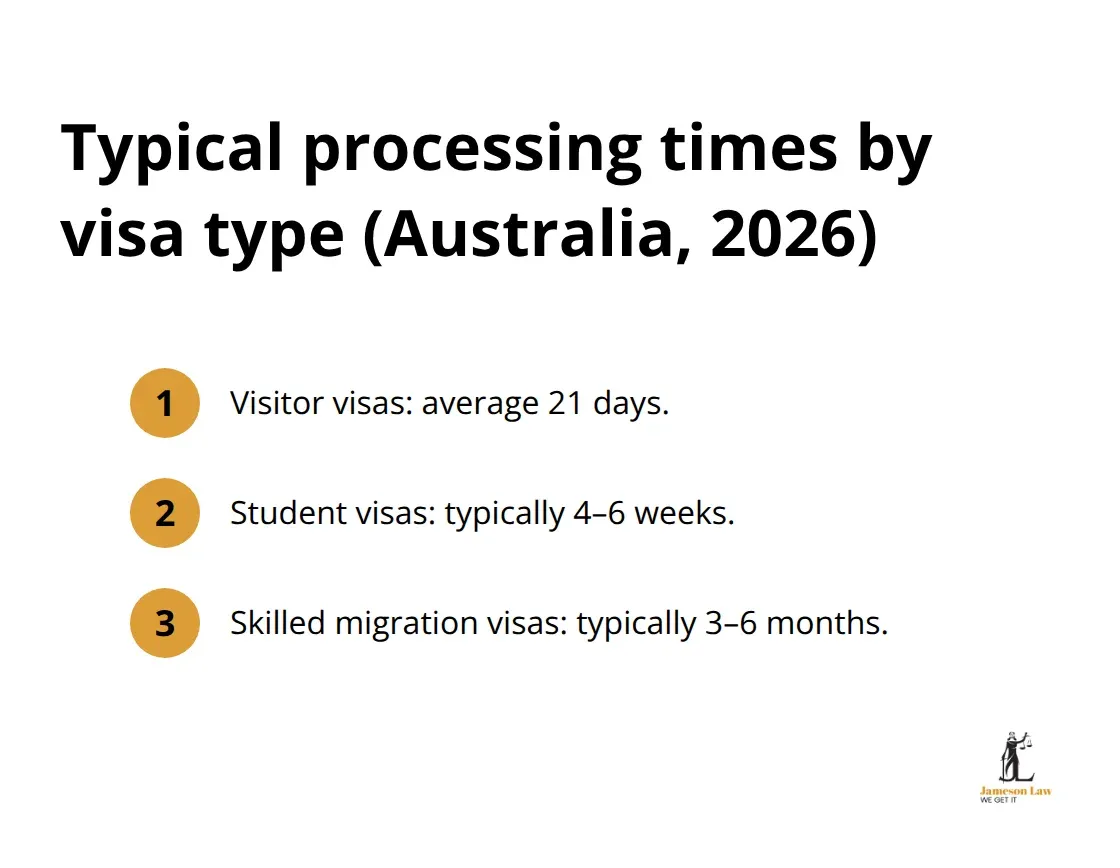
Processing times vary by visa type. Visitor visas average 21 days for approval, student visas typically take 4 to 6 weeks, and skilled migration visas can stretch to 3 to 6 months depending on whether the department requests additional information. The Department of Home Affairs publishes actual visa processing times on its website, updated fortnightly, so check these figures rather than relying on estimates from online forums.
Your application status remains invisible until the department makes a decision or requests further information. There is no real-time tracking system that shows your position in the queue. The department contacts you through ImmiAccount when action is required, so monitor your account regularly and respond promptly to any requests.
Five Delays That Halt Most Applications
Common delays stem from five specific issues that applicants encounter repeatedly. First, health examinations arrive incomplete because applicants attend non-approved panel doctors, forcing them to repeat testing at approved facilities (which adds 2 to 3 weeks). Second, police clearance certificates arrive late or missing entirely, halting applications indefinitely until applicants resubmit. Third, financial documents fail to satisfy the department because bank statements lack English translations, or they show funds that arrived only days before application, triggering suspicion about the money’s origin.
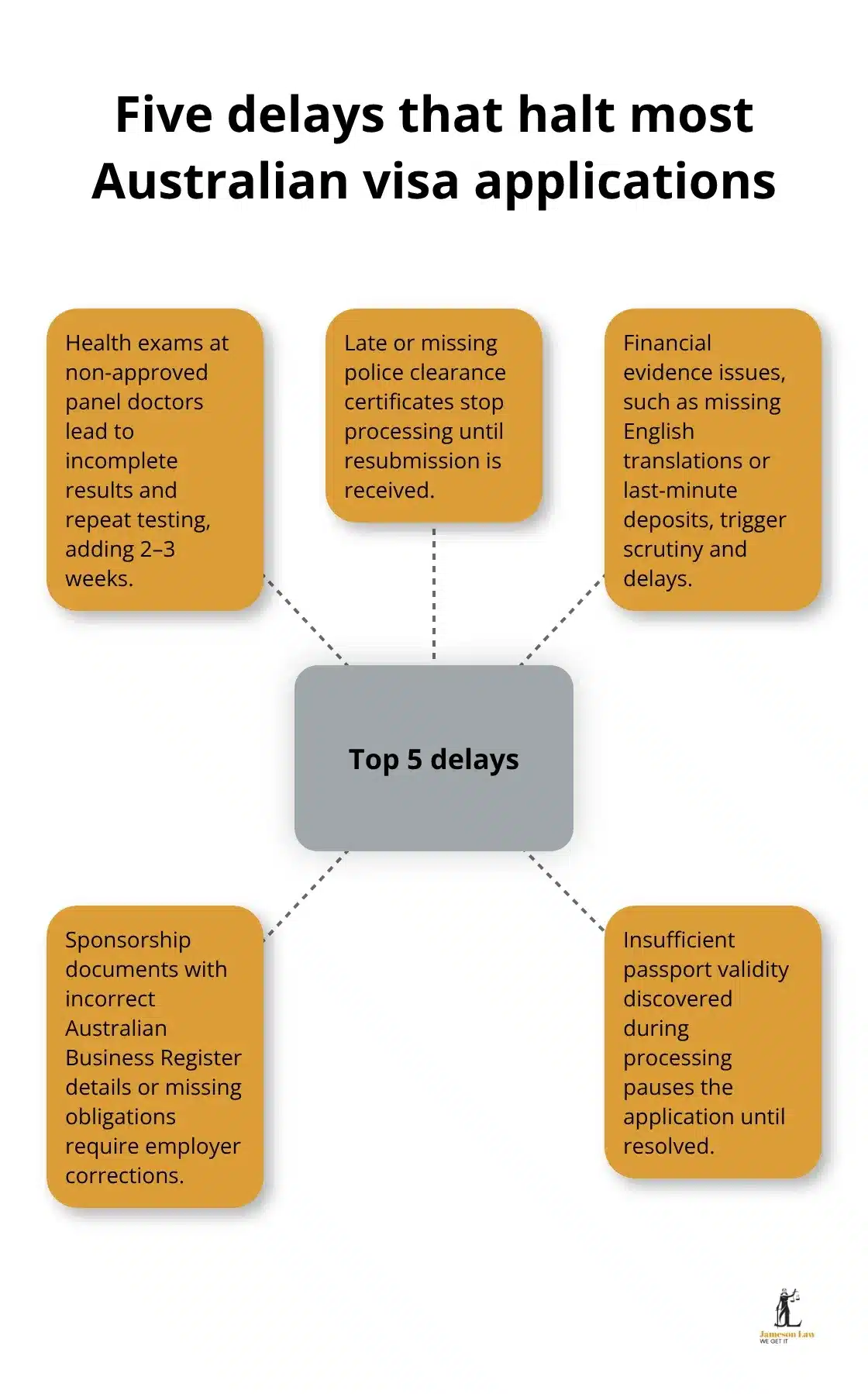
Fourth, sponsorship documentation for work visas contains errors in the employer’s Australian Business Register details or fails to show current sponsorship obligations, requiring applicants to request corrections from their employer. Fifth, passport validity falls below the required threshold during processing, which the department discovers only when reviewing your application.
Preventing Delays Before You Submit
Obtain police clearance certificates 6 weeks before you plan to submit your application. Schedule health examinations with approved panel doctors immediately after selecting your visa type. Translate all financial documents into English through certified translators. Check your passport validity today-if it expires within 12 months, renew it before lodging your application.
Request your employer provide a copy of their current Australian Business Register listing and sponsorship obligations letter before you submit your work visa application. These practical steps eliminate the five delays responsible for approximately 70 per cent of processing extensions experienced by temporary visa applicants.
Final Thoughts
Preparing for a temporary visa to Australia requires methodical planning across three distinct phases. You select your visa type based on your primary purpose, then gather the specific documents and financial evidence that category demands. You complete your entire application offline, verify every detail against your documents, and submit everything in one batch to avoid triggering requests for further information. You monitor your ImmiAccount regularly and respond immediately to any departmental requests.
The temporary visa Australia requirements outlined in this guide reflect current Department of Home Affairs standards as of 2026. Your passport must remain valid throughout your stay plus six months beyond, police clearance certificates take 4 to 8 weeks to obtain (so start this process early), financial documents must show 12 months of consistent funds, and health examinations must be completed by approved panel doctors only. These requirements apply regardless of which temporary visa category you pursue. After your visa receives approval, your obligations begin immediately-student visa holders must maintain full-time enrolment and comply with work restrictions, work visa holders must work only for their approved sponsor, and visitor visa holders cannot work for Australian employers or study beyond three months.
Professional legal advice becomes essential when your circumstances involve complexity. If you face health examination complications, police clearance delays, sponsorship issues, or financial documentation concerns, seeking guidance early prevents costly mistakes. Contact Jameson Law through our website to discuss your specific situation and receive practical guidance tailored to your visa category and circumstances.