

A visa refusal can feel like a dead end, but it’s not. You have legal options to challenge the decision, and understanding your visa refusal appeal rights is the first step toward fighting back.
At Jameson Law, we’ve helped countless Australians navigate the appeals process and overturn unfair rejections. This guide walks you through your options, the evidence you’ll need, and exactly how to present your case to the Administrative Appeals Tribunal.
What Happens When Your Visa Application Is Refused
Understanding the Refusal Decision
A visa refusal from the Department of Home Affairs is an official administrative act that creates immediate legal consequences and timeframes you must respect. The Department issues a refusal decision letter that outlines why your application failed to meet the criteria, and this letter becomes your starting point for understanding what went wrong and what you can do about it. The refusal might relate to character requirements, health concerns, financial capacity, or failure to meet specific visa conditions.
Your Legal Right to Appeal
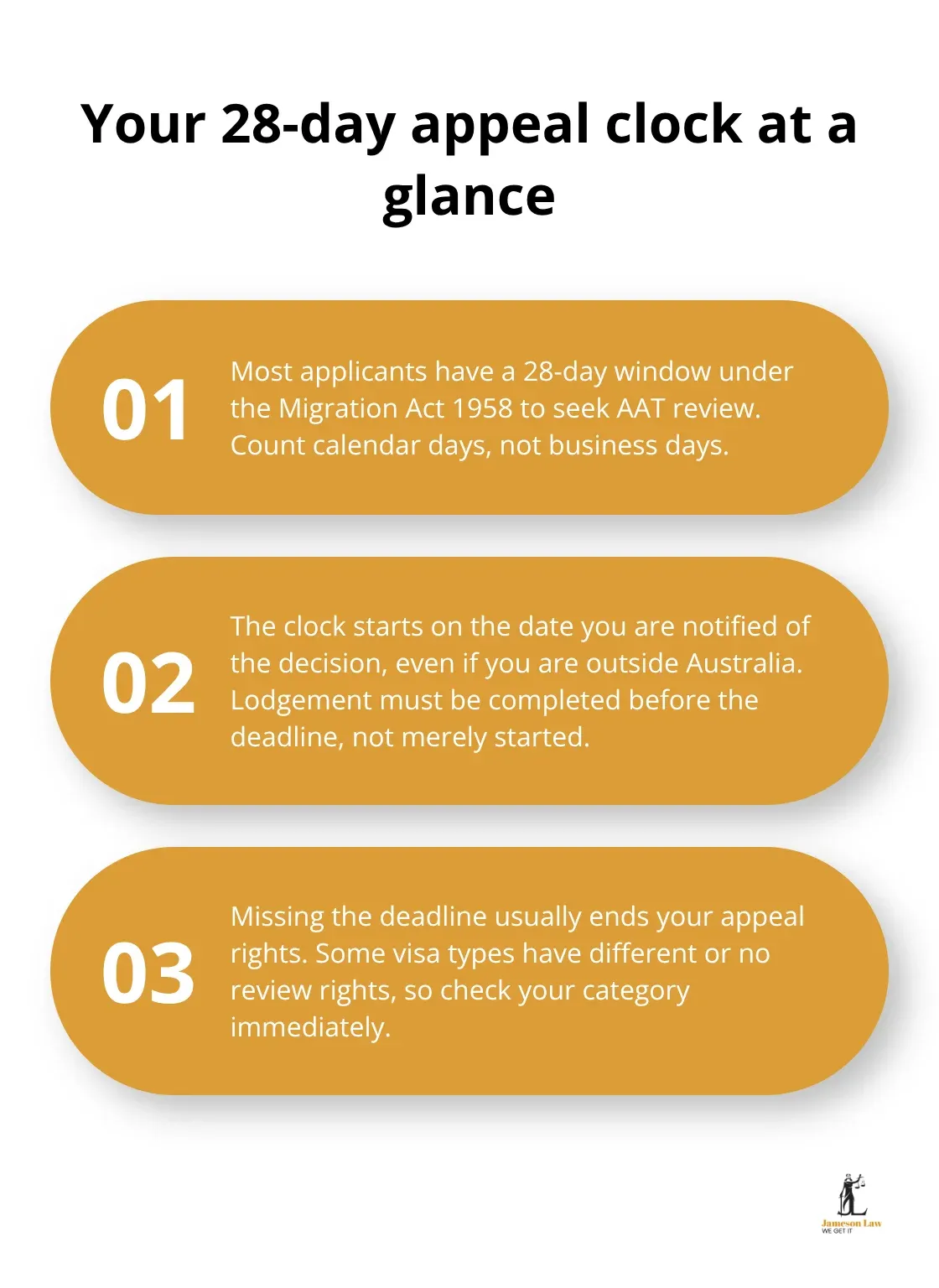
Your right to appeal a visa refusal depends on the visa type and the grounds for refusal. Under the Migration Act 1958, most visa applicants can seek review through the Administrative Appeals Tribunal within 28 days of receiving the refusal decision. This 28-day window is absolute and non-negotiable-missing it means you lose your appeal rights entirely unless exceptional circumstances apply. Some visa categories, including certain protection visas and ministerial intervention decisions, have different or no appeal rights, which is why you must check the specific conditions of your visa type immediately.
The 28-Day Deadline: What You Need to Know
The Department of Home Affairs website provides the official refusal letter with the exact date your appeal period begins, and you must count from that date. If you are outside Australia when refused, the clock still starts from the date the decision is notified to you, not from when you physically receive the letter. The AAT accepts appeals lodged within the 28-day period, and lodging means you submit your application to the Tribunal before the deadline closes, not simply start the process. You should mark the appeal deadline on your calendar and work backwards from that date to gather evidence and prepare your case with adequate time.
Acting Quickly Protects Your Rights
Acting quickly is not optional-it is a legal requirement that determines whether you retain any appeal rights at all. The timeframe applies regardless of your circumstances, and the Tribunal will not extend it without genuine exceptional grounds. Your next step involves understanding what evidence the AAT requires and how to structure your case for the best possible outcome.
Getting Your Appeal to the AAT
Lodging Your Application Correctly
Lodging your appeal with the Administrative Review Tribunal requires precision because errors can derail your case before it starts. You must submit your application in writing to the AAT, not to the Department of Home Affairs, and the Tribunal has specific requirements for how you present your case. The AAT accepts applications by post to its Melbourne office, online through its portal, or in person at any of its state offices. Online lodgement typically provides immediate confirmation of receipt, which protects you against deadline disputes.
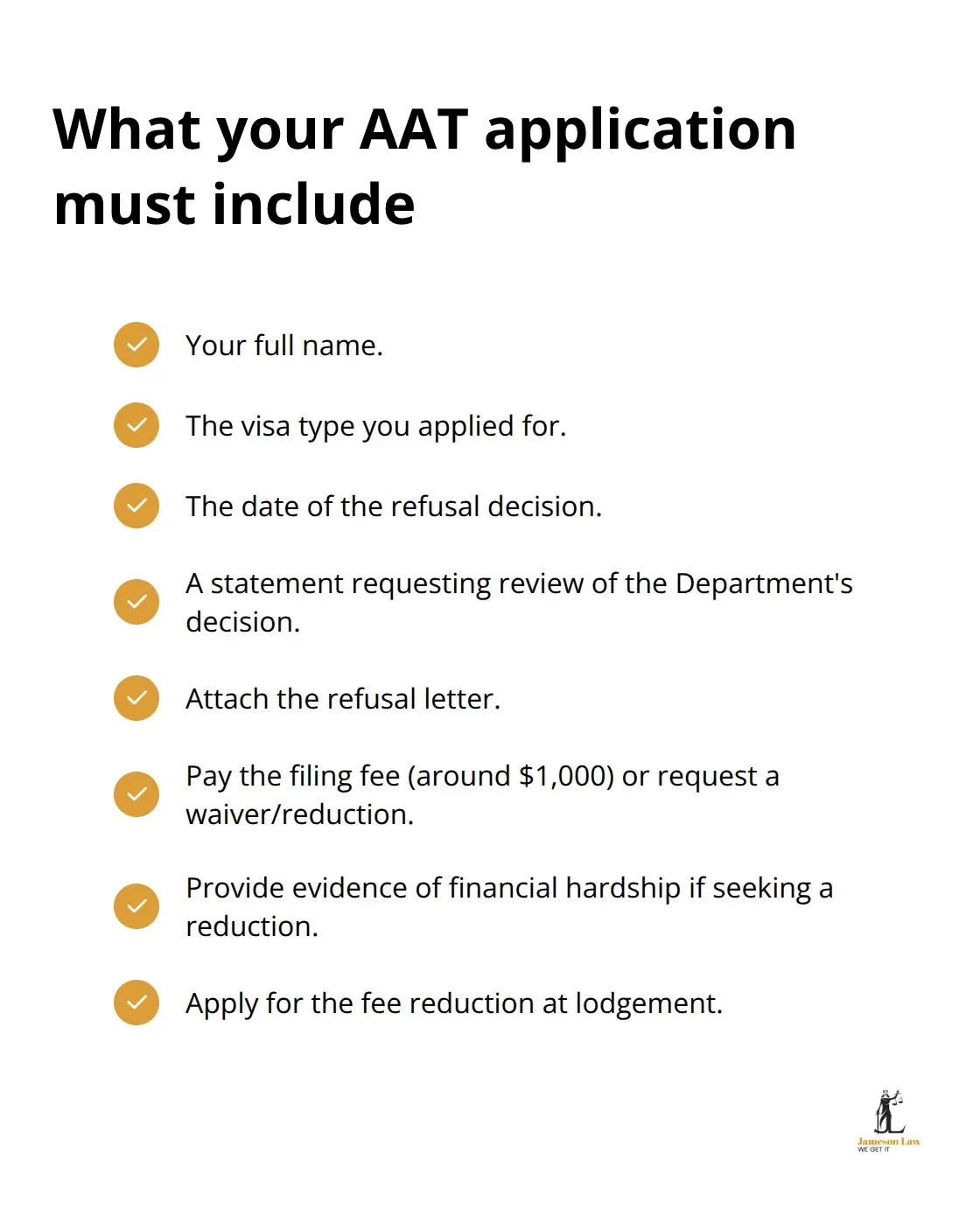
Your application must include your name, the visa type you applied for, the date of the refusal decision, and a clear statement that you want review of the Department’s decision. You must also attach a copy of the refusal letter itself. The AAT charges a filing fee of around $1,000 for most visa matters, though fee waivers or reductions are available if you demonstrate financial hardship. You should apply for a fee reduction at the time you lodge rather than waiting until later.
What Happens After You Lodge
Once the AAT accepts your application, the Tribunal sends you a letter confirming your case number and the next steps. The Department then has 28 days to provide its response and reasons for the refusal decision. The Tribunal processes applications in the order received, so your position in the queue depends on when you submit your paperwork.
Preparing Evidence That Wins Cases
Evidence preparation determines whether you succeed or fail at the Tribunal, and collecting the right material takes time and strategy. You need to gather everything that addresses the specific grounds cited in your refusal letter. If the Department refused you on character grounds, you collect character references and evidence of rehabilitation or good conduct. If health was the issue, you obtain updated medical assessments or specialist reports that counter the Department’s concerns.
The AAT does not accept vague statements or general assertions, so every piece of evidence must be specific, dated, and directly relevant to why the Department refused you. Documents should be organised chronologically or by topic, translated into English if they are in another language (with certified translations), and presented with an index so the Tribunal can navigate them easily.
Building Credible Supporting Materials
Supporting letters from employers, colleagues, community members, or professional contacts carry weight when they address the specific refusal grounds and explain why the person writing the letter is qualified to comment. Generic character references that say nothing substantive are virtually useless. You should also obtain professional reports where appropriate, such as updated police cheques showing no new offences, medical reports from specialists addressing health concerns, or financial documentation proving capacity to support yourself. These formal reports carry significantly more weight than personal statements.
Understanding the Hearing Timeline
The hearing typically occurs three to six months after you lodge your application. You receive notice of the hearing date at least four weeks in advance, giving you time to arrange time off work or travel if you need to attend in person. You can participate by videoconference from most locations in Australia, which removes the need for travel if that suits your circumstances better. With your evidence prepared and your hearing date confirmed, you now need to understand the specific grounds on which the Department refused your visa and how to challenge those grounds effectively.
Grounds for Challenging a Visa Decision
Why the Department Refuses Visas
The Department of Home Affairs refuses visa applications for specific, documented reasons, and understanding exactly why your application failed forms the foundation of a successful appeal. Character issues account for a significant portion of refusals, particularly when applicants have criminal convictions, immigration violations, or fail to provide satisfactory character references. Health refusals occur when the Department determines an applicant poses an unacceptable risk to public health or would place excessive demand on Australian health or community services-these decisions rely heavily on medical assessments conducted by the Department’s contracted panel doctors rather than your own medical evidence. Financial capacity refusals happen when you cannot demonstrate sufficient funds to support yourself and any dependants during your visa period, and the Department applies strict thresholds based on visa type and family size.
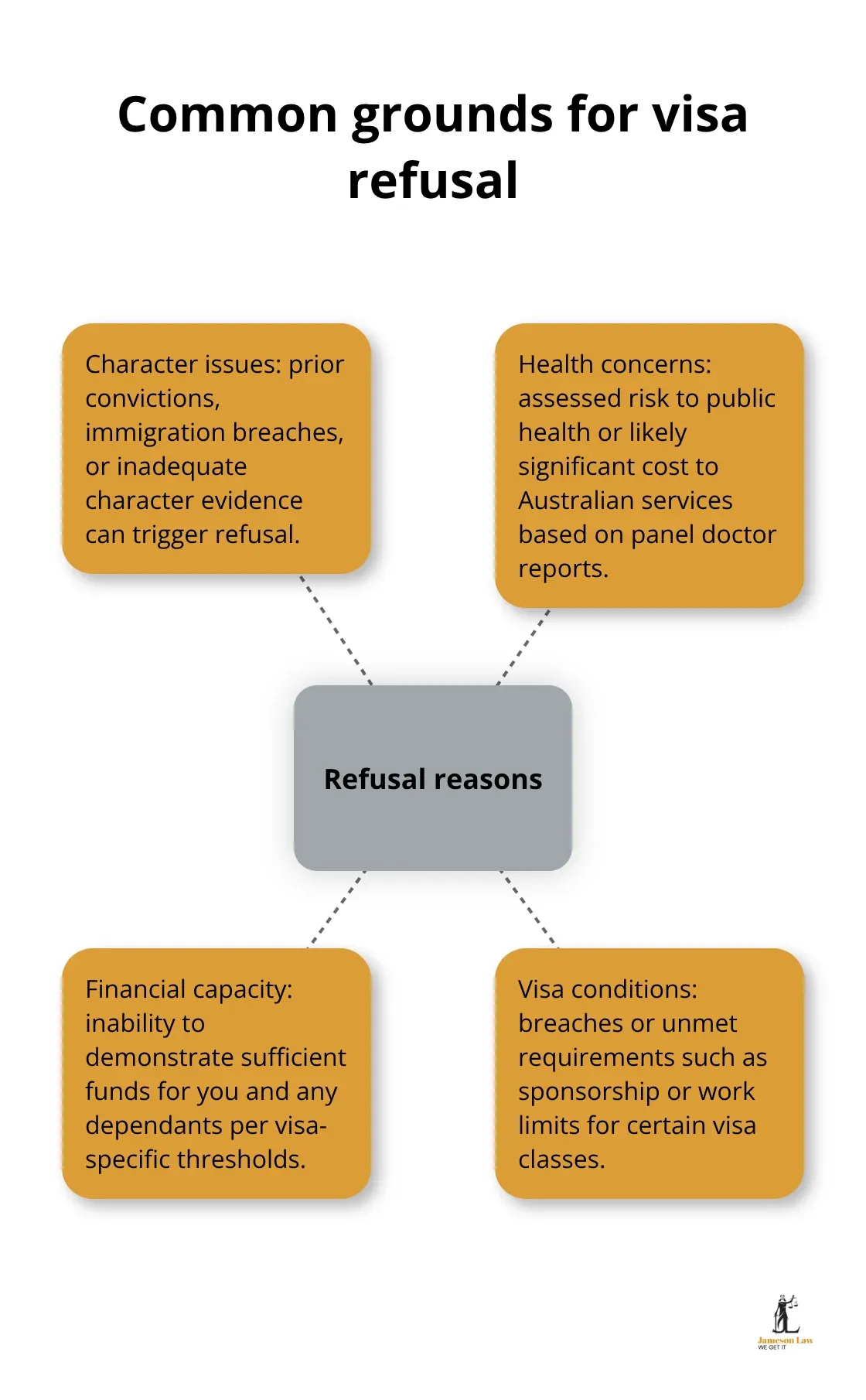
Failure to meet specific visa conditions, such as employment restrictions for student visas or sponsorship requirements for employer-sponsored visas, also generates refusals.
The Department must provide detailed reasons for the refusal in writing, and these reasons become your roadmap for identifying exactly what evidence and arguments will overturn the decision.
Identifying Procedural Errors
Procedural errors represent your strongest avenue for appeal because they do not require you to prove the Department was wrong on the merits-only that it failed to follow proper administrative process. The Department must give you procedural fairness before refusing your application, which means it must notify you of concerns and offer you a genuine opportunity to respond before making a final decision. If the Department refused you without asking you to address specific concerns or without considering information you provided, that procedural breach can be fatal to its decision.
Procedural errors also occur when the Department ignores relevant legislation, applies the wrong visa criteria, or fails to consider mandatory considerations outlined in the Migration Act 1958. To identify these errors, you must compare exactly what the Department says it considered against what you actually provided and what the law requires it to consider.
Building Your Appeal Case
You must organise your evidence to directly address each ground cited in the refusal letter, not provide general material that feels relevant. If character was the issue, you need recent character references from people who can specifically explain your rehabilitation or good conduct, not vague statements that you are a good person. If health was the concern, you obtain specialist medical reports that directly address the Department’s specific health concern, not generic medical certificates.
The Department’s own reasons become your checklist, and you systematically dismantle each reason with targeted evidence and legal argument. When the Department cites character concerns, you respond with documented evidence of rehabilitation, employment stability, and community ties. When it raises health issues, you obtain specialist assessments that address the particular medical condition the Department identified. When it questions financial capacity, you provide bank statements, employment contracts, and sponsorship documentation that prove you can support yourself throughout your visa period.
Final Thoughts
A visa refusal does not end your options. Your visa refusal appeal rights provide a legitimate pathway to challenge the Department’s decision, and thousands of Australians have successfully overturned rejections by following the proper process. Mark your 28-day deadline immediately, work backwards to gather evidence that addresses the specific grounds cited in your refusal letter, and lodge your application with the AAT before time runs out. Obtain professional reports where appropriate, such as updated medical assessments or character references that directly address the Department’s concerns, and organise your materials with precision and clarity.
The hearing typically occurs three to six months after you lodge your appeal, which gives you adequate time to prepare your case thoroughly. Attend your hearing in person if possible, as the Tribunal benefits from seeing you and hearing your account directly, though videoconference participation remains available from most locations across Australia. If the refusal involves complex grounds or procedural issues, seek legal assistance to avoid mistakes that could undermine your evidence.
Do not treat your refusal as final. The team at Jameson Law has experience helping Australians navigate visa appeals and can advise you on your specific circumstances and whether an appeal is viable. Act now, gather your evidence, and lodge your appeal within the 28-day window to protect your visa refusal appeal rights.